Ácidos benzoicos
Los ácidos benzoicos son ácidos carboxílicos aromáticos con la fórmula molecular C7H6O2, caracterizados por un anillo bencénico unido a un grupo carboxilo (-COOH). Estos compuestos se utilizan ampliamente como conservantes, intermediarios en la síntesis orgánica y en la producción de diversos productos químicos, incluidos colorantes y fragancias. Los ácidos benzoicos también son importantes en las industrias alimentaria y farmacéutica. En CymitQuimica, ofrecemos una gama diversa de ácidos benzoicos de alta calidad para apoyar sus necesidades de investigación e industriales.
Se han encontrado 5471 productos de "Ácidos benzoicos"
Ordenar por
Pureza (%)
0
100
|
0
|
50
|
90
|
95
|
100
Methyl 4,5-dimethoxy-3-hydroxybenzoate
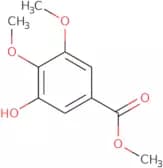
CAS:<p>Methyl 4,5-dimethoxy-3-hydroxybenzoate is a synthetic chemical that inhibits the enzyme tectorigenin reductase. Tectorigenin reductase is responsible for the production of tectorigenin, a phytoestrogen found in plants such as china. Methyl 4,5-dimethoxy-3-hydroxybenzoate was shown to inhibit the activity of platelets from human blood and has been studied for its pharmacological properties. The thermodynamic and kinetic parameters of methyl 4,5-dimethoxy-3-hydroxybenzoate have been determined using gas chromatography - mass spectrometry (GC–MS) and nuclear magnetic resonance (NMR) spectroscopy. It exists as both an enantiomeric mixture and racemic mixture.</p>Fórmula:C10H12O5Pureza:Min. 95%Forma y color:PowderPeso molecular:212.2 g/mol4-Amino-3-hydroxybenzoic acid
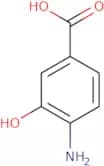
CAS:<p>4-Amino-3-hydroxybenzoic acid is a small molecule that has been shown to inhibit the activity of epidermal growth factor receptor (EGFR) and human epidermal growth factor (HER2). It is also an inhibitor of cytochrome P450 enzymes, which are involved in the metabolism of drugs. 4-Amino-3-hydroxybenzoic acid is used in vitro as an antifungal agent for Candida albicans and other pathogenic fungi. This drug inhibits the growth of cancer cells by binding to specific cell surface receptors, causing them to detach from their surroundings and die. 4-Amino-3-hydroxybenzoic acid may have potential as a drug for treating metastatic colorectal cancer. The mechanism of action is not yet fully understood but it may be related to the inhibition of intermolecular hydrogen bonding and water permeability.</p>Fórmula:C7H7NO3Pureza:Min. 97.5 Area-%Forma y color:Off-White PowderPeso molecular:153.14 g/mol2,3-Diaminobenzoic acid methyl ester
CAS:2,3-Diaminobenzoic acid methyl ester is a redox potential catalyst that has been shown to have anticancer activity in vitro and in vivo. It is a 5-ht4 receptor agonist, which causes an increase in the intracellular concentration of cAMP. The anticancer effect of this compound may be due to its ability to inhibit the growth of cancer cells by blocking DNA synthesis and cell division. The biological properties of this drug are not well understood, but it has been shown to have antioxidant effects, as well as proton-reducing and electron-accepting properties. This compound has also been studied electrochemically.Fórmula:C8H10N2O2Pureza:95%NmrForma y color:PowderPeso molecular:166.18 g/molEthyl 2-methoxybenzoate
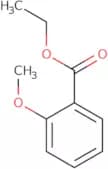
CAS:<p>Ethyl 2-methoxybenzoate is a colorless liquid that is used as an intermediate in the synthesis of other organic compounds. It has been shown to be an effective insect repellent, with an LD50 of 14 mg/kg. This compound also has a high affinity for protonated amines and amino acids, which may account for its adsorption to riparia. Ethyl 2-methoxybenzoate is biosynthesized from monoketones and monohydric alcohols. The hydroxyl group on the benzoic acid moiety reacts with methyl anthranilate to produce ethyl 2-methoxybenzoate.</p>Fórmula:C10H12O3Pureza:Min. 95%Forma y color:PowderPeso molecular:180.2 g/mol3,4-Dimethoxybenzoic acid anhydride
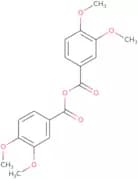
CAS:<p>3,4-Dimethoxybenzoic acid anhydride is a synthetic compound that can be used for the synthesis of other natural products. It has been shown to inhibit the demethylation of flavones and to activate the mitogen-activated protein kinase (MAPK) pathway in cells. 3,4-Dimethoxybenzoic acid anhydride has also been shown to have anti-inflammatory effects by inhibiting prostaglandin synthesis.</p>Fórmula:C18H18O7Pureza:Min. 95%Forma y color:White PowderPeso molecular:346.33 g/molGentisic acid sodium salt hydrate
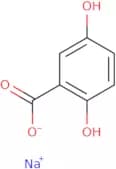
CAS:<p>Gentisic acid sodium salt hydrate is a benzoate that is used as a diagnostic agent in the study of inflammatory bowel disease. Gentisic acid sodium salt hydrate is a sodium salt of gentisic acid and has been shown to have anti-inflammatory properties. It is used as a stabilizer for solid dispersions, such as capsules, tablets, and granules. Gentisic acid sodium salt hydrate also has the ability to prevent degradation of certain drugs by hydrolysis or oxidation. Gentisic acid sodium salt hydrate can be synthesized from 2,6-dihydroxybenzoic acid (2,6-DHB) and hippuric acid.</p>Fórmula:C7H5NaO4·xH2OPureza:Min. 98 Area-%Forma y color:White PowderPeso molecular:176.1 g/mol3-Amino-2-hydroxybenzoic acid
CAS:3-Amino-2-hydroxybenzoic acid (AAHB) is a nonsteroidal anti-inflammatory drug that belongs to the group of pharmaceutical preparations. It inhibits the enzyme dehydroascorbate reductase, which is involved in the production of hydrogen peroxide and other reactive oxygen species by phagocytes. Hydrogen peroxide and other reactive oxygen species can cause DNA damage and lead to cancer development. AAHB may also have antimicrobial effects, as it has been shown to inhibit bacterial growth and cell adhesion. AAHB interacts with fatty acids in a similar manner as aspirin does, but with a lower potency. It has been shown to inhibit prostaglandin synthesis by inhibiting lipoxygenase activity. The binding of AAHB at these sites prevents the formation of arachidonic acid from linoleic acid and blocks the conversion of arachidonic acid into prostaglandin H2 (PGH2).Fórmula:C7H7NO3Pureza:Min. 98 Area-%Forma y color:Off-White PowderPeso molecular:153.14 g/mol2-Isopropylbenzoic acid
CAS:2-Isopropylbenzoic acid is a fine chemical that belongs to the group of aromatic compounds and has the molecular formula C8H10O2. This compound is used in research as an intermediate for organic synthesis, such as the production of pharmaceuticals. 2-Isopropylbenzoic acid is also a versatile building block for complex molecules, such as dyes and fragrances. It can be used as a reagent or speciality chemical in research and development, such as in polymer chemistry. 2-Isopropylbenzoic acid can be used as a reaction component for synthesis of other chemicals, such as pharmaceuticals. As an intermediate, it can be used in the production of synthetic drugs and other bioactive molecules that are difficult to synthesize by other means due to its high quality.Fórmula:C10H12O2Pureza:Min. 95%Forma y color:White PowderPeso molecular:164.2 g/mol3-Hydroxybenzoic acid
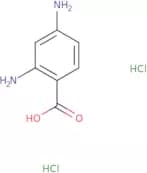
CAS:3-Hydroxybenzoic acid is a ferroelectric compound that can be found in water vapor, plants, and bacteria. It has been shown to have structural properties that are very similar to those of p-hydroxybenzoic acid. The redox potential of 3-hydroxybenzoic acid is around -0.8 volts versus the standard hydrogen electrode (p-hydroxybenzoic acid is -1.2 volts). 3-Hydroxybenzoic acid has been shown to inhibit some bacterial enzymes such as esterase and transaminase, but not others such as dehydrogenase or oxidoreductase. It also shows activity against fungal enzymes such as aminopeptidases and serine proteases. The compound can exist in two forms: the metastable form or a stable form. The metastable form can be obtained by crystallizing the compound from a solution containing copper chloride or x-ray diffraction data from wild type strainsFórmula:C7H6O3Forma y color:PowderPeso molecular:138.12 g/mol2,4-Diaminobenzoic acid dihydrochloride
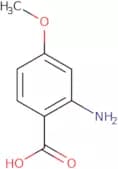
CAS:2,4-Diaminobenzoic acid dihydrochloride is a versatile building block for complex compounds. This compound can be used as a research chemical and is also a reagent and speciality chemical. 2,4-Diaminobenzoic acid dihydrochloride has been used in the synthesis of many useful compounds, including pharmaceuticals and agrochemicals. It is also an intermediate in the synthesis of some pharmaceuticals and agrochemicals. 2,4-Diaminobenzoic acid dihydrochloride can be used as a scaffold to produce new molecules that are potentially useful as drugs or other chemicals.Fórmula:C7H8N2O2•(HCL)2Pureza:Min. 95%Forma y color:Off-White PowderPeso molecular:225.07 g/mol2-Amino-4-methoxybenzoic acid
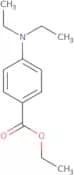
CAS:2-Amino-4-methoxybenzoic acid is a monophenolic compound that has been shown to have antioxidant properties. It is a redox potential with a pK of 7.8 and can be protonated at the phenolic hydroxyl group. 2-Amino-4-methoxybenzoic acid has been shown to inhibit the enzyme activities of histone proteins, which are enzymes that catalyze the formation of DNA from RNA. This compound also inhibits enzymes involved in amino acid synthesis such as anthranilate synthase and malic enzyme, as well as other enzymes such as phosphotransferase (PTS) and pyruvate kinase. 2-Amino-4-methoxybenzoic acid also causes inhibition of growth in phytophthora megasperma, an oomycete plant pathogen, by altering the redox potentials inside the cell membrane. The mechanism forFórmula:C8H9NO3Pureza:Min. 95%Forma y color:PowderPeso molecular:167.16 g/molEthyl 4-(N,N-diethylamino)benzoate
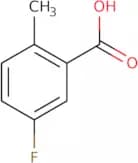
CAS:Ethyl 4-N,N-diethylamino)benzoate is a molecule that contains a carbonyl group. In an exothermic reaction, the carbonyl group reacts with naphthalene in the presence of activated alkyl substituents to form a fluorescent product. The molecule has a constant and is monomeric. It has an aromatic hydrocarbon structure, which results in a red shift in the fluorescence emission spectrum. Ethyl 4-N,N-diethylamino)benzoate reacts with solvents such as water and alcohols to form solutes that are fluorescent.Fórmula:C13H19NO2Pureza:Min. 95%Forma y color:PowderPeso molecular:221.3 g/mol5-Fluoro-2-methylbenzoic acid
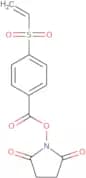
CAS:5-Fluoro-2-methylbenzoic acid is a synthetic compound that has antiviral potency against the influenza A virus. It is the active form of 5-fluoro-2-methylbenzoyl chloride, which is synthesized from a Grignard reagent and an asymmetric synthesis. 5-Fluoro-2-methylbenzoic acid has been shown to have anticancer properties in vitro, which may be due to its ability to inhibit cancer cell growth through interaction with chloride channels. This drug also inhibits the activity of dehydrogenases, which are enzymes that catalyze the oxidation of various substrates by reducing them.Fórmula:C8H7FO2Pureza:Min. 95%Forma y color:White PowderPeso molecular:154.14 g/mol4-(Ethenylsulfonyl)benzoic acid 2,5-dioxo-1-pyrrolidinyl ester
CAS:<p>4-(Ethenylsulfonyl)benzoic acid 2,5-dioxo-1-pyrrolidinyl ester is a fine chemical that is a useful scaffold for the synthesis of complex compounds. It can be used as a versatile building block in the production of research chemicals and pharmaceuticals, as well as a reaction component in speciality chemicals. The CAS Number for 4-(Ethenylsulfonyl)benzoic acid 2,5-dioxo-1-pyrrolidinyl ester is 343934-41-8.</p>Fórmula:C13H11NO6SPureza:Min. 95%Forma y color:White PowderPeso molecular:309.3 g/mol3,6-Dichloro-2-hydroxy benzoic acid
CAS:3,6-Dichloro-2-hydroxy benzoic acid is a reactive compound that is used as an intermediate in the synthesis of organic compounds. It reacts with the chlorine atom to form a diazonium salt. The diazonium salt then undergoes demethylation, which allows it to be converted into various products such as 3,5-dichloro-2-hydroxybenzoic acid or 2,4-dichloro-3,5-dimethoxybenzoic acid. 3,6-Dichloro-2-hydroxy benzoic acid is a strong base and can react with any acidic compounds present in the reaction vessel. This product has been shown to be effective for wastewater treatment by converting organic compounds into less harmful compounds.Fórmula:C7H4Cl2O3Pureza:Min. 95%Forma y color:PowderPeso molecular:207.01 g/mol2-Amino-4,6-dimethoxybenzoic acid
CAS:<p>2-Amino-4,6-dimethoxybenzoic acid is an organic chemical compound that can be used as a building block for the synthesis of other compounds. 2-Amino-4,6-dimethoxybenzoic acid has a number of uses including being a reagent in organic and inorganic reactions, such as the synthesis of dyes, pharmaceuticals, and pesticides. It is also used as a building block for complex compounds that are difficult to make. This chemical has been classified by the Chemical Abstract Services (CAS) registry with CAS number 21577-57-1.</p>Fórmula:C9H11NO4Pureza:Min. 95%Forma y color:Yellow SolidPeso molecular:197.19 g/mol2-Amino-5-iodobenzoic acid
CAS:<p>Please enquire for more information about 2-Amino-5-iodobenzoic acid including the price, delivery time and more detailed product information at the technical inquiry form on this page</p>Fórmula:C7H6INO2Peso molecular:263.04 g/mol2-(Bromomethyl)benzoic acid
CAS:<p>2-(Bromomethyl)benzoic acid is a functional group that can be found in many organic compounds. It is a derivative of phthalic acid and has some similar properties, including the ability to form micelles and radical species. 2-(Bromomethyl)benzoic acid has been shown to react with carbon tetrachloride or terephthalic acid to produce peroxides. This reaction is initiated by oxidation of the carbon-carbon double bond, which produces a radical pair that reacts with oxygen in the air to form radicals that are stabilized by resonance. 2-(Bromomethyl)benzoic acid also reacts with an inorganic base such as sodium hydroxide or potassium hydroxide to produce bromine gas and water.</p>Fórmula:C8H7BrO2Pureza:Min. 97 Area-%Forma y color:White Off-White PowderPeso molecular:215.04 g/mol2,6-Dimethoxybenzoic acid
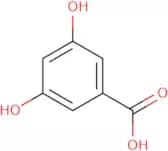
CAS:2,6-Dimethoxybenzoic acid is a chemical compound with the molecular formula of C9H8O4. It belongs to the group of sesquiterpene lactones and has been shown to have anti-inflammatory properties. 2,6-Dimethoxybenzoic acid exhibits a carboxylate reaction mechanism that can be activated by an enzyme, curculigoside, which hydrolyzes the ester bond in 2,6-dimethoxybenzoic acid. The reaction mechanism involves the group p2 (COOH) on 2,6-dimethoxybenzoic acid reacting with an alcohol on curculigoside to form an ester and protocatechuic acid. The dianthus caryophyllus plant produces 2,6-dimethoxybenzoic acid as a byproduct of its synthesis of protocatechuic acid. This compound is chemically studied using solid phase microextractionFórmula:C9H10O4Pureza:Min. 95%Forma y color:PowderPeso molecular:182.17 g/mol3,5-Dihydroxybenzoic acid
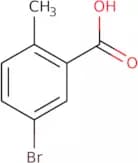
CAS:3,5-Dihydroxybenzoic acid is a phenolic compound that belongs to the class of aromatic compounds. It is an inhibitor of the enzyme 3-hydroxyphenylpyruvate dioxygenase and is used in the treatment of obesity. It has been shown to have a low potency for inhibiting this enzyme, although it does not inhibit other enzymes such as p-hydroxybenzoate hydroxylase. 3,5-Dihydroxybenzoic acid binds to human serum albumin through hydrogen bonding interactions and can inhibit the absorption of dietary phenols by binding to them. This compound also acts as a protocatechuic acid structural analog and has been shown to be hydrated in solution.Fórmula:C7H6O4Pureza:Min. 95%Forma y color:White PowderPeso molecular:154.12 g/mol5-Bromo-2-methylbenzoic acid
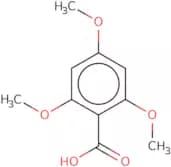
CAS:<p>Intermediate in the synthesis of canagliflozin</p>Fórmula:C8H7BrO2Pureza:Min. 95%Forma y color:White PowderPeso molecular:215.04 g/mol2,4,6-Trimethoxybenzoic acid
CAS:<p>2,4,6-Trimethoxybenzoic acid (TMB) is a monomer that belongs to the class of organic compounds known as phenols. It can undergo dehydrogenation reactions with nitroethane in the presence of trifluoroacetic acid and catalytic amounts of hydrogen gas. TMB has been shown to interact with an allyl group in other molecules. The reaction system was studied under different flow rates and was found to be best described by an isotherm equation.</p>Fórmula:C10H12O5Pureza:Min. 95%Forma y color:PowderPeso molecular:212.2 g/molN-Acetyl-4-aminosalicylic acid
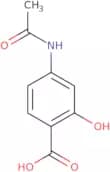
CAS:<p>N-Acetyl-4-aminosalicylic acid is an active site directed probe for the detection of salicylic acid. It has a fluorescence emission maximum at 370 nm and a fluorescence quantum yield of 0.93. N-Acetyl-4-aminosalicylic acid can be used to analyze samples, such as wastewater and human urine, which contain salicylic acid. The probe is protonated in the presence of salicylic acid and then binds to the acceptor in the sample with a bimodal distribution. The fluorescence resonance energy transfer (FRET) process between the donor and acceptor leads to an increase in fluorescence intensity that can be detected by electrophoresis methods. This probe also has a conformational change when it binds to its target, which allows for easy separation from other components in the sample by size exclusion chromatography.</p>Fórmula:C9H9NO4Pureza:Min. 95%Forma y color:Slightly Brown PowderPeso molecular:195.17 g/mol2-Hydroxy-3-methoxybenzoic acid
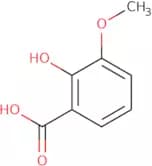
CAS:2-Hydroxy-3-methoxybenzoic acid is a chemical compound that has been studied for its potential use in the treatment of prostate cancer. It is a coordination complex that binds to DNA and inhibits the process of transcription. This compound also possesses anti-inflammatory properties, which are related to its ability to inhibit prostaglandin synthesis. 2-Hydroxy-3-methoxybenzoic acid has been shown to have an effect on human HL60 cells, which may be due to its ability to induce apoptosis. This compound has also been shown to have a high degree of metabolic stability and is not toxic to normal cells at doses up to 100 μM.Fórmula:C8H8O4Pureza:Min. 95%Forma y color:PowderPeso molecular:168.15 g/mol2-Nitrobenzoic acid
CAS:<p>2-Nitrobenzoic acid is a diagnostic chemical that has been used for the detection of epidermal growth factor. It also has therapeutic properties, and has been used to treat infectious diseases and autoimmune diseases. 2-Nitrobenzoic acid is an organic compound that contains two nitro groups, which are connected to a benzene ring by two carbon chains. The molecule also contains two aldehyde groups, which are connected to the benzene ring by one carbon chain each. 2-Nitrobenzoic acid is a white crystalline solid with a melting point of 118°C and boiling point of 310°C. It is soluble in water and alcohols, but insoluble in ethers or chloroform.<br>2-Nitrobenzoic acid can be synthesized from nitric acid and benzoic acid. This reaction produces enough heat to ignite the mixture if it's not cooled down first.</p>Fórmula:C7H5NO4Pureza:Min. 94 Area-%Forma y color:PowderPeso molecular:167.12 g/mol3-Bromo-5-isopropylbenzoic acid
CAS:Fórmula:C10H11BrO2Pureza:96%Forma y color:SolidPeso molecular:243.12-Amino-3,5-difluorobenzoic acid
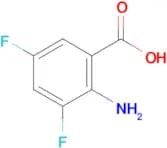
CAS:Fórmula:C7H5F2NO2Pureza:95%Forma y color:SolidPeso molecular:173.1195-[(3,5-Dicarboxyphenyl)methyl]benzene-1,3-dicarboxylic acid
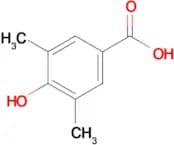
CAS:Pureza:96%Forma y color:SolidPeso molecular:344.27499394-Hydroxy-3,5-dimethylbenzoic acid
CAS:Fórmula:C9H10O3Pureza:98%Forma y color:SolidPeso molecular:166.1762,3-Dichloro-6-fluorobenzoic acid
CAS:Fórmula:C7H3Cl2FO2Pureza:95%Forma y color:SolidPeso molecular:209Ref: 10-F718089
1g383,00€5g1.199,00€10g2.395,00€2.5g780,00€50mg103,00€100mg152,00€250mg203,00€500mg313,00€5-Chlorosulfonyl-2-methoxybenzoic acid
CAS:Fórmula:C8H7ClO5SPureza:98%Forma y color:SolidPeso molecular:250.655-Carboxy-2-fluorophenylboronic acid
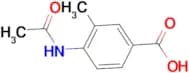
CAS:Fórmula:C7H6BFO4Pureza:98%Forma y color:SolidPeso molecular:183.934-(acetylamino)-3-methylbenzoic acid
CAS:Fórmula:C10H11NO3Pureza:97%Forma y color:Solid, White powderPeso molecular:193.2024-Chloro-2,6-difluorobenzoic acid
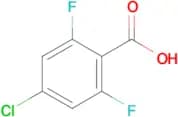
CAS:Fórmula:C7H3ClF2O2Pureza:95%Forma y color:SolidPeso molecular:192.552,3-Dimethoxybenzoic acid
CAS:Fórmula:C9H10O4Pureza:98%Forma y color:Solid, Crystalline PowderPeso molecular:182.1755-Nitrophthalic acid
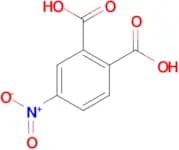
CAS:Fórmula:C8H5NO6Pureza:97%Forma y color:Solid, White to slightly pale yellow powderPeso molecular:211.129









![5-[(3,5-Dicarboxyphenyl)methyl]benzene-1,3-dicarboxylic acid](/_next/image/?url=https%3A%2Fstatic.cymitquimica.com%2Fproducts%2F10%2Fthumb-webp%2FF695868.webp&w=3840&q=75)