Ácidos benzoicos
Los ácidos benzoicos son ácidos carboxílicos aromáticos con la fórmula molecular C7H6O2, caracterizados por un anillo bencénico unido a un grupo carboxilo (-COOH). Estos compuestos se utilizan ampliamente como conservantes, intermediarios en la síntesis orgánica y en la producción de diversos productos químicos, incluidos colorantes y fragancias. Los ácidos benzoicos también son importantes en las industrias alimentaria y farmacéutica. En CymitQuimica, ofrecemos una gama diversa de ácidos benzoicos de alta calidad para apoyar sus necesidades de investigación e industriales.
Se han encontrado 5472 productos de "Ácidos benzoicos"
Ordenar por
Pureza (%)
0
100
|
0
|
50
|
90
|
95
|
100
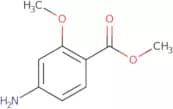
Methyl 4-amino-2-methoxybenzoate
CAS:Methyl 4-amino-2-methoxybenzoate is a solute with anticancer activity. It has been shown to inhibit the growth of erythrocytes and cancer cells in vitro. The mechanism of action is associated with its ability to bind to aminobenzothiazole, which inhibits the production of DNA and RNA. Methyl 4-amino-2-methoxybenzoate has also been shown to inhibit the proliferation of human muscle cells and induce their differentiation. This drug does not have any effect on lipid or protein synthesis in cells, which may be due to its solvent perturbation properties.Fórmula:C9H11NO3Pureza:Min. 95%Forma y color:PowderPeso molecular:181.19 g/molMethyl 3,4-dimethoxybenzoate
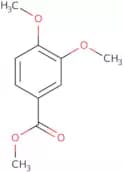
CAS:Methyl 3,4-dimethoxybenzoate is an acetate extract that has been shown to inhibit tyrosinase activity. This compound also has a potent inhibitory effect on the production of p-hydroxybenzoic acid. Methyl 3,4-dimethoxybenzoate can be synthesized from protocatechuic acid and methoxy groups. It is a chemical reaction involving three steps: condensation, dehydration, and reduction. Tyrosinase is an enzyme in the melanin biosynthetic pathway that catalyzes the conversion of tyrosine to dopaquinone. Tyrosinase activity can be inhibited by methyl 3,4-dimethoxybenzoate through competitive inhibition or by its ability to reduce the availability of substrate for this enzyme.Fórmula:C10H12O4Pureza:Min. 95%Forma y color:PowderPeso molecular:196.2 g/mol5-Iodo-2-nitrobenzoic acid
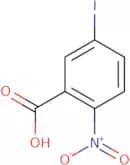
CAS:5-Iodo-2-nitrobenzoic acid is a fine chemical that is used as a building block in the synthesis of complex compounds and research chemicals. This compound has been shown to be an effective reagent for the synthesis of many different types of compounds. It can also be used as a reactant or intermediate in organic syntheses, such as those involving cross-coupling reactions. 5-Iodo-2-nitrobenzoic acid is a versatile building block that can be used in both simple and complex chemical reactions.Fórmula:C7H4INO4Pureza:Min. 95%Forma y color:Yellow PowderPeso molecular:293.02 g/mol2-Iodobenzoic acid
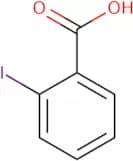
CAS:<p>2-Iodobenzoic acid is a synthetic compound that is used in the treatment of wastewater. It is produced by the reaction of benzoate and nitrite in the presence of sodium hydroxide. The intramolecular hydrogen atom transfer from the 2-iodobenzoic acid to benzoate is a reversible reaction. This process can be catalyzed by palladium, which has been shown to be effective in coupling 2-iodobenzoic acid with other compounds to produce cyclic peptides. The use of 2-iodobenzoic acid as a contraceptive has been investigated for its ability to inhibit acetylcholinesterase activity, which may lead to increased levels of acetylcholine and inhibition of muscle contractions.</p>Fórmula:C7H5IO2Pureza:Min. 98 Area-%Forma y color:PowderPeso molecular:248.02 g/molMethyl 3-bromobenzoate
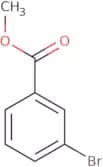
CAS:Methyl 3-bromobenzoate is a cross-coupled compound with three functional groups: a methyl group, an acid bromo group, and a carboxylic acid benzoic ester. It is used in the synthesis of antigens that are chemically reactive to trifluoroacetic acid gas. The clinical studies have shown that the efficiency of this study is low because it has been found to be difficult to synthesize methyl 3-bromobenzoate in large quantities. This molecule can be prepared by the reaction of vinylene with an electrophile in non-polar solvents or by catalytic mechanisms.Fórmula:C8H7BrO2Pureza:Min. 95%Forma y color:White PowderPeso molecular:215.04 g/mol2-(Boc-aminomethyl)benzoic acid
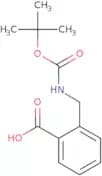
CAS:<p>2-(Boc-aminomethyl)benzoic acid is a versatile building block with a wide range of applications in the field of organic chemistry. It has been shown to be useful as a reagent in the synthesis of complex compounds and fine chemicals, as well as a reaction component for the preparation of pharmaceuticals. 2-(Boc-aminomethyl)benzoic acid can also be used as an intermediate in the synthesis of speciality chemicals such as herbicides, pesticides, and fungicides.</p>Fórmula:C13H17NO4Pureza:Min. 95%Forma y color:PowderPeso molecular:251.28 g/molRef: 4Z-B-085009
Producto descatalogadoRef: 4Z-B-085188
Producto descatalogadoRef: 4Z-B-085209
Producto descatalogadoRef: 4Z-B-085189
Producto descatalogadoRef: 4Z-B-085060
Producto descatalogado3-[6-Chloro-4-(trifluoromethyl)pyridin-2-yl]benzoic acid
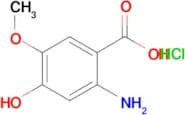
CAS:Pureza:95.0%Forma y color:SolidPeso molecular:301.64999389648442-amino-4-hydroxy-5-methoxybenzoic acid hydrochloride
CAS:Pureza:95.0%Peso molecular:219.6199951171875Ref: 10-F520974
Producto descatalogado2-Hydroxy-6-methylbenzoic acid
CAS:<p>2-Hydroxy-6-methylbenzoic acid is a natural product that is synthesized by the enzyme p. pastoris. It is a member of the polyketide class of compounds and has shown to have physiological effects such as anti-inflammatory and antioxidant properties. 2-Hydroxy-6-methylbenzoic acid also has been shown to inhibit ATP binding cassette transporter (ABC) proteins, which are involved in drug resistance, from transporting drugs out of cells, making it an attractive candidate for drug discovery.</p>Fórmula:C8H8O3Pureza:Min. 95%Forma y color:PowderPeso molecular:152.15 g/molRef: 3D-FH69926
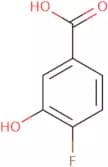
Producto descatalogado4-Fluoro-3-hydroxybenzoic acid
CAS:<p>4-Fluoro-3-hydroxybenzoic acid is a colorless solid that can be produced through the sulfonation of 4-fluorophenol with sulfuric acid. This process usually takes place in two steps: first, the phenol is refluxed with sulfur trioxide and then aqueous potassium hydroxide is added to the mixture. The reaction produces a sulfite salt, which is then treated with sodium sulfite to produce the desired acid. 4-Fluoro-3-hydroxybenzoic acid can also be synthesized by adding sulfur dioxide to an aqueous solution of 3% hydrogen peroxide and adding potassium hydroxide dropwise until effervescence ceases. This method produces an insoluble precipitate, which is filtered out and washed with water. The product can then be purified by recrystallization from hot water or by washing with ether.</p>Fórmula:C7H5FO3Pureza:Min. 95%Forma y color:White PowderPeso molecular:156.11 g/molRef: 3D-FF71035
Producto descatalogado2-Acetylbenzoic acid
CAS:<p>2-Acetylbenzoic acid is a functional molecule that contains an acetyl group. It can form hydrogen bonds with other molecules and has been shown to induce apoptosis in cells. The reaction products of 2-acetylbenzoic acid are malonic acid, acetylsalicylic acid, and 2-benzoylbenzoic acid. These three compounds are made by the addition of hydrogen or hydroxide to the molecule 2-acetylbenzoic acid. The molecule has two functional groups: a carbonyl group and an acetyl group. The chemical structure of this molecule can be seen in the figure below.<br>2-Acetylbenzoic Acid</p>Fórmula:C9H8O3Pureza:Min. 95%Forma y color:PowderPeso molecular:164.16 g/molRef: 3D-FA05086
Producto descatalogado4-Formylbenzoic acid
CAS:<p>4-Formylbenzoic acid is an organic compound with the molecular formula CH2=C(O)CH=CHCO2H. It is a white solid that is soluble in water and has a strong, unpleasant odor. 4-Formylbenzoic acid has been shown to have affinity for binding to odorous molecules such as sulfur compounds, amines, and mercaptans. The binding of these molecules to the 4-formylbenzoic acid leads to a decrease in their odor concentration. This process can be done using electrochemical impedance spectroscopy or optical sensors. The oxidation of 4-formylbenzoic acid by trifluoroacetic acid produces 2-formylphenol and formaldehyde, which are themselves volatile compounds with an unpleasant odor. These reactions may be used as wastewater treatment methods. Langmuir adsorption isotherm may be used as an analytical method for measuring the concentration of 4-formylbenzoic acid</p>Fórmula:C8H6O3Pureza:Min. 98 Area-%Forma y color:White Yellow PowderPeso molecular:150.13 g/molRef: 3D-FF23577
Producto descatalogado



![3-[6-Chloro-4-(trifluoromethyl)pyridin-2-yl]benzoic acid](/_next/image/?url=https%3A%2Fstatic.cymitquimica.com%2Fproducts%2F10%2Fthumb-webp%2FF317175.webp&w=3840&q=75)

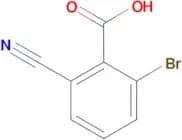
![2-[4-(methylamino)-3-nitrobenzoyl]benzoic acid](/_next/image/?url=https%3A%2Fstatic.cymitquimica.com%2Fproducts%2F10%2Fthumb-webp%2FF518183.webp&w=3840&q=75)