Ácidos benzoicos
Se han encontrado 5474 productos de "Ácidos benzoicos"
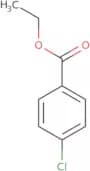
Ethyl 4-chlorobenzoate
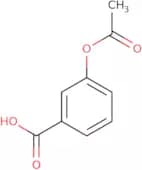
CAS:Ethyl 4-chlorobenzoate is an organic compound that is a colorless liquid with a sweet odor. It has been shown to be genotoxic in the presence of impurities such as palladium-catalyzed coupling and hemolytic activity. The structure of ethyl 4-chlorobenzoate can be determined by spectrometry analyses, which show that it contains an isopropyl group and an ethyl ester group. Ethyl 4-chlorobenzoate can be synthesized efficiently using the cross-coupling reaction between chlorides and aryl halides. This synthesis follows the same mechanism as the palladium catalyzed coupling reaction, but uses chloride ions instead of palladium complexes, which are more readily available.Fórmula:C9H9ClO2Pureza:Min. 95%Forma y color:Clear LiquidPeso molecular:184.62 g/mol3-Acetoxybenzoic acid
CAS:3-Acetoxybenzoic acid is a metabolite of 3-hydroxybenzoic acid, which is an intermediate in the biosynthesis of salicylic acid. It has been shown to have antibacterial properties and may be used as a topical treatment for skin infections caused by staphylococcus. 3-Acetoxybenzoic acid also has antiviral properties, which may be related to its ability to bind histone H3. 3-Acetoxybenzoic acid inhibits leishmania infantum growth and development by binding to chloride ions and preventing the formation of hydrogen bonds in the cell membrane. This prevents chloride ions from entering the cell and causes water channels to close, leading to dehydration and death.Fórmula:C9H8O4Pureza:Min. 95%Forma y color:PowderPeso molecular:180.16 g/molMethyl 4-bromo-2-methoxybenzoate
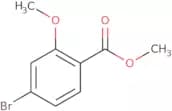
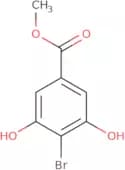
CAS:Methyl 4-bromo-2-methoxybenzoate is a drug molecule that belongs to the amide class. It is a synthetic reagent and can be used as a potential precursor in the synthesis of other drugs. Methyl 4-bromo-2-methoxybenzoate has been shown to react with carboxylic acids to form methyl esters, which are functional groups that contain a carboxyl group (COOH) and an alcohol group (OH). This reaction is called methoxylation. The transformation of methyl 4-bromo-2-methoxybenzoate into methyl esters increases the solubility of the compound and allows for it to be transported in water.Fórmula:C9H9BrO3Pureza:Min. 98 Area-%Forma y color:Yellow PowderPeso molecular:245.07 g/mol4-Bromo-3,5-dihydroxybenzoic acid methyl ester
CAS:The compound 4-Bromo-3,5-dihydroxybenzoic acid methyl ester is an ether that is a natural product. It has been shown to have diastereoselective coupling with phenolic groups and unsymmetrically with lactones. This compound also undergoes epoxidation and farnesylation reactions. The intramolecular chain of the ether is methylated by formylation and reductive elimination.Fórmula:C8H7BrO4Pureza:Min. 95%Forma y color:PowderPeso molecular:247.04 g/molBenzoic acid N-hydroxysuccinimide ester
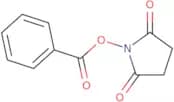
CAS:Benzoic acid N-hydroxysuccinimide ester is a chemical compound that is used for the diagnosis of cancer. It is used as a reagent in chromatographic methods and as a sample preparation agent in amine extraction techniques. The benzoate group reacts with amines to form an aminobenzoate ester, which can be detected by ionization techniques. This reaction mechanism has been studied extensively with spinorphin and epidermal growth factor.Fórmula:C11H9NO4Pureza:Min. 95%Forma y color:White PowderPeso molecular:219.19 g/mol3-Dimethylaminobenzoic acid
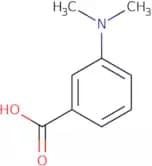
CAS:3-Dimethylaminobenzoic acid is a bacterial enzyme that belongs to the group of p2 carboxylates. It is a non-specific esterase that has been shown to hydrolyze 3-ethylbenzthiazoline-6-sulfonic acid, which is an indicator of root formation. The enzyme activity of 3-dimethylaminobenzoic acid has been demonstrated in kinetic data and redox potential measurements. 3DMBB is found in plants and can be used for the determination of dry weight, as it can hydrolyze triticum aestivum urine samples or cholesterol esters. This enzyme also has catalase activity and can be used in the determination of catalase activity in biological fluids such as urine samples or blood serum.Fórmula:C9H11NO2Pureza:Min. 95%Forma y color:Off-White PowderPeso molecular:165.19 g/mol4-Bromo-2-(trifluoromethyl)benzoic acid methyl ester
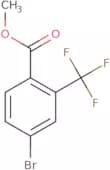
CAS:4-Bromo-2-(trifluoromethyl)benzoic acid methyl ester is a versatile building block that can be used to produce complex compounds. It is also an intermediate and a useful scaffold in organic synthesis. This chemical has been used as a research chemical and as a reagent for the production of other chemicals. The compound has CAS number 957207-58-8 and can be obtained from our supplier in high quality, with purity of 99%.Fórmula:C9H6BrF3O2Pureza:Min. 95%Forma y color:Colorless PowderPeso molecular:283.04 g/mol2-Amino-6-chlorobenzoic acid
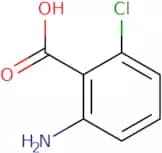
CAS:2-Amino-6-chlorobenzoic acid is a reactive compound that can be used as an antimicrobial agent. It binds to the active site of enzymes and inhibits their function, thereby preventing bacterial growth. 2-Amino-6-chlorobenzoic acid also has acidic properties, which may be due to its ability to hydrolyze esters by acting as a dehydrating agent. This chemical is thermodynamically stable and can be synthesized from malonic acid or other compounds. The chemical reactions of 2-amino-6-chlorobenzoic acid can be followed by NMR spectroscopy, which provides the structural information about the molecule. The reaction mechanism for 2-amino-6-chlorobenzoic acid is similar to that of amides.Fórmula:C7H6ClNO2Pureza:Min. 95%Forma y color:PowderPeso molecular:171.58 g/mol3,5-Diiodo-4-hydroxybenzoic acid
CAS:3,5-Diiodo-4-hydroxybenzoic acid (3,5 DIBA) is an aminotriazole that inhibits the growth of a wide range of bacteria. 3,5 DIBA inhibits the transport of catechol and 2,6-dichlorobenzoic acid into cells. This inhibition leads to decreased levels of catechol-O-methyltransferase activity and increased levels of lysine decarboxylase activity. The combination of these two reactions causes a decrease in lysine production. Lysine is important for cell division and protein synthesis in bacteria. 3,5 DIBA also inhibits root formation in plants and has been shown to inhibit the uptake of nutrients by plant roots. Also known as: Dibenzoylmethane; 1,2-Benzenediamine, 3-[(2,6-dichlorophenyl)imino]-, diiodide;Fórmula:C7H4I2O3Pureza:Min 97%Forma y color:PowderPeso molecular:389.91 g/mol2-Hydroxy-4-methoxybenzoic acid
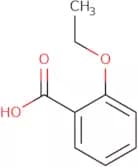
CAS:2-Hydroxy-4-methoxybenzoic acid (2HMB) is a natural product with tuberculostatic activity and is also used as a pharmaceutical drug. It is an enzyme inhibitor that binds to the diphenolase domain of mycobacterial cell wall hydrolases, such as lysyl oxidase and chitinase. 2HMB has been shown to be effective against cancer cells in vitro. The monosodium salt of 2HMB is more stable than the free acid form and can be used for the treatment of tuberculosis in India. 2HMB has also been shown to inhibit the growth of bacteria in human serum and tissue culture.Fórmula:C8H8O4Pureza:Min. 95%Forma y color:PowderPeso molecular:168.15 g/mol2-Ethoxybenzoic acid
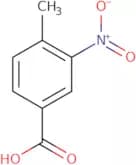
CAS:Component in some dental cementsFórmula:C9H10O3Pureza:Min. 99.0 Area-%Forma y color:Colorless Clear LiquidPeso molecular:166.17 g/mol4-Methyl-3-nitrobenzoic acid
CAS:4-Methyl-3-nitrobenzoic acid is a hydroxide solution that has been shown to be cytotoxic to malignant melanoma cells in vitro. 4-Methyl-3-nitrobenzoic acid also inhibits the growth of normal cells by blocking epidermal growth factor receptor signaling. This molecule is converted to hippuric acid, which may have an anti-cancer effect by inhibiting metal ion uptake and causing DNA damage. There are no known adverse effects or interactions with other drugs.Fórmula:C8H7NO4Pureza:Min. 95%Forma y color:PowderPeso molecular:181.15 g/mol2-Hydroxy-6-methylbenzoic acid
CAS:2-Hydroxy-6-methylbenzoic acid is a natural product that is synthesized by the enzyme p. pastoris. It is a member of the polyketide class of compounds and has shown to have physiological effects such as anti-inflammatory and antioxidant properties. 2-Hydroxy-6-methylbenzoic acid also has been shown to inhibit ATP binding cassette transporter (ABC) proteins, which are involved in drug resistance, from transporting drugs out of cells, making it an attractive candidate for drug discovery.
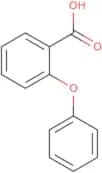
Fórmula:C8H8O3Pureza:Min. 95%Forma y color:PowderPeso molecular:152.15 g/mol2-Phenoxybenzoic acid
CAS:2-Phenoxybenzoic acid is a hydrochloride salt that is used as a reagent in analytical chemistry. It reacts with the carboxylate group of amino acids, proteins, and peptides to form a stable, water-soluble complex. The reaction is typically monitored by measuring the change in optical density at 260 nm. 2-Phenoxybenzoic acid reacts with bcr-abl kinase and colloidal gold to form an insoluble precipitate that can be detected with electron microscopy. This compound also has biological properties such as inhibiting carbonic anhydrase activity and changing the pH of the solution. 2-Phenoxybenzoic acid was originally synthesized from diphenyl ether and phenol (C6H5OH). 2-Phenoxybenzoic acid can be converted into 2-(4-nitrophenoxy) benzoic acid by reacting it with sodium nitrite followed by hydrochloric acidFórmula:C13H10O3Pureza:Min. 95%Forma y color:PowderPeso molecular:214.22 g/mol2-Amino-4-methoxy-benzoic acid methyl ester
CAS:2-Amino-4-methoxy-benzoic acid methyl ester is a high quality, versatile building block for the synthesis of complex compounds. It is an intermediate in the synthesis of a number of biologically active compounds and has been used as a reagent for the determination of amino acids. 2-Amino-4-methoxy-benzoic acid methyl ester is soluble in water and polar organic solvents.Fórmula:C9H11NO3Pureza:Min. 95%Forma y color:Off-White PowderPeso molecular:181.19 g/mol2,5-Difluoro-3-methylbenzoic acid methyl ester
CAS:2,5-Difluoro-3-methylbenzoic acid methyl ester is a high quality, complex compound that can be used as a versatile building block in synthesis. It acts as a reagent and can be used as a research chemical. 2,5-Difluoro-3-methylbenzoic acid methyl ester is an intermediate in the production of other chemicals and can also be used as a reaction component or useful scaffold.
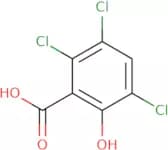
Fórmula:C9H8F2O2Pureza:Min. 95%Forma y color:PowderPeso molecular:186.16 g/mol3,5,6-Trichlorosalicylic acid
CAS:3,5,6-Trichlorosalicylic acid binds to the active site of bacterial 5-nitrosalicylic acid reductase and inhibits its activity. It is an inhibitor of proton-translocating ATPases. 3,5,6-Trichlorosalicylic acid has been shown to be effective against a variety of bacteria at low concentrations. 3,5,6-Trichlorosalicylic acid has also been shown to inhibit some physiological activities such as the light emission and chemiluminescent reaction of luciferin in fireflies. This chemical reacts with chloride ions to produce light.Fórmula:C7H3Cl3O3Pureza:Min. 95%Forma y color:PowderPeso molecular:241.46 g/mol4-Hydroxybenzoic acid
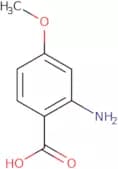
CAS:4-Hydroxybenzoic acid is a plant metabolite that is found in many plants and fruits. 4-Hydroxybenzoic acid has been shown to have anti-diabetic effects in vitro. This compound also has anti-inflammatory properties, which may be due to its ability to inhibit the production of effector proteins such as nitric oxide synthase and cyclooxygenase. The biological activity of 4-hydroxybenzoic acid is dependent on the concentration; at low concentrations it inhibits glucose uptake by cells, while at high concentrations it prevents cell growth.Fórmula:C7H6O3Pureza:Min. 98 Area-%Forma y color:White Off-White PowderPeso molecular:138.12 g/mol2-Amino-4-methoxybenzoic acid
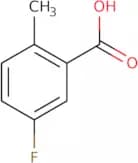
CAS:2-Amino-4-methoxybenzoic acid is a monophenolic compound that has been shown to have antioxidant properties. It is a redox potential with a pK of 7.8 and can be protonated at the phenolic hydroxyl group. 2-Amino-4-methoxybenzoic acid has been shown to inhibit the enzyme activities of histone proteins, which are enzymes that catalyze the formation of DNA from RNA. This compound also inhibits enzymes involved in amino acid synthesis such as anthranilate synthase and malic enzyme, as well as other enzymes such as phosphotransferase (PTS) and pyruvate kinase. 2-Amino-4-methoxybenzoic acid also causes inhibition of growth in phytophthora megasperma, an oomycete plant pathogen, by altering the redox potentials inside the cell membrane. The mechanism forFórmula:C8H9NO3Pureza:Min. 95%Forma y color:PowderPeso molecular:167.16 g/mol5-Fluoro-2-methylbenzoic acid
CAS:5-Fluoro-2-methylbenzoic acid is a synthetic compound that has antiviral potency against the influenza A virus. It is the active form of 5-fluoro-2-methylbenzoyl chloride, which is synthesized from a Grignard reagent and an asymmetric synthesis. 5-Fluoro-2-methylbenzoic acid has been shown to have anticancer properties in vitro, which may be due to its ability to inhibit cancer cell growth through interaction with chloride channels. This drug also inhibits the activity of dehydrogenases, which are enzymes that catalyze the oxidation of various substrates by reducing them.Fórmula:C8H7FO2Pureza:Min. 95%Forma y color:White PowderPeso molecular:154.14 g/mol