Estándares farmacéuticos
Los estándares farmacéuticos son un conjunto integral de materiales de referencia esenciales para garantizar la seguridad, eficacia y calidad de los productos farmacéuticos. Esta categoría incluye estándares para ingredientes farmacéuticos activos (APIs), que son los componentes centrales responsables de los efectos terapéuticos. Además, abarca compuestos y metabolitos relevantes tanto para las industrias farmacéutica como veterinaria, proporcionando puntos de referencia para la medición y análisis precisos de estas sustancias. Los estándares de control de nitrosaminas son cruciales para detectar y mitigar las nitrosaminas potencialmente dañinas en las formulaciones de medicamentos. Los estándares de toxicología ayudan a evaluar la seguridad y los posibles efectos adversos de los compuestos farmacéuticos. Además, los estándares de activadores e inhibidores enzimáticos son vitales para la investigación y el desarrollo, permitiendo estudios precisos de las vías bioquímicas y los mecanismos de acción de los medicamentos. Estos estándares farmacéuticos son herramientas indispensables para el cumplimiento normativo, el control de calidad y la investigación, asegurando que los productos farmacéuticos cumplan con estrictos criterios de seguridad y eficacia.
Subcategorías de "Estándares farmacéuticos"
- APIs para investigación e impurezas(273.444 productos)
- Activadores e inhibidores de enzimas(2.827 productos)
- Nitrosaminas(2.605 productos)
- Compuestos y metabolitos farmacéuticos y veterinarios(2.577 productos)
- Toxicología(13.652 productos)
Se han encontrado 7836 productos de "Estándares farmacéuticos"
Ordenar por
Pureza (%)
0
100
|
0
|
50
|
90
|
95
|
100
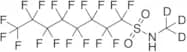
N-Methylperfluorooctanesulfonamide-d3 (50μg/mL in Methanol)
CAS:Producto controladoFórmula:C9HD3F17NO2SForma y color:Single SolutionPeso molecular:516.19[4S-(4a,7b,7aa)]-7,7a-Dihydro-7-hydroxy-4-methoxy-4H-furo[3,2-c]pyran-2(6H)-one-13C3
CAS:Producto controlado<p>Applications [4S-(4α,7β,7aα)]-7,7a-Dihydro-7-hydroxy-4-methoxy-4H-furo[3,2-c]pyran-2(6H)-one-13C3 is an intermediate used in the synthesis of Patulin-13C3 (P206502), which is a labelled Patulin (PAT), a mycotoxin produced by certain species of Penicillium, Aspergillus, and Byssochlamys, is mainly found in ripe apple and apple products. Patulin-induced genotoxicity and modulation of glutathione in Hep G2 cells. Antibiotic.<br>References Scott, P., et al.: J. Agric. Food Chem., 20, 450 (1972), Aden, D., et al.: Nature, 282, 615 (1979), Surralles, J., et al.: Mutat. Res., 341, 169 (1995), Alves, I., et al.: Mutagenesis, 15, 229 (2000), Liu, B., et al.: Toxicol. Appl. Pharmacol., 191, 255 (2003)<br></p>Fórmula:C5C3H10O5Forma y color:NeatPeso molecular:189.14α-Ketobutyric Acid-d2 Sodium
CAS:Producto controladoFórmula:C4D2H3O3·NaForma y color:NeatPeso molecular:126.0832,3-Dinor iPF2α-III-d9
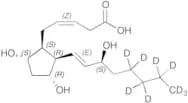
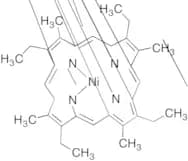
CAS:Producto controladoFórmula:C18D9H21O5Forma y color:NeatPeso molecular:335.483Etioporphyrin I Nickel
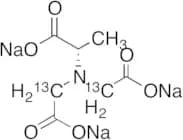
CAS:Producto controladoFórmula:C32H36N4NiForma y color:NeatPeso molecular:535.348N,N-Bis(carboxymethyl-13C)-L-alanine
CAS:Producto controladoFórmula:C513C2H11NO6Forma y color:Off White SolidPeso molecular:273.10p-Cresol-(methyl-13C)
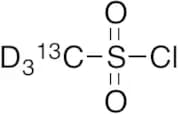
CAS:Producto controlado<p>Applications The formation of p-Cresol-(methyl-13C) via phenol methylation at higher temperature from the deactivation of basic catalyst.<br> Not a dangerous good if item is equal to or less than 1g/ml and there is less than 100g/ml in the package<br>References Borodina, I. B., et al.: Russ. J. Phys. Chem., 80, 892-898 (2006)<br></p>Fórmula:CC6H8OForma y color:NeatPeso molecular:109.13Methanesulfonyl Chloride-d3,13C
CAS:Fórmula:C2H3ClO2SForma y color:Colourless OilPeso molecular:118.56Naphthalene
CAS:<p>Naphthalene is a chemical that is used for wastewater treatment and as a pesticide. It is also used in the manufacturing of polymers, resins, and plastics. Naphthalene has antimicrobial properties due to its hydrophobic effect. Naphthalene's antimicrobial activity is based on its ability to react with the skeleton of bacterial cells and disrupt the integrity of their outer membrane. Naphthalene also interacts with proteins and DNA, causing cell death. The molecular mechanisms of naphthalene's antibacterial activity are not well understood but have been studied using Hl-60 cells, which are immortalized human monocytic leukemia cells. This study showed that naphthalene affects the cell cycle by inhibiting protein synthesis in bacteria through binding to ribosomes or by disrupting the dna replication process.</p>Fórmula:C10H8Pureza:Min. 95%Peso molecular:128.17 g/molRef: 3D-FN10260
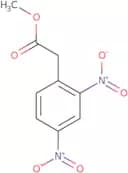
Producto descatalogadoMethyl (2,4-dinitrophenyl)acetate
CAS:<p>Please enquire for more information about Methyl (2,4-dinitrophenyl)acetate including the price, delivery time and more detailed product information at the technical inquiry form on this page</p>Fórmula:C9H8N2O6Pureza:Min. 95%Peso molecular:240.17 g/molRef: 3D-FM131241
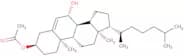
Producto descatalogado7b-Hydroxy cholesterol 3b-acetate
CAS:Producto controlado<p>7b-Hydroxy cholesterol 3b-acetate is an allylic compound that is catalyzed by molybdenum, which eliminates the acetyl group at position 7 to form a double bond with the 3-position. The reaction temperature of 7b-hydroxy cholesterol 3b-acetate can be increased to high temperatures (i.e., >100°C) for the elimination process, and allylic acetates are obtained as products. The reaction starts with the addition of hexacarbonyl, which leads to a diene intermediate. This is then eliminated by adding acetamide in presence of high concentration of acetic acid and catalytic amounts of molybdenum. The low yield and efficiency, however, are major drawbacks of this process.</p>Fórmula:C29H48O3Pureza:Min. 95%Peso molecular:444.69 g/molRef: 3D-FH23948
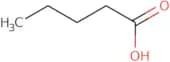
Producto descatalogadoValeric acid
CAS:<p>Valeric acid is a fatty acid that is used in the manufacture of polymers. Valeric acid can be synthesized from caproic acid, which is found in palm oil and coconut oil. Valeric acid has been shown to inhibit the activity of nicotinic acetylcholine receptors at low concentrations and to have an inhibitory effect on the ryanodine receptor at high concentrations. Valeric acid also has a matrix effect on analytical methods such as gas-liquid chromatography, which has been modeled using polymer compositions.</p>Fórmula:C5H10O2Pureza:Min. 95%Peso molecular:102.13 g/molRef: 3D-FV34914
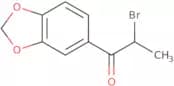
Producto descatalogado2-Bromo-3',4'-(methylenedioxy)propiophenone
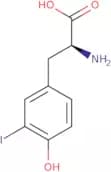
CAS:Producto controlado<p>Please enquire for more information about 2-Bromo-3',4'-(methylenedioxy)propiophenone including the price, delivery time and more detailed product information at the technical inquiry form on this page</p>Fórmula:C10H9BrO3Pureza:Min. 95%Forma y color:PowderPeso molecular:257.08 g/mol3-Iodo-L-tyrosine
CAS:<p>Please enquire for more information about 3-Iodo-L-tyrosine including the price, delivery time and more detailed product information at the technical inquiry form on this page</p>Fórmula:C9H10INO3Pureza:Min. 96.0 Area-%Forma y color:PowderPeso molecular:307.09 g/molRef: 3D-FI12110
Producto descatalogado

![[4S-(4a,7b,7aa)]-7,7a-Dihydro-7-hydroxy-4-methoxy-4H-furo[3,2-c]pyran-2(6H)-one-13C3](/_next/image/?url=https%3A%2Fstatic.cymitquimica.com%2Fproducts%2FTR%2Fthumb-webp%2FD449413.webp&w=3840&q=75)