Glycoscience
La glicociencia es el estudio de los carbohidratos y sus derivados, así como de las interacciones y funciones biológicas en las que participan. Este campo de investigación es crucial para comprender una amplia variedad de procesos biológicos, incluyendo el reconocimiento celular, la señalización, la respuesta inmune y el desarrollo de enfermedades. La glicociencia tiene aplicaciones importantes en la biotecnología, la medicina, y el desarrollo de nuevos fármacos y terapias. En CymitQuimica, ofrecemos una amplia selección de productos de alta calidad y pureza para la investigación en glicociencia. Nuestro catálogo incluye monosacáridos, oligosacáridos, polisacáridos, glicoconjugados, y reactivos específicos, diseñados para apoyar a los investigadores en sus estudios sobre la estructura, función y aplicaciones de los carbohidratos en sistemas biológicos. Estos recursos están destinados a facilitar descubrimientos científicos y aplicaciones prácticas en diversas áreas de la biociencia y la medicina.
Subcategorías de "Glycoscience"
- Aminoazúcares(108 productos)
- Anticuerpos relacionados con azúcares(282 productos)
- Glicolípidos(46 productos)
- Glicosaminoglicanos (GAGs)(55 productos)
- Glucósidos(419 productos)
- Monosacáridos(6.624 productos)
- Oligosacáridos(3.682 productos)
- Polisacáridos(503 productos)
Se han encontrado 11046 productos de "Glycoscience"
Ordenar por
Pureza (%)
0
100
|
0
|
50
|
90
|
95
|
100
2,3,6,2',3',6',2'',3'',4'',6''-Deca-O-acetyl-a-D-maltotriosyl bromide
2,3,6,2',3',6',2'',3'',4'',6''-Deca-O-acetyl-a-D-maltotriosyl bromide is an acetylated and fluorinated oligosaccharide that has been prepared by a click reaction. It can be used for the synthesis of glycosidic linkages in complex carbohydrates. This product is available as a custom synthesis.Pureza:Min. 95%Topiramate D-galactopyranose
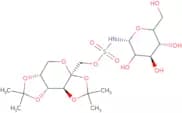
<p>Topiramate D-galactopyranose is a custom synthesis, modification, fluorination, methylation and monosaccharide. It is synthesized by clicking modification and oligosaccharide. Topiramate D-galactopyranose has CAS No. and polysaccharide. This product has sugar and complex carbohydrate. It can be used as a fluoroquinolone antibiotic for the treatment of bacterial infections such as tuberculosis, leprosy, mycobacterium avium complex, or staphylococcus aureus infection.<br>!--</p>Fórmula:C18H31NO13SPureza:Min. 95%Peso molecular:501.5 g/mol4-O-Benzyl-2-O-levulinoyl-3-O-para-methoxybenzyl-a-L-rhamnopyranosyl trichloroacetimidate
4-O-Benzyl-2-O-levulinoyl-3-O-para-methoxybenzyl-a-L-rhamnopyranosyl trichloroacetimidate is a synthetic sugar that has been fluorinated and methylated. It has been custom synthesized for use in glycosylation and is also used as a reagent for click chemistry to modify complex carbohydrates. This compound is available with high purity, which is determined by its chemical composition, including the absence of impurities and the presence of only one type of atom. 4-O-Benzyl--2--O--levulinoyl--3--O--para--methoxybenzyl--a--L--rhamnopyranosyl trichloroacetimidate can be found on CAS registry number 10082282.Fórmula:C28H32Cl3NO8Pureza:Min. 98 Area-%Peso molecular:616.91 g/molL-Rhamnose monohydrate - high purity
CAS:<p>L-Rhamnose monohydrate is a sugar that is found in plants, animals, and bacteria. It is a component of polysaccharides like cellulose and hemicellulose. L-Rhamnose monohydrate has been shown to stimulate the growth of probiotic bacteria like Lactobacillus acidophilus in vitro. It also has antiviral properties against the herpes simplex virus type 1 (HSV-1). The antiviral activity may be due to its ability to inhibit viral replication by interfering with the synthesis of viral DNA and RNA. L-Rhamnose monohydrate may also have anti-inflammatory effects due to its ability to inhibit prostaglandin synthesis through inhibition of cyclooxygenase enzyme activity. This product has applications as a dietary supplement and ingredient in functional foods or beverages.</p>Fórmula:C6H12O5•H2OPureza:Min. 98.0 Area-%Forma y color:PowderPeso molecular:182.17 g/molGQ3-Oligosaccharide
GQ3 oligosaccharide is the carbohydrate moiety in the GQ3 ganglioside. Breast cancer cells MCF-7 were found to express a complex pattern of neutral and sialylated glycosphingolipids from the globo- and ganglio-series, including unusual tetrasialylated and pentasialylated lactosylceramide derivatives, and GQ3 (II3Neu5Ac4-Gg2Cer) (Steenackers, 2012).Fórmula:C56H86N4O43Na4Pureza:Min. 95%Peso molecular:1,595.24 g/mol3,4,6-Tri-O-acetyl-2-azido-2-deoxy-β-D-galactopyranosyl trichloroacetimidate
CAS:3,4,6-Tri-O-acetyl-2-azido-2-deoxy-beta-D-galactopyranosyl trichloroacetimidate is a custom synthesis that has been modified with fluorination and methylation. It is a monosaccharide containing the sugar galactose and it can be found in a saccharide or polysaccharide. This compound was synthesized using click chemistry.Fórmula:C14H17Cl3N4O8Pureza:Min. 95 Area-%Peso molecular:475.67 g/molChitosan oligosaccharide HCl
CAS:Chitosan oligosaccharide HCl is a water-soluble, biocompatible polymer with an average molecular weight of 2,000. It has been shown to have hypoglycemic effects in vivo and inhibitory properties against inflammatory bowel disease. Chitosan oligosaccharide HCl also exhibits an ability to enhance the activity of monoclonal antibodies directed against human tumor cells. This effect may be due to the ability of chitosan oligosaccharide HCl to bind to antigens on the surface of tumor cells and facilitate antibody binding.Fórmula:(C12H24N2O9)nForma y color:Off-White PowderMethyl 2,3:4,6-di-O-isopropylidene-D-mannopyranoside
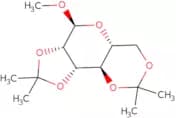
CAS:Methyl 2,3:4,6-di-O-isopropylidene-D-mannopyranoside is a synthetic glycosylate sugar that has been modified with fluorination. It is a monosaccharide that is used in the synthesis of complex carbohydrates. Click modification of this molecule has been performed to yield high purity and desired modifications. CAS number 50705-56-1.Fórmula:C13H22O6Pureza:Min. 95%Forma y color:PowderPeso molecular:274.31 g/mol2,3,4,6-Tetra-O-acetyl-1-deoxy-D-arabino-hex-1-enopyranose
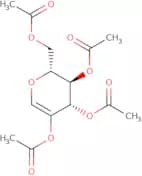
CAS:Tetra-O-acetyl-1-deoxy-D-arabinohexopyranose is a boron trifluoride etherate method for the synthesis of tetraacetylated 1-deoxyhexopyranoses. The yield of this reaction is dependent on the formamide concentration and the hydrogenation time. When formamide is used, the yields are greater than when it is not. This product can be used in a variety of reactions such as the synthesis of 2,3,4,6-tetraiodo-, 2,3,4,6-tetrahalogeno-, or 2,3,4,-trihalogeno hexoses by substitution with iodine or chlorine. Tetraacetylated 1-deoxyhexopyranoses can also be used to synthesize ethanethiols and other alcohols by elimination reactions.Fórmula:C14H18O9Forma y color:White PowderPeso molecular:330.29 g/mol2-Acetamido-3,4,6-tri-O-acetyl-2-deoxy-b-D-glucopyranosyl isothiocyanate
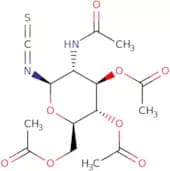
CAS:2-Acetamido-3,4,6-tri-O-acetyl-2-deoxy-b-D-glucopyranosyl isothiocyanate is a synthetic glycosylating agent that has been shown to be effective in the synthesis of complex carbohydrates. It is used for the modification of saccharides and polysaccharides with click chemistry. Click chemistry is an organic reaction that synthesizes carbon–carbon bonds by the addition of a copper catalyst at room temperature without the need for high energy input. 2AATIGI can also be used to modify oligosaccharides and glycosylates proteins. For example, this compound was found to be effective in modifying a protein with a carbohydrate moiety that was derived from 2′,3′,5′ triacetylhexaose (2T3H).Fórmula:C15H20N2O8SPureza:Min. 95%Forma y color:Off-White PowderPeso molecular:388.39 g/molBenzyl b-D-glucopyranoside
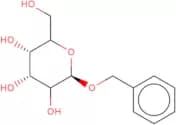
CAS:<p>Benzyl b-D-glucopyranoside is an organic solvent that can be used in chromatography. It is a disaccharide that consists of benzyl alcohol and glucose. Benzyl b-D-glucopyranoside has been shown to have inhibitory activities against glycosidation and β-amyrin synthesis, as well as other biochemical techniques. This compound has also been shown to have carbohydrate antigen activity, which may be due to its benzyl group.</p>Fórmula:C13H18O6Pureza:Min. 95%Forma y color:White Off-White PowderPeso molecular:270.28 g/molmyo-Inositol trispyrophosphate hexasodium salt
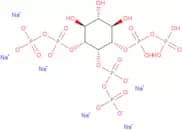
CAS:Myo-Inositol trispyrophosphate (ITPP) hexasodium salt is a drug with anti-cancer properties. It is an allosteric effector that interact with hemoglobin, releasing oxygen into the target tissues to avoid hypoxia. Several studies has shown an increase on the affinity of hemoglobin to oxygen when using ITPP, fact that demonstrated it can be a good strategy for the treatment of several cardiovascular diseases.Fórmula:C6H6Na6O21P6Pureza:Min. 95%Forma y color:White Off-White PowderPeso molecular:737.88 g/molSucrose octasulfate ammonium
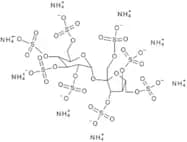
CAS:This comound is generally known as sucralfates and are medications primarily taken to treat active duodenal ulcers. They are also used for the treatment of gastroesophageal reflux disease (GERD) and stress ulcers. Sucralfate is a sucrose sulfate-aluminium complex that binds to the ulcer, creating a physical barrier that protects the gastrointestinal tract from stomach acid and prevents the degradation of mucus. It also promotes bicarbonate production and acts like an acid buffer with cytoprotective properties.Fórmula:C12H22O35S8•(H3N)8Pureza:Min. 98 Area-%Forma y color:White PowderPeso molecular:1,119.05 g/molTragacanth gum
CAS:Gum tragacanth is an exudate gum from species of Astragalus trees mainly grown in Iran and Turkey. Tragacanth finds applications as an effective emulsifying and thickening agent in the food and pharmaceutical industries. The gum is a slightly acidic salt consisting of two fractions namely the water soluble tragacanthin and the fraction bassorin which swells in water to form a gel. Water soluble tragacanthin is reported as a branched arabiogalactan which is soluble in 70% ethanol. The acidic bassorin has a chain of (1,4)-linked a-D-galacturonic acid units some of which are substituted at O-3 with β-D-xylopyranosyl units and some of these being terminated with galactose or fucose.Forma y color:White PowderForssman antigen pentaose
CAS:Tumor associated antigen and target for the development of anti-cancer vaccinesFórmula:C34H58N2O26Pureza:Min. 90 Area-%Forma y color:White PowderPeso molecular:910.82 g/molFA2B Glycan, 2-AB labelled
This is a monosaccharide with 2-AB labelled. It is a modification of the oligosaccharide, carbohydrate, complex carbohydrate, and custom synthesis. This product has high purity and CAS No. It is methylated and glycosylated. The product is fluorinated and saccharide.Pureza:Min. 95%1,4-Dideoxy-1,4-imino-D-mannitol HCl
CAS:1,4-Dideoxy-1,4-imino-D-mannitol HCl is a custom synthesis, modification and fluorination of mannitol. This compound is synthesized by the click modification of a monosaccharide and oligosaccharide. It is a saccharide with an average molecular weight of 584.45 g/mol. 1,4-Dideoxy-1,4-imino-D-mannitol HCl has been used to study glycosylation and sugar binding in carbohydrate research. CAS No.: 114976-76-0Fórmula:C6H13NO4·HClPureza:Min. 95%Forma y color:PowderPeso molecular:199.63 g/molHydroxyethyl cellulose - Viscosity 2400 to 2800(1% aqueous solution)
CAS:<p>Water thickener; rheological control additive; has industrial appplications</p>Pureza:Min. 95%4-Hydroxyestradiol 4-O-β-D-glucuronide sodium Salt
CAS:<p>4-Hydroxyestradiol 4-O-beta-D-glucuronide sodium salt is a custom synthesis of complex carbohydrates. This product is an Oligosaccharide, Polysaccharide, and Modification. It is made up of saccharides (sugar) and Carbohydrate. It has the CAS number 85359-06-4, which can be found on the Chemical Abstracts Service website. 4-Hydroxyestradiol 4-O-beta-D-glucuronide sodium salt is also Click modified with fluorine and synthetic. It has a purity of high purity and can be used for methylation and glycosylation reactions.</p>Fórmula:C24H32O9NaPureza:Min. 95%Peso molecular:487.5 g/mol2-Azidoethyl 2,3,4,6-tetra-O-acetyl-a-D-mannopyranoside
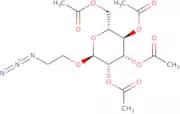
CAS:2-Azidoethyl 2,3,4,6-tetra-O-acetyl-a-D-mannopyranoside is a custom synthesis. It is a complex carbohydrate that has been modified with glycosylation and methylation. This saccharide is a glycoside of the simple sugar mannose and the amino acid 2-azidoethanol. The compound has been fluorinated to yield a stable molecule. This product is of high purity and can be used in the synthesis of other compounds.Fórmula:C16H23N3O10Pureza:Min. 95 Area-%Forma y color:PowderPeso molecular:417.37 g/mol