Glycoscience
La glicociencia es el estudio de los carbohidratos y sus derivados, así como de las interacciones y funciones biológicas en las que participan. Este campo de investigación es crucial para comprender una amplia variedad de procesos biológicos, incluyendo el reconocimiento celular, la señalización, la respuesta inmune y el desarrollo de enfermedades. La glicociencia tiene aplicaciones importantes en la biotecnología, la medicina, y el desarrollo de nuevos fármacos y terapias. En CymitQuimica, ofrecemos una amplia selección de productos de alta calidad y pureza para la investigación en glicociencia. Nuestro catálogo incluye monosacáridos, oligosacáridos, polisacáridos, glicoconjugados, y reactivos específicos, diseñados para apoyar a los investigadores en sus estudios sobre la estructura, función y aplicaciones de los carbohidratos en sistemas biológicos. Estos recursos están destinados a facilitar descubrimientos científicos y aplicaciones prácticas en diversas áreas de la biociencia y la medicina.
Subcategorías de "Glycoscience"
- Aminoazúcares(108 productos)
- Anticuerpos relacionados con azúcares(284 productos)
- Glicolípidos(46 productos)
- Glicosaminoglicanos (GAGs)(55 productos)
- Glucósidos(419 productos)
- Monosacáridos(6.623 productos)
- Oligosacáridos(3.688 productos)
- Polisacáridos(506 productos)
Se han encontrado 11039 productos de "Glycoscience"
Ordenar por
Pureza (%)
0
100
|
0
|
50
|
90
|
95
|
100
myo-Inositol 1,2,3,4,6-pentakisphosphate
CAS:Myo-inositol 1,2,3,4,6-pentakisphosphate is a compound that belongs to the group of myo-inositols. It can be isolated from rice bran or synthesized by reacting inositol with phosphoric acid. Myo-Inositol 1,2,3,4,6-pentakisphosphate has been shown to be an analog of myo-inositol and has a similar chromatographic profile. This compound also has the ability to dephosphorylate diacylglycerol (DAG) and reduce its levels in cells. Myo-inositol 1,2,3,4,6-pentakisphosphate can be quantified by reversed phase high performance liquid chromatography (RP-HPLC). The result can then be used to calculate the concentration of DAG in cells based on the standard curve obtained from the quantification of DAG inFórmula:C6H17O21P5Pureza:Min. 95%Peso molecular:580.06 g/mol4-Methylphenyl b-D-thioglucuronide methyl ester
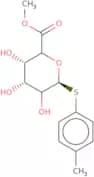
4-Methylphenyl b-D-thioglucuronide methyl ester is a Carbohydrate, Modification, saccharide, Oligosaccharide, sugar. It is a synthetic monosaccharide that has been modified with fluorination and methylation. This chemical is typically used as a reagent in glycosylation reactions to synthesize complex carbohydrates.Fórmula:C14H18O6SPureza:Min. 95%Peso molecular:314.36 g/mol1,2,4,6-Tetra-O-acetyl-3-deoxy-3-N-(4-nitrobenzamido)-D-galactopyranose
CAS:1,2,4,6-Tetra-O-acetyl-3-deoxy-3-N-(4-nitrobenzamido)-D-galactopyranose is a sugar that has been modified with methylation, click modification, and fluorination. This sugar is a carbohydrate that consists of a monosaccharide unit of galactose. It is synthesized from D-galactopyranose in the presence of methyl iodide and 4-nitrobenzamido anhydride. The synthesis follows an acetal formation reaction between 3,4-diacetoxybenzoic acid and D-galactopyranose. 1,2,4,6-Tetra-O-acetyl 3DGPA reacts with methyl iodide to form the corresponding 2-(methylthio)acetate (MTAA). The MTAA reacts with 4 nitrobenzamido anhydFórmula:C21H24N2O12Pureza:Min. 95%Peso molecular:496.42 g/mol1,2-13C-D-Mannose
1,2-13C-D-Mannose is a synthetic monosaccharide that is used as a building block for oligosaccharides and polysaccharides. It has been modified with fluorination, methylation, and click chemistry to yield a complex carbohydrate with high purity. The 13C isotope can be labeled in the 2 position of the mannose ring or at the C1 position of the glucose moiety.
Fórmula:C2C4H12O6Pureza:Min. 95%Forma y color:White PowderPeso molecular:182.14 g/molEthyl 2,4,6-tri-O-acetyl-a-D-thiomannopyranoside
CAS:Ethyl 2,4,6-tri-O-acetyl-a-D-thiomannopyranoside is a custom synthesized compound that is a complex carbohydrate. It is an oligosaccharide that has been modified with methylation and glycosylation. This compound is also a polysaccharide and it has been modified with fluorination. Ethyl 2,4,6-tri-O-acetyl-a-D-thiomannopyranoside can be used as a sweetener for food products or as an additive for pharmaceuticals to increase their sweetness. The CAS number for this compound is 1637783-63-1.Fórmula:C14H22O8SPureza:Min. 95%Peso molecular:350.39 g/molMethyl 3,4-isopropylidene-b-L-arabinopyranoside
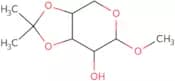
CAS:Methyl 3,4-isopropylidene-b-L-arabinopyranoside is a synthetic saccharide that has been modified by the Click chemistry. Click modification is a method of modifying a complex carbohydrate with a reactive group (e.g., an azide) at one end of the molecule and an electrophile at the other end of the molecule. The resulting product can be used in glycosylation reactions to form complex carbohydrates with various properties. Methyl 3,4-isopropylidene-b-L-arabinopyranoside is used as a precursor for the synthesis of oligosaccharides and polysaccharides. It also has been shown to be effective as an inhibitor of bacterial growth in vitro by inhibiting protein synthesis.Fórmula:C9H16O5Pureza:Min. 95%Peso molecular:204.22 g/mol2-Amino-2-deoxy-D-ribose hydrochloride
CAS:2-Amino-2-deoxy-D-ribose hydrochloride is a synthetic sugar that can be used to produce oligosaccharides and polysaccharides. It has been shown to have high purity and to be custom synthesized as per requirements. This sugar can also be modified with fluorination, methylation, or click modification.Fórmula:C5H11NO4•HClPureza:Min. 95%Forma y color:PowderPeso molecular:185.61 g/molHyaluronate biotin - Molecular Weight - 500kDa
Hyaluronate biotin is a high purity and complex carbohydrate. It is synthesized by methylation, saccharide, polysaccharide, and glycosylation of natural hyaluronic acid. Hyaluronate biotin is a modified form of hyaluronic acid that contains an additional biotin molecule per every 500 kDa of molecular weight. This modification can be used in the development of new drugs or as a supplement to improve joint health.Pureza:Min. 95%Sucrose octasulfate octatriethylammonium salt
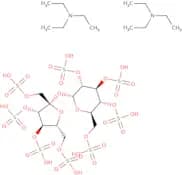
CAS:Used for treatment of duodenal ulcers and gastroesophageal refluxFórmula:C12H22O35S8•(C6H15N)8Pureza:Min. 95%Forma y color:PowderPeso molecular:982.81 g/mol1,3,6-Tri-O-acetyl-2,4-di-O-benzyl-a-D-glucopyranose
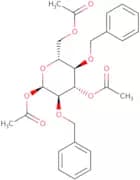
CAS:Glycosylation is a process by which glucose molecules are covalently attached to other molecules, such as proteins or lipids. This process can be accomplished through the addition of a phosphate group to the glucose molecule. The Methylation, Click modification, and Polysaccharide reactions are all methods of modifying glycosides. Glycosylation is an important part of many biological processes such as cell growth and repair, the immune response, and blood clotting. Fluorination is a chemical reaction between fluorine and another element or compound in which one or more atoms of fluorine replace hydrogen atoms on the other element or compound. This process has been used for the synthesis of carbohydrates with specific properties that may not be found in nature. The CAS number for 1,3,6-Tri-O-acetyl-2,4-di-O-benzyl-a-D-glucopyranose is 79414-66-7. This productFórmula:C26H30O9Pureza:Min. 95%Peso molecular:486.51 g/molPiceatannol 3'-O-glucoside
CAS:Piceatannol 3'-O-glucoside is a natural compound that is found in grape seeds. It has been shown to have the ability to inhibit the activity of matrix metalloproteinase (MMP)-9, which damages the extracellular matrix and promotes tumor growth. Piceatannol 3'-O-glucoside also inhibits the expression of MMP-9 at the transcriptional level. This compound also blocks the activation of PDGF and its downstream signaling pathway, leading to decreased cell proliferation and cell death. Piceatannol 3'-O-glucoside may be a potential treatment for various diseases, such as cancer, high blood pressure, nervous system diseases, or other conditions where MMP-9 activity is increased.Fórmula:C20H22O9Pureza:Min. 95%Forma y color:SolidPeso molecular:406.38 g/molGalacto-N-biose-PAA-biotin
Galacto-N-biose-PAA-biotin is a carbohydrate that is synthesized by the addition of PAA (polyallylamine) to galactose. This compound can be used in fluorescence labeling and detection of carbohydrates, glycosylation, and polysaccharide synthesis. Galacto-N-biose-PAA-biotin has a CAS number (CAS: 146988-01-4).Pureza:Min. 95%Forma y color:White/Off-White SolidErigeside C
CAS:Erigeside C is a flavonoid derivative that has been shown to be effective in treating allergic symptoms. Erigeside C inhibits the production of various pro-inflammatory cytokines, such as IL-6 and TNF-α, by inhibiting the activity of protein kinase C (PKC). The compound also inhibits the production of prostaglandin E2 by inhibiting cyclooxygenase-2. In addition, Erigeside C is able to inhibit the release of histamine from mast cells. This antihistamine effect is due to its ability to inhibit oxidation reactions in the cell membrane and block cellular calcium channels.Pureza:Min. 95%L-Xylose-BSA
L-Xylose-BSA is a glycosylation product that has been modified with methylation, click modification, and fluorination. The compound is a complex carbohydrate that is classified as a polysaccharide. L-Xylose-BSA is a monosaccharide that has been synthesized using the Custom synthesis and high purity techniques. This saccharide is used in various types of research including glycosylation, methylation, click modification, and fluorination. L-Xylose-BSA can also be found under CAS No. 6525-83-8 or EC No. E 1451/1.Pureza:Min. 95%Benzyl 2-acetamido-2-deoxy-D-glucopyranoside
CAS:Benzyl 2-acetamido-2-deoxy-D-glucopyranoside is a fluorinated glycosylation reagent that has been developed for the synthesis of complex carbohydrates, oligosaccharides, and saccharides. This compound is also useful in the modification of natural products and as a synthetic intermediate. Benzyl 2-acetamido-2-deoxy-D-glucopyranoside is an excellent substrate for Click chemistry, which can be used to modify saccharide units. The purity of this product is high, with no detectable impurities.Fórmula:C15H21NO6Pureza:Min. 95%Peso molecular:311.33 g/mol3'-Sialyllactosyl azide
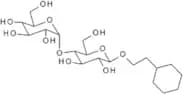
3'-Sialyllactosyl azide is a complex carbohydrate that is modified with fluorination, saccharide modification, and methylation. 3'-Sialyllactosyl azide is synthesized from a monosaccharide by glycosylation, methylation, click modification, or polysaccharides. The CAS number for this compound is 814-07-1. This product can be custom synthesized to meet the customer's needs.Pureza:Min. 95%2-Cyclohexylethyl-4-O-(a-D-glucopyranosyl)-b-D-glucopyranoside
CAS:Oroxylum indicum is a plant that belongs to the family Bignoniaceae. It has been used in traditional medicine for the treatment of cancer and has been shown to possess anti-inflammatory properties. The sequenced genome of Oroxylum indicum has provided a model system for understanding the molecular mechanisms underlying tumorigenesis. This plant contains a number of monoclonal antibodies, including one that is active against mouse monoclonal antibodies and inhibits tumor xenografts. The extract of this plant also inhibits influenza virus and polymerase chain reactions, which are important steps in protein synthesis. Oroxylum indicum may have therapeutic potential as an anti-cancer drug because it can inhibit solid tumours by interfering with protein synthesis.Fórmula:C20H36O11Pureza:Min. 95%Forma y color:PowderPeso molecular:452.49 g/molMan-6 N-Glycan
CAS:Man-6 N-Glycan is a custom synthesis of an oligosaccharide. It is also classified as a polysaccharide and carbohydrate. The glycosylation of this product involves the addition of a sugar to the glycan, which is then modified by methylation or fluorination. This product has been shown to be stable in a buffer solution at pH 7 and can be used for click chemistry. The purity is high with no detectable impurities.Fórmula:C52H88N2O41Pureza:Min. 95%Forma y color:PowderPeso molecular:1,397.24 g/molParomamine trihydrochloride
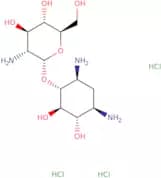
CAS:Paromamine trihydrochloride is a Custom synthesis, Modification, Fluorination, Methylation, Monosaccharide, Synthetic, Click modification of the chemical compound. Paromamine trihydrochloride is an Oligosaccharide and saccharide that has been Glycosylated. The Carbohydrate complex is made up of a number of sugar units that are linked together to form a polysaccharide. This Polysaccharide can be found in many plants and animals.Fórmula:C12H25N3O7•(HCl)3Pureza:Min. 95%Forma y color:PowderPeso molecular:432.72 g/molL-Idonic acid-1,4-lactone
CAS:L-Idonic acid-1,4-lactone is a custom synthesis that is a glycoconjugate with a carbohydrate moiety. It can be used for the modification of glycoproteins and glycopeptides, and has shown to have anti-inflammatory properties. L-Idonic acid-1,4-lactone is a sugar that is made up of an idonic acid attached to an alpha (1→4)-linked D-glucose molecule. This product can be methylated or glycosylated and has been shown to have anticancer activity in animal models. L-Idonic acid-1,4-lactone is soluble in water and has been fluorinated at the 4 position on the glucose unit.Fórmula:C6H10O6Pureza:Min. 95%Peso molecular:178.14 g/mol