Glycoscience
La glicociencia es el estudio de los carbohidratos y sus derivados, así como de las interacciones y funciones biológicas en las que participan. Este campo de investigación es crucial para comprender una amplia variedad de procesos biológicos, incluyendo el reconocimiento celular, la señalización, la respuesta inmune y el desarrollo de enfermedades. La glicociencia tiene aplicaciones importantes en la biotecnología, la medicina, y el desarrollo de nuevos fármacos y terapias. En CymitQuimica, ofrecemos una amplia selección de productos de alta calidad y pureza para la investigación en glicociencia. Nuestro catálogo incluye monosacáridos, oligosacáridos, polisacáridos, glicoconjugados, y reactivos específicos, diseñados para apoyar a los investigadores en sus estudios sobre la estructura, función y aplicaciones de los carbohidratos en sistemas biológicos. Estos recursos están destinados a facilitar descubrimientos científicos y aplicaciones prácticas en diversas áreas de la biociencia y la medicina.
Subcategorías de "Glycoscience"
- Aminoazúcares(108 productos)
- Anticuerpos relacionados con azúcares(282 productos)
- Glicolípidos(46 productos)
- Glicosaminoglicanos (GAGs)(55 productos)
- Glucósidos(419 productos)
- Monosacáridos(6.624 productos)
- Oligosacáridos(3.682 productos)
- Polisacáridos(503 productos)
Se han encontrado 11046 productos de "Glycoscience"
Ordenar por
Pureza (%)
0
100
|
0
|
50
|
90
|
95
|
100
Fucoidan, Lessonia nigrescens
CAS:A fucan sulphate found in brown marine algae (Phaeophyta-typically Fucus vesiculotus, Ascophyllum nodosum, Alaria and Lessonia nigrescens (illustrated) and has been shown to have anticoagulant activity. The main constituents are α-1,4 and α-1,2 linked L-fucose sulphates although galactose also occurs and there are many variations of the basic structure found in different species of Phaeophyta. The image was kindly provided by Prof Mike Guiry from Cork who runs ‘The Seaweed Site’.Pureza:Min. 95%Forma y color:White PowderOnitin 2'-O-glucoside
CAS:Onitin 2'-O-glucoside is a sugar that is custom synthesized and purified. It is a modification of oligosaccharides, complex carbohydrates, and polysaccharides. Onitin 2'-O-glucoside is an Oligosaccharide Carbohydrate which can be used in the synthesis of high purity monosaccharides and methylations. It also has the ability to form glycosylation with saccharides, such as glucose or fructose. This product can also be fluorinated to produce saccharides that are water soluble.Pureza:Min. 95%Lipid IVa
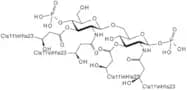
CAS:Lipid IVA is a tetra-acylated precursor molecule of lipid A which is a component of lipopolysaccharides (LPS) on the outer membrane of gram-negative bacteria. On the innate immune cells of hosts there are toll-like receptor 4 (TLR4) and MD-2 which recognize LPS. This recognition event ultimately leads to the activation of NFκB which in turn results in pro-inflammatory cytokine production. Studies have suggested lipid A in Escherichia coli to be an agonist for both mouse and human TLR4, while lipid IVA can induce species specific TLR4 responses. For example for horse and mouse TLR4 and MD-2, Lipid IVA is an agonist where as it is an antagonist for TLR4 and MD-2 in humans.Fórmula:C68H130N2O23P2Pureza:One Main SpotForma y color:White PowderPeso molecular:1,405.7 g/mol1,2,3,4,6-Penta-O-acetyl-D-galactopyranose
CAS:1,2,3,4,6-Penta-O-acetyl-D-galactopyranose is an analog of the natural pentoses that binds to the mitochondrial membrane and inhibits the production of pro-inflammatory cytokines. This drug has been shown to inhibit the binding of lysophosphatidic acid (LPA) to its receptor by substituting for LPA in this binding site. 1,2,3,4,6-Penta-O-acetyl-D-galactopyranose also inhibits the expression of proinflammatory cytokines such as interleukin 6 (IL6) and IL1β in a dose dependent manner. This drug is also capable of inhibiting phosphotungstic acid from binding to a monolayer surface and can be used as a glycopolymer for cell culture. It has been shown that 1,2,3,4,6-Penta-O-acetylFórmula:C16H22O11Pureza:Min. 95%Forma y color:PowderPeso molecular:390.34 g/mol2-N-Chloroacetyl-2-deoxy-D-glucosamine
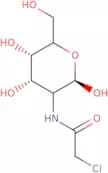
CAS:2-N-Chloroacetyl-2-deoxy-D-glucosamine is a high purity synthetic molecule that is custom synthesized to meet your needs. This product is a sugar with the following Click modification, fluorination, glycosylation, and methylation. 2-N-Chloroacetyl-2-deoxy-D-glucosamine has CAS No. 1334320-67-0. The molecular weight of this compound is 514.25 g/mol. This product can be used in the synthesis of oligosaccharides and monosaccharides as well as saccharides, which are complex carbohydrates.Fórmula:C8H14ClNO6Pureza:Min. 95%Forma y color:PowderPeso molecular:255.65 g/molMaltotridecaose
CAS:Maltotridecaose is a sugar alcohol with an acceptor group that can be introduced into a cavity in a molecule. It is a sweetener that has been shown to have oligosaccharide properties, which are the molecules that comprise dietary carbohydrates. Maltotridecaose can be found as an unlabeled ingredient in foods such as sugar-free chewing gum, chocolate, and ice cream. The debranching of maltotridecaose occurs by way of glucans and licheniformis.Fórmula:C78H132O66Pureza:Min. 95%Forma y color:White/Off-White SolidPeso molecular:2,125.84 g/molBlood Group B type II linear trisaccharide
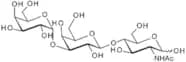
CAS:<p>Core antigen fragment in ABO blood group system</p>Fórmula:C20H35NO16Pureza:Min. 95%Forma y color:PowderPeso molecular:545.49 g/mol1,3,4,6-Tetra-O-galloyl glucose
CAS:Tetra-O-galloyl glucose is a pentagalloyl glucose that is found in the Chinese herb Paeonia lactiflora. It has been shown to inhibit the replication of hepatitis B virus, and can be used for the treatment of hepatitis B infection. Tetra-O-galloyl glucose also has anti-inflammatory activities, which may be due to its ability to inhibit prostaglandin synthesis.Fórmula:C34H28O22Pureza:Min. 95%Peso molecular:788.57 g/molChondroitin sulphate
CAS:Chondroitin sulphate is an inhibitor that has been extensively studied in human and animal models. This active agent has been shown to have a protein inhibitory effect on epithelial cells, as well as an inhibitory effect on cell growth in Chinese medicine and Chinese medicinal plants. Chondroitin sulphate has been found to exhibit inhibitory activity against endothelial cells, which may be due to its ability to inhibit the nuclear translocation of NF-κB. This compound can be detected by liquid chromatography and has been shown to have a significant inhibitory effect on the proliferation of HepG2 cells. Overall, chondroitin sulphate shows great potential for use in healthcare products aimed at regulating cell growth and inflammation.Pureza:ReportedForma y color:PowderDigalactosyldiacylglycerol - 10mg/ml in Chloroform-Methanol
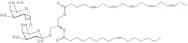
CAS:In plants and algae, the two main galactolipids, monogalactosyldiacyglycerol (MGDG) and digalactosyldiacyglycerol (DGDG), are synthesized by galactosyltransferases in the plastid envelope. They have been linked to the anti-inflammatory and cancer benefits of a green leafy vegetable diet in humans due to their ability to regulate the levels of free radicals like nitric oxide (NO)Fórmula:C51H84O15Pureza:Min. 95%Forma y color:PowderPeso molecular:937.2 g/molTetradecyl b-D-maltopyranoside
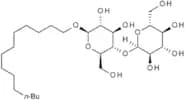
CAS:Tetradecyl b-D-maltopyranoside is a crystalline polymer of high molecular weight that is made up of repeating units of tetradecyl b-D-maltose. It has a lamellar morphology and can be sectioned with techniques such as electron microscopy, X-ray diffraction, and differential scanning calorimetry. Tetradecyl b-D-maltopyranoside is a metastable form of the compound. It has been found in nature in the form of the monomer unit, tetradecyl maltosyl (tetramethyleneglycol) b-d-maltoside. In order to produce this compound as a polymer, it must first be heated to about 160°C for several hours, which causes the monomers to assemble into chains of tetrahedrons. The properties of tetradecyl b-D-maltopyranoside depend on its environmentFórmula:C26H50O11Pureza:Min. 95 Area-%Forma y color:PowderPeso molecular:538.67 g/molL-Heptaguluronic acid heptasodium
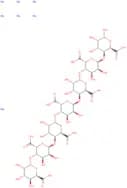
CAS:Please enquire for more information about L-Heptaguluronic acid heptasodium including the price, delivery time and more detailed product information at the technical inquiry form on this pageFórmula:C42H58O43•Na7Pureza:Min. 95%Peso molecular:1,411.81 g/molβ-1,3-Glucan
CAS:β-1,3-Glucan is a bioactive polysaccharide, which is located predominantly in the cell walls of yeast, fungi, and certain cereals. This compound is characterized by its unique branched structure, which is crucial for its biological function. The mode of action of β-1,3-Glucan involves the binding to specific receptors on immune cells, such as dectin-1, which triggers a cascade of immune responses. This interaction enhances the activity of macrophages, neutrophils, and natural killer cells, thus bolstering the body's innate immune defenses.The uses and applications of β-1,3-Glucan are broad, primarily focused on immunological research and potential therapeutic strategies. It is extensively utilized in studies examining its effects as an immunomodulator, leveraging its ability to potentiate immune system function and examining its role in adjunctive cancer therapies, where it may enhance the efficacy of certain treatments. Additionally, β-1,3-Glucan is investigated for its potential benefits in reducing infection rates and improving recovery times in clinical settings. Moreover, its applications in dietary supplements and functional foods continue to be a subject of scientific inquiry, aiming to harness its health-promoting properties within nutrition science.Pureza:Min. 95%Forma y color:PowderD-Glucose-6-phosphate barium hepthydrate
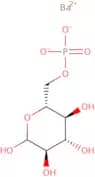
CAS:D-Glucose-6-phosphate barium salt is a custom synthesis that is prepared by modification of D-glucose with phosphoric acid, fluorination, methylation, and monosaccharide. This compound is a synthetic carbohydrate that belongs to the category of oligosaccharides and polysaccharides. It has a molecular weight of 583.12 g/mol and an empirical formula of C7H8O10P2Ba. The CAS number for this compound is 150400-00-3.Fórmula:C6H11BaO9P•(H2O)7Pureza:Min. 95%Forma y color:PowderPeso molecular:521.55 g/mola-D-Glucose
CAS:<p>Glucose is a monosaccharide that is an important source of energy for the human body. It is a simple sugar found in many carbohydrates and is the main form of fuel used by the brain. Glucose is also used as a chemical building block for polysaccharides such as glycogen, cellulose, and chitin. The hypoglycemic effect of glucose can be observed when blood glucose levels are below 70 mg/dL. This effect can be due to its ability to increase the production of insulin or decrease the rate of gluconeogenesis in liver cells. It also has been shown to have an inhibitory effect on some viruses and bacteria, which may be due to its ability to inhibit transcription activators or polymerase chain reactions.</p>Fórmula:C6H12O6Pureza:Min. 96 Area-%Forma y color:White PowderPeso molecular:180.16 g/molN-(Formylamidino)-N-b-D-ribofuranosylurea
CAS:<p>Please enquire for more information about N-(Formylamidino)-N-b-D-ribofuranosylurea including the price, delivery time and more detailed product information at the technical inquiry form on this page</p>Fórmula:C8H14N4O6Pureza:Min. 95%Peso molecular:262.22 g/molGlycosylceramide - from plant origin
CAS:Glucosylceramide (Glc-Cer) is the common precursor in the biosynthesis of most glycosphingolipids, with exception of some Gal-Cer derivatives, such as, GM4. Glucosylceramide consists of a glucosyl moiety which is β-O-glycosydically linked to ceramide, which itself, consists of the long-chain aminoalcohol sphingosine and a fatty acid. Glucosylceramide (also called glucocerebroside) is synthesised enzymatically, by the glucosylceramide synthase-catalysed with the addition of a glucose residue to ceramide. Glucosylceramide is involved in the regulation of various cellular events and also serves as a main constituent in liposome formulations.Fórmula:C40H75NO9Pureza:Min. 95%Peso molecular:714.02 g/mol1,3,4,6-Tetra-O-acetyl-2-azido-2-deoxy-D-galactopyranose
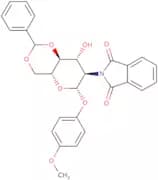
CAS:1,3,4,6-Tetra-O-acetyl-2-azido-2-deoxy-D-galactopyranose is a carbohydrate that has been shown to bind to the lectin domain of the human insulin receptor. This binding is thought to modulate the activity of this protein. The carbohydrate has also been shown to inhibit the uptake of galactose by pancreatic beta cells in vitro. 1,3,4,6-Tetra-O-acetyl-2-azido-2-deoxy-D-galactopyranose is postulated to have anti cancer properties and may be used as a blocker for tumor growth.Fórmula:C14H19N3O9Pureza:Min. 95%Forma y color:White PowderPeso molecular:373.32 g/mol4-Methoxyphenyl 4,6-O-benzylidene-2-deoxy-2-phthalimido-β-D-glucopyranoside
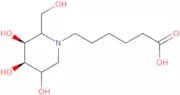
CAS:4-Methoxyphenyl 4,6-O-benzylidene-2-deoxy-2-phthalimido-b-D-glucopyranoside is an organic compound with the formula C13H14N4O8. It is a white solid that is soluble in water, methanol and ethanol. The compound has been synthesized using Click chemistry, fluorination, glycosylation, and methylation of the sugar. It has also been modified with an oligosaccharide and monosaccharide to form a complex carbohydrate.Fórmula:C28H25NO8Pureza:Min. 98 Area-%Forma y color:PowderPeso molecular:503.51 g/molN-5-Carboxypentyl-1-deoxygalactonojirimycin
CAS:N-5-Carboxypentyl-1-deoxygalactonojirimycin is an inhibitor of glycolipid hydrolase and a potential drug for the treatment of lysosomal storage disorders. N-5-Carboxypentyl-1-deoxygalactonojirimycin is derived from the natural product galactonojirimycin, which has been shown to inhibit glycolipid hydrolase in vitro. The compound was developed by modifying the peptide sequence to increase its affinity for the enzyme. N-5-Carboxypentyl-1-deoxygalactonojirimycin displays a higher affinity for glycolipid hydrolase than galactonojirimycin, and it also has a greater inhibitory effect on this enzyme. N-5-Carboxypentyl-1-deoxygalactonojirimycin isFórmula:C12H23NO6Pureza:Min. 95%Forma y color:White PowderPeso molecular:277.31 g/mol