Glycoscience
La glicociencia es el estudio de los carbohidratos y sus derivados, así como de las interacciones y funciones biológicas en las que participan. Este campo de investigación es crucial para comprender una amplia variedad de procesos biológicos, incluyendo el reconocimiento celular, la señalización, la respuesta inmune y el desarrollo de enfermedades. La glicociencia tiene aplicaciones importantes en la biotecnología, la medicina, y el desarrollo de nuevos fármacos y terapias. En CymitQuimica, ofrecemos una amplia selección de productos de alta calidad y pureza para la investigación en glicociencia. Nuestro catálogo incluye monosacáridos, oligosacáridos, polisacáridos, glicoconjugados, y reactivos específicos, diseñados para apoyar a los investigadores en sus estudios sobre la estructura, función y aplicaciones de los carbohidratos en sistemas biológicos. Estos recursos están destinados a facilitar descubrimientos científicos y aplicaciones prácticas en diversas áreas de la biociencia y la medicina.
Subcategorías de "Glycoscience"
- Aminoazúcares(108 productos)
- Anticuerpos relacionados con azúcares(282 productos)
- Glicolípidos(46 productos)
- Glicosaminoglicanos (GAGs)(55 productos)
- Glucósidos(419 productos)
- Monosacáridos(6.624 productos)
- Oligosacáridos(3.682 productos)
- Polisacáridos(503 productos)
Se han encontrado 11046 productos de "Glycoscience"
Ordenar por
Pureza (%)
0
100
|
0
|
50
|
90
|
95
|
100
Disialyl, monofucosyllacto-N-hexaose
CAS:<p>Disialyl, monofucosyllacto-N-hexaose is a synthetic oligosaccharide also found in human milk</p>Fórmula:C68H112N4O51Pureza:Min. 95%Peso molecular:1,801.61 g/molGalactomannan, from soybean
CAS:<p>A polysaccharide consisting of a mannose backbone with galactose side chains. Galactomannan is a component of the cell wall of the mold Aspergillus and is released during growth. Detection of galactomannan in blood is used to diagnose invasive aspergillosis infections in humans.</p>Pureza:Min. 95%Forma y color:PowderL-Sorbose-1-phosphate disodium
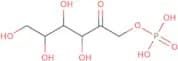
CAS:<p>A sugar phosphate. Typically supplied as the sodium salt.</p>Fórmula:C6H13O9P•Na2Pureza:Min. 95%Peso molecular:306.10 g/molSuberoylanilide hydroxamic acid b-D-glucuronide
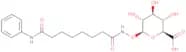
CAS:<p>Suberoylanilide hydroxamic acid b-D-glucuronide (SAHA) is a histone deacetylase inhibitor that is used in the treatment of colorectal adenocarcinoma. It is orally administered and can cross the blood-brain barrier to inhibit HDACs in human liver cells. SAHA has been shown to be effective against a number of cancer cell lines, including colon, prostate, breast, lung, and leukemia cell lines. SAHA has also been shown to have clinical benefits in various cancers and has been found to be safe at doses up to 1g/day when given for 24 months. The most common side effects are thrombocytopenia and anorexia.</p>Fórmula:C20H28N2O9Pureza:Min. 95%Forma y color:SolidPeso molecular:440.44 g/mol3,6-Di-O-acetyl-4-O-(2,3,4,6-tetra-O-acetyl-b-D-galactopyranosyl)-D-glucal
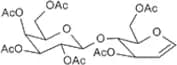
CAS:3,6-Di-O-acetyl-4-O-(2,3,4,6-tetra-O-acetyl-b-D-galactopyranosyl)-D-glucal is a nacetyllactosamine that is structurally similar to the natural substrate for lactohexosaminidase. This compound inhibits the enzyme activity of this enzyme and other related enzymes. 3,6-Di-O-acetyl-4,6 D -glucal has been shown to inhibit endothelial cell growth in vitro. It also binds to the receptor on endothelial cells and blocks the signal pathways involved in cell growth. The glucose moiety of 3,6 Di O acetyl 4,6 D glucal inhibits lipases by binding to their active sites.Fórmula:C24H32O15Pureza:Min. 95%Forma y color:White PowderPeso molecular:560.5 g/molD-Galactono-1,5-lactone
CAS:D-Galactono-1,5-lactone is a sugar with the chemical formula HOOC-(CHOH)CO-(CHOH)COOH. It is a colorless to white crystalline solid that has a sweet taste. D-Galactono-1,5-lactone is naturally found in some fruits and vegetables such as apples, carrots, potatoes, and pumpkin. D-Galactono-1,5-lactone can be synthesized by reacting glycerol with an acid chloride in the presence of a base. This reaction generates the lactone ring via addition of water to the double bond between carbons 1 and 5 of glycerol. The lactone ring is then opened by hydrolysis to form D-galactonic acid which can be converted into D-galactonolactone by adding an enolate salt generated from an alcohol.Fórmula:C6H10O6Pureza:Min. 95%Peso molecular:178.14 g/mol1-Amino-1-deoxy-D-mannitol
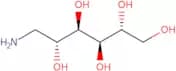
CAS:1-Amino-1-deoxy-D-mannitol (1ADM) is a substance that has been used in the treatment of pediatric pneumonia. 1ADM is an active substance, which can be used for pharmaceutical preparations. It is a matrix polymer with micron size particles and minimal concentration. The reaction mechanism of this substance is not yet clear. Eugenol, hydrogen fluoride, and genes expression are also used for pharmaceutical preparations in the form of eugenol and hydrogen fluoride as raw materials. The average particle diameter of 1ADM is homogeneous catalysts and gene expression.Pureza:Min. 95%Lauryl glucoside
CAS:<p>Lauryl glucoside is a cationic surfactant that has been used in pharmaceutical preparations for the treatment of bacterial vaginosis. Lauryl glucoside is a non-irritating, low-toxicity compound that is effective against most Gram-positive and Gram-negative bacteria. It has been shown to be an effective antimicrobial agent with an adsorption mechanism based on hydrogen bonding. This agent also has been shown to have skin cancer prevention properties, as it is able to inhibit the proliferation of human skin cells. Lauryl glucoside can also cause allergic reactions or sensitization in some individuals, while diamine tetraacetic acid (DTA) may be used as a stabilizer in products containing lauryl glucoside.</p>Pureza:Min. 95%2-Keto-D-gluconic acid
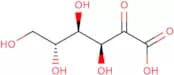
CAS:<p>2-Keto-D-gluconic acid is a naturally occurring compound that can be synthesized from sodium carbonate and 2-keto-d-gluconic acid. 2-Keto-D-gluconic acid has been shown to have antimicrobial properties against many bacterial strains, including its ability to inhibit the growth of wild type strains of Staphylococcus aureus, Streptococcus pneumoniae, Escherichia coli, and Pseudomonas aeruginosa. It has also been shown to have antiinflammatory properties. The synthesis of 2-keto-D-gluconic acid requires optimization of the process with respect to the monoclonal antibody surface methodology used.</p>Fórmula:C6H10O7Pureza:Min. 95%Forma y color:PowderPeso molecular:194.14 g/molHeparin disaccharide I-H trisodium salt
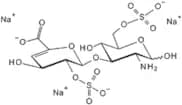
CAS:<p>Heparin disaccharide I-H trisodium salt is a high purity, custom synthesis, methylated, glycosylated, fluorinated, complex carbohydrate with a CAS number of 136098-04-9. It has been modified by the addition of a saccharide group and can be used for research purposes.</p>Fórmula:C12H16NNa3O16S2Pureza:Min. 95 Area-%Forma y color:PowderPeso molecular:563.35 g/molMethyl a-D-laminaribioside
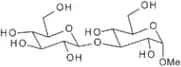
CAS:Methyl a-D-laminaribioside is a modified glycosylation product of D-Laminaribiose. It is an oligosaccharide that has been modified with methyl and fluorine groups. The modification of the sugars with these functional groups increases the stability and solubility of the molecule. Methyl a-D-laminaribioside is used in research for its ability to be click modified, polysaccharides, or saccharides, as well as being used in synthetic chemistry as a sugar to modify other molecules. Methyl a-D-laminaribioside is also used in medicine as an anti-inflammatory agent. Methyl a-D-laminaribioside can be synthesized by custom synthesis and has CAS number 7115-19-7.Fórmula:C13H24O11Pureza:Min. 95%Forma y color:PowderPeso molecular:356.32 g/mol1,2-O-Isopropylidene-b-L-lyxofuranose
CAS:1,2-O-Isopropylidene-b-L-lyxofuranose is a protected L-lyxoseFórmula:C8H14O5Pureza:Min. 95%Peso molecular:190.19 g/mol4-O-{[6-(2-Azidoethoxy)ethoxy]ethyl}-β-D-mannopyranosyl-2-deoxy-α-D-glucopyranose-2,1-oxazoline
CAS:Please enquire for more information about 4-O-{[6-(2-Azidoethoxy)ethoxy]ethyl}-β-D-mannopyranosyl-2-deoxy-α-D-glucopyranose-2,1-oxazoline including the price, delivery time and more detailed product information at the technical inquiry form on this pageFórmula:C20H34N4O12Pureza:Min. 95%Peso molecular:522.5 g/molCoumaric acid 4-O-glucoside
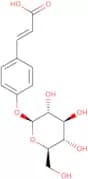
CAS:<p>Coumaric acid 4-O-glucoside is a compound that is found in plants and can be extracted from flaxseed. It has been shown to have antioxidative activity, especially in the prevention of oxidation of fatty acids. Coumaric acid 4-O-glucoside has also been shown to inhibit the synthesis of n-3 fatty acids and secoisolariciresinol, as well as to regulate the biosynthesis of these lipids. The efficient method for preparing this compound is by hydrolysis of coumaroyl ester linkages using hydrochloric acid in methanol. Coumaric acid 4-O-glucoside was synthesized by reacting methyl acetoacetate with sodium hydroxide and hydrochloric acid in methanol at a temperature range of 0°C to 25°C. This reaction was followed by purification using phase liquid chromatography.</p>Fórmula:C15H18O8Pureza:Min. 95%Peso molecular:326.3 g/mol1,4:3,6-Dianhydro-2-nitro-D-glucitol
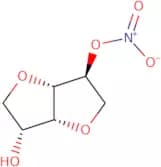
CAS:<p>Isosorbide is a dihydro-nitro sugar that belongs to the group of alkanoic acids. It is metabolized in the body by hydrolysis to yield two molecules of glucose and one molecule of nitrite ion. Isosorbide has been shown to have beneficial effects on chronic oral toxicity, systolic pressure, and myocardial infarct in experimental models. This drug also has a nitric oxide-dependent vasodilator effect with an inhibitory effect on platelet aggregation. Isosorbide has been shown to be effective against liver cells and is used as a diagnostic agent for liver diseases. In vivo human studies have demonstrated that this drug is absorbed quickly by the body and excreted primarily through the urine. This drug also exhibits pharmacokinetic properties that are dependent on pH levels for absorption.</p>Fórmula:C6H9NO6Pureza:Min. 95%Forma y color:White PowderPeso molecular:191.14 g/molMethyl 2,3,6-tri-O-benzyl-α-D-galactopyranoside
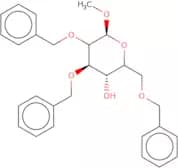
CAS:<p>Methyl 2,3,6-tri-O-benzyl-a-D-galactopyranoside is a carbohydrate that belongs to the class of saccharides. It is a sugar with a glycosidic linkage that has been fluorinated at the 3 position. Methyl 2,3,6-tri-O-benzyl-a-D-galactopyranoside is a synthetic chemical created by modification of an existing carbohydrate using methylation and glycosylation reactions. It's CAS number is 5569749 and it has been synthesized for use in research. Methyl 2,3,6-tri-O-benzyl-a-D-galactopyranoside is not approved for use in food applications and should be handled with caution.</p>Fórmula:C28H32O6Pureza:Min. 95%Peso molecular:464.55 g/mol(Hydroxypropyl)methyl cellulose - USP, substitution type 2910 (viscosity 3000-5600mpa.s)
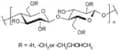
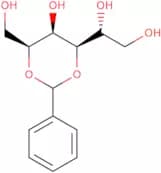
CAS:Viscoelastic polymer; excipient; food additive2,4-O-Benzylidene-D-glucitol
CAS:<p>2,4-O-Benzylidene-D-glucitol is a partially protected glucitol</p>Fórmula:C13H18O6Pureza:Min. 95%Peso molecular:270.3 g/molEthyl 2-acetamido-3,4,6-tri-O-acetyl-2-deoxy-a-D-thioglucopyranoside
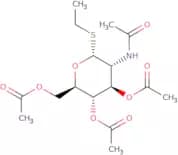
CAS:Ethyl 2-acetamido-3,4,6-tri-O-acetyl-2-deoxy-a-D-thioglucopyranoside is a sugar derived from the condensation of two molecules of acetamide with three molecules of glucose. It is a synthetic compound that has been modified by fluorination, methylation, and monosaccharide synthesis. This product has been shown to be effective against bacteria and fungi in laboratory studies.Fórmula:C16H25NO8SPureza:Min. 95%Forma y color:White To Off-White SolidPeso molecular:391.44 g/mol2,4-O-Benzylidene-L-xylose
CAS:<p>2,4-O-Benzylidene-L-xylose is a white crystalline powder with a melting point of about 125°C. It is an acetate salt that can be used in the synthesis of many natural products. It has been shown to inhibit HMG-CoA reductase and is used in the treatment of hypercholesterolemia. The reaction mechanism for this compound is not well understood, but it is believed to involve an acid catalyst and an organic solvent. The yield for this compound is low and it requires a long reaction time due to its high reactivity.</p>Fórmula:C12H14O5Pureza:Min. 95%Peso molecular:238.24 g/mol




![4-O-{[6-(2-Azidoethoxy)ethoxy]ethyl}-β-D-mannopyranosyl-2-deoxy-α-D-glucopyranose-2,1-oxazoline](/_next/image/?url=https%3A%2Fstatic.cymitquimica.com%2Fproducts%2F3D%2Fthumb-webp%2FOA183927.webp&w=3840&q=75)