Glycoscience
La glicociencia es el estudio de los carbohidratos y sus derivados, así como de las interacciones y funciones biológicas en las que participan. Este campo de investigación es crucial para comprender una amplia variedad de procesos biológicos, incluyendo el reconocimiento celular, la señalización, la respuesta inmune y el desarrollo de enfermedades. La glicociencia tiene aplicaciones importantes en la biotecnología, la medicina, y el desarrollo de nuevos fármacos y terapias. En CymitQuimica, ofrecemos una amplia selección de productos de alta calidad y pureza para la investigación en glicociencia. Nuestro catálogo incluye monosacáridos, oligosacáridos, polisacáridos, glicoconjugados, y reactivos específicos, diseñados para apoyar a los investigadores en sus estudios sobre la estructura, función y aplicaciones de los carbohidratos en sistemas biológicos. Estos recursos están destinados a facilitar descubrimientos científicos y aplicaciones prácticas en diversas áreas de la biociencia y la medicina.
Subcategorías de "Glycoscience"
- Aminoazúcares(108 productos)
- Anticuerpos relacionados con azúcares(282 productos)
- Glicolípidos(46 productos)
- Glicosaminoglicanos (GAGs)(55 productos)
- Glucósidos(419 productos)
- Monosacáridos(6.624 productos)
- Oligosacáridos(3.682 productos)
- Polisacáridos(503 productos)
Se han encontrado 11046 productos de "Glycoscience"
Ordenar por
Pureza (%)
0
100
|
0
|
50
|
90
|
95
|
100
Hexadecyl β-D-glucopyranoside
CAS:Hexadecyl b-D-glucopyranoside is a divalent hydrocarbon that has been used as a hybridization probe to detect human papilloma virus (HPV) in tissue samples. It is also used as an analytical standard for the quantification of fatty acids, with a detection sensitivity of 10 ppm. The hexadecyl b-D-glucopyranoside can be synthesized from fatty acid esters and hydroxy groups. The product can be conditioned by buffers, such as calcium carbonate, before reacting with isopropyl palmitate to produce the desired reaction products. Hexadecyl b-D-glucopyranoside can be used as an additive in cosmetic products due to its conditioning properties.Fórmula:C22H44O6Pureza:Min. 95%Forma y color:PowderPeso molecular:404.58 g/mola-D-Galactosyl-mannotriose
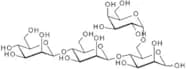
CAS:<p>a-D-Galactosyl-mannotriose is a complex oligosaccharide, which is derived from plant materials such as leguminous seeds. Its mode of action involves selectively promoting the growth of beneficial gut bacteria, particularly bifidobacteria and lactobacilli, through its structural composition that resists hydrolysis by human digestive enzymes. This non-digestibility allows it to reach the colon intact, where it can exert its prebiotic effects.</p>Fórmula:C24H42O21Pureza:Min. 95 Area-%Forma y color:White PowderPeso molecular:666.58 g/molD-Erythrose 4-phosphate
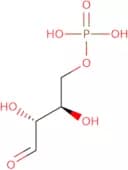
CAS:<p>The utilization of D-Erythrose 4-phosphate extends to various research applications, particularly in studying metabolic pathways and enzyme catalysis relevant to both prokaryotic and eukaryotic organisms.</p>Fórmula:C4H9O7PPureza:Min. 95%Peso molecular:200.08 g/mol(-)-2,3-O-Isopropylidene-D-threitol
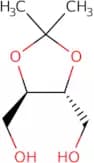
CAS:<p>(-)-2,3-O-Isopropylidene-D-threitol is a chiral compound with two stereoisomers. It is a crystalline solid that melts at 71°C and has a population of 50%. (-)-2,3-O-Isopropylidene-D-threitol is an important intermediate for the synthesis of polyethers with chiral centers. The catalytic asymmetric synthesis of (-)-2,3-O-isopropylidene-D-threitol is achieved by alkylation of (+)-2,3-(dimethoxyphosphinyl)propane with isopropanol. This reaction can be used to produce polyethers with chiral centers in high yields and enantioselectivity.</p>Fórmula:C7H14O4Pureza:Min. 95%Peso molecular:162.18 g/molMethyl 6-O-p-toluenesulfonyl-a-D-glucopyranoside
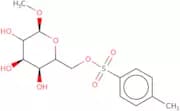
CAS:Methyl 6-O-p-toluenesulfonyl-a-D-glucopyranoside is a custom synthesis. It is an oligosaccharide and polysaccharide that can be modified with methylation and glycosylation. The carbohydrate has a CAS number of 6619-09-6, and the purity is high. This product has been fluorinated for synthetic purposes.Fórmula:C14H20O8SPureza:Min. 95%Peso molecular:348.37 g/molb-D-Galactose-sp-biotin
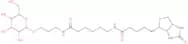
<p>b-D-Galactose-sp-biotin is a glycosylation agent that can be used to modify proteins, polysaccharides, and other complex carbohydrates. It is synthesized by the modification of b-D-galactose with a spacer arm containing biotin. The compound can be modified with fluorine atoms or methyl groups. It can also be modified with click chemistry to produce a reactive site for further chemical modification. This compound has been shown to have high purity and stability, which makes it suitable for use in a variety of applications.</p>Fórmula:C25H44N4O9SPureza:Min. 95%Forma y color:White PowderPeso molecular:576.7 g/molN-[4-(Hydroxymethyl)phenyl]-O-(2,3,4,6-tetra-O-acetyl-β-D-glucopyranosyl)carbamate
CAS:N-[4-(Hydroxymethyl)phenyl]-O-(2,3,4,6-tetra-O-acetyl-β-D-glucopyranosyl)carbamate is an enzymically cleavable spacer used for anthracycline prodrugs.Fórmula:C22H27NO12Peso molecular:497.45 g/molCellobiose-6'-phosphate
CAS:produced as the sodium saltFórmula:C13H25O14PPureza:Min. 95%Peso molecular:436.3 g/molFructose-3-phosphate sodium salt
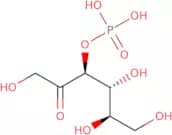
CAS:<p>Fructose-3-phosphate sodium salt is a reactive sugar molecule that belongs to the group of monosaccharides. It can be used as a cross-linking agent in polymerization reactions, such as those used in sample preparation for animal experiments or for magnetic resonance spectroscopy. Fructose-3-phosphate sodium salt is also used as a reactant in nephrology dialysis and has been shown to have beneficial effects on diabetic patients. This compound has the ability to increase the concentration of galactitol, a nonmetabolized form of glucose that can only be obtained from the diet. Galactitol is produced by the liver when blood glucose levels are high and helps to lower blood glucose levels through its action on insulin secretion and peripheral tissue sensitivity. Fructose-3-phosphate sodium salt may also act as an anti-inflammatory agent by inhibiting prostaglandin synthesis, which may be due to its inhibition of prostaglandin synthesis</p>Pureza:Min. 95%Xyloglucan heptasaccharide
CAS:Xyloglucan is a heptasaccharide that is an important component of the plant cell wall. Xyloglucan heptasaccharides are found in the cell walls of many plants, including banana and potato. Xyloglucan heptasaccharides are composed of alternating glucose and xylose residues, with a glycosidic linkage between two xylose residues. This linkage can be hydrolyzed by α-amyrinase to yield two xylose monomers. The conformational properties of xyloglucan depend on its stereochemistry, which has been shown to affect its ability to inhibit inflammatory bowel disease (IBD). Xyloglucan heptasaccharides have also been shown to bind to bacterial cells, inhibiting their growth.Fórmula:C39H66O33Pureza:Min. 95%Forma y color:PowderPeso molecular:1,062.92 g/mola-D-Glucopyranosyl azide
CAS:<p>Please enquire for more information about a-D-Glucopyranosyl azide including the price, delivery time and more detailed product information at the technical inquiry form on this page</p>Fórmula:C6H11N3O5Peso molecular:205.17 g/molcis-Zeatin-o-glucoside
CAS:<p>cis-Zeatin-o-glucoside is a naturally occurring cytokinin glycoside, which is a derivative of cis-zeatin conjugated with a glucose molecule. It is synthesized in various plant tissues and acts as an important signaling compound within the plant's hormonal network. The mode of action involves the regulation of cell division and differentiation, primarily through modulating the expression of specific genes and interacting with cytokinin receptors. This glycosylation potentially alters the transport, stability, and activity of the cytokinin, influencing its overall biological effect.</p>Fórmula:C16H23N5O6Pureza:Min. 95%Forma y color:PowderPeso molecular:381.38 g/mol2-Acetamido-2-deoxy-D-gluconhydroximo-1,5-lactone
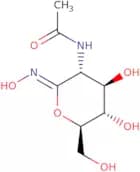
CAS:2-Acetamido-2-deoxy-D-gluconhydroximo-1,5-lactone is a farnesyltransferase inhibitor that belongs to the group of techniques. It is used in the diagnosis of relapsed and resistant multiple myeloma. This drug has been shown to be a potent inductor of apoptosis in vitro and in vivo through inhibition of protein synthesis. 2-Acetamido-2-deoxy-D-gluconhydroximo-1,5-lactone also inhibits the growth of tumor cells and can be used as a potential chemotherapeutic agent for pediatric patients with relapsed or resistant myeloma.Fórmula:C8H14N2O6Pureza:Min. 95%Peso molecular:234.21 g/molb-D-Glucopyranosyl fluoride
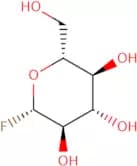
CAS:b-D-Glucopyranosyl fluoride is a kinetic inhibitor of the enzyme fatty acid synthase that is commonly found in human serum. It inhibits the activity of this enzyme by irreversible inhibition, which means that it binds to the active site of the enzyme and prevents it from functioning. The rate at which this inhibitor reacts with the enzyme depends on pH, as well as concentrations of other substances in solution, such as hydrogen fluoride and methyl glycosides. b-D-Glucopyranosyl fluoride has been shown to inhibit HIV infection by inhibiting viral maturation and protease activity. This drug also inhibits cell growth in culture by affecting cellular metabolism.Fórmula:C6H11FO5Pureza:Min. 95%Peso molecular:182.15 g/mol4,5,7-Tri-O-acetyl-2,6-anhydro-3-deoxy-D-lyxo-hept-2-enononitrile
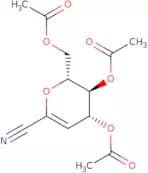
CAS:4,5,7-Tri-O-acetyl-2,6-anhydro-3-deoxy-D-lyxo-hept-2-enononitrile is a modified sugar molecule that has been synthesized and fluorinated. It has a high purity and can be custom synthesized to order. Click modification of this molecule is possible with the addition of a methyl group. This product is used in the synthesis of oligosaccharides and polysaccharides for glycosylation studies.Fórmula:C13H17NO7Pureza:Min. 95%Peso molecular:299.28 g/mol2-Thioethyl-β-D-glucopyranoside
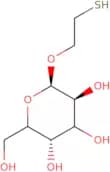
CAS:2-Thioethyl-b-D-glucopyranoside is a methylated saccharide with a molecular weight of 228.2 g/mol. It is soluble in water and aqueous solutions, and has an odorless taste. This compound is used as a synthetic intermediate for the preparation of other saccharides, such as starch, cellulose, and glycogen. 2-Thioethyl-b-D-glucopyranoside can be custom synthesized to meet your specifications.Fórmula:C8H16O6SPureza:Min. 95%Forma y color:White PowderPeso molecular:240.28 g/molMethyl a-L-arabinofuranoside
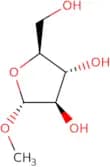
CAS:<p>Methyl a-L-arabinofuranoside is a microbial feed additive that is used to improve the quality of ruminal cellulose. This product has been shown to inhibit the activity of esterases and polysaccharides, which would otherwise break down cellulose so it can be digested by bacteria in the rumen. This supplement also inhibits microbial growth and has been shown to be an effective treatment for infectious diseases. Methyl a-L-arabinofuranoside is detectable in urine, feces, and milk one day after administration. It is broken down by uronic acid esterases into arabinose and methyl alcohol.</p>Fórmula:C6H12O5Pureza:Min. 95%Peso molecular:164.16 g/molN-(Succinyl)-2-acetamido-2-deoxy-b-D-glucopyranosylhydroxylamine
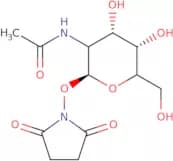
Succinyl activated n-acetylglucosamine.Fórmula:C12H18N2O8Pureza:Min. 95%Peso molecular:318.28 g/mol2,3,5-Tri-O-benzyl-D-arabinofuranose
CAS:<p>2,3,5-Tri-O-benzyl-D-arabinofuranose is a phosphorane that has been synthesised by the reaction of 2,3,5-trihydroxypentanoic acid and benzaldehyde. The synthesis of this compound involves the use of a stereoselective process to produce the desired product. This compound is able to inhibit both bacterial and fungal growth in vitro. Inhibition of bacterial growth is due to its ability to disrupt the synthesis of proteins and nucleic acids while the inhibition of fungal growth is due to its ability to interfere with chitin production.</p>Fórmula:C26H28O5Pureza:Min. 95%Forma y color:White PowderPeso molecular:420.5 g/molb-D-Fructofuranosyl a-D-glucopyranoside 6-octanoate
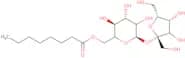
CAS:b-D-Fructofuranosyl a-D-glucopyranoside 6-octanoate is a saccharide that is used as an intermediate for the synthesis of polysaccharides. This compound can be used to synthesize glycosylated oligosaccharides with high purity and good yields. It can also be used in the preparation of complex carbohydrates, including fluorinated sugar derivatives.Pureza:Min. 95%


![N-[4-(Hydroxymethyl)phenyl]-O-(2,3,4,6-tetra-O-acetyl-β-D-glucopyranosyl)carbamate](/_next/image/?url=https%3A%2Fstatic.cymitquimica.com%2Fproducts%2F3D%2Fthumb-webp%2FMH184602.webp&w=3840&q=75)