Glycoscience
La glicociencia es el estudio de los carbohidratos y sus derivados, así como de las interacciones y funciones biológicas en las que participan. Este campo de investigación es crucial para comprender una amplia variedad de procesos biológicos, incluyendo el reconocimiento celular, la señalización, la respuesta inmune y el desarrollo de enfermedades. La glicociencia tiene aplicaciones importantes en la biotecnología, la medicina, y el desarrollo de nuevos fármacos y terapias. En CymitQuimica, ofrecemos una amplia selección de productos de alta calidad y pureza para la investigación en glicociencia. Nuestro catálogo incluye monosacáridos, oligosacáridos, polisacáridos, glicoconjugados, y reactivos específicos, diseñados para apoyar a los investigadores en sus estudios sobre la estructura, función y aplicaciones de los carbohidratos en sistemas biológicos. Estos recursos están destinados a facilitar descubrimientos científicos y aplicaciones prácticas en diversas áreas de la biociencia y la medicina.
Subcategorías de "Glycoscience"
- Aminoazúcares(108 productos)
- Anticuerpos relacionados con azúcares(282 productos)
- Glicolípidos(46 productos)
- Glicosaminoglicanos (GAGs)(55 productos)
- Glucósidos(419 productos)
- Monosacáridos(6.624 productos)
- Oligosacáridos(3.682 productos)
- Polisacáridos(503 productos)
Se han encontrado 11046 productos de "Glycoscience"
Ordenar por
Pureza (%)
0
100
|
0
|
50
|
90
|
95
|
100
a-D-Glucopyranosyl azide
CAS:<p>Please enquire for more information about a-D-Glucopyranosyl azide including the price, delivery time and more detailed product information at the technical inquiry form on this page</p>Fórmula:C6H11N3O5Peso molecular:205.17 g/molHexadecyl β-D-glucopyranoside
CAS:Hexadecyl b-D-glucopyranoside is a divalent hydrocarbon that has been used as a hybridization probe to detect human papilloma virus (HPV) in tissue samples. It is also used as an analytical standard for the quantification of fatty acids, with a detection sensitivity of 10 ppm. The hexadecyl b-D-glucopyranoside can be synthesized from fatty acid esters and hydroxy groups. The product can be conditioned by buffers, such as calcium carbonate, before reacting with isopropyl palmitate to produce the desired reaction products. Hexadecyl b-D-glucopyranoside can be used as an additive in cosmetic products due to its conditioning properties.Fórmula:C22H44O6Pureza:Min. 95%Forma y color:PowderPeso molecular:404.58 g/mol4,5,7-Tri-O-acetyl-2,6-anhydro-3-deoxy-D-lyxo-hept-2-enononitrile
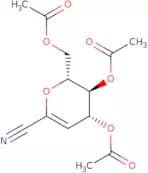
CAS:4,5,7-Tri-O-acetyl-2,6-anhydro-3-deoxy-D-lyxo-hept-2-enononitrile is a modified sugar molecule that has been synthesized and fluorinated. It has a high purity and can be custom synthesized to order. Click modification of this molecule is possible with the addition of a methyl group. This product is used in the synthesis of oligosaccharides and polysaccharides for glycosylation studies.Fórmula:C13H17NO7Pureza:Min. 95%Peso molecular:299.28 g/molα-D-Galactose-1-phosphate
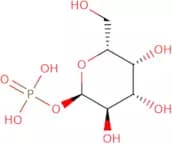
CAS:<p>α-D-Galactose-1-phosphate is a model organism for the study of galactose metabolism. It is an intermediate in the galactose pathway and provides a new approach to understanding the pathogenesis of metabolic disorders. α-D-Galactose-1-phosphate is involved in many enzymatic reactions, including the conversion of uridine diphosphoglucose (UDPG) to UDP glucose, which is a key step in glycolysis. The enzyme that catalyzes this reaction, UDP glucuronosyltransferase (UGT), has been shown to be defective in patients with galactosemia. α-D-Galactose 1 phosphate has also been used as a model for studying human gene expression, specifically protein genes. This molecule has been found to bind DNA polymerase II and inhibit transcriptional elongation at specific sites on DNA called RNA polymerase II pause sites.</p>Fórmula:C6H13O9PPureza:Min. 95%Forma y color:PowderPeso molecular:260.14 g/mol1,2:4,5-Di-O-isopropylidene-b-D-erythro-2,3-hexodiulo-2,6-pyranose
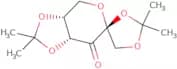
CAS:1,2:4,5-Di-O-isopropylidene-b-D-erythro-2,3-hexodiulo-2,6-pyranose is an acidic compound that is a constituent of the ginseng plant. It has been shown to have biochemical properties as well as bioactivities. It can be synthesized in vivo from the amino acid L-lysine by the enzyme diammonium glyoxalate reductase. The compound has two chiral centers and four stereogenic centers. It is a trisubstituted diastereomer with oxygenated ring opening and chemical structures consisting of a pyranose ring and an ethylene glycol moiety.Fórmula:C12H18O6Pureza:Min. 95%Peso molecular:258.27 g/mol2-deoxy-2,2-difluoro-D-ribonic acid-1,4-lactone
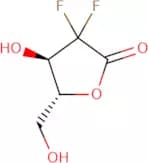
CAS:2-Deoxy-2,2-difluoro-D-erythro-pentonic acid gamma-lactone is a modification of the natural pentose sugar erythrose. It is a white crystalline powder that can be used for the synthesis of oligosaccharides, polysaccharides, and other complex carbohydrates. 2DFPGL can be found in various glycosylation and methylation reactions in the synthesis of saccharides. It has been shown to act as a competitive inhibitor of glucose uptake by cells.Fórmula:C5H6F2O4Pureza:Min. 95%Peso molecular:168.1 g/mol5-Thio-N-acetylglucosamine
<p>5-Thio-N-acetylglucosamine is a microtubule inhibitor that binds to o-glcnac, a posttranslational modification of proteins that regulates the morphology and cycling of stem cells. 5-Thio-N-acetylglucosamine has been shown to inhibit the transcriptional activity of o-glcnacase, an enzyme that catalyzes the conversion of o-glcnac to glucosamine. This drug also inhibits the metabolic activity of neural progenitor cells, which may be due to its ability to regulate subpopulations with concomitant expression of markers such as Oct4 and Sox2.</p>Pureza:Min. 95%Methyl 1,2,3,4-tetra-O-acetyl-a-L-idopyranuronate
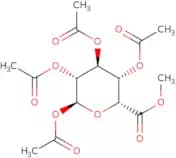
CAS:Methyl 1,2,3,4-tetra-O-acetyl-a-L-idopyranuronate is a carbohydrate standard that belongs to the group of L-iduronic acid derivatives. Methyl 1,2,3,4-tetra-O-acetyl-a-L-idopyranuronate is commonly used in the synthesis of glycosides and glycoconjugates. Its fluorescence properties make it useful for labeling and detection purposes in biochemical assays. This compound can also serve as a substrate for enzymes involved in carbohydrate metabolism. Overall, Methyl 1,2,3,4-tetra-O-acetyl-a-L-idopyranuronate is an essential tool for researchers in the field of glycobiology and biochemistry.Fórmula:C15H20O11Pureza:Min. 95%Peso molecular:376.31 g/molD-Idonic acid-1,4-lactone
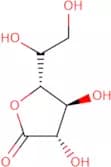
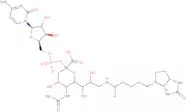
CAS:D-Idonic acid-1,4-lactone is a modification of a carbohydrate which can be custom synthesized. The product is an oligosaccharide that has a high purity and is synthetically produced. This product is composed of monosaccharides, methylation, glycosylation, polysaccharides and sugar. It also contains fluorination and saccharide.Fórmula:C6H10O6Pureza:Min. 95%Forma y color:Colorless PowderPeso molecular:178.14 g/molCMP-N-acetylneuraminic acid 9-sp-biotin
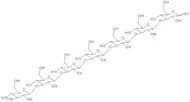
<p>CMP-N-acetylneuraminic acid 9-sp-biotin is a biotinylated sugar nucleotide</p>Pureza:Min. 95%Laminariheptaose
CAS:<p>Ex algal/bacterial polysaccharides-value in b1-3 glucanase assays & diagnostics</p>Fórmula:C42H72O36Pureza:Min. 95%Forma y color:PowderPeso molecular:1,153 g/mola-D-Galactose-sp-biotin
a-D-Galactose-sp-biotin is a glycosylation product with a complex carbohydrate structure. It is synthesized by reacting a galactose with a spacer arm and biotin. The product has been modified to include fluorination, saccharide modification, and Oligosaccharide synthesis. This product is available in high purity and CAS No.Fórmula:C25H44N4O9SPureza:Min. 95%Forma y color:PowderPeso molecular:576.7 g/molDaunorubicin-d3
<p>Daunorubicin-d3 is a fluorinated, monosaccharide, synthetic, oligosaccharide and complex carbohydrate. Custom synthesis of Daunorubicin-d3 is available with glycosylation, methylation and other modifications. Daunorubicin-d3 has CAS No. 1614-68-8 and purity >99%.</p>Fórmula:C27H26D3NO10Pureza:Min. 95%Peso molecular:530.54 g/molPorphyran
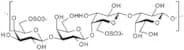
CAS:Porphyran is an agar-like polysaccharide with a linear backbone consisting of 3 linked β-D-galactosyl units alternating with either 4-linked α-L-galactosyl 6-sulphate or 3-6-anhydro-α-L-galactosyl units.The composition includes 6-O-sulphated L-galactose, 6-O-methylated D-galactose, L-galactose, 3,6-anhydro-L-galactose, 6-O-methyl D-galactose and ester sulphate. Some of the ester is present as 1,4-linked L-galactose 6-sulphate. The precise composition of porphyran shows seasonal and environmental variations. Porphyran is not used commercially, but the seaweed, Porphyra umbilicalis, is edible and is consumed in Wales (Laver). It is also made into a delicacy called Laverbread. The image was kindly provided by Prof Mike Guiry from Cork who runs ‘The Seaweed Site’.Pureza:(%) Min. 80%Forma y color:PowderMaltohexaose spacer fluorescein
<p>Fluorescent diagnostic reagent used for tumor diagnosis</p>Pureza:Min. 95%Disialyllacto-N-hexaose I
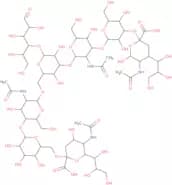
CAS:<p>Disialyllacto-N-hexaose I is a complex carbohydrate that belongs to a class of saccharides called polysaccharides. Disialyllacto-N-hexaose I is synthesized through the methylation and glycosylation of sucrose. It has been modified by Click chemistry with a maleimide group to create an amide bond between the terminal alpha position on the glucose residue and the terminal alpha position on the N-acetylglucosamine residue. This modification can be used for Polysaccharide analysis, such as MALDI TOF MS. Disialyllacto-N-hexaose I has a CAS number of 137636-98-7 and has been shown to have high purity without any impurities or contaminants.</p>Fórmula:C62H102N4O47Pureza:Min. 95%Peso molecular:1,655.47 g/mol4,7-Anhydro-1,2,3-trideoxy-D-allo-oct-1-enitol
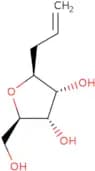
CAS:4,7-Anhydro-1,2,3-trideoxy-D-allo-oct-1-enitol is a modified sugar that has been synthesized for use in glycosylation reactions. It is a high purity product with no detectable impurities. Click modification of this product has been shown to be useful for glycosylation reactions. 4,7-Anhydro-1,2,3-trideoxy-D-allo-oct-1-enitol is also fluorinated and glycosylated. This product can be used in the synthesis of oligosaccharides and monosaccharides.Fórmula:C8H14O4Pureza:Min. 95%Peso molecular:174.19 g/mol2-Acetamido-6-O-(2-acetamido-2-deoxy-b-D-galactopyranosyl)-2-deoxy-3-O-(b-D-galactopyranosyl)-D-glucopyranose
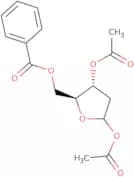
A GalNAc trisaccharidePureza:Min. 95%1,3-Di-O-acetyl-5-O-benzoyl-2-deoxy-D-xylofuranose
CAS:<p>1,3-Di-O-acetyl-5-O-benzoyl-2-deoxy-D-xylofuranose is a complex carbohydrate that has been custom synthesized. It is a monosaccharide with a methyl group at the C1 position and an acetyl group at the C3 position. The chemical formula for 1,3 Di-O-acetyl 5 O benzoyl 2 deoxy D xylofuranose is C11H21NO6. The molecular weight of 1,3 Di O acetyl 5 O benzoyl 2 deoxy D xylofuranose is 277.27 g/mol. 1,3 Di O acetyl 5 O benzoyl 2 deoxy D xylofuranose may have glycosidic bonds and be used in the synthesis of other carbohydrates or as a reagent in organic chemistry reactions.</p>Fórmula:C16H18O7Pureza:Min. 95%Peso molecular:322.31 g/mol1,2-¹³C2-D-Rhamnose
Enantiomer of natural L-Rha 13C-labelled at carbons 1 and 2Fórmula:C2C4H12O5Pureza:Min. 95%Forma y color:White PowderPeso molecular:166.14 g/mol