


Glycoscience
Subcategorías de "Glycoscience"
- Aminoazúcares(108 productos)
- Anticuerpos relacionados con azúcares(282 productos)
- Glicolípidos(46 productos)
- Glicosaminoglicanos (GAGs)(55 productos)
- Glucósidos(419 productos)
- Monosacáridos(6.616 productos)
- Oligosacáridos(3.718 productos)
- Polisacáridos(502 productos)
Se han encontrado 11010 productos de "Glycoscience"
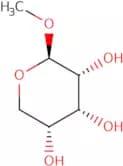
Methyl β-D-ribopyranoside
CAS:Methyl β-D-ribopyranoside is a sugar alcohol that belongs to the group of pentoses. It is a potential precursor for the synthesis of phosphite, which is a reactive anion used in organic chemistry. Methyl β-D-ribopyranoside has been shown to regulate the growth of bacteria and fungi by altering their metabolic pathways. This compound also has shown to be programmed death in certain bacterial strains, although it is not clear how it induces this programmed death. Methyl β-D-ribopyranoside can also affect the rhizosphere and can be used as a substrate for anions and sugar alcohols.
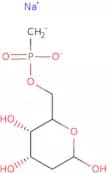
Fórmula:C6H12O5Pureza:Min. 99 Area-%Forma y color:White PowderPeso molecular:164.16 g/mol2-Deoxy-D-glucose-6-phosphate sodium salt
CAS:Glucose 6-phosphatase substrate
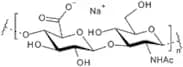
Fórmula:C6H12NaO8PPureza:Min. 98 Area-%Forma y color:White PowderPeso molecular:266.12 g/molHyaluronic acid sodium salt - Average MW 0.6 - 1.0 million Da
CAS:Gycosaminoglycan in many organs; joint lubricant and shock absorber
Fórmula:(C14H20NO11Na)nPureza:Min. 95%Forma y color:Powder1,5-Anhydro-D-fructose
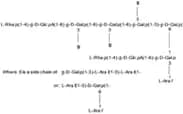
CAS:Antioxidant; antibacterial; suppresses LPS-induced inflammatory responseFórmula:C6H10O5Pureza:Min. 95%Forma y color:PowderPeso molecular:162.14 g/molGum arabic
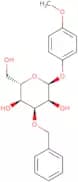
CAS:Gum arabic is an exudate gum picked from Acacia trees growing in tropical arid regions (typically Acacia senegal and Acacia laetia). The polysaccharide is branched with a main chain of (1-3) linked β-D-galactopyranosyl units with side chains of (1-3) β-D-galactopyranosyl units joined to it by (1-6) links. The side chains are 2-5 units in length. Both the main chain and the side chains have attached units of α-L-arabinofuranosyl, α-L-rhamnopyranosyl, β-D-glucuronopyranosyl and 4-O-methyl-β-D-glucuronopyranosyl units.Pureza:Min. 95%Forma y color:Powder4-Methoxyphenyl 3-O-benzyl-β-D-galactopyranoside
CAS:4-Methoxyphenyl 3-O-benzyl-β-D-galactopyranoside is a microstructural stabilizer that can be used in the production of thermoelectric materials. It has been shown to inhibit the growth of bacteria and fungi at temperatures as low as −5°C. The compound has also been shown to have neuroprotective effects, which may be due to its ability to stabilize mitochondria and reduce oxidative stress. 4-Methoxyphenyl 3-O-benzyl-β-D-galactopyranoside is an endogenous ligand for unidentified receptors. It also binds to the amyloid protein in Alzheimer's disease, but does not show any significant toxicity in mice and rats.Fórmula:C20H24O7Pureza:Min. 95%Forma y color:Off-White PowderPeso molecular:376.4 g/molMethyl 2,6-di-O-p-toluenesulfonyl-D-glucopyranoside
CAS:Fluorination is a process that has been used to synthesize various types of chemical compounds. Fluorination is usually achieved by reacting an organic compound with elemental fluorine gas, or dissolved fluoric acid. Fluorination may also be carried out with silicon tetrachloride, sulfur tetrafluoride, or other fluorinating agents. The term fluorination refers to the substitution of hydrogen atoms in an organic molecule with fluorine atoms. This reaction is most often done on unsaturated carbon-carbon bonds, because these are more reactive than others. Monosaccharides are sugar molecules that consist of one sugar unit and two hydroxyl groups (CAS No. 54497-89-1). They are classified as simple sugars because they can be hydrolyzed into their component parts by hydrolysis or oxidation. Polysaccharides are carbohydrates consisting of long chains of monosaccharides (sugar molecules) bonded together by glycosidic linkagesFórmula:C21H26O10S2Pureza:Min. 95%Peso molecular:502.56 g/molGlucurono-xylomannan polysaccharide from Tremella fuciformis
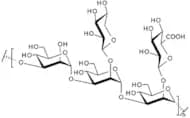
CAS:The polysaccharide, known as glucuronoxylomannan - produced by fruit bodies and in pure culture conditions - has been shown to consist of a mannan backbone that is glycosylated with xylan and glucuronic acid chains in a regular repeating structure. Laboratory tests have associated a number of biological activities with Cryptococcus neoformans glucuronoxylomannan, including immunostimulatory, antidiabetic, anti-inflammatory, hypocholesterolemic, hepatoprotective, and antiallergic effects. The image was kindly provided by Dr. Chris Lawson.Pureza:(%) Min. 60%Forma y color:White Off-White PowderGlobo-H hexaose
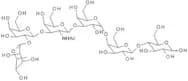
CAS:Cancer-associated carbohydrate antigen
Fórmula:C38H65NO30Pureza:Min. 90%Forma y color:White PowderPeso molecular:1,015.91 g/mol(+)-Lyoniresinol-3a-O-(6''-3,5-dimethoxy-4-hydroxybenzoyl)-b-D-glucopyranoside
(+)-Lyoniresinol-3a-O-(6''-3,5-dimethoxy-4-hydroxybenzoyl)-b-D-glucopyranoside is a custom synthesis that is a methylated oligosaccharide with a 3,5-dimethoxy 4'-hydroxybenzoyl group. This compound has CAS number and is a complex carbohydrate that has been modified with fluorination. It is highly pure and can be used in the modification of monosaccharides or sugars.Pureza:Min. 95%D-Allono-1,5-lactone
CAS:D-Allono-1,5-lactone is a glycoside that has been custom synthesized. It is a high purity product with a variety of modification options. This compound can be used for the synthesis of sugars, Click modification, fluorination, and glycosylation. D-allono-1,5-lactone has CAS No. 894408-50-5 and is classified as an oligosaccharide or sugar. It can also be methylated or modified to create saccharides or complex carbohydrates.Fórmula:C6H10O6Pureza:Min. 95%Peso molecular:178.14 g/molZiyuglycoside I
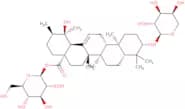
CAS:Ziyuglycoside I is a naturally occurring compound that has been shown to have physiological effects on skin cells. It has been found to bind to collagen and the matrix of skin cells, which may be its mechanism of action. Ziyuglycoside I also has an anti-inflammatory effect, which may be due to its ability to inhibit transcription-polymerase chain reactions (PCR). It has been shown to have antimicrobial activity against some strains of bacteria that are resistant to antibiotics such as erythromycin and tetracycline. Ziyuglycoside I has potential applications in the treatment of infectious diseases and inflammatory skin diseases.
Fórmula:C41H66O13Pureza:Min. 95%Forma y color:White PowderPeso molecular:766.95 g/molIron sucrose - 20% Iron
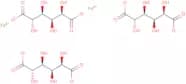
CAS:Iron sucrose is a form of iron that is used in the treatment of iron deficiency anemia. Iron sucrose is administered orally and absorbed in the small intestine. The amounts of iron absorbed are not sufficient to correct the underlying cause of iron deficiency anemia, but can be used as a substitute for oral iron therapy. Iron sucrose has been shown to be safe and effective in treating chronic bowel disease and may be useful in other diseases with inflammatory components, such as infectious diseases and inflammatory bowel disease. Iron sucrose may also be helpful for patients with congestive heart failure or nephrology dialysis who require supplemental erythropoietin.Fórmula:C12H22O11FePureza:Min. 95%Peso molecular:398.14 g/mol1,2:3,4-Di-O-isopropylidene-a-D-galactopyranose
CAS:1,2:3,4-Di-O-isopropylidene-a-D-galactopyranose, also known as diacetone-D-galactose and galactose diacetonide, is a partially protected monosaccharide building block with isopropylidene groups on the 1,2 and 3,4 hydroxyls. The 6-hydroxyl is unprotected and able to undergo a variety of chemical transformations, such as glycosylation acting as a glycosyl acceptor to form 1,6-linked disaccharides.Fórmula:C12H20O6Pureza:Min. 96.5 Area-%Forma y color:Clear Viscous LiquidPeso molecular:260.28 g/molMethyl 2-benzyloxycarbonylamino-2-deoxy-a-D-glucopyranoside
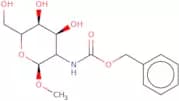
CAS:Methyl 2-benzyloxycarbonylamino-2-deoxy-a-D-glucopyranoside is a monosaccharide that is modified with fluorine. The modification of the sugar molecule can be done by either a click or an oxidative process. In the case of this product, the modification was done by addition of fluorine to the methyl group on the second carbon atom of the benzyloxycarbonyl group. This product belongs to CAS No. 4704-15-8 and has a high purity. It is also a complex carbohydrate and consists of saccharides and sugars. Methyl 2-benzyloxycarbonylamino-2-deoxy-a-D-glucopyranoside can be used in polysaccharides and saccharides, as well as other applications related to carbohydrates such as modifying glycoproteins and glycolipids, as well as being used in pharmaceuticals suchFórmula:C15H21NO7Pureza:Min. 95%Peso molecular:327.33 g/molD-Raffinose pentahydrate
CAS:Raffinose is the most abundant of the family of oligosaccharides that are α-galactosyl derivatives of sucrose (Collins, 2006). The other main member of the group is the tetrasaccharide stachyose. Raffinose is found in sugar beet molasses and whole grains. Soybean oligosaccharides make up approximately 5% of dry matter in whole beans and up to 8% of dry matter in soybean meal. Together raffinose and stachyose rank second only to sucrose in abundance, as water-soluble carbohydrates (Kumar, 2010).Fórmula:C18H42O21Pureza:Min. 97 Area-%Peso molecular:594.52 g/molRef: 3D-R-1000
10gA consultar1kgA consultar5kgA consultar10kgA consultar2500gA consultar-Unit-kgkgA consultarMaltoheptaose tricosaacetate
CAS:CO2-philic compound; used in pharmaceuticals and CO2-based processesFórmula:C88H118O59Pureza:Min. 95%Forma y color:PowderPeso molecular:2,119.92 g/mol1-Chloro-1-deoxy-D-fructose
CAS:glycosidase enzyme inhibitor. Formerly code MC04178.
Fórmula:C6H11ClO5Peso molecular:198.60 g/molN-Nonyldeoxynojirimycin
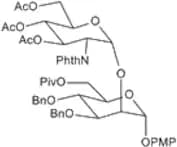
CAS:Inhibitor and pharmacological chaperone of lysosomal β-glucosidase (glucosylceramidase). The compound binds to the unstable glucosidase active site during the folding and post-translational processing in Golgi apparatus and endoplasmatic reticulum. It is effective in stabilising the enzyme and preventing accumulation of glucosylceramides in models for Gaucher disease, especially in the ones carrying N370S mutation. In addition, it has antiviral activity against Hepatitis C virus, which is mediated by misfolding of viral glycoproteins in the presence of the inhibitor.Fórmula:C15H31NO4Pureza:Min. 95%Forma y color:White PowderPeso molecular:289.41 g/mol4-Methoxyphenyl 2-O-(3,4,6-tri-O-acetyl-2-deoxy-2-phthalimido-a-D-glucopyranosyl)-3,4-di-O-benzyl-6-O-pivaloy-a-D-mannopyranoside
CAS:The chemical name of the compound is 4-Methoxyphenyl 2-O-(3,4,6-tri-O-acetyl-2-deoxy-2-phthalimido-a-D-glucopyranosyl)-3,4-di-O-benzyl--6--O--pivaloyl-[a]-D--mannopyranoside. The molecular formula is C47H69NO17. The molecular weight is 838.10 g/mol. This product is a white to off white solid that has no odor and a sweet taste. Compound can be custom synthesized to customer's specification and purity requirements. The CAS number for this compound is 1820574-70-6.
Fórmula:C52H57NO17Pureza:Min. 95%Peso molecular:968.01 g/molMethyl 2,3,4-tri-O-pivaloyl-6-O-trityl-a-D-galactopyranoside
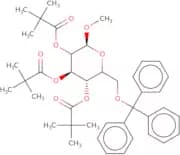
Methyl 2,3,4-tri-O-pivaloyl-6-O-trityl-a-D-galactopyranoside is a sugar with a molecular weight of 576.6 g/mol. The chemical formula for this compound is C36H50O24 and the structural formula is CH2(COOCH2)5(CHO)3(CHOH)4(COOCH2)5. This product can be custom synthesized to order. Methyl 2,3,4-tri-O-pivaloyl-6-O-trityl-a-D galactopyranoside is used in glycosylation reactions as a protecting group for the hydroxyl groups on the carbohydrate chain. It can also be used as a fluorination agent or in Click modification reactions to modify sugars and oligosaccharides. Methyl 2,3,4 tri - O - pFórmula:C41H52O9Pureza:Min. 95%Peso molecular:688.87 g/molPhenyl 3,4-di-O-acetyl-2-O-benzyl-a-L-thiofucopyranoside
CAS:This compound is a glycosylation product of the monosaccharide fucose and the disaccharide 2-O-benzyl-a-L-thiofucopyranoside. It is a custom synthesis that has been modified by fluorination, methylation and click chemistry. This product is available in high purity and with a CAS No. 183051-73-2.Pureza:Min. 95%1,5-Anhydro-D-glucitol 6-dihydrogenphosphate
CAS:1,5-Anhydro-D-glucitol 6-dihydrogenphosphate is a biochemical analog. It has been shown to have anti-inflammatory effects in rat models of inflammatory bowel disease and metabolic disorders. 1,5-Anhydro-D-glucitol 6-dihydrogenphosphate inhibits the activity of bacterial enzymes that catalyze protein glycosylation. It also blocks the production of inflammatory cytokines and colony stimulating factors. The enzyme inhibition may be due to its ability to inhibit the synthesis of D-glucose from D-galactose by blocking the enzyme DALR (deleted in liver cancer).Fórmula:C6H13O8PPureza:Min. 95%Forma y color:PowderPeso molecular:244.14 g/mol1,2,4,6-Tetra-O-acetyl-3-O-(2,3,4,6-tetra-O-acetyl-b-D-glucopyranosyl)-a-D-glucopyranose
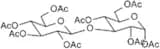
CAS:Acetyl protected laminariboseFórmula:C28H38O19Pureza:Min. 95%Peso molecular:678.6 g/molTri-b-GalNAcAc3-6-aminoheaxanoate TFA
Tri-b-GalNAc-6-aminohexanoate TFA is the peracetylated TFA salt from MT184237. It is a synthetic ligand designed to target the asialoglycoprotein receptor (ASGPR) on hepatocytes. The three terminal beta-N-acetylgalactosamine (GalNAc) sugars provide an efficient ASGPR binding. It serves as a platform for lysosomal targeting chimera (LYTAC) development, allowing for the creation of chimeras that specifically target unwanted proteins for degradation within hepatocytes. In addition, tri-b-GalNAc-6-aminohexanoate facilitates the delivery of therapeutic cargo, such as RNA or Cas9 complexes, directly to hepatocytes via ASGPR-mediated endocytosis. This approach is promising for gene therapy and RNAi applications in the liver due to the specificity of ASGPR targeting and the versatility of the conjugation moiety.Fórmula:C85H140N11O37C2F3O2Pureza:Min. 95 Area-%Peso molecular:2,021.09 g/molPhenyl 2,3,4,6-tetra-O-acetyl-a-D-thiomannopyranoside
CAS:Phenyl 2,3,4,6-tetra-O-acetyl-a-D-thiomannopyranoside is an analog of a sugar molecule. This compound can be synthesized by the metathesis reaction between phenyl 2,3,4,6-tetra-O-acetyl-α-(2′→3′)-D-thiomannopyranoside and bis(trimethylsilyl) sulfate in the presence of polyphosphoric acid and potassium sulfate. The yield of this synthesis is high and can be increased with the addition of potassium sulfonate as a cofactor.Fórmula:C20H24O9SPureza:Min. 98%Forma y color:PowderPeso molecular:440.46 g/mol1-Chloro-2-deoxy-3,5-di-O-toluoyl-D-ribofuranose
CAS:Synthetic building block for nucleic acid researchFórmula:C21H21ClO5Pureza:Min. 95%Forma y color:Off-White PowderPeso molecular:388.84 g/molN-Azidoacetylmannosamine
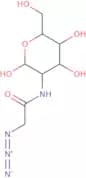
CAS:N-Azidoacetylmannosamine, also called ManNAz and 2-[(2-azidoacetyl)amino]-2-deoxy-D-mannose, is a click reagent for metabolic labelling of ManNAc. The azide is able to react with an alkyne in a 1,3-dipolar cycloaddition reaction (click chemistry) to enable linking to a fluorescent probe or a biotin. N-Azidoacetylmannosamine has been used in the chemical modification of glycoproteins to improve their in vivo efficacy and to label them for detection.Fórmula:C8H14N4O6Pureza:Min. 90%Forma y color:White PowderPeso molecular:262.22 g/molPhenyl 2,3,4,6-tetra-O-benzyl-b-D-thioglucopyranoside
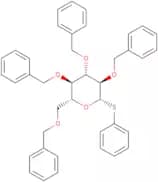
CAS:Phenyl 2,3,4,6-tetra-O-benzyl-b-D-thioglucopyranoside is a modification. It is an oligosaccharide that belongs to the class of carbohydrates. Phenyl 2,3,4,6-tetra-O-benzyl-b-D-thioglucopyranoside has a high purity and can be synthesized in a custom manner. It is a white to off white powder that has CAS No. 38184-10-0 and can be used for glycosylation or methylation reactions. It also has fluoroquinolone resistance and can be used as a complex carbohydrate in the synthesis of polysaccharides.Fórmula:C40H41O5SPureza:Min. 95%Forma y color:White Off-White PowderPeso molecular:632.83 g/molMethyl 2-acetamido-3-O-(2,3,4,6-tetra-O-acetyl-a-D-galactopyranosyl)-2-deoxy-a-D-galactopyranoside
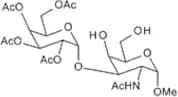
Methyl 2-acetamido-3-O-(2,3,4,6-tetra-O-acetyl-a-D-galactopyranosyl)-2-deoxy-a-D-galactopyranoside is a custom synthesis product that can be fluorinated, methylated and glycosylated. This compound has a CAS number and is polysaccharide in nature. It's complex carbohydrate with oligosaccharides and saccharides.Fórmula:C23H35NO15Pureza:Min. 95%Peso molecular:565.52 g/molN- [(3R, 4R, 5R) - 4- Hydroxy- 5- (hydroxymethyl) - 3- pyrrolidinyl] -acetamide
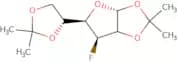
CAS:N- [(3R, 4R, 5R) - 4- Hydroxy- 5- (hydroxymethyl) - 3- pyrrolidinyl] -acetamide is a synthetic compound that is composed of two molecules of acetamide linked to each other by an ester linkage. The acetamide group is attached to the nitrogen atom of the heterocycle. The N-COOH carbonyl group is attached to the oxygen atom of the heterocycle. N-[(3R,4R,5R)-4-hydroxy-5-(hydroxymethyl)-3-(pyrrolidin-1-yl)pyrrolidinium]acetamide has not been studied in humans or animals.Pureza:Min. 95%3-Deoxy-3-fluoro-1,2:5,6-di-O-isopropylidene-a-D-allofuranose
3-Deoxy-3-fluoro-1,2:5,6-di-O-isopropylidene-a-D-allofuranose is a modification of the naturally occurring 3,6-anhydro form of D allofuranose. It is an oligosaccharide that is the product of a synthetic process and has been shown to be useful in glycosylation reactions. 3DFIODA can be methylated at its hydroxyl groups and glycosylated with saccharides. It is also fluorinated at C3 and C6 positions. This compound has CAS number 141173-26-8 and molecular weight of 228.Fórmula:C12H19FO5Pureza:Min. 95%Peso molecular:262.27 g/molDihydrozeatin-O-glucoside riboside
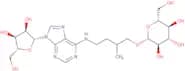
CAS:Dihydrozeatin-O-glucoside riboside is a plant hormone that is found in the roots of Eucomis species. It has been shown to interact with indole-3-acetyl-L-aspartic acid and inhibit the growth of plantlets. The interaction between dihydrozeatin and indole-3-acetyl-L-aspartic acid has been shown to be due to the formation of an intermediate, which is also metabolized by rhizobia. Dihydrozeatin also interacts with ammonium formate and profiles have been obtained for its metabolic products. This molecule also inhibits the production of growth regulators such as abscisic acid, alnifolia, and salicylic acid.Fórmula:C21H33N5O10Pureza:Min. 95 Area-%Forma y color:PowderPeso molecular:515.51 g/mol1,2-O-Cyclohexylidene-myo-inositol
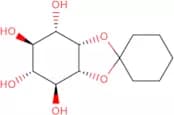
CAS:1,2-O-Cyclohexylidene-myo-inositol (CIM) is a fatty acid that has a 6-hydroxyl group. This compound is used in the diagnosis of chemical biology, immunocomplexes and phosphate derivatives. CIM has been shown to bind to iron and form an immunocomplex with it. CIM also binds to phosphate derivatives, which are found in carbohydrate chemistry. The hydroxyl group on CIM can react with chloride ions and form asymmetric synthesis. Growth factors like insulin and other hormones can be synthesized from this compound through the addition of an amine group or phosphate group. CIM also reacts with monoclonal antibodies for use in diagnostic tests for pancreatic lipase.Fórmula:C12H20O6Pureza:Min. 95%Forma y color:PowderPeso molecular:260.28 g/mol2-NBDG
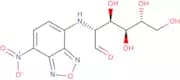
CAS:Fluorescent substrate used to monitor glucose uptakeFórmula:C12H14N4O8Pureza:Min. 95%Forma y color:Red SolidPeso molecular:342.26 g/molPhenyl 3-deoxy-3-fluoro-α-D-glucopyranoside
Phenyl 3-deoxy-3-fluoro-a-D-glucopyranoside is a modified oligosaccharide, which is synthesized by the glycosylation of 3,6-diaminohexanoic acid with phenyl boronic acid. This compound is also known as an anti-tuberculosis drug. It has been shown to inhibit bacterial growth by binding to DNA dependent RNA polymerase, thereby preventing transcription and replication. The high frequency of human activity has been shown using a patch clamp technique on human erythrocytes. Phenyl 3-deoxy-3-fluoro-a-D-glucopyranoside also specifically binds to markers expressed at high levels in Mycobacterium tuberculosis strains (e.g., ESX1 secretion system protein) and inhibits cell growth in culture.
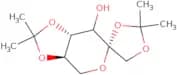
Fórmula:C12H15FO5Pureza:Min. 95%Forma y color:White to off-white solid.Peso molecular:258.24 g/mol1,2;4,5-Di-O-isopropylidene-b-D-fructopyranose
CAS:Synthetic building blockFórmula:C12H20O6Pureza:Min. 95 Area-%Forma y color:Off-White PowderPeso molecular:260.28 g/mol1,5-Diepi-adenophorine
1,5-Diepi-adenophorine is a fluorinated monosaccharide. It is synthesized by an asymmetric glycosylation with 1,5-dideoxyadenosine and α-D-mannose as the donors. The synthesis of this compound requires custom synthesis and high purity. 1,5-Diepi-adenophorine can be modified with methyl groups or click chemistry to make it more suitable for use in biochemistry research.Pureza:Min. 95%GD2-Oligosaccharide-sp-biotin
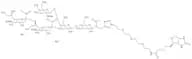
The structure of GD2-oligosaccharide-sp-biotin (sodium salt) comprises (GalNAcβ1,4Galβ1,4Glc) with two sialic acids linked (β-2,3/β-2,8) to the central galactose residue and biotin attached to position 1 of the reducing glucose moiety. GD2 ganglioside is expressed at a low concentration in the central nervous system, nerves, skin melanocytes and stem cells in healthy adults. On the other hand, GD2 ganglioside is overexpressed in a number of tumors, including: neuroblastoma, melanoma, small cell lung carcinoma and brain tumors. Recently, it has been found in low concentrations on breast cancer stem cells (CSC) that possess: self-renewal properties (division without disrupting the undifferentiated state) and tumor-initiating capabilities. It has been suggested that GD2 ganglioside may be developed as an effective target antigen for CSC immunotherapy.
Fórmula:C65H104N10O37S·2NaPureza:One SpotForma y color:White PowderPeso molecular:1,695.61 g/mol2,3,4,6-Tetra-O-benzyl-a-D-glucopyranosyl fluoride
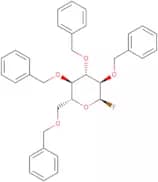
CAS:2,3,4,6-Tetra-O-benzyl-a-D-glucopyranosyl fluoride is a modification of a carbohydrate. It is a complex carbohydrate that has the CAS No. 89025-46-7 and is custom synthesized. The product contains an oligosaccharide and high purity that are synthetic and monosaccharides that are methylated, glycosylated, and polysaccharides that are sugars with fluorination. The product also contains saccharides with glycosylation and polysaccharide sugar units.Fórmula:C34H35FO5Pureza:Min. 95%Forma y color:White To Off-White SolidPeso molecular:542.64 g/molLS-tetrasaccharide a
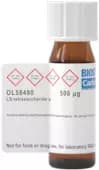
CAS:Sialylated tetrasaccharide found in human milk. Possible health benefits for the neonate, by supporting resistance to pathogens, gut maturation, immune function, and cognitive development.Fórmula:C37H62N2O29Pureza:Min. 95%Forma y color:PowderPeso molecular:998.88 g/mol(1S) -1- [(2S, 3R,4S) - 3- Hydroxy-4-hydroxymethyl- 1- benzyl - 2- azetidinyl] -1, 2- ethanediol
(1S) -1- [(2S, 3R,4S) - 3- Hydroxy-4-hydroxymethyl- 1- benzyl - 2- azetidinyl] -1, 2- ethanediol is a sugar that is made synthetically. It has a CAS number of 76577-11-7 and is available for custom synthesis. The chemical name for this product is (1S)-1-[(2S,3R,4S)-3-[(2E)-3-(hydroxymethyl)oxirane]-4-(hydroxymethyl)-2-(benzyloxy)methyl]-1,2-ethanediol. This product has high purity and can be used for glycosylation or methylation reactions.Pureza:Min. 95%L-[1-13C]Fucose
CAS:L-[1-13C]Fucose is a custom synthesis. It is an oligosaccharide that consists of D-fucose, which is a sugar found in the cell wall of bacteria. L-[1-13C]Fucose has been used as a substrate for methylation reactions and click chemistry modifications to study the binding affinity of various proteins. This compound has also been used in saccharide modification studies and glycosylation reactions.Fórmula:CC5H12O5Pureza:Min. 95%Forma y color:PowderPeso molecular:195.19 g/molPhenyl-6-azido-6-deoxy-2,3,4-tris-O-(phenylmethyl)-1-thio-b-D-galactopyranoside
CAS:Phenyl-6-azido-6-deoxy-2,3,4-tris-O-(phenylmethyl)-1-thio-β-D-galactopyranoside is an oligosaccharide that can be used in the synthesis of complex carbohydrates. This compound has a CAS number of 260976-50-9 and a molecular weight of 536. It can be used as a synthetic intermediate in the production of saccharides and sugar derivatives. Phenyl 6 Azido 6 Deoxy 2,3,4 Tris O (phenylmethyl) 1 Thio β D Galactopyranoside is soluble in water and insoluble in organic solvents. It is also stable under acidic conditions and can be easily converted to other compounds with different functional groups.Pureza:Min. 95%Sucrose acetoisobutyrate
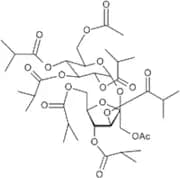
CAS:Sucrose acetoisobutyrate (SAIB) is an emulsifier and is compatible with a wide variety of polymers, resins, plasticisers, oils and waxes - where it is used in surface coatings. Food applications have been developed for this compound and it has an E number (E444). It is recognized as a safe food additive in cocktail mixers, beer, malt beverages, or wine coolers and is a potential replacement for brominated vegetable oil.Fórmula:C40H62O19Pureza:(Saponification Value) Min. 90%Forma y color:Clear LiquidPeso molecular:846.91 g/molMethyl 4-O-methyl-β-L-arabinopyranoside
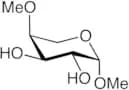
CAS:Methyl 4-O-methyl-β-L-arabinopyranoside is an L-arabinose analogueFórmula:C7H14O5Pureza:Min. 95%Forma y color:PowderPeso molecular:178.18 g/molRhodamine B isothiocyanate-dextran - Average MW 10,000
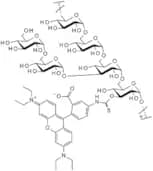
Rhodamine dextran (RD) is widely used as both an anterograde and retrograde tracer in neurons and for numerous other applications. It is biologically rather inert having α-1,6-linked glucose residues resistant to cleavage by most endogenous cellular glycosidases. It has low immunogenicity and makes an ideal long-term tracer for live cells. RD also serves as a valuable marker for cell loading of macromolecules by micro-injection, vesicular fusion, and electroporation, as well as for the uptake and internal processing of exogenous materials by phagocytotic and endocytic pathways.Forma y color:PowderCharantoside
Charantoside is a natural flavone glycoside that belongs to the group of c-glycosides. It has significant anti-inflammatory activity, inhibiting tumor necrosis factor-α (TNF-α) and matrix metalloproteinase-7 (MMP-7), which are proinflammatory cytokines. Charantoside also has anti-diabetic properties, as it inhibits glucose uptake and stimulates insulin release from pancreatic β cells in vitro. Charantoside is found in plants of the Cucurbitaceae family, such as cucumber and pumpkin. This compound can be detected by fingerprinting techniques and was found to have been present in at least two plant families. Charantoside has been shown to inhibit TNF-α production in vivo studies conducted on mice.Pureza:Min. 95%1,3,4,6-Tetra-O-acetyl-N-azidoacetylmannosamine
CAS:1,3,4,6-Tetra-O-acetyl-N-azidoacetylmannosamine, also called ManNAz tetraacetate, 1,3,4,6-tetra-O-acetyl-N-azidoacetyl-D-mannosamine and Ac4ManNAz, is an azide-containing metabolic glycoprotein labelling reagent that can be incorporated into the sialic acid biosynthesis pathway. The azide is able to react with an alkyne in a 1,3-dipolar cycloaddition reaction (click chemistry) to enable linking to a fluorescent probe or a biotin.Fórmula:C16H22N4O10Pureza:Min. 95%Forma y color:PowderPeso molecular:430.37 g/mol(5R, 8S, 9R) -8- [(4R) - 2, 2-Dimethyl- 1, 3- dioxolan- 4- yl] - 9- hydroxy- 2, 2- dimethyl- 1, 3, 7- trioxaspiro[4.4] nonan- 6- one
(5R, 8S, 9R) -8- [(4R) - 2, 2-Dimethyl- 1, 3- dioxolan- 4- yl] - 9- hydroxy- 2, 2- dimethyl- 1, 3, 7- trioxaspiro[4.4] nonan- 6- one is a monosaccharide that has been synthesized and modified. The synthesis of this compound was achieved by reacting 5-(2-(benzyloxy)ethoxy)-1-(3-(dimethylamino)propoxy)-2-(4-[(2S)-2,2,-dimethylpropanoyl]phenyl)pentaone (1), with the corresponding bromoacetate or chloroacetate in the presence of base to give the desired product (2). This compound has been methylated and glycosylated. It is a white solid that is soluble in water and DMSOPureza:Min. 95%











![N- [(3R, 4R, 5R) - 4- Hydroxy- 5- (hydroxymethyl) - 3- pyrrolidinyl] -acetamide](/_next/image/?url=https%3A%2Fstatic.cymitquimica.com%2Fproducts%2F3D%2Fthumb-webp%2FMH163543.webp&w=3840&q=75)

![(1S) -1- [(2S, 3R,4S) - 3- Hydroxy-4-hydroxymethyl- 1- benzyl - 2- azetidinyl] -1, 2- ethanediol](/_next/image/?url=https%3A%2Fstatic.cymitquimica.com%2Fproducts%2F3D%2Fthumb-webp%2FMH163532.webp&w=3840&q=75)
![L-[1-13C]Fucose](/_next/image/?url=https%3A%2Fstatic.cymitquimica.com%2Fproducts%2F3D%2Fthumb-webp%2FMF08310.webp&w=3840&q=75)


![(5R, 8S, 9R) -8- [(4R) - 2, 2-Dimethyl- 1, 3- dioxolan- 4- yl] - 9- hydroxy- 2, 2- dimethyl- 1, 3,…](/_next/image/?url=https%3A%2Fstatic.cymitquimica.com%2Fproducts%2F3D%2Fthumb-webp%2FMD170672.webp&w=3840&q=75)