Glycoscience
Subcategorías de "Glycoscience"
- Aminoazúcares(108 productos)
- Anticuerpos relacionados con azúcares(282 productos)
- Glicolípidos(46 productos)
- Glicosaminoglicanos (GAGs)(55 productos)
- Glucósidos(419 productos)
- Monosacáridos(6.616 productos)
- Oligosacáridos(3.718 productos)
- Polisacáridos(502 productos)
Se han encontrado 11010 productos de "Glycoscience"
5-O-Tert.butyldimethylsilyl-2- C- methyl- D- arabinonic acid g- lactone
5-O-Tert.butyldimethylsilyl-2- C-methyl-D-arabinonic acid g-lactone is a methylated arabinose derivative that has been synthesized from 2,6,8,10,12,14,16-hexadecanoyloxybenzyl alcohol and tert.butyldimethylchlorosilane in a two step process. It can be used as an intermediate for the synthesis of oligosaccharides and polysaccharides with various modifications. 5-O-Tert.butyldimethylsilyl-2- C-methyl-D-arabinonic acid g -lactone is available at a purity of > 98% and contains no other contaminants such as sugar or monosaccharide.Pureza:Min. 95%Methyl 3-O-(a-D-mannopyranosyl)-b-D-mannopyranoside
Methyl 3-O-(a-D-mannopyranosyl)-b-D-mannopyranoside is a custom synthesized compound that belongs to the group of complex carbohydrates. It is used in the synthesis of oligosaccharides and polysaccharides. Methyl 3-O-(a-D-mannopyranosyl)-b-D-mannopyranoside can be modified through fluorination, which enhances its properties. This product is available in high purity and with a monosaccharide content of 99%. The CAS number for this compound is 4127757-76-4.Fórmula:C13H24O11Pureza:Min. 95%Peso molecular:356.32 g/mol(3R, 4S, 5R, 6R, 7S) -1- Azabicyclo[4.2.0] octane- 3, 4, 5, 7- tetrol
CAS:Fluorination, Monosaccharide, Synthetic, Oligosaccharide, complex carbohydrate, Custom synthesis, Glycosylation, Polysaccharide, Click modification, Methylation Fluorination is a chemical reaction that introduces fluorine into organic compounds. The reactant is typically an alcohol or phenol and the product is a fluoroalcohol or fluoroether. Monosaccharides are simple sugars that cannot be hydrolyzed to smaller carbohydrates. Oligosaccharides are saccharides composed of two to ten monosaccharides. Complex carbohydrates are polymers of saccharides. Click chemistry is a type of chemical reaction used in organic chemistry to create new molecules and modify existing ones with high selectivity and efficiency. Methylation is the process by which methyl groups are introduced into organic compounds such as fats and oils. It can also refer to the addition of a methyl group at one specificPureza:Min. 95%Hyaluronic acid potassium salt - from Cockscomb
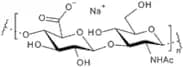
CAS:Hyaluronic acid is a glycosaminoglycan found in many organs where it functions as a joint lubricant and shock absorber (Collins, 2006). It is obtained principally from synovial fluid, vitreous humor of the eye, umbilical tissue and cockscomb. The chemical structure of hyaluronic acid is a disaccharide repeat of β-1,3 glucuronic acid and β-1,4 N-acetyl glucosamine (Casu, 1990). Hyaluronic acid is a common ingredient in skin care products and is used as a dermal filler in cosmetic surgery.Fórmula:(C14H20KNO11)nForma y color:White PowderHyaluronic acid sodium, average MW 2.0 - 2.5 million Da
CAS:Gycosaminoglycan in many organs; joint lubricant and shock absorberFórmula:(C14H20NO11Na)nPureza:Min. 95%Forma y color:Powder2-Acetamido-1,3,4-tri-O-butanoyl-2-deoxy-D-mannopyranose
CAS:2-Acetamido-1,3,4-tri-O-butanoyl-2-deoxy-D-mannopyranose is a protected mannosamine carbohydrate.
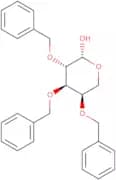
Fórmula:C23H39NO9Pureza:Min. 95%Peso molecular:473.56 g/mol2,3,4-Tri-O-benzyl-b-D-arabinopyranose
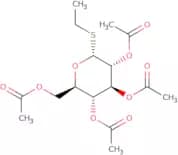
CAS:2,3,4-Tri-O-benzyl-b-D-arabinopyranose (TBA) is a sugar that is found in the skin of primates. It has been shown to promote epidermal growth factor (EGF) production and maturation of the epidermis. TBA has also been shown to have a gestational age effect on epidermal growth. This compound has been used as a synchronizing agent for animal studies in vitro and has been investigated as a treatment for cesarean sections, which may help to reduce the risk of infection and postoperative complications. TBA has also been used to treat skin diseases such as psoriasis and ichthyosis by stimulating keratinocyte proliferation and differentiation.Fórmula:C26H28O5Pureza:Min. 95%Forma y color:PowderPeso molecular:420.5 g/molEthyl 2,3,4,6-tetra-O-acetyl-a-D-thioglucopyranoside
CAS:Ethyl 2,3,4,6-tetra-O-acetyl-a-D-thioglucopyranoside is an orthorhombic sugar that is composed of a mannopyranoside and a thioglucopyranoside. The crystal structure has been determined to be space group P2(1)/c.Fórmula:C16H24O9SPureza:Min. 98 Area-%Forma y color:White PowderPeso molecular:392.42 g/mol1,2,3,4,6-Penta-O-benzyl-β-D-thiogalactopyranoside
CAS:1,2,3,4,6-Penta-O-benzyl-b-D-thiogalactopyranoside is a custom synthesis that is a complex carbohydrate. It has a CAS number of 210358-01-3 and a molecular weight of 603. It is modified with saccharide, methylation, glycosylation, and carbonyl groups. This product is available in high purity and without fluorination or synthetic modification.
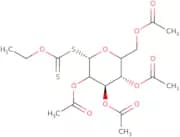
Fórmula:C41H42O5SPureza:Min. 95%Forma y color:PowderPeso molecular:646.84 g/mol2,3,4,6-Tetra-O-acetyl-b-D-galactopyranosyl ethylxanthate
2,3,4,6-Tetra-O-acetyl-b-D-galactopyranosyl ethylxanthate is a carbohydrate that has been modified through the process of fluorination and methylation. It is a synthetic compound that has been custom synthesized to produce high purity. The CAS number for this compound is 56923-48-8. This compound is used in the modification of saccharides and oligosaccharides as well as other sugar compounds. 2,3,4,6-Tetra-O-acetyl-b-D-galactopyranosyl ethylxanthate is also glycosylated and click modified.Fórmula:C17H24O10S2Pureza:Min. 95%Peso molecular:452.5 g/mol5-Azepan-1-yl-5-deoxy-1,2-isopropylidene-a-D-xylofuranose
CAS:5-Azepan-1-yl-5-deoxy-1,2-isopropylidene-a-(D)-xylofuranose (ADXF) is a synthetic glycoside that was synthesized in order to explore the potential of ADXF as a drug candidate. ADXF has shown promising antiinflammatory and anticancer activities. The synthesis of ADXF starts with the protection of the hydroxyl group at the anomeric center with acetate and then the glycosylation with azepane and 5-deoxy-1,2 isopropylidene erythronolide B. This synthesis also includes fluorination and methylation steps, which are necessary for modifying the sugar structure.
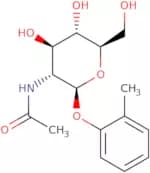
Fórmula:C14H25NO4Pureza:Min. 95%Forma y color:Brown solid.Peso molecular:271.35 g/mol2-Methylphenyl 2-acetamido-2-deoxy-β-D-glucopyranoside
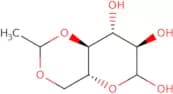
CAS:2-Methylphenyl 2-acetamido-2-deoxy-b-D-glucopyranoside is a fluorinated glycosylation product that is synthesized by custom synthesis. It is a complex carbohydrate with high purity and modification.Fórmula:C15H21NO6Pureza:Min. 95%Forma y color:PowderPeso molecular:311.33 g/mol4,6-O-Ethylidene-D-glucopyranose
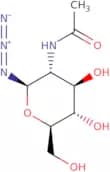
CAS:4, 6-O-Ethylidene-D-glucopyranose is a glucose analogue that inhibits sugar transport. It has been shown to inhibit glucose transport by binding to the hydroxyl group on the red cell membrane. This binding prevents the sugar from entering the cell and as a result, glucose accumulates in the blood. 4, 6-O-Ethylidene-D-glucopyranose also binds to tryptophan fluorescence and inhibits cytochalasin B binding to tryptophans that are located on the plasma membrane of eukaryotic cells.Fórmula:C8H14O6Pureza:Min. 90 Area-%Forma y color:PowderPeso molecular:206.19 g/mol2-Acetamido-2-deoxy-b-D-glucopyranosyl azide
CAS:2-Acetamido-2-deoxy-b-D-glucopyranosyl azide is a biodegradable, environmentally oriented compound that has been shown to be compatible with polylactic acid. This compound has shown unevenness in the hydroxy group and a functional group sensitive to hydrolysis. The molecular weight of 2-acetamido-2-deoxy-b-D-glucopyranosyl azide is 154.14 g/mol. It is soluble in water and has a natural environment frequency of 0.0005%.
Fórmula:C8H14N4O5Pureza:Min. 95 Area-%Forma y color:White PowderPeso molecular:246.22 g/mol2-Azido- 2- deoxy- 2, 4- di- C- methyl- 3, 4- O- isopropylidene - L- ribonic acid d- lactone
2-Azido-2-deoxy-2,4-di-C-methyl-3,4-O-isopropylidene -L-ribonic acid d -lactone is a synthetic carbohydrate. It is a monosaccharide that has been modified by the addition of fluorine atoms to the 2 and 4 positions of the ribose ring. The chemical name for this compound is 2-[(4S)-2,2'-azido]-2,4-[1S,3R,4R]dimethyl - 3,4-[1S,3R]oxirane - O-[(1Z)-1-(ethoxycarbonyl)propylidene]- L -ribonic acid d -lactone. This compound can be used in glycosylation reactions with saccharides and other carbohydrates that are not more than two carbons long. It can also be methylated at the 2 position on the ribPureza:Min. 95%2-Fluoro-4-nitrophenyl 2-azido-2-deoxy-b-D-galactopyranoside
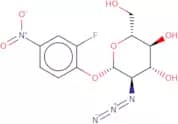
CAS:2-Fluoro-4-nitrophenyl 2-azido-2-deoxy-b-D-galactopyranoside is a synthetic glycosylation agent that has been used in the synthesis of oligosaccharides and polysaccharides. This reagent is also used for click modification, which is a chemical reaction that produces an azide group on the saccharide. Click modification can be used to modify complex carbohydrates with fluorine or methyl groups. 2-Fluoro-4-nitrophenyl 2-azido-2-deoxy-b-D galactopyranoside has a CAS number of 2088233–73–0.Fórmula:C12H13FN4O7Pureza:Min. 95%Forma y color:Off-White To Yellow SolidPeso molecular:344.25 g/mol2,3-Anhydro-3,4-O-ispropylidene-7-O-triphenylmethyl-D-glycero-D-altro-heptonic acid diethylamide
2,3-Anhydro-3,4-O-ispropylidene-7-O-triphenylmethyl-D-glycero-D-altroheptonic acid diethylamide is a custom synthesis that has been modified by fluorination and methylation. The compound is a monosaccharide with an Oligosaccharide chain. It is a synthetic molecule that can be found in the CAS No. 899072. This compound is a saccharide and a carbohydrate. It is complex carbohydrate that consists of glucose and galactose units.Pureza:Min. 95%GD1a-Ganglioside
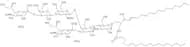
CAS:GD1a ganglioside is one of the major gangliosides in neuronal and glial membranes. It has a core tetrasaccharide structure (Galβ1,3GalNAcβ1,4Galβ1,4Glc) with sialic acids linked α2,3/α2,8 to the inner galactose residue, α2,3 to the outer galactose residue, and ceramide linked β to position 1 on the reducing terminal glucose residue (Ledeen, 2009). GD1a ganglioside interacts with myelin-associated glycoprotein (MAG) and is essential for long-term axon-myelin stability. GD1a ganglioside plays a role in viral infection as it is a receptor for viral glycoproteins in rotavirus and paramyxovirus 1. The hexasaccharide GD1a moiety was also found on a glycoprotein that acts as a receptor for adenovirus type 37. GD1a ganglioside also interacts with botulinum neurotoxin (BoNT) and is crucial for its entry into cells (Kolter, 2012). The functional significance of ammonia in the brain is not fully understood see: (Modi, 1994).Fórmula:C84H148N4O39Pureza:Min. 95%Forma y color:PowderPeso molecular:1,838.08 g/molIsolichenan
CAS:Isolichenan is a cold-water soluble (1,3)-(1,4)-α-D-glucan isolated from lichen Cetraria islandica to have MW of about 6-8 kDa. Lichens produce isolichenan-type polysaccharides with considerable variation in linkage ratios as well as MW, even within the same species. Occasionally these α-glucans can be branched at O2, O3 or O6. The immunomodulating activity of isolichenan was tested in in vitro phagocytosis and anti-complementary assays, and proved to be active in both cases.
The image was kindly provided by Prof Mike Guiry from Cork who runs ‘The Seaweed Site’.Pureza:Min. 85%Forma y color:PowderIsomaltopentaose
CAS:Produced from high maltose syrup by treatment with transglucosidase
Fórmula:C30H52O26Pureza:Min. 95%Forma y color:White PowderPeso molecular:828.7 g/molMethyl 2,3,4-tri-O-benzyl-6-O-trityl-a-D-mannopyranoside
CAS:Methyl 2,3,4-tri-O-benzyl-6-O-trityl-a-D-mannopyranoside is a complex carbohydrate that contains a glycosylation site. This compound has a CAS number of 40653-13-2, and is available for custom synthesis. Methyl 2,3,4-tri-O-benzyl-6-O-trityl-aD mannopyranoside is water soluble and has high purity. The chemical structure of this compound can be modified to include fluorination or Click modification. This compound is also an oligosaccharide containing sugar residues and monosaccharides with a molecular weight of approximately 1000 Da.Fórmula:C47H46O6Pureza:Min. 95%Peso molecular:706.89 g/mol3,4,6-Tri-O-acetyl-2-O-trifluoromethanesulfonyl-b-D-mannopyranosyl azide
CAS:3,4,6-Tri-O-acetyl-2-O-trifluoromethanesulfonyl-b-D-mannopyranosyl azide is a chemically synthesized compound that can be used for methylation reactions. It is an Oligosaccharide with a molecular weight of 597.5 and contains the following structural features: A saccharide composed of three monosaccharides (D-glucose, D-mannose, and D-galactose), which is bonded by alpha 1,6 linkages. The chemical formula is C12H14F3N3O8. The CAS number is 1159265-99-2.Fórmula:C13H16F3N3O10SPureza:Min. 95%Forma y color:PowderPeso molecular:463.34 g/mol2-Acetamido-1,2-dideoxy-galactonojirimycin
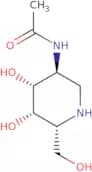
CAS:2-Acetamido-1,2-dideoxy-galactonojirimycin is a microbial infection drug that belongs to the class of chemical species. It has been shown to be a potent inhibitor of sodium carbonate (NaCO) and can be used as a control in analytical studies. This drug also inhibits vasoactive intestinal peptide, which may lead to the development of cancer. 2-Acetamido-1,2-dideoxy-galactonojirimycin is an acyl chain with galacturonic acid and can be used as diagnostic agents for human serum and hepatic steatosis. It has been shown to have anti-inflammatory properties that are useful for the treatment of autoimmune diseases.Fórmula:C8H16N2O4Pureza:Min. 95%Forma y color:PowderPeso molecular:204.22 g/mol5-Deoxy-L-ribose
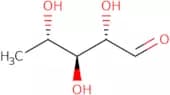
CAS:5-Deoxy-L-ribose is found in a variety of organisms, including humans. It is stereoselective, with the (-) form being more common than the (+) form. 5-Deoxy-L-ribose is synthesized by the glycosidic bond between l-arabinose and D-ribose. This compound is an inexpensive way to produce 5-deoxy analogs of other sugars, such as glucose, fructose, and mannose. The biosynthesis of 5-deoxy-L-ribose relies on a molybdenum cofactor and involves oxidation of L-arabinonate by aldehyde oxidase to give L-xylulose. Lactate dehydrogenase converts this into D-xylulose. Dihydroorotate reductase then reduces this to give D-(+)-5--deoxy--D--erythro--pentitol phosphate, which cyclFórmula:C5H10O4Pureza:Min. 95%Forma y color:Slightly Yellow Clear LiquidPeso molecular:134.13 g/mol2, 4- Anhydro-5-O-benzyl- 6- deoxy- L- mannonic acid methyl ester
2, 4-Anhydro-5-O-benzyl-6-deoxy-L-mannonic acid methyl ester is a synthetic oligosaccharide that can be used as a fluorinated carbohydrate. It is modified by the addition of methyl groups to the hydroxyl group of an anhydro sugar moiety. It can be used in various applications such as glycosylation and click chemistry. 2, 4-Anhydro-5-O-benzyl-6-deoxy--L--mannonic acid methyl ester has CAS number 167801–91–9 and molecular weight of 538.4 g/mol. It is soluble in water and ethanol.Pureza:Min. 95%N- [(Phenylmethoxy) carbonyl] glycylglycyl- 2- amino- 2- deoxy-a- D- manno- 2- heptulofuranosonic acid methyl ester
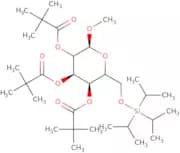
CAS:N- [(Phenylmethoxy) carbonyl] glycylglycyl- 2- amino- 2- deoxy-a- D- manno- 2- heptulofuranosonic acid methyl ester is a custom synthesis of an oligosaccharide, polysaccharide, and a complex carbohydrate. It is modified with methylation, glycosylation, and click modification. The CAS number for this compound is 161086-37-9. This product is highly pure, fluorinated, and synthetic.Pureza:Min. 95%Methyl 2,3,4-tri-O-pivaloyl-6-O-triisopropylsilyl-a-D-mannopyranoside
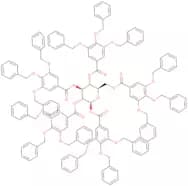
Methyl 2,3,4-tri-O-pivaloyl-6-O-triisopropylsilyl-a-D-mannopyranoside is a custom synthesis of an oligosaccharide with high purity. It is a complex carbohydrate that has been modified to have fluorination. The modification of the saccharide was done by Click chemistry, which is a type of radical reaction. Methyl 2,3,4-tri-O-pivaloyl-6-O-triisopropylsilyl-a-D-mannopyranoside is a monosaccharides and sugar that has been synthesized.Fórmula:C31H58O9SiPureza:Min. 95%Peso molecular:602.89 g/mol1,2,3,4,6-Penta-O-(3,4,5-tri-O-benzylgalloyl)-b-D-glucopyranose
CAS:1,2,3,4,6-Penta-O-(3,4,5-tri-O-benzylgalloyl)-b-D-glucopyranose is a custom synthesis, complex carbohydrate that has been modified with methylation and glycosylation. It is also a saccharide that can be found in the form of an Oligosaccharide or Polysaccharide. The CAS No. for this compound is 122625-60-9. This compound has a purity level of 99% and is 100% synthetic. It has been fluorinated to make it more stable. 1,2,3,4,6-Penta-O-(3,4,5-tri-O-benzylgalloyl)-b-D-glucopyranose can be used in pharmaceuticals as a sugar or carbohydrate. It can also be used as a food additive for flavoring purposesFórmula:C146H122O26Pureza:Min. 95%Peso molecular:2,292.52 g/mol1,3,4,6-Tetra-O-benzyl-2-O-(2,3,4,6-tetra-O-benzyl-a-D-glucopyranosyl)-b-D-galactopyranoside
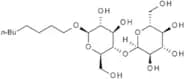
CAS:Tetra-O-benzyl-2-O-(2,3,4,6-tetra-O-benzyl-a-D-glucopyranosyl)-b-D-galactopyranoside is a polysaccharide that is synthesized by the methylation of 1,3,4,6-tetra-O-benzyl -2,3,4,6 tetra - O - benzyl - a - D - glucopyranoside. It can be used to modify proteins and oligosaccharides. This product is custom synthesized and has high purity.Fórmula:C68H70O11Pureza:Min. 95%Peso molecular:1,063.28 g/moln-Octyl β-D-maltoside
CAS:n-Octyl β-D-maltoside (OBM) is a fatty acid that is used as a sample preparation agent. OBM is chemically stable and has been shown to be non-carcinogenic in mammalian tissue. The structural analysis of OBM revealed that the molecule contains two nitrogen atoms, one on each end. In addition, OBM binds to antimicrobial peptides and inhibits their activity by preventing them from binding to their target site on the bacterial membrane. OBM also has anti-cancer properties due to its ability to prevent the proliferation of cervical cancer cells.Fórmula:C20H38O11Pureza:Min. 98 Area-%Forma y color:White PowderPeso molecular:454.51 g/mol1,2,3,4-Tetra-O-acetyl-6-deoxy-6,6,6-trifluoro-L-galactose
CAS:fucosylation inhibitor
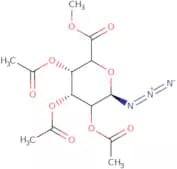
Fórmula:C14H17F3O9Peso molecular:386.28 g/molMethyl 2,3,4-tri-O-acetyl-b-D-glucopyranuronosyl azide
CAS:Methyl 2,3,4-tri-O-acetyl-b-D-glucopyranuronosyl azide is a fluorinated carbohydrate. It is a monosaccharide and an oligosaccharide that is synthesized from a synthetic glycosylation reaction. This product can be used in the production of polysaccharides or as a click modification to modify the sugar moiety of other molecules. Methyl 2,3,4-tri-O-acetyl-b-D-glucopyranuronosyl azide has CAS No. 67776-38-9 and is available in high purity.Fórmula:C13H17N3O9Pureza:(%) Min. 98%Forma y color:White PowderPeso molecular:359.29 g/mol6-Deoxy-a-D-talose
CAS:6-Deoxy-a-D-talose is a non-reducing sugar. It is used in the synthesis of glycosides and polysaccharides. 6-Deoxy-a-D-talose is hydrolyzed by esterases or glucuronidases, oxidized by cytochrome P450 enzymes, reduced by glutathione reductase, or conjugated with glucuronic acid.Fórmula:C6H12O5Pureza:Min. 95%Forma y color:PowderPeso molecular:164.16 g/mol(4αS,6S,7R,8S,8αR)-8-(Benzyloxy)-2-phenyl-6-(phenylthio)hexahydropyrano[3,2-d][1,3]dioxin-7-yl benzoate
CAS:Please enquire for more information about (4αS,6S,7R,8S,8αR)-8-(Benzyloxy)-2-phenyl-6-(phenylthio)hexahydropyrano[3,2-d][1,3]dioxin-7-yl benzoate including the price, delivery time and more detailed product information at the technical inquiry form on this page
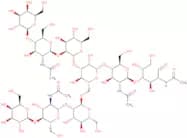
Fórmula:C33H30O6SPeso molecular:554.66 g/molNA2 N-Glycan
CAS:NA2 is a glycan that is a specific antigen binding molecule. It binds to the CD20 receptor on the surface of human B lymphocytes, which are involved in the development of cancer and inflammatory diseases. NA2 can be used for the treatment of these diseases, as well as cancers that express CD20 receptors. NA2 is generated from endogenous molecules that have been modified by introducing galactose into the carbohydrate backbone. These molecules also form a linker with bendamustine, which is an anticancer drug.Fórmula:C62H104N4O46Pureza:Min. 90%Forma y color:PowderPeso molecular:1,641.49 g/mol6-a-D-Glucopyranosyl maltotriose
CAS:Substrate for glucoamylases; derived from pullulan using pullulanase
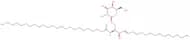
Fórmula:C24H42O21Pureza:Min. 97 Area-%Forma y color:PowderPeso molecular:666.58 g/molCerebrosides - Kerasin
CAS:Cerebrosides are a group of complex carbohydrates that have been modified by glycosylation, methylation, and/or fluorination. These modifications can be used to produce saccharides with different properties. Cerebrosides are found in the brain, central nervous system, and spinal cord. They are also found in the connective tissue of skin and hair follicles.
The CAS number for cerebrosides is 85116-74-1.Fórmula:C48H91NO8Pureza:Min. 95%Forma y color:PowderPeso molecular:810.24 g/molPhenyl-β-D-thioglucuronic acid
CAS:Phenyl-beta-D-thioglucuronic acid is a drug that is used to treat inflammatory diseases and autoimmune diseases. It is a basic structure that has been shown to have anti-estrogenic effects in vitro, although the mechanism of action is not well understood. Phenyl-beta-D-thioglucuronic acid can be crosslinked with proteins to form a matrix for wound healing. This drug has also been shown to be a potent inhibitor of proteases, and may inhibit other enzymes such as matrix metalloproteinases and serine proteases.
Fórmula:C12H14O6SPeso molecular:286.31 g/molRef: 3D-P-4300
1gA consultar5gA consultar10gA consultar500mgA consultar2500mgA consultar-Unit-ggA consultar6-Deoxy-γ-cyclodextrin
This gamma-cyclodextrin (γ-CD) derivative is a modified cyclic oligosaccharide composed of eight glucose units, featuring a larger cavity size than α- and β-cyclodextrins. This structural characteristic allows γ-CDs to form inclusion complexes with a wider range of guest molecules, making it particularly versatile in various industries. In the food sector, it is used as a carrier and stabilizer for flavors, fat-soluble vitamins, and polyunsaturated fatty acids, protecting volatile compounds from evaporation. In pharmaceuticals, it enhances the solubility and bioavailability of poorly water-soluble drugs and, thanks to its larger ring size, allows for the encapsulation of larger molecules or even entire drug molecules. γ-CDs and derivatives are also used for environmental remediation and, in analytical chemistry, for the extraction and concentration of target substances.Fórmula:C48H80O32Pureza:Min. 95%Peso molecular:1,169.13 g/mol(1R) -1- [(2S, 3R) - 3- Hydroxy- 1- methyl - 2- azetidinyl] -1, 2- ethanediol
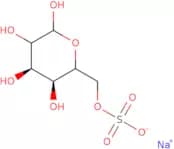
(1R) -1- [(2S, 3R) - 3- Hydroxy- 1- methyl - 2- azetidinyl] -1, 2- ethanediol is a fluorinated sugar that is used in the synthesis of oligosaccharides and polysaccharides. This synthetic monosaccharide can be modified by glycosylation, methylation, and click chemistry. It has an CAS number and a high purity.Pureza:Min. 95%D-Mannose-6-O-sulphate sodium salt
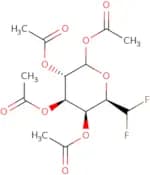
CAS:D-Mannose-6-O-sulphate sodium salt (DMS) is a synthetic sugar that is used in the preparation of biopolymers. It is a complex carbohydrate that is composed of both saccharide and phosphate groups. DMS has been modified to contain methyl groups, which can be used for click chemistry reactions. The CAS number for this compound is 204575-08-6. DMS has been shown to be useful as a fluorination reagent. It has also been synthesized using click chemistry, which allows it to be incorporated into polymers and other organic compounds.Fórmula:C6H11O9SNaPureza:Min. 95%Forma y color:PowderPeso molecular:282.2 g/mol1,2,3,4-Tetra-O-acetyl-6-deoxy-6,6-difluoro-L-galactose
CAS:fucosylation inhibitor
Fórmula:C14H18F2O9Peso molecular:368.28 g/molTizoxanide O-b-D-glucuronide sodium salt
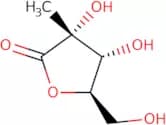
CAS:Tizoxanide O-b-D-glucuronide sodium salt is a synthetic glycosylate of tizoxanide, which is a sulfonamide antibacterial agent. The drug has broad-spectrum activity against Gram-positive and Gram-negative bacteria as well as anaerobic bacteria. Tizoxanide O-b-D-glucuronide sodium salt is also effective against mycoplasma, chlamydia, and rickettsia. This compound can be formulated in the form of a sterile powder for intravenous injection or oral administration. It is used to treat infections caused by bacteria that are resistant to other antibiotic drugs. Tizoxanide O-b-D-glucuronide sodium salt has an excellent safety profile in humans with no significant side effects reported.Fórmula:C16H14N3NaO10SPureza:Min. 95%Forma y color:PowderPeso molecular:463.35 g/mol2,3-O-Isopropylidene-2-C-methyl-D-ribono-1,4-lactone
CAS:2,3-O-Isopropylidene-2-C-methyl-D-ribono-1,4-lactone is a crystalline compound that is obtained by the reaction of dimethylamine with epichlorohydrin. The compound has an asymmetric carbon atom and exists in two enantiomeric forms. It can be used as an acceptor in crystallographic analysis. The chemical structure of 2,3-O-Isopropylidene-2-C-methyl-D-ribono-1,4 -lactone is a lactone form of episulfide. Episulfides are lactones with episulfide groups attached to the C2 and C3 positions on the D ring. The episulfide group is formed by the reaction between the alcohol and sulfhydryl group from cysteamine with sulfur trioxide. The chemical formula for this compound is C13H20N2O8SFórmula:C9H14O5Pureza:Min. 95%Forma y color:PowderPeso molecular:202.2 g/mol3-O-Benzyl-2-deoxy-1,6-di-O-methoxyphenyl-2-phthalimido-β-D-glucopyranoside
3-O-Benzyl-2-deoxy-1,6-di-O-methoxyphenyl-2-phthalimido-b-D-glucopyranoside is a synthetic glycosylation agent. It is a sugar with an Oligosaccharide structure. 3-O-Benzyl--2'-deoxy--1,6'-di--O--methoxyphenyl--2'-phthalimido--b--D--glucopyranoside has been synthesized by fluorination of the sugar and methylation of the benzyl group. Click modification can be used to modify the carbohydrate to create complex carbohydrates. This compound is made from natural ingredients and has a high purity level. Molecular weight: 592.24 g/mol CAS Number: 251300 EINECS Number: 208–831–3 Melting Point: 130°C (decFórmula:C35H33NO9Pureza:Min. 95%Peso molecular:611.64 g/mol(2R,3R,4S,5S)- 2-[(1R)-1,2-Dihydroxyethyl]-3,4-dihydroxy-1-oxa-6,9-diazaspiro[4.5]decane-7,10-dione
(2R,3R,4S,5S)-2-[(1R)-1,2-Dihydroxyethyl]-3,4-dihydroxy-1-oxa-6,9-diazaspiro[4.5]decane-7,10-dione is a glycosylation agent that can be used in organic synthesis. This compound has been shown to have complex carbohydrate and methylation properties. It is also fluorinated and saccharide modified. (2R,3R,4S,5S)-2-[(1R)-1,2-Dihydroxyethyl]-3,4-dihydroxy-1-oxa-6,9-diazaspiro[4.5]decane-7,10-dione is a custom synthesized product with a CAS number of 17098094.Pureza:Min. 95%3-Deoxy-3-fluoro-D-xylofuranose, Aqueous solution
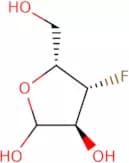
CAS:3-Deoxy-3-fluoro-D-xylofuranose - Aqueous solution is a substrate for the enzyme glucose isomerase. This enzyme catalyses the isomerisation of 3-deoxy-3-fluoro-D-xylofuranose to D-ribose in aqueous solution. The immobilised glucose isomerase can be used as an alternative to the free form, which has been shown to have low yields and high levels of product inhibition.Fórmula:C5H9FO4Pureza:Min. 95%Forma y color:Yellow PowderPeso molecular:152.12 g/molEthyl 2,3-di-O-benzoyl-4,6-O-benzylidene-b-D-thiogalactopyranoside - non-animal origin
CAS:Ethyl 2,3-di-O-benzoyl-4,6-O-benzylidene-b-D-thiogalactopyranoside - non animal origin is a custom synthesis that is modified to include fluorination and methylation. This product is also an oligosaccharide or saccharide with a complex carbohydrate. The CAS No. for this product is 56119-30-3.Pureza:Min. 95%3-O-Benzyl-1,2:5,6-di-O-isopropylidene-D-allofuranose
3-O-Benzyl-1,2:5,6-di-O-isopropylidene-D-allofuranose is a modification of the carbohydrate that is produced synthetically. It belongs to the group of modified carbohydrates and can be used as a monosaccharide or an oligosaccharide. 3-O-Benzyl-1,2:5,6-di-O-isopropylidene-D allofuranose has been shown to have high purity and can be methylated and glycosylated for custom synthesis. This compound has CAS number 93343-70-2.Pureza:Min. 95%


![(3R, 4S, 5R, 6R, 7S) -1- Azabicyclo[4.2.0] octane- 3, 4, 5, 7- tetrol](/_next/image/?url=https%3A%2Fstatic.cymitquimica.com%2Fproducts%2F3D%2Fthumb-webp%2FMA163391.webp&w=3840&q=75)






![N- [(Phenylmethoxy) carbonyl] glycylglycyl- 2- amino- 2- deoxy-a- D- manno- 2- heptulofuranosonic …](/_next/image/?url=https%3A%2Fstatic.cymitquimica.com%2Fproducts%2F3D%2Fthumb-webp%2FMP163942.webp&w=3840&q=75)




![(4αS,6S,7R,8S,8αR)-8-(Benzyloxy)-2-phenyl-6-(phenylthio)hexahydropyrano[3,2-d][1,3]dioxin-7-yl ben…](/_next/image/?url=https%3A%2Fstatic.cymitquimica.com%2Fproducts%2F3D%2Fthumb-webp%2FMB184552.webp&w=3840&q=75)



![(1R) -1- [(2S, 3R) - 3- Hydroxy- 1- methyl - 2- azetidinyl] -1, 2- ethanediol](/_next/image/?url=https%3A%2Fstatic.cymitquimica.com%2Fproducts%2F3D%2Fthumb-webp%2FMH163529.webp&w=3840&q=75)

![(2R,3R,4S,5S)- 2-[(1R)-1,2-Dihydroxyethyl]-3,4-dihydroxy-1-oxa-6,9-diazaspiro[4.5]decane-7,10-dione](/_next/image/?url=https%3A%2Fstatic.cymitquimica.com%2Fproducts%2F3D%2Fthumb-webp%2FMD163941.webp&w=3840&q=75)