Glycoscience
La glicociencia es el estudio de los carbohidratos y sus derivados, así como de las interacciones y funciones biológicas en las que participan. Este campo de investigación es crucial para comprender una amplia variedad de procesos biológicos, incluyendo el reconocimiento celular, la señalización, la respuesta inmune y el desarrollo de enfermedades. La glicociencia tiene aplicaciones importantes en la biotecnología, la medicina, y el desarrollo de nuevos fármacos y terapias. En CymitQuimica, ofrecemos una amplia selección de productos de alta calidad y pureza para la investigación en glicociencia. Nuestro catálogo incluye monosacáridos, oligosacáridos, polisacáridos, glicoconjugados, y reactivos específicos, diseñados para apoyar a los investigadores en sus estudios sobre la estructura, función y aplicaciones de los carbohidratos en sistemas biológicos. Estos recursos están destinados a facilitar descubrimientos científicos y aplicaciones prácticas en diversas áreas de la biociencia y la medicina.
Subcategorías de "Glycoscience"
- Aminoazúcares(108 productos)
- Anticuerpos relacionados con azúcares(282 productos)
- Glicolípidos(46 productos)
- Glicosaminoglicanos (GAGs)(55 productos)
- Glucósidos(419 productos)
- Monosacáridos(6.624 productos)
- Oligosacáridos(3.682 productos)
- Polisacáridos(503 productos)
Se han encontrado 11046 productos de "Glycoscience"
Ordenar por
Pureza (%)
0
100
|
0
|
50
|
90
|
95
|
100
2-epi-(-)-emtricitabine
CAS:<p>2-epi-(-)-emtricitabine is an analog of the nucleoside cytidine, which inhibits the phosphorylation and subsequent degradation of deoxycytidine kinase, thereby blocking the production of the viral DNA polymerase. The compound also inhibits tyrosine kinases, which are enzymes that play a vital role in cell signaling. This inhibition may contribute to its antiviral activity. 2-epi-(-)-emtricitabine has been shown to inhibit human immunodeficiency virus (HIV) replication in vitro and in vivo. It is a prodrug that is converted to emtricitabine, its active form, by deoxycytidine kinase and then hydrolyzed by esterases. 2-epi-(-)-emtricitabine has been shown to be effective against hepatitis B virus and cancer cells.</p>Fórmula:C8H10FN3O3SPureza:Min. 95%Peso molecular:247.25 g/molD-Galactosamine-2-N-sulfate sodium
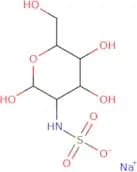
CAS:D-Galactosamine-2-N-sulfate sodium is a chemical compound with potential applications in cancer treatment. It has been shown to enhance the cytotoxic effects of certain drugs, such as Tolvaptan and Luliconazole, in human cancer cells. Additionally, D-Galactosamine-2-N-sulfate sodium has been reported to inhibit kinase activity in Staphylococcus aureus and induce apoptosis in cancer cells. This compound may also have potential as an inhibitor of betamethasone-induced apoptosis and as an analog of cytisine and gossypol. Further research is needed to fully understand the potential therapeutic benefits of D-Galactosamine-2-N-sulfate sodium for cancer treatment.Fórmula:C6H12NNaO8SPureza:Min. 95%Peso molecular:281.22 g/molFluorescein isothiocyanate-dextran - Average MW 10,000
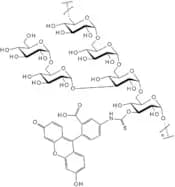
CAS:<p>Fluorescein dextran (FD) is widely used as both an anterograde and retrograde tracer in neurons and for numerous other applications. It is biologically rather inert having α-1,6-linked glucose residues resistant to cleavage by most endogenous cellular glycosidases. It has low immunogenicity and makes an ideal long-term tracer for live cells. FD also serves as a valuable marker for cell loading of macromolecules by micro-injection, vesicular fusion, and electroporation, as well as for the uptake and internal processing of exogenous materials by phagocytotic and endocytic pathways.</p>Pureza:Min. 95%5-Amino-5-deoxy-1,2-O-isopropylidene-6-O-trityl-a-D-galactofuranose
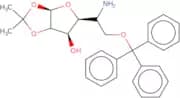
CAS:5-Amino-5-deoxy-1,2-O-isopropylidene-6-O-trityl-a-D-galactofuranose is a fluorinated analog of the natural sugar galactose. This compound has been used as a substrate for the synthesis of modified oligosaccharides and polysaccharides. It is also used in research for its ability to act as a methylation reagent. 5ADOGF has been modified with click chemistry to form 5-(2,3,4,5,6,7,8,9,10) -aminopropylidene-[beta]-D-[alpha]-D-[beta]-D-[alpha]-D-[beta]-D-[alpha] -galactofuranose (APGDF). The CAS number for this compound is 109681-00-7.Fórmula:C18H31NO5Pureza:Min. 95%Peso molecular:461.55 g/molGM2-Oligosaccharide-spacer-NH2 ammonium
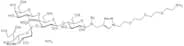
<p>GM2-Oligosaccharide-spacer-NH2 ammonium is a complex carbohydrate with an oligosaccharide spacer and a hydrophobic NH2 group. The product is custom synthesized to your specifications and is available in high purity. It can be modified with fluorination or click chemistry. GM2-Oligosaccharide-spacer-NH2 ammonium is used in the synthesis of polysaccharides, saccharides, and carbohydrates. Some of its applications include modifying proteins, monosaccharides, and sugars.</p>Fórmula:C44H75N7O27·NH3Pureza:Min. 95%Peso molecular:1,151.13 g/mol4-Amino-4-deoxy-D-glucopyranose
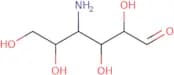
CAS:4-Amino-4-deoxy-D-glucopyranose is an anticancer agent that has been found to be effective against cancer cells. It is a chitosan derivative that acts as an inhibitor of apoptosis in cancer cells. This compound has been detected in urine and has been shown to inhibit the growth of human cancer cells by inhibiting kinase activity. 4-Amino-4-deoxy-D-glucopyranose is an analog of glucose and can be used as a potential therapeutic agent for the treatment of tumors. It specifically targets kinases involved in the regulation of cell growth and protein synthesis, which makes it a promising candidate for cancer treatment.Fórmula:C6H13NO5Pureza:Min. 95%Peso molecular:179.17 g/molD-Ribonolactone 2,3-cyclohexyl ketal
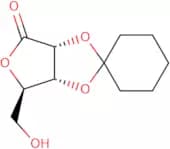
CAS:<p>D-Ribonolactone 2,3-cyclohexyl ketal is a custom synthesis. It is a synthetic modification of the natural D-ribose sugar molecule. It has been modified by methylation and glycosylation to yield a complex carbohydrate with a high degree of purity. The fluorination process has been used to introduce fluorine atoms into the molecule.</p>Fórmula:C11H16O5Pureza:Min. 95%Peso molecular:228.24 g/molLacto-N-fucopentaose II-APD-KLH
CAS:Lacto-N-fucopentaose II-APD-KLH is a fluorinated, monosaccharide, synthetic, oligosaccharide, complex carbohydrate. It has CAS No. 21973-23-9 and a custom synthesis. Lacto-N-fucopentaose II-APD-KLH can be used as a glycosylation or polysaccharide with click modification or methylation. The high purity of this product is 99%.Pureza:Min. 95%3-O-Toluoyl decitabine
CAS:<p>3-O-Toluoyl decitabine is a synthetic, high purity drug that is custom synthesized to order. The synthesis of 3-O-Toluoyl decitabine involves the modification of sugar molecules with fluorination, glycosylation, and methylation. This compound has CAS No. 183016-21-9 and is used in the treatment of cancer by inhibiting ribonucleic acid (RNA) synthesis. 3-O-Toluoyl decitabine inhibits RNA polymerase II and III, which are enzymes that catalyze the transcription of DNA into RNA. It also inhibits protein kinase C, which leads to cell death and tumor shrinkage.</p>Fórmula:C16H18N4O5Pureza:Min. 95%Peso molecular:346.34 g/molNeosamine
<p>Neosamine is an antimicrobial agent that is activated by the addition of fatty acids. It has a low potency and is used to diagnose infections caused by bacteria. Neosamine has been shown to inhibit the growth of bacteria, fungi, and parasites on electron microscopy. Neosamine also inhibits protease activity and may be useful in detergent compositions for removing fats, oils, and greases from surfaces. This chemical is stable in acidic solutions and does not react with carbostyril or other diagnostic agents.</p>Fórmula:C6H14N2O4Pureza:Min. 95%Peso molecular:178.19 g/molEthyl a-L-thiorhamnopyranoside
<p>Ethyl a-L-thiorhamnopyranoside is a synthetic, fluorinated monosaccharide. It is an oligosaccharide with a complex carbohydrate structure and can be used as a building block for the synthesis of glycosides, polysaccharides, and other sugar derivatives. This product can also be modified by methylation, click reactions, or other chemical reactions to produce desired structures. The purity of this product is >98%.</p>Pureza:Min. 95%D-Glucose diethyl mercaptal
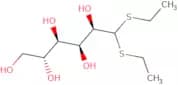
CAS:<p>D-Glucose diethyl mercaptal is a homogeneous catalyst that can be used to acetylate galactitol to produce D-arabinose. It acts as an efficient and selective catalyst for the reaction of nitrous acid with hydrochloric acid, which produces acetyl chloride. Acetyl chloride is a reactive compound that can be used in the synthesis of many other compounds. <br>D-Glucose diethyl mercaptal has been used in chromatographic methods to separate d-arabinose from L-arabinose. The ring-opening polymerization of D-glucopyranose by mercaptals leads to the formation of polyols, which are useful materials for the production of plastics and rubber products. Chloride ions are required for this reaction, while hydrogen chloride is produced as a byproduct.</p>Fórmula:C10H22O5S2Pureza:Min. 95%Peso molecular:286.41 g/molBromoxynil D-glucuronide methyl ester
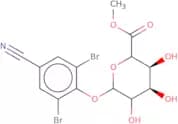
<p>Bromoxynil D-glucuronide methyl ester is a synthetic, high-purity chemical with a CAS number of 2512-06-3. It is an Oligosaccharide and sugar that is Glycosylated and Click modified. This product can be used in Custom synthesis or as a Modification to saccharides.</p>Fórmula:C14H13Br2NO7Pureza:Min. 95%Peso molecular:467.06 g/mol2,3,5-Tri-O-p-chlorobenzyl-L-fucopyranoside
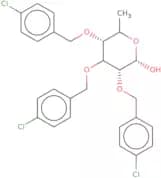
CAS:<p>2,3,5-Tri-O-p-chlorobenzyl-L-fucopyranoside is a modified sugar and an effective inhibitor of the glycosidase enzymes. It has been shown to inhibit the synthesis of glycogen in vitro. 2,3,5-Tri-O-p-chlorobenzyl-L-fucopyranoside is a major component of commercially available agarose gel electrophoresis buffers and is also used for modification of proteins by click chemistry. The compound can be custom synthesised with a high degree of purity and can be fluorinated for use in mass spectrometry.</p>Fórmula:C27H27Cl3O5Pureza:Min. 95%Peso molecular:537.86 g/molUDP-N-acetyl-D-glucosamine
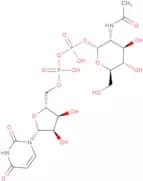
CAS:<p>UDP-N-acetyl-D-glucosamine is a nucleotide that is found in the cell membrane of Gram-positive bacteria. It has been shown to inhibit the growth of bacteria by binding to the 50S ribosomal subunit. This binding prevents the formation of an antibiotic-inhibitor complex with the enzyme cell wall synthesis that is required for cell wall biosynthesis, inhibiting protein synthesis and cell division. UDP-N-acetyl-D-glucosamine has also been shown to be a substrate for glycosylation enzymes, which are involved in the production of glycogen, chitin, and other polysaccharides.</p>Fórmula:C17H27N3O17P2Pureza:Min. 95%Forma y color:PowderPeso molecular:607.35 g/mol1,3,5-Tri-O-benzoyl-2-deoxyribofuranose
CAS:<p>1,3,5-Tri-O-benzoyl-2-deoxyribofuranose is a custom synthesis of a complex carbohydrate. It has been modified by methylation and glycosylation to form an Oligosaccharide. This product is also fluorinated and synthesized in the laboratory using click chemistry. The compound is available at high purity with low impurities.</p>Fórmula:C26H22O7Pureza:Min. 95%Peso molecular:446.45 g/molDiosmetin-d3-3'-O-glucuronide
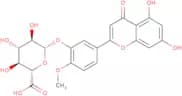
CAS:<p>Diosmetin-d3-3'-O-glucuronide is a synthetic sugar derivative that is used as a building block for the synthesis of oligosaccharides and polysaccharides. Diosmetin-d3-3'-O-glucuronide can be fluorinated and methylated, which makes it useful for click chemistry reactions, because it can be easily modified to create new structures. This product is available in high purity with custom synthesis options.</p>Fórmula:C22H17D3O12Pureza:Min. 95%Peso molecular:479.4 g/molDi[3-deoxy-D-manno-octulosonyl]-lipid A sodium salt - 0.5mg/ml aqueous solution
CAS:Essential component of lipopolysaccharide in most Gram-negative bacteria and the minimal structural component to sustain bacterial viability. It serves as the active component of lipopolysaccharide to stimulate potent host immune responses through the complex of Toll-like-receptor 4 and myeloid differentiation protein 2.Fórmula:C110H198N2Na4O39P2Pureza:Min. 95%Forma y color:PowderPeso molecular:2,326.65 g/mol4-Methylphenyl 2,3,4,6-tetra-O-benzyl-b-D-thiogalactopyranoside
CAS:4-Methylphenyl 2,3,4,6-tetra-O-benzyl-b-D-thiogalactopyranoside is a synthetic saccharide set up to be an oligo-saccharide building block.Fórmula:C41H42O5SPureza:Min. 95%Peso molecular:646.84 g/mol1,2,3,4-Tri-O-acetyl-b-D-glucuronide benzyl ester
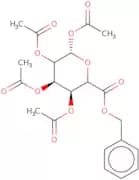
CAS:<p>1,2,3,4-Tri-O-acetyl-b-D-glucuronide benzyl ester is a synthetic compound that belongs to the group of high purity custom synthesis. It has been shown to be a useful reagent for glycosylation and methylation reactions. This product is also used in the synthesis of oligosaccharides and monosaccharides. 1,2,3,4-Tri-O-acetyl-b-D-glucuronide benzyl ester can also be used as a sugar or complex carbohydrate in biological studies.</p>Fórmula:C21H24O11Pureza:Min. 95%Peso molecular:452.41 g/molGM1-Ganglioside labelled by biotin
GM1-biotin ganglioside (sodium salt) has a core tetrasaccharide structure (Galβ1,3GalNAcβ1,4Galβ1,4Glc) with sialic acid linked α2,3 to the inner galactose residue, ceramide linked β to position 1 on the reducing terminal glucose residue, and biotin to position 5 on sialic acid (Ledeen, 2009). GM1 ganglioside is abundant in all mammalian brains where it covers 10%-20% of the total ganglioside mixture. It is found in epithelial membranes and is a key element for bacterial toxicity and viral infection as it is the intestinal receptor for the cholera toxin, the B-subunits of heat-labile toxin, rotavirus, and simian virus 40. GM1 ganglioside functions as a neurotrophic and neuroprotective compound, and has been used therapeutically for diabetic and peripheral neuropathies. GM1 ganglioside also has the ability to bind amyloid-β proteins and is involved in Alzheimerâs pathogenesis (Chiricozzi, 2020).Fórmula:C71H122N6O33SPureza:Min. 95%Peso molecular:1,619.82 g/mol4,6-O-p-Methoxylbenzylidene-D-glucal
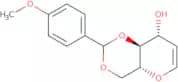
CAS:<p>4,6-O-p-Methoxylbenzylidene-D-glucal is a custom synthesis that can be modified to meet your needs. It is an oligosaccharide and polysaccharide which belongs to the group of carbohydrates. Carbohydrates are important in many biochemical processes. They are found in plants, animals, and bacteria and are the most abundant organic molecules in living things. Carbohydrates are composed of carbon (C), hydrogen (H), and oxygen (O). The general formula for carbohydrates is Cx(H2O)y where x represents the number of carbon atoms and y represents the number of water molecules. This product has high purity and can be used in a variety of applications including methylation, click modification, oligosaccharides, polysaccharides, saccharides, complex carbohydrate synthesis, monosaccharides, sugar synthesis, or synthetic modifications.</p>Pureza:Min. 95%N-Acetyl-D-galactopyranosylthiosemicarbazide
N-Acetyl-D-galactopyranosylthiosemicarbazide is a glycosylation reagent that is used in the synthesis of saccharides, oligosaccharides, and polysaccharides. N-Acetyl-D-galactopyranosylthiosemicarbazide is synthesized by reacting acetamidoacetonitrile with D-galactose and sodium thiosulfate. The reaction product can be easily purified by crystallization or recrystallization. N-Acetyl-D-galactopyranosylthiosemicarbazide has been shown to be a high purity compound, as it does not contain any residual solvents or impurities. The CAS number for this compound is 58437-66-7.Pureza:Min. 95%b-Lactosyl ureide dihydrate
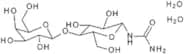
b-Lactosyl ureide dihydrate is a white crystalline powder that is soluble in water. It has a molecular weight of 598.7 and was synthesized by the reaction of b-lactosyl chloride with urea. The compound has been used as a fluoro-protecting group for nucleophilic substitution reactions, and glycosylation reactions.Fórmula:C13H24N2O11·2H2OPureza:Min. 95%Forma y color:White/Off-White SolidPeso molecular:420.37 g/molMethyl 2,4-di-O-acetyl-b-D-xylopyranoside
CAS:Methyl 2,4-di-O-acetyl-b-D-xylopyranoside (MDX) is an epoxide that has been found to stimulate the growth of Schizophyllum commune and other fungi. It is structurally related to vicinal diols, which are known to inhibit esterases and hydrolyze acetyl groups. The acetyl groups on MDX can be reduced by hydride reduction or by hydrolysis with acetylated esters. MDX inhibits bacterial growth by inhibiting protein synthesis through its structural similarity to deoxyribose phosphate, a component of DNA.Fórmula:C10H16O7Pureza:Min. 95%Peso molecular:248.2 g/molAsenapine N-b-D-glucuronide
Asenapine N-b-D-glucuronide is a modification of asenapine, which is an antipsychotic drug. It is a complex carbohydrate that contains an oligosaccharide and a monosaccharide. The oligosaccharide has two methyl groups, one of which is located at the 6th position and the other at the 8th position. This modification also contains two glycosylation sites and one fluorination site.Fórmula:C23H24ClNO7Pureza:Min. 95%Peso molecular:461.89 g/molTri-fucosyl-Lewis Y-heptasaccharide-APE, HSA
<p>Tri-fucosyl-Lewis Y-heptasaccharide-APE, HSA is a complex carbohydrate that has been custom synthesized and glycosylated. It was modified with methylation and fluorination to create a high purity product. This complex carbohydrate has a CAS number of 107386-00-6 and is composed of sugar molecules. It is a polysaccharide with the following structure:</p>Pureza:Min. 95%Sucrose 4,6-methyl orthoester
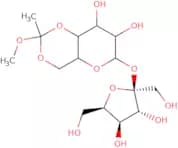
CAS:<p>Sucrose 4,6-methyl orthoester is a sugar derivative that can be synthesized from sucrose. Sucrose 4,6-methyl orthoester is a white solid that is soluble in water, methanol, and acetone. It has been shown to have the same properties as sucrose but with higher stability in acidic conditions and at high temperatures. This compound has been custom synthesized by our laboratory to produce a high purity product.</p>Fórmula:C15H26O12Pureza:Min. 95%Peso molecular:398.36 g/molMethyl 2,3,4,6-tetra-O-acetyl-α-D-thiomannopyranoside
CAS:<p>Methyl 2,3,4,6-tetra-O-acetyl-a-D-thiomannopyranoside is a linker that is used in the synthesis of oligodeoxyribonucleotides. This compound has been shown to inhibit the expression of factor receptor α subunit in plant cells. In human studies, methyl 2,3,4,6-tetra-O-acetyl-a-D-thiomannopyranoside has been found to be effective against infectious diseases such as HIV and malaria by suppressing the production of growth factors. It also inhibits protein synthesis and cell division. Methyl 2,3,4,6-tetra-O-acetyl-a -D -thiomannopyranoside is synthesized from D -mannose and acetaldehyde in plants. The biosynthesis of this compound occurs by means of a sequence that begins with phosphorylation of D -mannose</p>Fórmula:C15H22O9SPureza:Min. 95%Peso molecular:378.4 g/mol2,3-O-Isopropylidene-1,5-di-O-toluoyl-b-D-ribofuranose
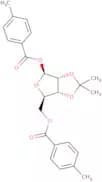
CAS:<p>2,3-O-Isopropylidene-1,5-di-O-toluoyl-b-D-ribofuranose (IPDT) is a saccharide that is modified with a methyl group at the 2' position of the ribose. This modification can be used to control the rate of glycosylation reactions, or to synthesize oligosaccharides and complex carbohydrates. IPDT is also an important precursor for click chemistry reactions, which are used in the synthesis of polymers and other organic compounds.</p>Fórmula:C24H26NO7Pureza:Min. 95%Peso molecular:440.47 g/molMethyl 2,3,4-tri-O-acetyl-b-D-thiogalacturonide methyl ester
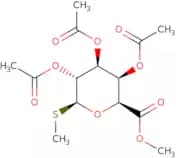
CAS:Methyl 2,3,4-tri-O-acetyl-b-D-thiogalacturonide methyl ester is a modified carbohydrate that has been synthesized for use as a building block in the synthesis of complex carbohydrates. The compound is readily available and can be custom synthesized to meet your specifications. It is also available as a fluorinated form. This product is manufactured by a process called Click chemistry and it has been shown to have high purity, making it suitable for use in pharmaceuticals and other applications.Fórmula:C14H20O9SPureza:Min. 95%Peso molecular:364.37 g/molD-Raffinose undecaacetate
CAS:D-Raffinose undecaacetate is a sweetener that is used in some chewing gum and other foods. It is a sucrose ester with the chemical formula C12H24O11. D-Raffinose undecaacetate has been shown to increase the release of insulin, which may be due to its effects on glucose uptake or modulation of taste receptors on the tongue. It has also been shown to have an anti-inflammatory effect, which may be due to its interactions with the bitter taste receptors present in tissues such as the small intestine and liver.Fórmula:C40H54O27Pureza:Min. 95%Peso molecular:966.84 g/molLotaustralin
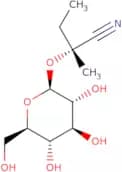
CAS:<p>Lotaustralin is a natural product that is derived from the plant Lotea usitatissima. It belongs to the class of isoflavonoids and has shown activity against infectious diseases. Lotaustralin has been shown to inhibit mycelial growth in vitro by targeting enzymes involved in the biosynthesis of isoflavonoid compounds in plants, such as lc-ms/ms methodology, preparative hplc, and enzymatic assays. It also has been shown to have an effect on locomotor activity in mice. The polymerase chain reaction (PCR) assay was used to detect the presence of lotaustralin in various samples, including blood serum and sputum samples. This product can be used for sample preparation for PCR assay.</p>Fórmula:C11H19NO6Pureza:Min. 97%Peso molecular:261.27 g/mol4-Methylphenyl 2-acetamido-2-deoxy-b-D-glucopyranoside
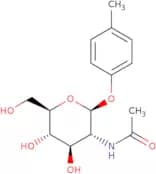
CAS:<p>4-Methylphenyl 2-acetamido-2-deoxy-b-D-glucopyranoside is a high purity, custom synthesis sugar. It is a synthetic oligosaccharide monosaccharide saccharide carbohydrate. This chemical has been modified with fluorination, glycosylation, and methylation. The CAS number for this compound is 35694-99-6 and it has the molecular formula of C11H14O5.</p>Fórmula:C15H21NO6Pureza:Min. 95%Peso molecular:311.33 g/molS-Hydroxy topiramate
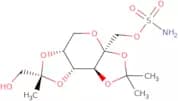
CAS:S-Hydroxy topiramate is a modification of topiramate, which is a sugar. The chemical name for this compound is carbamic acid, N-[(1R,2S)-2-[[(3S)-3-methyl-4-(2,2,2-trifluoroethoxy)piperidin-1-yl]carbonyl]cyclopentyl]-3-[(phenylmethoxy)methyl]-, monosodium salt. It has the following properties: CAS No. 198215-62-2; Carbohydrate; complex carbohydrate; Custom synthesis; Oligosaccharide; High purity; Synthetic; Monosaccharide; Methylation; Glycosylation; Polysaccharide. This product can be used in the following applications: Fluorination, saccharide.Fórmula:C12H21NO9SPureza:Min. 95%Peso molecular:355.36 g/mol6-O-Benzyl-D-glucose
CAS:<p>6-O-Benzyl-D-glucose is an aglycon of 6-O-benzylglycosides, which are synthesized from glucose by alkaline hydrolysis in the presence of silver oxide. The benzyl group can be removed by a variety of methods, including treatment with hydrogen chloride gas. 6-O-Benzyl-D-glucose has been used in research to demonstrate that carbohydrates have a common structural feature that can be identified by looking at their molecular structure. This molecule has also been used to study the synthesis and reactivity of benzyl groups.</p>Fórmula:C13H18O6Pureza:Min. 95%Peso molecular:270.28 g/molN-Acetyl-α-D-glucosamine
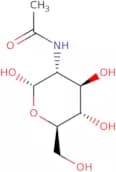
CAS:<p>N-Acetyl-a-D-glucosamine is a low energy, vivo animal, chemical biology, expressed, oligosaccharides, acceptor. It is an acetylated amino sugar that can be found in the cell membrane surface of bacteria and is also a protein target for acetylation. In addition to this function, NAG has been shown to be involved in protein synthesis and growth factor activity. It has been used as a substrate for the production of monoclonal antibodies and has been shown to have stereoselective effects on the antibody response.</p>Fórmula:C8H15NO6Pureza:Min. 95%Forma y color:PowderPeso molecular:221.21 g/mol1-Benzyl-4,6-O-acetamidogalactose
<p>1-Benzyl-4,6-O-acetamidogalactose is an aminoglycoside antibiotic that inhibits the growth of bacteria by binding to the 50S ribosomal subunit. It enters the bacterial cell wall and blocks the synthesis of peptidoglycan, which is an essential component of the cell wall. 1-Benzyl-4,6-O-acetamidogalactose has been shown to have a potent bactericidal effect against Mycobacterium tuberculosis, with a half maximal inhibitory concentration (IC50) of 0.5 µg/mL. It also has a significant inhibitory effect on Mycobacterium avium complex (MIC=8 µg/mL).</p>Pureza:Min. 95%4'-Hydroxypropranolol-2-O-b-D-glucuronide
<p>4'-Hydroxypropranolol-2-O-b-D-glucuronide is a custom synthesis that has been modified with glycosylation, methylation, and fluorination. It is a complex carbohydrate that has CAS number and is a polysaccharide. 4'-Hydroxypropranolol-2-O-b-D-glucuronide is synthesized by the modification of an oligosaccharide, saccharide, or sugar with methylation and glycosylation. This product also contains a click modification.</p>Pureza:Min. 95%2-O-(b-D-Galactopyranosyl)-D-xylopyranose
CAS:<p>2-O-(b-D-Galactopyranosyl)-D-xylopyranose is a synthetic monosaccharide that is the product of glycosylation, fluorination, and methylation. This compound is a custom synthesis and has been modified by click chemistry to make it more stable. This product has high purity and can be used in the synthesis of complex carbohydrates. The CAS number for this compound is 91463-78-4.</p>Fórmula:C11H20O10Pureza:Min. 95%Peso molecular:312.27 g/mol2-Deoxy-2,2-difluoro-D-threo-pentofuranos-1-ulose-3,5-dibenzoate
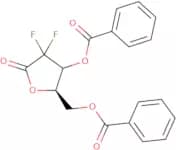
CAS:2-Deoxy-2,2-difluoro-D-threo-pentofuranos-1-ulose-3,5-dibenzoate is a custom synthesis of an oligosaccharide. It is a polysaccharide that contains saccharides and other modifications such as methylation and glycosylation. This product is a sugar with high purity and fluorination. Click modification is the process by which 2,2'-dF (fluorine) is introduced into the furanose ring at the C4 position. Fluorination increases the stability of the molecule and increases its resistance to hydrolysis by enzymes. The addition of this fluorine group also decreases the reactivity of the molecule with water, making it more stable for storage.Fórmula:C19H14F2O6Pureza:Min. 95%Forma y color:SolidPeso molecular:376.31 g/molD-Glucosamine-2-N,6-O-disulphate disodium
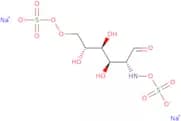
CAS:D-Glucosamine-2-N,6-O-disulphate disodium salt is a methylated glucosamine derivative. It is a sugar that is typically found in the form of an oligosaccharide or polysaccharide. D-Glucosamine can be synthesized from glucose and ammonia, which are both natural compounds. This compound has been modified with fluorine atoms to create a high purity product that can be used in research or industrial applications. In addition, this product is available with custom synthesis modifications.Fórmula:C6H13NO11S2•Na2Pureza:(Paper Electrophoresis. Ph 5) Single SpotForma y color:PowderPeso molecular:385.28 g/molMethyl 2-deoxy-D-threo-pentofuranoside
CAS:Methyl 2-deoxy-D-threo-pentofuranoside is a synthetic monosaccharide that has been modified by fluorination. It can be used for the synthesis of oligosaccharides and complex carbohydrates. Methyl 2-deoxy-D-threo-pentofuranoside can also be used for glycosylation, methylation, or click modification reactions. This product is available in high purity and will not contain any impurities.Pureza:Min. 95%a-Cyclodextrin sulfate sodium salt
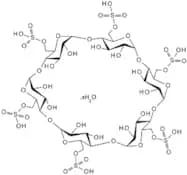
CAS:Alpha-cyclodextrin (α-CD) derivative with a hydrophilic exterior and lipophilic cavity (smaller than β-CDs and γ-CDs) to allocate certain guest molecules. This structural characteristic enables applications in molecular encapsulation, solubility enhancement, and stabilization across multiple industries. In pharmaceuticals, it serves as a drug delivery vehicle, enhancing the bioavailability and stability of active ingredients. The food industry utilizes it as a stabilizer for flavors, colors, and nutrients, as well as a functional ingredient for its effects on lipid metabolism. In cosmetics, it acts as a complex agent for fragrances and active components. Its applications extend to analytical chemistry for chiral separation and to materials science for developing smart materials and nanosystems.Pureza:Min. 95%Forma y color:White PowderD-Myo-inositol-1,3,5-triphosphate
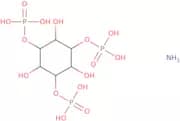
CAS:<p>D-myo-inositol-1,3,5-triphosphate is a carbohydrate that is modified with fluorine. It is a custom synthesis and can be synthesized in high purity. D-myo-inositol-1,3,5-triphosphate has several glycosylations and methylations. The modification of this compound includes click chemistry for the synthesis of oligosaccharides and saccharides. D-myo-inositol-1,3,5-triphosphate can be used as a sugar or an oligosaccharide in the modification of proteins or carbohydrates.</p>Pureza:Min. 95%6-bromo-6-deoxy-γ-cyclodextrin
CAS:This gamma-cyclodextrin (γ-CD) derivative is a modified cyclic oligosaccharide composed of eight glucose units, featuring a larger cavity size than α- and β-cyclodextrins. This structural characteristic allows γ-CDs to form inclusion complexes with a wider range of guest molecules, making it particularly versatile in various industries. In the food sector, it is used as a carrier and stabilizer for flavors, fat-soluble vitamins, and polyunsaturated fatty acids, protecting volatile compounds from evaporation. In pharmaceuticals, it enhances the solubility and bioavailability of poorly water-soluble drugs and, thanks to its larger ring size, allows for the encapsulation of larger molecules or even entire drug molecules. γ-CDs and derivatives are also used for environmental remediation and, in analytical chemistry, for the extraction and concentration of target substances.Fórmula:C48H72Br8O32Pureza:Min. 95%Peso molecular:1,800.3 g/molNGA4B N-Glycan
CAS:NGA4B N-Glycan is a custom synthetic compound that can be modified to include methylation, fluorination, and other modifications. It is an oligosaccharide that is a polysaccharide composed of saccharides. The saccharides are monosaccharides or simple sugars. NGA4B N-Glycan is available at high purity for use in research and as a reagent.Fórmula:C74H123N7O51Pureza:Min. 95%Peso molecular:1,926.79 g/molBlood Group H-BSA - 15 atom spacer
The H-BSA-15-atom spacer is a synthetic polymer that can be modified to create a glycolipid or glycopeptide. The H-BSA-15-atom spacer is an oligosaccharide with a molecular weight of 3,500 daltons and has been custom synthesized for this use. This product is highly purified and does not contain any other substances, such as proteins. It has been fluorinated to increase its resistance to degradation by enzymes. Glycosylation and click modification have also been performed on the H-BSA-15 atom spacer.Pureza:Min. 95%Forma y color:PowderMethyl 4-deoxy-2,3-O-isopropylidene-L-threonate
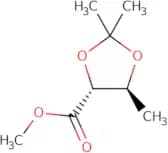
CAS:<p>Methyl 4-deoxy-2,3-O-isopropylidene-L-threonate is a fluorinated sugar that can be synthesized with high purity. It has been used for the synthesis of glycosyls and polysaccharides or for the modification of natural sugars. This compound is an intermediate in the synthesis of complex carbohydrates such as oligosaccharides and polysaccharides. Click chemistry has also been used as a modification to this compound. Methyl 4-deoxy-2,3-O-isopropylidene-L-threonate is a white crystalline solid that is soluble in water and methanol but not in ethanol. It has a melting point of 155°C and a CAS number of 78086-72-3.</p>Fórmula:C8H14O4Pureza:Min. 95%Peso molecular:174.19 g/mol8-Methoxycarbonyl-3-benzyl-3',4',6',6-tetra-O-acetyl-N,N'-diacetyl-b-chitobioside
CAS:8-Methoxycarbonyl-3-benzyl-3',4',6',6-tetra-O-acetyl-N,N'-diacetyl b-chitobioside is a synthetic product that belongs to the class of glycosides. This compound has been modified by the incorporation of methyl and fluorine atoms. It is used as an intermediate in the synthesis of oligosaccharides and saccharides for use in biotechnology research.Fórmula:C39H58N2O16Pureza:Min. 95%Peso molecular:810.88 g/mol





![Di[3-deoxy-D-manno-octulosonyl]-lipid A sodium salt - 0.5mg/ml aqueous solution](/_next/image/?url=https%3A%2Fstatic.cymitquimica.com%2Fproducts%2F3D%2Fthumb-webp%2FOD29173.webp&w=3840&q=75)