Glycoscience
Subcategorías de "Glycoscience"
- Aminoazúcares(108 productos)
- Anticuerpos relacionados con azúcares(284 productos)
- Glicolípidos(46 productos)
- Glicosaminoglicanos (GAGs)(55 productos)
- Glucósidos(422 productos)
- Monosacáridos(6.674 productos)
- Oligosacáridos(4.042 productos)
- Polisacáridos(517 productos)
Se han encontrado 11404 productos de "Glycoscience"
R,S-Flurbiprofen-acyl-b-D-glucuronide
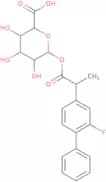
CAS:R,S-Flurbiprofen-acyl-b-D-glucuronide is a custom synthesis of an oligosaccharide that has been modified by fluorination and methylation. This saccharide is synthesized from R,S-flurbiprofen using the click modification. It is a polysaccharide with glycosylation at the sugar level. The carbohydrate chain also contains monosaccharides and complex carbohydrates.Fórmula:C21H21FO8Pureza:Min. 95%Peso molecular:420.39 g/mol1,2,4,6-Tetra-O-acetyl-3-O-benzyl-b-D-glucopyranose
CAS:Hypromellose is a polymer that is made from cellulose. It is used as an excipient in pharmaceutical formulations, such as tablets and capsules. Hypromellose can also be used as a food additive for thickening, stabilizing, and suspending. It has a molecular weight of about 20000 Daltons and may have the following side effects: mild gastrointestinal discomfort, diarrhea, nausea, or vomiting.Fórmula:C21H26O10Pureza:Min. 95%Forma y color:PowderPeso molecular:438.43 g/mol3-Azido-5-O-benzoyl-3-deoxy-1,2-O-isopropylidene-a-D-ribofuranose
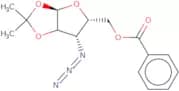
3-Azido-5-O-benzoyl-3-deoxy-1,2-O-isopropylidene a D-ribofuranose (3ABI) is a synthetic monosaccharide that can be synthesized via a custom synthesis. 3ABI is an oligosaccharide that has the ability to modify glycosylation and polysaccharide synthesis. The fluorination of this sugar provides it with high purity and stability. 3ABI has been shown to have a CAS number of 44793-23-2.
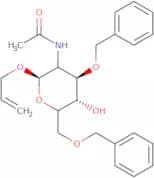
Fórmula:C15H17N3O5Pureza:Min. 95%Peso molecular:319.31 g/molAllyl 2-acetamido-3,6-di-O-benzyl-2-deoxy-b-D-glucopyranoside
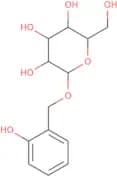
CAS:Allyl 2-acetamido-3,6-di-O-benzyl-2-deoxy-b-D-glucopyranoside is a synthetic sugar that is used in the modification of complex carbohydrates. It is an Oligosaccharide that has a Glycosylation and fluorination. Allyl 2-acetamido-3,6-di-O-benzyl-2-deoxy-b--D--glucopyranoside contains a methyl group on the C1 position, which can be modified at the C1 position to produce various derivatives. Click chemistry reactions are also possible with this compound. The chemical name for this compound is 65730–02–1 and it has CAS number 65730–02–1.Fórmula:C25H31NO6Pureza:Min. 95%Peso molecular:441.53 g/mol2-Hydroxybenzylbeta-D-glucopyranoside
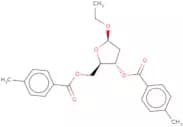
CAS:2-Hydroxybenzylbeta-D-glucopyranoside is a fluorinated monosaccharide that has been custom synthesized for the glycosylation of complex carbohydrate. It is a synthetic compound that features a click modification and methylation. This product is offered in high purity and is available for custom synthesis.Fórmula:C13H18O7Pureza:Min. 95%Peso molecular:286.28 g/molEthyl 2-deoxy-3,5-di-O-toluoyl-D-xylofuranoside
Ethyl 2-deoxy-3,5-di-O-toluoyl-D-xylofuranoside is a monosaccharide or a modified sugar. It is used in the synthesis of complex carbohydrates and can be fluorinated to prepare a water soluble fluorinated saccharide. Ethyl 2-deoxy-3,5-di-O-toluoyl-D-xylofuranoside is an intermediate in the modification of oligosaccharides and polysaccharides. The chemical name for this compound is ethyl 2 deoxy 3,5 di O toluoyl D xylo furanoside.Fórmula:C23H26O6Pureza:Min. 95%Peso molecular:398.45 g/molMethyl 1-(5-fluoro-1H-2-oxopyrimidin-4-yl)-b-D-glucopyranuronate
CAS:Methyl 1-(5-fluoro-1H-2-oxopyrimidin-4-yl)-b-D-glucopyranuronate is an anticancer drug that inhibits β-glucuronidase. Methyl 1-(5-fluoro-1H-2-oxopyrimidin-4-yl)-b-D-glucopyranuronate is a colorless solid that has been recrystallized, purified, and analyzed for its chloride content. The function of this compound has been tested in vitro using tissue cultures and animal models. The reaction vessel used for the test was an acetonitrile solution with a pH between 7 and 8. The methylester form of methyl 1-(5-fluoro-1H--2--oxopyrimidin 4--yl)-b--D--glucopyranuronate reacts with sulphite to produce a green product with a colorimetric method
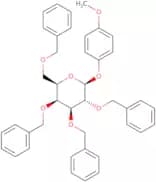
Fórmula:C11H13FN2O8Pureza:Min. 95%Peso molecular:320.23 g/mol4-Methoxyphenyl 2,3,4,6-tetra-O-benzyl-β-D-galactopyranoside
CAS:4-Methoxyphenyl 2,3,4,6-tetra-O-benzyl-b-D-galactopyranoside is a matrix assisted laser desorption/ionization (MALDI) probe that is used for the detection of esophageal cancer. This probe has been shown to be resistant to non-Hodgkin's lymphoma and dna–dna hybridization. The type strain of this agent was found in a clinical sample from an esophagus biopsy. 4MPBGP has also been shown to have coagulation and waveform properties.Fórmula:C41H42O7Pureza:Min. 95%Peso molecular:646.77 g/molTri-b-GalNAc-b-alanine-PEG3-biotin
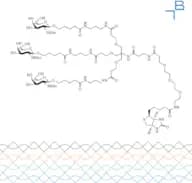
Tri-b-GalNAc-b-alanine-PEG3-biotin comprises a trivalent β-GalNAc ligand, a beta-alanine-PEG3 spacer, and a biotin tag in its structure. The ligand specifically targets ASGPRs (asialoglycoprotein receptors) on hepatocyte cells due to its multivalent GalNAc residues. The flexible linker (beta-alanine-PEG3) connects the GalNAc segment to biotin, allowing researchers to attach it to streptavidin-coated surfaces. Applications include lysosomal targeting, hepatocyte studies, and drug delivery.
Fórmula:C83H146N14O34SPureza:Min. 95%Peso molecular:1,916.19 g/molTri-b-GalNAcAc3-C12-amido-C3-azide
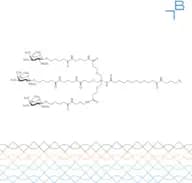
This is the peracetylated equivalent of tri-b-GalNAc-C12-amido-C3-azide. This unique bifunctional ligand for ASGPR-targeted applications contains three terminal GalNAc sugars that bind to ASGPR receptors and permit hepatocyte uptake, the C12-amide linker offers a stable spacer and the C3-azide moiety enables tailored bioconjugation via CuAAC click chemistry. This design has the potential for targeted delivery of therapeutic cargo (drugs, siRNA, nanoparticles) to hepatocytes, development of LYTACs for selective protein degradation, and creation of in vivo ASGPR imaging probes.Fórmula:C94H154N14O38Pureza:Min. 95%Peso molecular:2,088.3 g/molD-Mannoheptulose
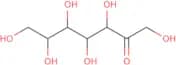
CAS:D-Mannoheptulose is a natural analog of D-fructose that has been shown to have anticancer properties. It inhibits the growth and proliferation of cancer cells, induces apoptosis, and reduces tumor size. D-Mannoheptulose is a potent inhibitor of protein kinases, including the Chinese hamster ovary cell kinase (CHO-K1) and the human protein kinase C isoform βII. This compound has been found in urine and has potential as an anticancer agent. In addition, it has been studied as a potential inhibitor for diabetes drug saxagliptin.
Fórmula:C7H14O7Pureza:Min. 95%Peso molecular:210.18 g/molL-[6-13C]Sorbose
CAS:L-[6-13C]Sorbose is a modified sugar that is synthesized from D-glucose, L-sorbose, and 13C-labeled methyl groups. This compound can be used to study the methylation and glycosylation of polysaccharides and oligosaccharides.Fórmula:C513CH12O6Pureza:Min. 95%Peso molecular:181.15 g/molRhamnolipids C10
CAS:Rhamnose based 'green' surfactantFórmula:C32H58O13Pureza:Min. 95%Forma y color:PowderPeso molecular:650.8 g/molOctadecylthioethyl 4-O-(a-D-galactopyranosyl)-b-D-galactopyranoside
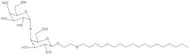
CAS:Octadecylthioethyl 4-O-(a-D-galactopyranosyl)-b-D-galactopyranoside is a synthetic carbohydrate with the CAS number 87019-34-9. It is a non-reducing sugar and has the molecular formula C18H36O22. The chemical structure of Octadecylthioethyl 4-O-(a-D-galactopyranosyl)-b-D-galactopyranoside is: The chemical name for Octadecylthioethyl 4-O-(a-D-galactopyranosyl)-b-D-galactopyranoside is Oligosaccharide, Custom synthesis, Glycosylation, High purity, Carbohydrate, sugar, Synthetic. The molecular weight of Octadecylthioethyl 4 -O-(a-[3]-Galactopyranosyl)-b-[2]-GalactopyrFórmula:C32H62O11SPureza:Min. 95%Peso molecular:654.89 g/molUndecyl 2-acetamido-2-deoxy-b-D-glucopyranoside
CAS:Undecyl 2-acetamido-2-deoxy-b-D-glucopyranoside is a cell surface glycosaminoglycan (GAG) that binds to the proteoglycan receptor, which is a GAG binding protein. Undecyl 2-acetamido-2-deoxy-b-D-glucopyranoside has been shown to be involved in signaling pathways and gene expression regulation, as well as having an effect on the activity of other proteins. This glycosaminoglycan has been used to profile gene expression levels in cells and tissues. The high density microarray technique can be used to analyze the expression profile of many genes simultaneously.Fórmula:C19H37NO6Pureza:Min. 95%Peso molecular:375.5 g/molCyclohexylethanoyl-N-Hydroxyethylglucamide
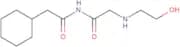
CAS:Cyclohexylethanoyl-N-Hydroxyethylglucamide (CYE) is a membrane protein with a strong affinity for the bacterial enzyme histidine kinase, which is involved in the regulation of bacterial cell wall synthesis. CYE binds to the catalytic site of this enzyme and inhibits its activity. CYE also has an inhibitory effect on clostridium dehydrogenases and campylobacter adenylate cyclases. CYE has been shown to bind to other enzymes, such as tecnologia and diffraction, synchrotron, staphylococcus kinases, and campylobacter adenylate cyclases. Structural studies of CYE have been carried out using crystallography at the Instituto de Tecnología Química e Biológica in Campinas, Brazil.Fórmula:C16H31NO7Pureza:Min. 95%Peso molecular:349.42 g/molLacto-N-fucopentaose II-APD-HSA
Lacto-N-fucopentaose II-APD-HSA is a complex carbohydrate that has been chemically modified to include a fucose sugar. Lacto-N-fucopentaose II-APD-HSA is synthesized by the click reaction and then modified with the addition of an acetyl group. The product is then methylated and purified by HPLC. Lacto-N-fucopentaose II-APD-HSA can be used in a wide range of applications, including as a component in glycosylation reactions or as an adjuvant for fluorescence labelling.
Pureza:Min. 95%Hexadecyl 2-acetamido-3,4,6-tri-O-acetyl-2-deoxy-b-D-glucopyranoside
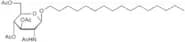
CAS:Hexadecyl 2-acetamido-3,4,6-tri-O-acetyl-2-deoxy-b-D-glucopyranoside (HAT) is an antibiotic that belongs to the class of macrolides. It has been shown to be heritable and its heritability is dependent on the type of animal species. HAT also has a basic structure with substituents that are either acidic or hydroxylated. The heterogeneity in this compound can be seen by the different lactation periods for different animals. Regression analysis was used to find out if there was a correlation between the lactation period and the basicity of HAT. This study found that there was no such correlation and therefore concluded that there is no relationship between HAT's basicity and its heritability.Fórmula:C30H53NO9Pureza:Min. 95%Peso molecular:571.74 g/molHexyl 2-acetamido-2-deoxy-b-D-glucopyranoside
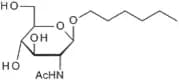
CAS:Hexyl 2-acetamido-2-deoxy-b-D-glucopyranoside is a sugar that is used in the study of immune reactions. It can be used to measure albumin levels and tissue samples, as well as in animal experiments. Hexyl 2-acetamido-2-deoxy-b-D-glucopyranoside has been shown to have toxic effects on cells, which may be due to its ability to inhibit DNA concentrations. This substance also has a directional fluorescence, which means that it will emit light in one direction only when stimulated with light of a certain wavelength.Fórmula:C14H27NO6Pureza:Min. 95%Peso molecular:305.37 g/molOctyl 2-acetamido-3,4,6-tri-O-acetyl-2-deoxy-b-D-glucopyranoside
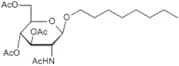
CAS:Octyl 2-acetamido-3,4,6-tri-O-acetyl-2-deoxy-b-D-glucopyranoside is an antigen that is expressed in tumor tissue. It is a polynucleotide molecule that can be used for the diagnosis of cancer and autoimmune diseases. The octyl 2-acetamido-3,4,6-tri-O acetyl 2 deoxy b D glucopyranoside molecule is a programmable molecule that can be used to induce a specific phenotype in cells. Octyl 2 acetamido 3,4,6 tri O acetyl 2 deoxy b D glucopyranoside has been shown to be an effective antigen for the generation of CD8+ T cells.
Fórmula:C22H37NO9Pureza:Min. 95%Peso molecular:459.53 g/mol



![L-[6-13C]Sorbose](/_next/image/?url=https%3A%2Fstatic.cymitquimica.com%2Fproducts%2F3D%2Fthumb-webp%2FMS35536.webp&w=3840&q=75)