Glycoscience
Subcategorías de "Glycoscience"
- Aminoazúcares(108 productos)
- Anticuerpos relacionados con azúcares(284 productos)
- Glicolípidos(46 productos)
- Glicosaminoglicanos (GAGs)(55 productos)
- Glucósidos(419 productos)
- Monosacáridos(6.622 productos)
- Oligosacáridos(3.689 productos)
- Polisacáridos(506 productos)
Se han encontrado 11038 productos de "Glycoscience"
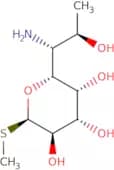
Methyl 1-thiolincosaminide
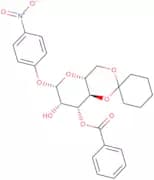
CAS:Intermediate in the production of biosynthetic antibioticsFórmula:C9H19NO5SPureza:Min. 95%Peso molecular:253.32 g/mol4-Nitrophenyl 3-O-benzoyl-4,6-cyclohexylidene-b-D-mannopyranoside
CAS:4-Nitrophenyl 3-O-benzoyl-4,6-cyclohexylidene-b-D-mannopyranoside is a Custom synthesis. It is an Oligosaccharide that consists of a Polysaccharide with Modification. The CAS No. 102717-17-9 is Methylation and Glycosylation and Carbohydrate. Click modification and saccharide are sugar and High purity. Fluorination is Synthetic.Fórmula:C25H27NO9Pureza:Min. 95%Peso molecular:485.48 g/molD-Fuculose
CAS:D-Fuculose is a sugar that is used as a sweetener. It is produced by microbial fermentation of l-arabinose, which is an intermediate in the pentose phosphate pathway. D-Fuculose can be synthesized from glucose and fucose using enzymes such as sucrose isomerase or mutarotase. The conversion of glucose to D-fuculose proceeds at temperatures between 50 and 70 degrees Celsius, with optimal activity occurring at 60 degrees Celsius. D-Fuculose has been shown to have high catalytic activity and stability under acidic conditions, making it ideal for use as a food additive in acidic drinks or foods. It also has the highest sweetness intensity of all sugars tested to date.Fórmula:C6H12O5Pureza:Min. 95%Peso molecular:164.16 g/molAllyl 4,6-O-benzylidene-a-L-glucopyranoside
Allyl 4,6-O-benzylidene-a-L-glucopyranoside is a glycosylation agent that is used in the synthesis of oligosaccharides. It is a synthetic compound that can be modified to produce complex carbohydrates. Allyl 4,6-O-benzylidene-a-L-glucopyranoside has been shown to be effective for the fluorination and methylation of sugar chains. It also has high purity and CAS number, which makes it an excellent choice for custom synthesis.
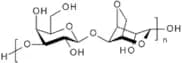
Pureza:Min. 95%Agar
CAS:The major gel forming component in agar, agarose, consists of a linear chain of sequences of 1,3 linked β-D-galactopyranosyl units and 1,4 linkages to 3,6-anhydro-α-L-galactopyranosyl units. Gelation is done via the formation of double helices (Arnott, 1974). Agar's properties are similar to gelatin as it is primarily used as a plating gel for microbial cultures (Lahaye, 1991). However, agar is a good substitute for animal-based gelatin in vegetarian foods and is easy to use in food gels in a similar way to the carrageenans. Common food applications of agar include: puddings, custards, and soft candies. Agar improves the texture of processed cheese and frozen desserts, and is also added to baked goods to inhibit staling. A creative food application uses agar-based gel cubes that are infused with fruit extract or wine to make a vegetable-based aspic (Armisén, 2009). Agar contains two polysaccharides Agarobiose and Agaropectin. Both Gelidium latifolium and Gelidium amansii are sources of both Agar and Agarose. The images were kindly provided by Prof Mike Guiry from Cork who runs ‘The Seaweed Site’. Agaropectin Agaropectin is a sulphated non-gelling galactan comprising about 30% of Agar. Half ester sulphate is present in varying amounts plus D-glucuronic acid and small amounts of pyruvic acid. As with Agarose the main chain has alternating residues of D-galactose and L-galactose heavily modified with acidic side-groups which are usually sulfate, glucuronate, and pyruvate. Pyruvic acid is possibly attached in an acetal form to the D-galactose residues of the agarobiose skeleton. No formal structure of Agaropectin appears to have been published. Agarose Agarose is a linear gelling polysaccharide of (1-3) linked β-D-galactopyranose residues linked to 3,6-anhydro-α-L-galactopyranose via 1-4 bonds. Agar contains about 60% Agarose.Pureza:Min. 95%Forma y color:PowderSulpho Lewisa Na
Sulpho Lewisa Na is a complex carbohydrate that has been modified with fluorination and methylation. This product is custom synthesized, high purity, and has a CAS number. It is available for synthesis in various lengths of saccharides with a variety of modifications. Sulpho Lewisa Na can be used in the following applications: glycosylations, click modification, and methylation.
Fórmula:C20H34NNaO18SPureza:Min. 95%Peso molecular:631.54 g/molNicotinic acid acyl-b-D-glucuronide
CAS:Nicotinic acid acyl-b-D-glucuronide is a carbohydrate that is synthesized by the condensation of nicotinic acid with b-D-glucuronic acid. It can be modified by fluorination, methylation, glycosylation, or click modification. The CAS Number for this product is 24719-73-1 and it has a purity of >98%. It has been custom synthesized at our lab and it is available in high purity.Fórmula:C12H13NO8Pureza:Min. 95%Peso molecular:299.23 g/molMethyl b-neuraminic acid methyl ester
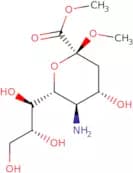
CAS:Methyl b-neuraminic acid methyl ester is a synthetic monosaccharide that is used for the synthesis of oligosaccharides and polysaccharides. Methylation of this compound provides a convenient way to introduce fluorine atoms into saccharides, which can be used for click chemistry reactions. Methyl b-neuraminic acid methyl ester is also used in the synthesis of glycosylated proteins, as it can be easily hydrolyzed by enzymes such as sialidase and neuraminidase. This product is sold at high purity and custom synthesis.Fórmula:C11H21NO8Pureza:Min. 95%Peso molecular:295.29 g/mol(R)-Ketoprofen b-D-glucuronide
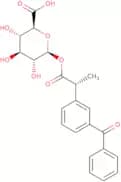
CAS:(R)-Ketoprofen b-D-glucuronide is a synthetic modified sugar that is produced by the glucuronidation of ketoprofen, a nonsteroidal anti-inflammatory drug. The modification of ketoprofen with glucuronic acid can be achieved through an enzymatic process, which is catalyzed by UDP-glucuronyltransferase. This modification increases the solubility of ketoprofen and its ability to penetrate cells. (R)-Ketoprofen b-D-glucuronide has been shown to have antibacterial properties against Gram positive bacteria such as Staphylococcus aureus and Streptococcus pyogenes. It has also shown antiviral activity against HIV-1 due to its inhibition of reverse transcriptase, which is an enzyme important for viral replication.
Fórmula:C22H22O9Pureza:Min. 95%Forma y color:White to off-white solid.Peso molecular:430.4 g/molPentaric acid
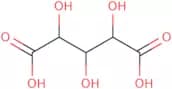
CAS:Pentaric acid is a crystalline, monocarboxylic acid with a hydroxyl group. It is used as an inhibitor of corrosion in metal and as a disinfectant. Pentaric acid can be found in urine samples and has been shown to be an effective inhibitor of the enzymatic reaction that produces azobenzene, which is associated with the development of bladder cancer. This compound also inhibits the growth of bacteria. Pentaric acid is used as an additive in some detergents and soaps because it can inhibit the growth of bacteria on surfaces.
Pentaric acid was first synthesized by German chemist Otto Wohlert in 1834. Hydrogen ions are released when pentaric acid dissolves in water, lowering the pH level and causing corrosion to metal surfaces. The corrosion inhibition properties of pentaric acid have been known since its discovery, but its anti-bacterial properties were not discovered until recently when researchers found that pentarFórmula:C5H8O7Pureza:Min. 95%Peso molecular:180.11 g/molMethyl 2,3,6-tri-O-acetyl-a-D-glucopyranoside
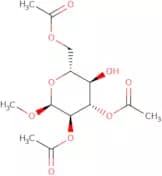
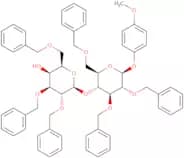
CAS:Methyl 2,3,6-tri-O-acetyl-a-D-glucopyranoside is a fluorinated monosaccharide that can be used in the synthesis of oligosaccharides, polysaccharides and complex carbohydrates. This product is custom synthesized for customers with specific needs. The modification of Methyl 2,3,6-tri-O-acetyl-a-D-glucopyranoside can also be done to provide desired properties. The purity of this product is high and suitable for various applications.Fórmula:C13H20O9Pureza:Min. 95%Peso molecular:320.29 g/mol4-Methoxyphenyl 4-O-(2,3,6-tri-O-benzyl-b-D-galactopyranosyl)-2,3,6-tri-O-benzyl-b-D-glucopyranoside
CAS:4-Methoxyphenyl 4-O-(2,3,6-tri-O-benzyl-b-D-galactopyranosyl)-2,3,6-tri-O-benzyl-b-D-glucopyranoside is a sugar that is custom synthesized. It is fluorinated and modified with saccharides. The molecular weight of this compound is 582.06 g/mol and the CAS number for it is 15041281.Fórmula:C61H64O12Pureza:Min. 95%Peso molecular:989.15 g/mol(S)-Propranolol b-D-glucuronide sodium salt
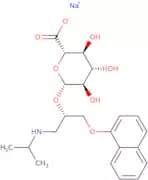
CAS:Propranolol is a non-selective beta-blocker that blocks the action of epinephrine on beta-adrenergic receptors. It is used to treat high blood pressure, angina, and arrhythmia. Propranolol b-D-glucuronide sodium salt is a prodrug of propranolol that has been modified in order to improve its oral bioavailability.Fórmula:C22H28NNaO8Pureza:Min. 95%Peso molecular:457.45 g/molMethyl 3,4-O-isopropylidene-a-D-galactopyranoside
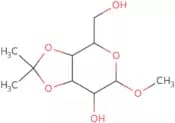
CAS:Methyl 3,4-O-isopropylidene-a-D-galactopyranoside is a white crystalline powder that is soluble in water. This product is used in the synthesis of complex carbohydrate and glycosylation. It has CAS No. 40269-01-0 and can be custom synthesized to meet your requirements. The purity of this product is over 99%.Fórmula:C10H18O6Pureza:Min. 95%Peso molecular:234.25 g/molAbacavir 5'-β-D-glucuronide
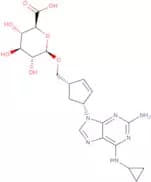
CAS:Main metabolite of antiretroviral drug Abacavir with potent activity against human immunodeficiency virus type 1 (HIV-1). Abacavir is eliminated by hepatic metabolism to two major metabolites: 5’-glucuronide formed by uridine diphosphate glucuronyl transferase and 5’-carboxylate formed by cytosolic alcohol dehydrogenase.
Fórmula:C20H26N6O7Pureza:Min. 95%Forma y color:PowderPeso molecular:462.46 g/mol2,6-Di-O-acetyl-3,4-di-O-benzyl-a-D-mannopyranosyl trichloroactimidate
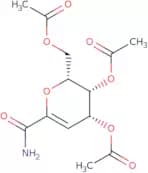
CAS:2,6-Di-O-acetyl-3,4-di-O-benzyl-a-D-mannopyranosyl trichloroactimidate is a synthetic, glycosylate sugar that can be used in the synthesis of oligosaccharides and polysaccharides. This molecule has been fluorinated to increase its lipophilicity and stability. It has been modified with methyl groups to improve its reactivity with other molecules. The purity of 2,6-Di-O-acetyl-3,4-di-O-benzyl-a-D-mannopyranosyl trichloroactimidate is greater than 98%.Fórmula:C26H28Cl3NO8Pureza:Min. 95%Peso molecular:588.86 g/mol4,5,7-Tri-O-acetyl-2,6-anhydro-3-deoxy-D-lyxo-hept-2-enonamide
CAS:4,5,7-Tri-O-acetyl-2,6-anhydro-3-deoxy-D-lyxo-hept-2-enonamide is a carbohydrate that belongs to the group of oligosaccharides. It is a synthetic compound that has been modified with fluorination and methylation. This compound has been synthesized with high purity and custom synthesis. The modification process includes glycosylation and click chemistry.Fórmula:C13H17NO8Pureza:Min. 95%Peso molecular:315.28 g/molD-Mannose- 4- 13C
CAS:D-Mannose is a sugar that is found in many plants and animals. It can be extracted from natural sources or synthesized with the use of Click modification, fluorination, glycosylation, and methylation. D-Mannose has been shown to inhibit bacterial adhesion and prevent the formation of biofilms. In addition, it has been shown to have anti-inflammatory activities. D-Mannose is a complex carbohydrate that is composed of saccharides joined together in chains and rings.Pureza:Min. 95%Peso molecular:181.15 g/molPhosphoric acid mono-((2R,3R,4S,5R)-2,3,4,5,7-pentahydroxy-6-hydroxyimino-heptyl) ester disodium salt (compound H)
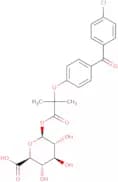
Phosphoric acid mono-((2R,3R,4S,5R)-2,3,4,5,7-pentahydroxy-6-hydroxyimino-heptyl) ester disodium salt (compound H) is a high purity compound that can be custom synthesized to suit the customer's needs. It is a synthetically modified sugar with Click modification. This product has been fluorinated and glycosylated. Modification and methylation are also available on request.Fórmula:C7H14O10NPNa2Pureza:Min. 95%Peso molecular:349.14 g/molFenofibryl b-D-glucuronide
CAS:Fenofibryl b-D-glucuronide is a potential anticancer drug that has been shown to inhibit growth and induce apoptosis in human liver cancer cells. Fenofibryl b-D-glucuronide is also known to have the ability to react with covalent adducts, which may be due to its reactive nature. It is not currently known how this compound interacts with other drugs or how it affects body mass index in humans.Fórmula:C23H23ClO10Pureza:Min. 95%Peso molecular:494.88 g/mol