Glycoscience
La glicociencia es el estudio de los carbohidratos y sus derivados, así como de las interacciones y funciones biológicas en las que participan. Este campo de investigación es crucial para comprender una amplia variedad de procesos biológicos, incluyendo el reconocimiento celular, la señalización, la respuesta inmune y el desarrollo de enfermedades. La glicociencia tiene aplicaciones importantes en la biotecnología, la medicina, y el desarrollo de nuevos fármacos y terapias. En CymitQuimica, ofrecemos una amplia selección de productos de alta calidad y pureza para la investigación en glicociencia. Nuestro catálogo incluye monosacáridos, oligosacáridos, polisacáridos, glicoconjugados, y reactivos específicos, diseñados para apoyar a los investigadores en sus estudios sobre la estructura, función y aplicaciones de los carbohidratos en sistemas biológicos. Estos recursos están destinados a facilitar descubrimientos científicos y aplicaciones prácticas en diversas áreas de la biociencia y la medicina.
Subcategorías de "Glycoscience"
- Aminoazúcares(108 productos)
- Anticuerpos relacionados con azúcares(282 productos)
- Glicolípidos(46 productos)
- Glicosaminoglicanos (GAGs)(55 productos)
- Glucósidos(419 productos)
- Monosacáridos(6.624 productos)
- Oligosacáridos(3.682 productos)
- Polisacáridos(503 productos)
Se han encontrado 11046 productos de "Glycoscience"
Ordenar por
Pureza (%)
0
100
|
0
|
50
|
90
|
95
|
100
Hyaluronic acid disaccharide sodium salt
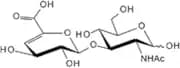
CAS:The hyaluronic acid discaccharide and other enzymatically produced polymer homologs from hyaluronic acid have been of value in the study of hyaluronic acid metabolism in healthy and diseased tissues (Hascall, 2019). Hyaluronic acid is a polysaccharide containing repeating disaccharide units of β-1,3-N-acetyl glucosamine and β-1, 4-glucuronic acid. The unsaturated disaccharide hyalobiuronic acid is released from hyaluronic acid by the action of hyaluronidase on umbilical cord (Weissman, 1954).Fórmula:C14H20NNaO11Pureza:Min. 95 Area-%Forma y color:PowderPeso molecular:401.3 g/mol2-Acetamido-1,3,6-tri-O-acetyl-2,4-dideoxy-4-fluoro-D-glucopyranose
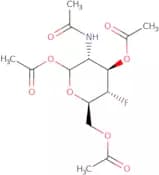
CAS:<p>2-Acetamido-1,3,6-tri-O-acetyl-2,4-dideoxy-4-fluoro-D-glucopyranose is a high purity synthetic glycosylate with a custom synthesis. It is an oligosaccharide that has been modified for fluorination and methylation. This product is used as an intermediate in the production of complex carbohydrates.</p>Fórmula:C14H20FNO8Pureza:Min. 95%Forma y color:PowderPeso molecular:349.31 g/mol5-Deoxy-D-ribose
CAS:<p>5-Deoxy-D-ribose is a molecule that is an intermediate in the shikimate pathway, which produces the aromatic amino acids. 5-Deoxy-D-ribose can be synthesized from D-ribose and shikimic acid. The biosynthesis of 5-deoxy-D-ribose is catalyzed by the enzyme ribose 5'-phosphate kinase, which converts ribose 5'-phosphate to 5-deoxy--D--ribose phosphate. This reaction requires ATP as a source of energy, and it is inhibited by phosphoribosyl pyrophosphate (PRPP). The asymmetric synthesis of 5-deoxy--D--ribose has been achieved with a chiral Lewis acid catalyst. The molecular structure of 5-deoxy--D--ribose has been determined by NMR spectroscopy. Shikimate pathways are present in mammalian cells, but not in plants or bacteria.</p>Fórmula:C5H10O4Pureza:Min. 95 Area-%Forma y color:Orange Clear LiquidPeso molecular:134.13 g/mol2,5-Dideoxy-2,5-imino-D-glucitol
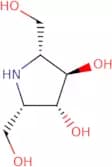
CAS:2,5-Dideoxy-2,5-imino-D-glucitol is a potent inhibitor of glycosidases. It has been shown to have significant antifungal activity against Candida albicans in the caco-2 cell model system. 2,5-Dideoxy-2,5-imino-D-glucitol inhibits β-(1→3)-glycosidase activity by binding to the active site of the enzyme and preventing substrate hydrolysis. The compound is also an enantiopure and asymmetric synthesis. This drug has been shown to be a model system for studying glycosidase inhibition.Fórmula:C6H13NO4Pureza:Min. 95%Peso molecular:163.17 g/mol4-C-[[(Methylsulfonyl)oxy]methyl]-3-O-benzyl-1,2-di-O-acetyl 5-methanesulfonate D-erythro-pentofuranose
CAS:<p>Methyl 4-C-[[(methylsulfonyl)oxy]methyl]-3-O-benzyl-1,2-di-O-acetyl 5-methanesulfonate D-erythro-pentofuranose is a methylated saccharide used in the synthesis of LNA amidites</p>Fórmula:C19H26O12S2Pureza:Min. 95%Forma y color:PowderPeso molecular:510.53 g/mol2,3,4,6-Tetra-O-acetyl-D-mannopyranose
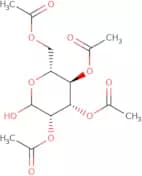
CAS:<p>2,3,4,6-Tetra-O-acetyl-D-mannopyranose is a stereoselective technique used for the production of trisaccharides. It is also an acetylated form of D-mannopyranose that is obtained by acetylation of D-mannopyranose with acetic anhydride in the presence of hydrochloric acid or pyridine. The compound can be obtained as either levorotatory or dextrorotatory isomers depending on whether the hydroxyl group or carbonyl group are in the axial position. 2,3,4,6-Tetra-O-acetyl-D-mannopyranose can be used as a substrate for enzyme preparations to produce aminoglycoside antibiotics such as hygromycin A. Acetylation increases the solubility and stability of this drug and reduces its toxicity to humans</p>Fórmula:C14H20O10Pureza:Min. 98 Area-%Forma y color:White PowderPeso molecular:348.3 g/molOnitin 2'-O-glucoside
CAS:Onitin 2'-O-glucoside is a sugar that is custom synthesized and purified. It is a modification of oligosaccharides, complex carbohydrates, and polysaccharides. Onitin 2'-O-glucoside is an Oligosaccharide Carbohydrate which can be used in the synthesis of high purity monosaccharides and methylations. It also has the ability to form glycosylation with saccharides, such as glucose or fructose. This product can also be fluorinated to produce saccharides that are water soluble.Pureza:Min. 95%Methyl 2-deoxy-L-ribofuranoside
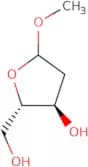
CAS:<p>Methyl 2-deoxy-L-ribofuranoside is an intermediate in the synthesis of l-arabinose. It can be obtained by the reaction of methyl 2,3-dideoxy-D-ribofuranoside with pivaloyl chloride. The antiviral activity of this compound has been shown by its ability to inhibit the replication of influenza A virus. Methyl 2-deoxy-L-ribofuranoside is a fluorinating agent that can be used for the synthesis of oligosaccharides and nucleosides. This intermediate also serves as a substrate for a number of organic reactions, including regioselective and stereoselective chlorination.</p>Fórmula:C6H12O4Pureza:Min. 95%Forma y color:PowderPeso molecular:148.16 g/molN-Trimethylchitosan
CAS:Quaternization of the primary amine in N-Trimethylchitosan increases the water solubility of chitosan and keeps chitosan soluble over a wide pH range. N-Trimethylchitosan is soluble in water and ethanol, making it ideal for use in biotechnology applications.The degree of quaternization is 30-70%Pureza:Min. 90%Atorvastatin acyl-b-D-glucuronide
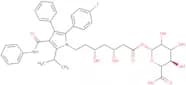
CAS:<p>Atorvastatin acyl-b-D-glucuronide is a synthetic compound that has been modified with fluorine and methyl groups. It is a glycosylated molecule with a carbohydrate moiety. It has been shown to be active against Saccharide-producing bacteria, such as the genus Clostridium, which are responsible for the production of polysaccharides and glycans.</p>Fórmula:C39H45FN2O11Pureza:90%MinPeso molecular:736.8 g/mol2,3-O-Isopropylidene-L-glyceraldehyde - 50% DCM solution
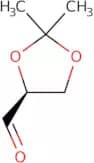
CAS:2,3-O-Isopropylidene-L-glyceraldehyde (2,3-OIPA) is a synthetic compound that was developed as an alternative to paraformaldehyde for the synthesis of enantiopure compounds. It has been used in metathesis reactions and catalysed the conversion of β-unsaturated ketones to enantiopure products. 2,3-OIPA also has significant cytotoxic activity against a range of human cancer cell lines. This compound can be used in asymmetric syntheses to produce chiral molecules with a high degree of optical purity.Fórmula:C6H10O3Pureza:Min. 95%Forma y color:Colorless PowderPeso molecular:130.14 g/molD-Glucosamine-3,4,6-tri-O-sulphate trisodium salt
CAS:<p>D-Glucosamine-3,4,6-tri-O-sulphate trisodium salt is a high purity and custom synthesis of D-glucosamine. It is a sugar with click modification and fluorination. It has CAS No. 157297-03-5 and it is synthesized from glycosylation, methylation, and modification. It has a molecular weight of 517.85 g/mol and the chemical formula C9H14N2O12S3NaO6. Glucosamine is an oligosaccharide that can be found in many complex carbohydrates such as chitin or cellulose.</p>Fórmula:C6H10NO14S3Na3Pureza:Min. 95%Forma y color:PowderPeso molecular:485.31 g/mol6'-Sialyllactose-BSA
<p>Sialyllactose-BSA is a complex carbohydrate that is used in the synthesis of saccharides. It has been modified with fluorination to create a 6'-sialyllactose-BSA, which is a monosaccharide. This product can be custom synthesized and it's purity is high. The product can be methylated or glycosylated, and it has been click-modified for fluorescence labeling.</p>Pureza:Min. 95%Forma y color:PowderPeso molecular:72,318 g/molDipyridamole di-O-b-D-glucuronide
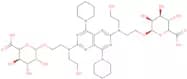
CAS:<p>Dipyridamole di-O-b-D-glucuronide is a fluorinated oligosaccharide that has been synthesized using the click chemistry reaction. It is a monosaccharide that has been glycosylated and modified with methyl groups to produce a high purity product. The carbohydrate consists of one or more sugar units linked by glycosidic bonds. Carbohydrates are classified by their number of sugar units and by the presence of other chemical groups such as phosphate, sulfate, or hydroxyl. This product is also used in the synthesis of complex carbohydrates and polysaccharides.</p>Fórmula:C36H56N8O16Pureza:Min. 95%Peso molecular:856.87 g/molBlood group B trisaccharide 8-methoxycarbonyloctyl ester
CAS:<p>8-methoxycarbonyl ester of Gal-a1-3(Fuc-a1-2)Gal</p>Fórmula:C28H50O17Pureza:Min. 95%Forma y color:PowderPeso molecular:658.69 g/mol3'-b-Sialyl-N-acetyllactosamine
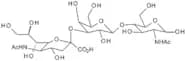
CAS:<p>3'-b-Sialyl-N-acetyllactosamine is an oligosaccharide that is synthesized from L-arabinose and 3'-phosphoadenosine 5'-phosphosulfate. It has a high degree of purity and is custom synthesized to order. The CAS number for this product is 210418-18-1.</p>Fórmula:C25H42N2O19Pureza:Min. 95%Forma y color:White PowderPeso molecular:674.6 g/molb-D-Galactopyranosyl nitromethane
CAS:<p>b-D-Galactopyranosyl nitromethane is a high purity sugar with various modifications. It is custom synthesized to order and is available in various purity grades. This sugar can be modified by fluorination, glycosylation, methylation, or modification with oligosaccharides or monosaccharides. The CAS number for this sugar is 81846-64-2. b-D-Galactopyranosyl nitromethane High purity, Custom synthesis, sugar, Click modification, Fluorination, Glycosylation, Synthetic, Methylation, Modification, Oligosaccharide, Monosaccharide CAS No. 81846-64-2</p>Fórmula:C7H13NO7Pureza:Min. 95%Peso molecular:223.2 g/molGalactomannan, from soybean
CAS:<p>A polysaccharide consisting of a mannose backbone with galactose side chains. Galactomannan is a component of the cell wall of the mold Aspergillus and is released during growth. Detection of galactomannan in blood is used to diagnose invasive aspergillosis infections in humans.</p>Pureza:Min. 95%Forma y color:PowderMethyl a-D-arabinofuranoside
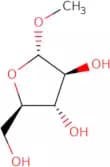
CAS:Methyl a-D-arabinofuranoside is an inhibitor of the enzyme D-arabinonolactate synthase, which is involved in the synthesis of arabinose from D-ribulose. It can be used for the diagnosis and treatment of pediatric patients with high activity index values in their blood. This drug has been shown to inhibit transcriptional regulation in human erythrocytes and to have structural similarities to the natural substrate. Methyl a-D-arabinofuranoside has also been shown to inhibit the activities of enzymes involved in cellular respiration, protein synthesis, and DNA replication. This inhibition leads to cell death by apoptosis or necrosis. The group P2 methyl a-D-arabinofuranoside (MAA) was tested as a potential analytical method for wastewater treatment; it was found that MAA could be used as an effective tool for removing organic matter from wastewater.Fórmula:C6H12O5Pureza:Min. 98 Area-%Forma y color:Colorless Clear LiquidPeso molecular:164.16 g/molBlumenol C glucoside
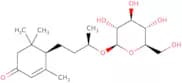
CAS:<p>Blumenol C glucoside is a natural compound that is found in plants. It has been found to have an apoptotic effect on cancer cells and may be used as a chemotherapeutic agent. Blumenol C glucoside has been shown to induce apoptosis in many cell types, including human carcinoma cells, by inhibiting the mitochondrial membrane potential. It also induces apoptosis by down-regulating Bcl-2 and up-regulating Bax proteins. The induction of apoptosis by Blumenol C glucoside is mediated through an increase in the release of cytochrome c from the mitochondria into the cytosol. In addition, it inhibits the expression of proinflammatory cytokines such as IL-1β and IL-6. This compound also induces apoptosis in normal human prostate epithelial cells and mouse colon epithelial cells without affecting normal human lung epithelial cells or mouse lung epithelial cells. A transcriptomic analysis revealed that Blumenol</p>Fórmula:C19H32O7Pureza:Min. 95%Forma y color:PowderPeso molecular:372.45 g/mol


![4-C-[[(Methylsulfonyl)oxy]methyl]-3-O-benzyl-1,2-di-O-acetyl 5-methanesulfonate D-erythro-pentofur…](/_next/image/?url=https%3A%2Fstatic.cymitquimica.com%2Fproducts%2F3D%2Fthumb-webp%2FMM76880.webp&w=3840&q=75)