Compuestos relacionados con enzimas, péptidos y proteínas
Los compuestos relacionados con enzimas, péptidos y proteínas son críticos para estudiar y manipular las vías bioquímicas. Estos compuestos incluyen enzimas que catalizan reacciones bioquímicas, péptidos que actúan como hormonas y moléculas de señalización, y proteínas que desempeñan una amplia gama de funciones dentro de los organismos. Esta categoría abarca inhibidores, activadores, sustratos y otros reactivos esenciales para la enzimología, la proteómica y la investigación de péptidos. En CymitQuimica, ofrecemos una diversa selección de compuestos de alta calidad para facilitar su investigación en cinética enzimática, función de proteínas y síntesis de péptidos, asegurando resultados precisos y fiables.
Subcategorías de "Compuestos relacionados con enzimas, péptidos y proteínas"
- Aminoácidos (AA)(40.509 productos)
- Enzimas(3.560 productos)
- Péptidos(30.719 productos)
- Proteínas(15.022 productos)
Se han encontrado 1312 productos de "Compuestos relacionados con enzimas, péptidos y proteínas"
Ordenar por
Pureza (%)
0
100
|
0
|
50
|
90
|
95
|
100
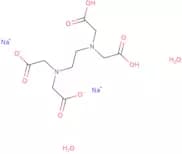
Ethylenediaminetetraacetic acid disodium dihydrate
CAS:<p>Hexadentate chelator</p>Fórmula:C10H14N2Na2O8·2H2OForma y color:White PowderPeso molecular:372.24 g/molN-Benzyl-2,4,6-triphenyl pyridinium tetrafluoroborate
CAS:<p>N-Benzyl-2,4,6-triphenyl pyridinium tetrafluoroborate is a molecule that regulates transcriptional activity. It can be used to isolate regulatory genes from different organisms and identify the specific genes that regulate the expression of other genes. The algorithm for this process is a stepwise, stereoselective, aerobic search. This process starts with an algorithm that identifies the best possible match between the gene sequence and the database sequences. The algorithm then transfers to another stepwise and stereoselective search of the database until it finds a match. The process ends when there are no more matches in the database or when all possible combinations have been searched. N-Benzyl-2,4,6-triphenyl pyridinium tetrafluoroborate has been shown to activate Staphylococcus aureus at very low concentrations but does not cause activation of mammalian cells at these concentrations.</p>Fórmula:C30H24N·BF4Pureza:Min. 95%Peso molecular:485.32 g/molLorcaserin hydrochloride hemihydrate
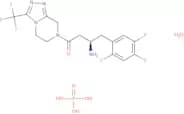
CAS:Producto controlado<p>Serotonin receptor 5-HT2C agonist</p>Fórmula:(C11H14ClN)2•(HCl)2•H2OPureza:Min. 95%Forma y color:White PowderPeso molecular:482.31 g/molSitagliptin phosphate monohydrate
CAS:<p>Sitagliptin phosphate monohydrate is a DPP-IV inhibitor that is used to treat type 2 diabetes mellitus. Sitagliptin decreases postprandial glucose levels and improves glycemic control. It binds to the enzyme DPP-IV, which breaks down peptides in the small intestine, inhibiting the breakdown of incretin hormones such as glucagon-like peptide 1 and glucose transporter type 2 (GLUT2). This leads to increased levels of GLP-1. Sitagliptin also has been shown to have an anti-diabetic effect by increasing insulin release from pancreatic beta cells.</p>Fórmula:C16H20F6N5O6PPureza:Min. 95%Forma y color:White PowderPeso molecular:523.32 g/molTolterodine tartrate
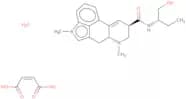
CAS:<p>Muscarinic antagonist</p>Fórmula:C22H31NO·C4H6O6Pureza:Min. 95%Forma y color:PowderPeso molecular:475.57 g/molMethysergide maleate monohydrate
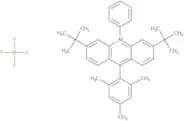
CAS:Producto controlado<p>Methylergide maleate monohydrate is a high-quality reagent that is useful as an intermediate for the synthesis of complex compounds. It is also a fine chemical that can be used in research and development. Methylergide maleate monohydrate has CAS No. 129-49-7, and it can be used to produce speciality chemicals or reaction components. It has a wide range of applications, such as being a versatile building block in organic synthesis and being a reaction component for the production of pharmaceuticals or agrochemicals.</p>Fórmula:C25H33N3O7Pureza:Min. 95%Forma y color:White PowderPeso molecular:487.55 g/mol3,6-Bis(1,1-dimethylethyl)-10-phenyl-9-(2,4,6-trimethylphenyl)-acridinium tetrafluoroborate
CAS:<p>3,6-Bis(1,1-dimethylethyl)-10-phenyl-9-(2,4,6-trimethylphenyl)-acridinium tetrafluoroborate is a high quality reagent that is used as an intermediate in the synthesis of other compounds. It has CAS No. 1810004-87-5 and a molecular weight of 345.7 g/mol. This compound is useful for the synthesis of complex compounds and can be used in fine chemicals. 3,6-Bis(1,1-dimethylethyl)-10-phenyl-9-(2,4,6-trimethylphenyl)-acridinium tetrafluoroborate is also useful for research purposes and can be used as a scaffold for drug discovery. It is also a versatile building block that can be used in reactions to produce speciality chemicals and reaction components such as esters or amides.</p>Fórmula:C36H40BF4NPureza:Min 95%Forma y color:PowderPeso molecular:573.51 g/molDibenzotetrathiafulvalene
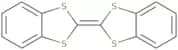
CAS:<p>Dibenzotetrathiafulvalene is an organic molecule that is a hydrogen-bond donor. It has been found to have the ability to bind with itself and form rings. Dibenzotetrathiafulvalene has been shown to be stable in various solvents, as well as in aqueous solutions at high temperatures and low pH values. This compound has also shown the ability to act as an electron donor or acceptor, depending on the oxidation state of its bonds. The photoelectron spectrum of this molecule indicates it has a redox potential of 1.78 V and can easily transfer electrons to other molecules. Dibenzotetrathiafulvalene exhibits structural analysis by x-ray crystal structures, which provide information about its molecular structure and properties including transport pathways.</p>Fórmula:C14H8S4Pureza:Min. 95%Forma y color:Orange PowderPeso molecular:304.48 g/mol1-Pentanesulfonic acid sodium monohydydrate
CAS:<p>1-Pentanesulfonic acid sodium monohydydrate (1PS) is the sodium salt of 1-pentanesulfonic acid. It is used as a fluorescent probe for atropine, which is a drug that blocks nerve impulses to muscles and produces paralysis. The concentration of 1PS can be determined by measuring the fluorescence intensity. This method can be used in conjunction with plates or quantifying with a spectrophotometer. Acetonitrile and dilution are required to produce the solution for measurement, which may then be injected into a chromatographic column for separation. Optical absorbance measurements are used to detect the presence of 1PS in the eluant from the column. Recoveries of 100% were obtained using this method on atropine sulfate in acetonitrile solutions containing 1-pentanesulfonic acid sodium monohydydrate at concentrations ranging from 0.01 to 10 mg/mL.</p>Fórmula:C5H11O3SNa•H2OPureza:Min. 95%Forma y color:PowderPeso molecular:192.21 g/molThiamine monophosphate chloride dihydrate
CAS:<p>Thiamine monophosphate chloride dihydrate is a form of the vitamin thiamine. It has been used in control analysis to measure the activity of enzymes that require thiamine as a cofactor, such as transketolase and pyruvate kinase. Thiamine monophosphate chloride dihydrate has also been studied in biochemical properties, where it was found that this compound can be cleaved by picolinic acid to form thiazole phosphate. The matrix effect is an important factor in polymerase chain reactions and has been shown to be dependent on the presence of dinucleotide phosphate. This compound is an essential component of energy metabolism and plays a role in protein synthesis. Thiamine monophosphate chloride dihydrate also has toxicological studies, including a model system using wild-type strains of yeast. These studies have shown that this compound leads to physiological effects such as inhibition of glycolysis and lactic acid production.</p>Fórmula:C12H18N4O4PS•Cl•(H2O)2Pureza:Min. 99 Area-%Forma y color:PowderPeso molecular:416.82 g/molrec IL-3 (human)
CAS:<p>Please enquire for more information about rec IL-3 (human) including the price, delivery time and more detailed product information at the technical inquiry form on this page</p>Pureza:Min. 95%Ethyl 6-aminoveratrate
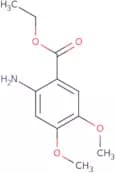
CAS:<p>Ethyl 6-aminoveratrate (EAOV) is a urea derivative that has been shown to have analgesic effects in vitro and in vivo. EAOV was found to be more potent than morphine, but with less side effects. EAOV's antinociceptive effects are due to its ability to inhibit the activity of protein kinase C and phosphorylate the extracellular signal-regulated kinases ERK1/2. EAOV also showed metabolic stability and chemical stability, which may be due to its lack of reactive functional groups. The low potency of EAOV makes it an attractive candidate for research into the development of a new generation of painkillers.</p>Fórmula:C11H15NO4Pureza:Min. 95%Forma y color:PowderPeso molecular:225.24 g/molSodium tungstate dihydrate
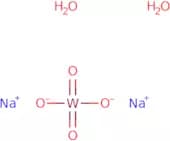
CAS:<p>Sodium tungstate dihydrate (STDH) is a sodium salt that has been shown to be effective against the MCL-1 protein. This protein is involved in regulating energy metabolism and cell death. STDH binds to the MCL-1 protein, preventing it from forming an oligomer with other proteins. This prevents the MCL-1 protein from translocating into the mitochondria and disrupting the mitochondrial membrane potential, which leads to cell death. STDH has been shown to be effective against wild-type strains of bacteria as well as against bacterial strains that have developed resistance to antibiotics such as molybdenum and tungsten. STDH also inhibits axonal growth in vitro and human serum, leading to physiological effects such as blood coagulation.</p>Fórmula:Na2WO4•(H2O)2Forma y color:PowderPeso molecular:329.85 g/molMethyl 2-coumarate
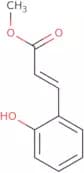
CAS:<p>Methyl 2-coumarate is a chemotherapeutic agent that inhibits the growth of cancer cells by binding to their cell membranes. It is an analog of coumarin and has been shown to be more potent than the parent compound. Methyl 2-coumarate binds to the acceptor site on the cell membrane, which prevents other molecules from entering or leaving the cell and eventually leading to cell death. The residue of methyl 2-coumarate is believed to play a role in its anticancer activity, as it forms a pharmacophore with paraformaldehyde.</p>Fórmula:C10H10O3Pureza:Min. 95%Forma y color:PowderPeso molecular:178.18 g/mol2-Veratramide
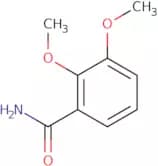
CAS:<p>2-Veratramide is a drug that belongs to the group of amides. It is a highly soluble, water-soluble and lipophilic molecule. The molecular modeling study revealed that it has a hydroxyl group in its structure and a hydrogen bond with the intramolecular hydrogen atom. 2-Veratramide has been observed to inhibit protein synthesis and cellular proliferation by binding to cancer cells or inflammatory cells. It also binds to dopamine receptors, inhibiting uptake of dopamine and subsequent activation of downstream signaling pathways. 2-Veratramide is an inhibitor of nitric oxide synthase (NOS), which plays an important role in inflammation, vascular tone, neurotransmission, and cell proliferation.<br>2-Veratramide inhibits NOS by competitively binding to the heme moiety at the active site of the enzyme, thereby blocking access to substrate arginine.</p>Fórmula:C9H11NO3Pureza:Min. 97%Forma y color:PowderPeso molecular:181.19 g/molrec β-Defensin 2 (human)
CAS:<p>rec beta-Defensin 2 (human) is a recombinant peptide, which is a human-derived antimicrobial protein. It is sourced through recombinant DNA technology, enabling the production of a synthetic version of the natural peptide found in epithelial cells. Its mode of action involves disrupting microbial cell membranes, leading to cell lysis, in addition to modulating the immune response by interacting with immune cells and enhancing the production of cytokines.</p>Pureza:Min. 95%L-Thyroxine sodium pentahydrate
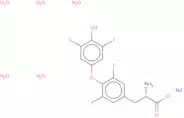
CAS:<p>L-Thyroxine sodium pentahydrate is an organic chemical compound that belongs to the group of thyroxine compounds. It is a white, crystalline solid with a molecular formula of C5H11NNaO4S. L-Thyroxine sodium pentahydrate is used in research as a reagent, scaffold, and intermediate, and can be used as a building block for other chemicals. This chemical has many different uses because it is versatile and reacts easily with other compounds.</p>Fórmula:C15H20I4NNaO9Forma y color:PowderPeso molecular:888.93 g/molrec Oncostatin M (human)
CAS:<p>Please enquire for more information about rec Oncostatin M (human) including the price, delivery time and more detailed product information at the technical inquiry form on this page</p>Pureza:Min. 95%Sodium sulfide nonahydrate
CAS:Producto controlado<p>Sodium sulfide nonahydrate is a chemical compound that has been shown to be statistically significantly more genotoxic than sodium sulfate, but less genotoxic than sodium sulfite. Sodium sulfide nonahydrate is used as a coating material and in the production of polychromatic pigment. It has also been studied for its potential use in analytical methods such as surface methodology, x-ray absorption spectroscopy, and photoelectron spectroscopy. Recent studies have also shown that this compound may enhance the rate of reaction between nucleophiles and electrophiles. Sodium sulfide nonahydrate can cause hematological changes in humans at high doses, including lymphocyte reduction, leukocytosis, and increased erythrocyte sedimentation rate.</p>Fórmula:Na2S•(H2O)9Pureza:Min. 98%Forma y color:PowderPeso molecular:240.18 g/molMetamizol sodium monohydrate
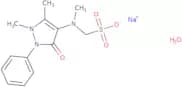
CAS:<p>Metamizol sodium monohydrate is a nonsteroidal anti-inflammatory drug that is used as an analgesic and antipyretic. Metamizol sodium monerate is metabolized in the liver via cytochrome P450 (CYP) to form metamizole. It has been shown to inhibit chemiluminescence of polycyclic aromatic hydrocarbons using a dipyrone-treated biological sample, and the rate constant for this inhibition has been determined by the use of a chemiluminescence method. An analytical method for metamizol sodium monohydrate has also been developed using polymerase chain reaction (PCR) amplification of DNA sequences from human squamous cells, which can be used for forensic purposes. Metamizol sodium monohydrate has shown anti-inflammatory activity against rat paw edema and carrageenan-induced inflammation in rats, but it can cause side effects such as dizziness, drowsiness, headache, nausea,</p>Fórmula:C13H16N3O4S•H2O•NaPureza:Min. 95%Peso molecular:351.36 g/mol