Compuestos relacionados con enzimas, péptidos y proteínas
Los compuestos relacionados con enzimas, péptidos y proteínas son críticos para estudiar y manipular las vías bioquímicas. Estos compuestos incluyen enzimas que catalizan reacciones bioquímicas, péptidos que actúan como hormonas y moléculas de señalización, y proteínas que desempeñan una amplia gama de funciones dentro de los organismos. Esta categoría abarca inhibidores, activadores, sustratos y otros reactivos esenciales para la enzimología, la proteómica y la investigación de péptidos. En CymitQuimica, ofrecemos una diversa selección de compuestos de alta calidad para facilitar su investigación en cinética enzimática, función de proteínas y síntesis de péptidos, asegurando resultados precisos y fiables.
Subcategorías de "Compuestos relacionados con enzimas, péptidos y proteínas"
- Aminoácidos (AA)(40.537 productos)
- Enzimas(3.561 productos)
- Péptidos(30.720 productos)
- Proteínas(15.020 productos)
Se han encontrado 1312 productos de "Compuestos relacionados con enzimas, péptidos y proteínas"
Ordenar por
Pureza (%)
0
100
|
0
|
50
|
90
|
95
|
100
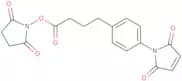
N-Succinimidyl 4-(p-maleimidophenyl)butyrate
CAS:<p>N-Succinimidyl 4-(p-maleimidophenyl)butyrate is a fatty acid that has been shown to regulate the effector proteins of cell surface receptors. It has been shown to be site specific, with water permeability and a molecule size of about 200 Daltons. It is able to bind to the regulatory sites on proteins and inhibit their function. The binding of N-succinimidyl 4-(p-maleimidophenyl)butyrate to antibodies can cause an antibody response in humans and other mammals. Additionally, this fatty acid can also be used as a substrate for protein synthesis. N-Succinimidyl 4-(p-maleimidophenyl)butyrate binds to the subunits of proteins by hydrogen bonding or hydrophobic interactions, which are necessary for protein synthesis. This compound has been shown to inhibit the messenger RNA (mRNA) production in Galleria mellonella larvae,</p>Fórmula:C18H16N2O6Pureza:Min. 95%Forma y color:PowderPeso molecular:356.33 g/molDimethylglyoxime disodium salt octahydrate
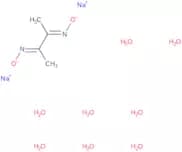
CAS:<p>Dimethylglyoxime is a pesticide that has been used to control insects and nematodes. It has been found to be effective in controlling mosquitoes, flies, and other pests. This compound is also used as an extractor in microextraction. Dimethylglyoxime is not toxic to humans and does not cause any adverse effects on the environment or human health. It can be used with chlorine for wastewater treatment.</p>Fórmula:C4H8N2Na2O2·8H2OPureza:Min. 95%Forma y color:PowderPeso molecular:306.22 g/molManganese(III) acetate hydrate
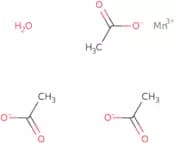
CAS:<p>Manganese(III) acetate hydrate is a compound that is used as an oxidant in organic synthesis. It can be prepared by the reaction of manganese dioxide with acetic acid, followed by drying and crystallization. The product is a white powder that dissolves in water or alcohol. Manganese(III) acetate hydrate is soluble in organic solvents such as benzene and chloroform. Preparative methods include the use of aqueous potassium permanganate for oxidation reactions or hydrolysis for solvent extraction. Manganese (III) acetate hydrate is also used as a reagent for carboxylic acids, dihydrate, and alkenes.</p>Fórmula:C6H9MnO6·xH2OForma y color:PowderPeso molecular:232.07 g/molSodium stearyl fumarate
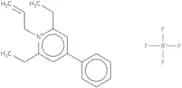
CAS:<p>Sodium stearyl fumarate is a pharmaceutical excipient that is used as an anti-caking agent, lubricant, and flow agent in tablet production. It is also used as an additive to improve the stability of some drugs. Sodium stearyl fumarate can be used in diagnosis of metabolic disorders and prognosis of cardiovascular diseases. It reacts with hydrogen peroxide to form a particle which may be responsible for its anti-oxidant properties. The reaction mechanism for this drug has been elucidated using electron paramagnetic resonance spectroscopy on the hydroxyl radical.</p>Fórmula:C22H39NaO4Pureza:Min. 95%Forma y color:PowderPeso molecular:390.53 g/molN-Propyl-1-ene-2,6-diethyl-4-phenylpyridinium tetrafluoroborate
CAS:<p>N-Propyl-1-ene-2,6-diethyl-4-phenylpyridinium tetrafluoroborate (NPEEDPBF) is a fine chemical that has been used as a building block in research and industrial chemistry. The synthesis of NPEEDPBF typically involves the reaction of diethyl phenylpyridinium bromide with n propyl iodide. It can be used as a reagent for organic syntheses and as an intermediate for other compounds. NPEEDPBF is also a versatile building block for complex compounds.</p>Fórmula:C18H22N•BF4Pureza:Min. 95%Peso molecular:339.18 g/molChloral hydrate
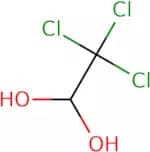
CAS:Producto controlado<p>Chloral hydrate is a sedative and hypnotic drug that is used in the treatment of insomnia, anxiety disorders, and seizure disorders. It has also been used as an anticonvulsant and muscle relaxant. Chloral hydrate binds to the 5-HT2 receptors on neurons to produce its sedative effects. The therapeutic dose of chloral hydrate ranges from 1 to 3 g per day in adults, with a maximum dose of 12 g per day. Clinical studies have shown that chloral hydrate can cause liver damage when combined with other drugs such as acetaminophen or alcohol.</p>Fórmula:C2H3Cl3O2Pureza:Min. 95%Forma y color:PowderPeso molecular:165.4 g/molCerium trichloride heptahydrate
CAS:<p>Cerium trichloride heptahydrate is a reactive compound. It reacts with amines, forming salts and other compounds. Cerium trichloride heptahydrate is highly toxic and can cause death in humans by inhalation or ingestion. This chemical has been shown to be effective against choroidal neovascularization (CNV) in a mouse model of age-related macular degeneration by intravitreal injection. The preparative method for this compound is precipitation from a solution of ceric nitrate, sodium carbonate, and hydrochloric acid. Cerium trichloride heptahydrate has an average particle diameter of about 0.4 micrometers and contains functional groups that are covalently bonded to the lanthanum atom. The reaction yield for this compound is 100%.</p>Fórmula:CeCl3•(H2O)7Pureza:Min. 98%Forma y color:PowderPeso molecular:372.58 g/molAlendronic acid monosodium salt trihydrate - USP
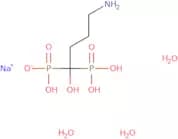
CAS:<p>Farnesyl diphosphate synthase inhibitor; inhibits bone resorption</p>Fórmula:C4H18NNaO10P2Pureza:Min. 95%Forma y color:White PowderPeso molecular:325.12 g/molrec RANTES (human)
<p>Please enquire for more information about rec RANTES (human) including the price, delivery time and more detailed product information at the technical inquiry form on this page</p>Pureza:Min. 95%Ferrocenium Tetrafluoroborate
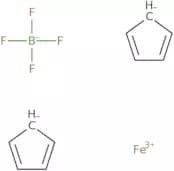
CAS:<p>Ferrocenium tetrafluoroborate is a chiral, unreactive compound that is synthesized through the reaction of ferrocene and tetrafluoroboric acid. Ferrocenium tetrafluoroborate is a kinetic polymer that can be used as a linker in the synthesis of polymeric materials. This compound has been shown to catalyze the epoxidation of aliphatic alcohols to yield epoxides. Ferrocenium tetrafluoroborate has also been shown to catalyze the epoxidation of cyclic olefins, such as 1-octene. Ferrocenium tetrafluoroborate is an achiral catalyst and does not change during the course of the reaction.</p>Fórmula:C10H2BF4FeForma y color:Brown PowderPeso molecular:264.77 g/mol9-Mesityl-2,7-dimethyl-10-phenylacridinium tetrafluoroborate
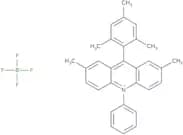
CAS:<p>9-Mesityl-2,7-dimethyl-10-phenylacridinium tetrafluoroborate is a versatile building block and reagent for organic synthesis. It is a fine chemical that is used in the production of research chemicals and speciality chemicals. 9-Mesityl-2,7-dimethyl-10-phenylacridinium tetrafluoroborate can be used as a reaction component to synthesize complex compounds with various functional groups. It has been reported to have high quality, being both useful and stable. CAS NO: 1621020-00-5</p>Fórmula:C30H28BF4NForma y color:Yellow PowderPeso molecular:489.35 g/molMalonic acid disodium salt monohydrate
CAS:<p>Malonic acid disodium salt monohydrate is a water-soluble alkanoic acid that is used as a cross-linking agent in the manufacture of polymers. Malonic acid disodium salt monohydrate is also used to produce immunogenic antigens for cancer research and as a synthetic intermediate in the synthesis of pharmaceuticals or agricultural chemicals. Malonic acid disodium salt monohydrate is converted to malic acid by the enzyme cytosolic malate dehydrogenase. Malonic acid disodium salt monohydrate has an acidic pH and can be used to neutralize sodium salts such as sodium bicarbonate. Cell culture studies have shown that exposure to malonic acid disodium salt monohydrate inhibits protein synthesis and cell growth, which may be due to its ability to bind with DNA during transcription.</p>Fórmula:C3H2Na2O4·H2OPureza:Min 98%Forma y color:White PowderPeso molecular:166.04 g/molHydroxycitric acid tripotassium monohydrate
CAS:<p>Hydroxycitric acid tripotassium salt monohydrate is a reagent that is used as a starting material in organic synthesis. It can be used as an intermediate in the preparation of complex compounds. Hydroxycitric acid tripotassium salt monohydrate has been shown to be useful for research purposes, as it has a versatile scaffold and can be used as a building block in the preparation of speciality chemicals. The compound also has a high quality and is considered to be a fine chemical. It is CAS No. 232281-44-6 and can be found on ChemSpider at <a href="http://www.chemspider.com/Chemical-Structure.232281-44-6.html" target="_blank" rel="noreferrer noopener">http://www.chemspider.com/Chemical-Structure.232281-44-6.html</a></p>Fórmula:C6H5K3O8•H2OPureza:Min. 95%Forma y color:PowderPeso molecular:340.41 g/molGallic acid monohydrate
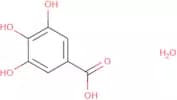
CAS:<p>Gallic acid monohydrate is a natural phenolic compound present in plants, such as oak and sumac. It has been shown to have anticarcinogenic properties in animal models of cancer. Gallic acid monohydrate inhibits the growth of tumor cells by binding to the DNA of tumor cells and inhibiting the synthesis of RNA and proteins. It also possesses antioxidant properties, which may be due to its ability to scavenge free radicals. Gallic acid monohydrate is soluble in water, but not in organic solvents such as ether or chloroform. It exists as two crystalline polymorphs: one anhydrous form that occurs at room temperature and a hydrated form that appears when heated above 40 degrees Celsius. In vitro assays have shown that gallic acid monohydrate is stable when exposed to heat, light, and pH changes.END></p>Fórmula:C7H8O6Pureza:Min. 95%Forma y color:White PowderPeso molecular:188.13 g/mol5-Acetamido-6-amino-3-methyluracil hydrate
CAS:<p>5-Acetamido-6-amino-3-methyluracil hydrate (AAU) is a drug that is used as an analytical reagent in the determination of caffeine, 5-hydroxytryptophan, and other compounds. It can be used to assess interactions between drugs and enzyme activities. AAU has been shown to be a suitable substrate for many enzymes, including alcohol dehydrogenase, acetylcholinesterase, catalase, and glucose oxidase. The sample preparation procedure is performed by dissolving the compound in water or ethanol. The sample is then filtered before it is analyzed using high performance liquid chromatography (HPLC). The chemical properties of AAU are such that it can be easily transported from one place to another without undergoing significant changes in physical properties. AAU has been shown to have no effect on biological samples when exposed to radiation.</p>Fórmula:C7H10N4O3·H2OPureza:Min. 95%Forma y color:Slightly Yellow PowderPeso molecular:216.2 g/mol2-Cyanoethyl phosphate barium salt hydrate
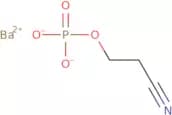
CAS:<p>2-Cyanoethyl phosphate barium salt hydrate is an alkaline compound that is soluble in water. It has been used to synthesize phosphodiesters, benzene, dioxan and alcohols. The chemical was originally developed as a reagent for the quantitative conversion of ethyl acetate esters to their corresponding acid chlorides. This reaction can be carried out quantitatively in tetrahydrofuran at room temperature with yields of about 95%. 2-Cyanoethyl phosphate barium salt hydrate also converts alcohols to their corresponding monophosphates quantitatively in alkaline conditions. Crystalline forms are obtained by reacting the compound with triethylamine and benzene.</p>Fórmula:C3H6BaNO4P•xH2OPureza:Min. 95%Forma y color:PowderPeso molecular:324.42 g/mol(5S)-N-(5-Amino-1-carboxypentyl) iminodiacetic acid hydrate
CAS:<p>(5S)-N-(5-Amino-1-carboxypentyl) iminodiacetic acid hydrate is a sophisticated chelating agent, designed for precise control in various biochemical applications. The reactive moieties of this compound are particularly useful in affinity chromatography and surface functionalization, making it a valuable tool in both protein purification and the development of biosensors or other biotechnological applications. Affinity chromatography: As a metal-chelator, it is particularly adept at binding divalent metal cations such as Ni²⁺, Co²⁺, and Cu²⁺, which are instrumental in stabilizing protein structures or facilitating enzyme activity. When complexed with Ni²⁺ (nickel) ions (5S)-N-(5-Amino-1-carboxypentyl) iminodiacetic acid forms a surface that can specifically capture proteins engineered with a polyhistidine tag (His-tag). Such interactions facilitate the purification and isolation of target proteins with high specificity, allowing immobilization in a controlled orientation without compromising functional integrity.Surface functionalization: The free amine group allows for conjugation via strong covalent bonds to surfaces such as glass, silica, gold (e.g., electrodes), polymers, hydrogels and magnetic beads. This creates metal-functionalized surfaces for biospecific interactions with His-tagged proteins. Examples of potential applications of this include Surface Plasmon Resonance (SPR), fluorescence microscopy and use in artificial cell systems with hydrogel-based cell-mimicking environments. Thus giving (5S)-N-(5-Amino-1-carboxypentyl) iminodiacetic acid a broad scope in its application in advanced biochemical assays and materials science.</p>Fórmula:C10H18N2O6·xH2OPureza:Min. 95 Area-%Forma y color:White PowderPeso molecular:262.26 g/molEdetate calcium disodium dihydrate
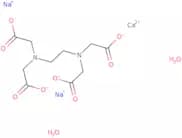
CAS:<p>Edetate calcium disodium dihydrate is an antidote for poisoning by lead, mercury, or arsenic. It is a chelating agent that binds to the metal ions and prevents their absorption into the body. The chemical reaction of edetate calcium disodium dihydrate with lead, mercury, or arsenic produces a stable precipitate that is eliminated in urine. This drug has been shown to be effective when given as a single dose and has been used in clinical trials for long-term efficacy and optimum concentration. Edetate calcium disodium dihydrate has also been used to treat bowel disease and symptoms of lead toxicity such as abdominal pain, nausea, vomiting, constipation, headache, and muscle weakness.</p>Fórmula:C10H12CaN2O8·2H2O·2NaForma y color:White PowderPeso molecular:410.3 g/mol3-Methyl-2-benzothiazolinone hydrazone hydrochloride monohydrate
CAS:<p>3-Methyl-2-benzothiazolinone hydrazone hydrochloride monohydrate is a diazonium salt that inhibits the activity of tyrosinase. It is used in pharmaceutical preparations as an inhibitor molecule to treat skin cancer. This compound has been shown to inhibit the production of melanin, which protects cells from damage by ultraviolet (UV) radiation. 3-Methyl-2-benzothiazolinone hydrazone hydrochloride monohydrate binds to tyrosinase and prevents it from forming radicals, which are necessary for the formation of melanin. The inhibition of this enzyme results in skin that is less susceptible to UV radiation and therefore less likely to develop skin cancer.</p>Fórmula:C8H9N3S·HCl·H2OPureza:Min. 98 Area-%Forma y color:PowderPeso molecular:233.72 g/molrec IL-10 (human)
CAS:<p>Please enquire for more information about rec IL-10 (human) including the price, delivery time and more detailed product information at the technical inquiry form on this page</p>Fórmula:C828H1307N229O245S12Pureza:Min. 95%Peso molecular:18,774.43 g/mol