Compuestos relacionados con enzimas, péptidos y proteínas
Los compuestos relacionados con enzimas, péptidos y proteínas son críticos para estudiar y manipular las vías bioquímicas. Estos compuestos incluyen enzimas que catalizan reacciones bioquímicas, péptidos que actúan como hormonas y moléculas de señalización, y proteínas que desempeñan una amplia gama de funciones dentro de los organismos. Esta categoría abarca inhibidores, activadores, sustratos y otros reactivos esenciales para la enzimología, la proteómica y la investigación de péptidos. En CymitQuimica, ofrecemos una diversa selección de compuestos de alta calidad para facilitar su investigación en cinética enzimática, función de proteínas y síntesis de péptidos, asegurando resultados precisos y fiables.
Subcategorías de "Compuestos relacionados con enzimas, péptidos y proteínas"
- Aminoácidos (AA)(40.527 productos)
- Enzimas(3.560 productos)
- Péptidos(30.720 productos)
- Proteínas(15.021 productos)
Se han encontrado 1312 productos de "Compuestos relacionados con enzimas, péptidos y proteínas"
Ordenar por
Pureza (%)
0
100
|
0
|
50
|
90
|
95
|
100
N-Benzyl-2,4,6-triphenyl pyridinium tetrafluoroborate
CAS:<p>N-Benzyl-2,4,6-triphenyl pyridinium tetrafluoroborate is a molecule that regulates transcriptional activity. It can be used to isolate regulatory genes from different organisms and identify the specific genes that regulate the expression of other genes. The algorithm for this process is a stepwise, stereoselective, aerobic search. This process starts with an algorithm that identifies the best possible match between the gene sequence and the database sequences. The algorithm then transfers to another stepwise and stereoselective search of the database until it finds a match. The process ends when there are no more matches in the database or when all possible combinations have been searched. N-Benzyl-2,4,6-triphenyl pyridinium tetrafluoroborate has been shown to activate Staphylococcus aureus at very low concentrations but does not cause activation of mammalian cells at these concentrations.</p>Fórmula:C30H24N·BF4Pureza:Min. 95%Peso molecular:485.32 g/molS-(-)-Tolterodine d-tartrate
CAS:<p>S-(-)-Tolterodine d-tartrate is a fine chemical that belongs to the class of organic compounds. It has been used as a useful scaffold in the synthesis of various complex compounds, such as reaction components and speciality chemicals. In addition, S-(-)-Tolterodine d-tartrate has served as an intermediate for the synthesis of other chemicals.</p>Fórmula:C22H31NO•C4H6O6Pureza:Min. 95%Forma y color:White to off-white solid.Peso molecular:475.57 g/molCreatine phosphate, disodium salt tetrahydrate, pH > 8.00
CAS:<p>Creatine phosphate, disodium salt tetrahydrate, is a fine chemical that is used as a versatile building block for the synthesis of other compounds. Creatine phosphate is useful in research because it can be converted to creatine, which can then be converted to phosphocreatine. Creatine phosphate has been shown to have a number of biological activities including the promotion of cell proliferation and differentiation. This product is an extremely high quality reagent for use in laboratory experiments.</p>Fórmula:C4H16N3Na2O9PPureza:Min. 95.0 Area-%Peso molecular:327.14 g/mol(S)-2-Amino-3-(3,4-dihydroxyphenyl)-2-methylpropionic acid sesquihydrate
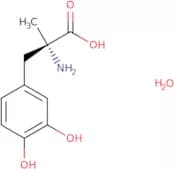
CAS:<p>(S)-2-Amino-3-(3,4-dihydroxyphenyl)-2-methylpropionic acid sesquihydrate is a synthetic drug that is used for the treatment of metabolic disorders such as diabetes mellitus. It has been shown in animal studies to increase locomotor activity and decrease bowel disease. It also has an effect on α7 nicotinic acetylcholine receptors and 2 adrenergic receptors.</p>Fórmula:C10H13NO4•(H2O)1Pureza:Min 98%Forma y color:PowderPeso molecular:238.24 g/molMethyl 12-ketostearate
CAS:<p>Methyl 12-ketostearate is an organic compound with the formula CH(CH)COCH=CHCOCH=CHCOOCH3. It is a colorless liquid with a fishy odor. The compound is used as a precursor to other compounds, such as esters and amides. It can be prepared by the reaction of methyl mercaptoacetate and copper chromite in dimethylformamide: Methyl 12-ketostearate + CuCrO4 → Methyl 12-ketostearate + CuCrO4 → Methyl 12-ketostearate + CuCrO4 → Methyl 12-ketostearate + CuCrO4 → Methyl 12-ketostearate + CuCrO4 → Methyl 12-ketostearate + CuCrO4 →</p>Fórmula:C19H36O3Pureza:Min. 97 Area-%Forma y color:White PowderPeso molecular:312.49 g/molrec FGF acidic (human)
CAS:<p>Please enquire for more information about rec FGF acidic (human) including the price, delivery time and more detailed product information at the technical inquiry form on this page</p>Pureza:Min. 95%Dextrorphan tartrate
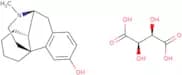
CAS:Producto controlado<p>Dextrorphan tartrate is a pharmaceutical drug that is used in the treatment of infections. It is taken by mouth and inhibits the uptake of fatty acids by liver cells, which then leads to the death of these cells. Dextrorphan tartrate has been shown to be active against viruses and experimental models of bacterial infection. It also has an effect on monoamine neurotransmitters, which may be responsible for its depressant effect on the central nervous system.</p>Fórmula:C21H29NO7Pureza:Min. 95%Forma y color:White PowderPeso molecular:407.46 g/molNesfatin-1 (rat) trifluoroacetate salt
CAS:<p>Please enquire for more information about Nesfatin-1 (rat) trifluoroacetate salt including the price, delivery time and more detailed product information at the technical inquiry form on this page</p>Fórmula:C424H684N116O136Pureza:Min. 95%Peso molecular:9,582.67 g/molPimavanserin tartrate
CAS:<p>Serotonin receptor 5-HT2A inverse agonist</p>Fórmula:(C25H34FN3O2)2•C4H6O6Pureza:Min. 97 Area-%Forma y color:White PowderPeso molecular:1,005.2 g/mol6-Amino-4-hydroxy-2-mercaptopyrimidine monohydrate
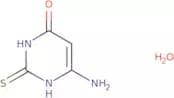
CAS:<p>6-Amino-4-hydroxy-2-mercaptopyrimidine monohydrate (6AP) is a chemical compound that has been shown to have potent antibacterial activity against Gram-positive bacteria. It is also effective at inhibiting the growth of S. aureus, both in vitro and in vivo. 6AP can be used as an alternative treatment for cancer, where it inhibits the growth of tumor cells by blocking ferrocene, which plays an important role in cancer cell proliferation and survival. The efficacy of 6AP against bacterial infections has been demonstrated in vitro with a variety of Gram-positive pathogens, including S. aureus, Streptococcus pneumoniae, Enterococcus faecalis, and Bacillus anthracis.</p>Fórmula:C4H5N3OS•H2OPureza:Min. 95%Forma y color:PowderPeso molecular:161.18 g/molSpermidine phosphate salt hexahydrate
CAS:Producto controlado<p>Spermidine phosphate salt hexahydrate is a reaction component, reagent, useful scaffold, and high quality research chemical. It is a versatile building block that can be used as a fine chemical or speciality chemical. Spermidine phosphate salt hexahydrate is CAS No. 23273-82-7 and has the following properties: soluble in water; slightly soluble in methanol; insoluble in ether and chloroform. This product is an intermediate for complex compounds such as aminopyrimidines, quinazolinones, and nitroimidazoles.</p>Fórmula:(C7H19N3)2•(H2O)6•(H3O4P)3Pureza:Min. 95%Forma y color:White PowderPeso molecular:692.57 g/molAliskiren hemifumarate
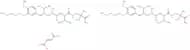
CAS:<p>Non-peptide renin inhibitor; anti-hypertensive</p>Fórmula:C30H53N3O6·C4H4O4Pureza:Min. 95%Forma y color:White PowderPeso molecular:1,219.59 g/molSodium sulfide nonahydrate
CAS:Producto controlado<p>Sodium sulfide nonahydrate is a chemical compound that has been shown to be statistically significantly more genotoxic than sodium sulfate, but less genotoxic than sodium sulfite. Sodium sulfide nonahydrate is used as a coating material and in the production of polychromatic pigment. It has also been studied for its potential use in analytical methods such as surface methodology, x-ray absorption spectroscopy, and photoelectron spectroscopy. Recent studies have also shown that this compound may enhance the rate of reaction between nucleophiles and electrophiles. Sodium sulfide nonahydrate can cause hematological changes in humans at high doses, including lymphocyte reduction, leukocytosis, and increased erythrocyte sedimentation rate.</p>Fórmula:Na2S•(H2O)9Pureza:Min. 98%Forma y color:PowderPeso molecular:240.18 g/molMetamizol sodium monohydrate
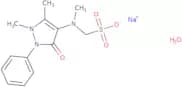
CAS:<p>Metamizol sodium monohydrate is a nonsteroidal anti-inflammatory drug that is used as an analgesic and antipyretic. Metamizol sodium monerate is metabolized in the liver via cytochrome P450 (CYP) to form metamizole. It has been shown to inhibit chemiluminescence of polycyclic aromatic hydrocarbons using a dipyrone-treated biological sample, and the rate constant for this inhibition has been determined by the use of a chemiluminescence method. An analytical method for metamizol sodium monohydrate has also been developed using polymerase chain reaction (PCR) amplification of DNA sequences from human squamous cells, which can be used for forensic purposes. Metamizol sodium monohydrate has shown anti-inflammatory activity against rat paw edema and carrageenan-induced inflammation in rats, but it can cause side effects such as dizziness, drowsiness, headache, nausea,</p>Fórmula:C13H16N3O4S•H2O•NaPureza:Min. 95%Peso molecular:351.36 g/molCalcium 2-oxoglutarate
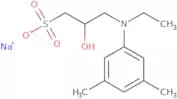
CAS:<p>Calcium 2-oxoglutarate (Ca2OG) is a metabolite of the TCA cycle and has been shown to regulate energy metabolism. It can be used as a precursor for the synthesis of glutamate, which is an important neurotransmitter in the central nervous system. Ca2OG also has inhibitory properties on many enzymes, including enzymes involved in the synthesis of amino acids and fatty acids. Ca2OG has been shown to have a role in transcriptional regulation, acting as a transcriptional activator or repressor depending on cell type and stimulus. Ca2OG also affects plant metabolism by regulating caproic acid levels. This compound is structurally similar to oxoglutarate, which is found in vivo, but it is more stable than this form of glutamic acid due to the presence of calcium ions. Ca2OG has been synthesized in vitro using x-ray crystallography and biochemical properties have been determined through various biochemical assays.br>br></p>Fórmula:C5H4O5·CaPureza:Min 98%Forma y color:PowderPeso molecular:184.16 g/molN-Ethyl-N-(2-hydroxy-3-sulfopropyl)-3,5-dimethylaniline sodium monohydrate
CAS:<p>N-Ethyl-N-(2-hydroxy-3-sulfopropyl)-3,5-dimethylaniline (NAHSDMA) is a coumarin derivative that inhibits protein synthesis and necrotic cell death. NAHSDMA was found to inhibit the growth of colorectal adenocarcinoma cells in culture and has been shown to have anti-inflammatory properties. NAHSDMA binds to the amine group of monoamine neurotransmitters, which are vital for brain function. This drug also has antimicrobial properties, inhibiting bacterial growth by binding to the enzyme DNA gyrase and topoisomerase IV, which maintain the integrity of bacterial DNA. Linear calibration curves were obtained in human serum with an IC50 value of 0.87 μM. NAHSDMA was shown to be metabolized through hydrolysis by esterases or glucuronidases, oxidation by cytochrome P450 enzymes,</p>Fórmula:C13H22NNaO5SPureza:Min. 95%Peso molecular:327.37 g/molrec β-Defensin 2 (human)
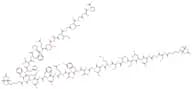
CAS:<p>rec beta-Defensin 2 (human) is a recombinant peptide, which is a human-derived antimicrobial protein. It is sourced through recombinant DNA technology, enabling the production of a synthetic version of the natural peptide found in epithelial cells. Its mode of action involves disrupting microbial cell membranes, leading to cell lysis, in addition to modulating the immune response by interacting with immune cells and enhancing the production of cytokines.</p>Pureza:Min. 95%Biotinyl-(Cys1,Lys(biotinyl)18)-Calcitonin (human) trifluoroacetate salt
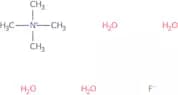
CAS:<p>Please enquire for more information about Biotinyl-(Cys1,Lys(biotinyl)18)-Calcitonin (human) trifluoroacetate salt including the price, delivery time and more detailed product information at the technical inquiry form on this page</p>Fórmula:C171H254N44O49S5Pureza:Min. 95%Peso molecular:3,870.44 g/molTetramethylammonium fluoride tetrahydrate
CAS:<p>Tetramethylammonium fluoride tetrahydrate (TMF) is an ionic liquid that is a reaction product of tetraethylammonium and hydrochloric acid. TMF has been shown to react reversibly with water to produce aqueous hydrogen fluoride, which can be detected at low concentrations with a variety of analytical techniques such as gas chromatography. TMF has also been shown to have selectivities for the transport of silicon and calcium carbonate ions, which are useful in electrochemical studies. The activation energies for the reaction of TMF with water were determined by electrochemical studies to be around -0.4 eV.</p>Fórmula:C4H12FN·4H2OForma y color:White PowderPeso molecular:165.2 g/molSuramin hexasodium salt hydrate
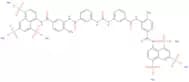
CAS:<p>Treatment of trypanosomiasis in heamolytic stage</p>Fórmula:C51H34N6O23S6·6Na·13H2OPureza:Min. 95%Forma y color:PowderPeso molecular:1,663.38 g/mol