Compuestos relacionados con enzimas, péptidos y proteínas
Los compuestos relacionados con enzimas, péptidos y proteínas son críticos para estudiar y manipular las vías bioquímicas. Estos compuestos incluyen enzimas que catalizan reacciones bioquímicas, péptidos que actúan como hormonas y moléculas de señalización, y proteínas que desempeñan una amplia gama de funciones dentro de los organismos. Esta categoría abarca inhibidores, activadores, sustratos y otros reactivos esenciales para la enzimología, la proteómica y la investigación de péptidos. En CymitQuimica, ofrecemos una diversa selección de compuestos de alta calidad para facilitar su investigación en cinética enzimática, función de proteínas y síntesis de péptidos, asegurando resultados precisos y fiables.
Subcategorías de "Compuestos relacionados con enzimas, péptidos y proteínas"
- Aminoácidos (AA)(40.527 productos)
- Enzimas(3.560 productos)
- Péptidos(30.720 productos)
- Proteínas(15.021 productos)
Se han encontrado 1312 productos de "Compuestos relacionados con enzimas, péptidos y proteínas"
Ordenar por
Pureza (%)
0
100
|
0
|
50
|
90
|
95
|
100
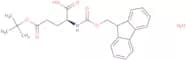
Fmoc-L-glutamic acid-O-tert-butyl ester hydrate
CAS:<p>Fmoc-L-glutamic acid-O-tert-butyl ester hydrate is a useful scaffold that is used in the synthesis of complex compounds. It can be used as a reaction component for the preparation of speciality chemicals and as an intermediate for the production of fine chemicals. Fmoc-L-glutamic acid-O-tert-butyl ester hydrate has a CAS number of 204251-24-1.</p>Fórmula:C24H27NO6•H2OPureza:Min. 95%Forma y color:White PowderPeso molecular:443.49 g/molFolic acid dihydrate
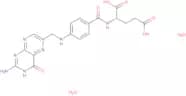
CAS:<p>Folic acid dihydrate is a water-soluble vitamin that is involved in the production of nucleic acids and amino acids. It is a component of many compounds, such as DNA and RNA, and is essential for cell growth. Folic acid dihydrate can be synthesized by bacteria, which use it as an energy source. The radionuclide form of folic acid has been used to study the thermal expansion of food composition and to determine the nutrient content of foods. In addition, folic acid dihydrate has been used in tissue culture experiments to measure receptor binding or growth factor activity. Folic acid dihydrate has also been investigated for its ability to inhibit the growth of infectious diseases, including Streptococcus faecalis, Helicobacter pylori and HIV-1.</p>Fórmula:C19H19N7O6Pureza:97 To 102%Peso molecular:441.4 g/molDiisopropyl D-tartrate
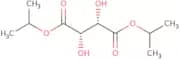
CAS:<p>Diisopropyl tartrate is a chemical compound that has been used in the synthesis of antibiotics. It is bifunctional, meaning that it can act as both a nucleophile and a base. The chloride forms a nucleophilic addition with the allyl group, forming an intermediate that is an excellent leaving group for the final product. Diisopropyl tartrate is used to synthesize monomers for polymers, such as chloroprene and styrene, which are used in the manufacture of plastics and rubber. This chemical is also used in catalytic asymmetric reactions, where it acts as a catalyst by stabilizing one enantiomer over another to promote stereoselective reactions.</p>Fórmula:C10H18O6Pureza:Min. 95%Forma y color:Colorless Clear LiquidPeso molecular:234.25 g/molPotassiumtetrachloroaurate(III)
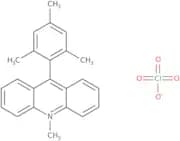
CAS:<p>Potassiumtetrachloroaurate(III) is a chemical compound with the molecular formula KAuCl4. It is a white solid that has been shown to have anti-cancer properties in animal studies. Potassiumtetrachloroaurate(III) has also been found to be toxic to bacteria, such as Pseudomonas aeruginosa. The redox potential of potassiumtetrachloroaurate(III) can be changed by adding copper chloride or sodium citrate, which may affect its toxicity towards bacteria.</p>Fórmula:AuCl4KPureza:Min. 95%Peso molecular:377.88 g/mol9-Mesityl-10-methylacridinium perchlorate
CAS:<p>9-Mesityl-10-methylacridinium perchlorate is a cross-coupling reagent that can be used to form amines from alkenes via bond cleavage. The mechanism of this reaction involves irradiation, which generates radical species, and the use of molecular probes to rationalize the rate of the reaction. 9-Mesityl-10-methylacridinium perchlorate is a highly reactive compound with a short half life, which makes it an ideal candidate for generating radicals in order to study mechanistic studies on acridinium.</p>Fórmula:C23H22ClNO4Pureza:Min. 95%Forma y color:PowderPeso molecular:411.88 g/mol2,9-Dimethyl-1,10-phenanthroline hemihydrate
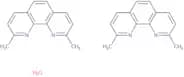
CAS:<p>Chelating agent used to detect aqueous copper ions by electrochemiluminescence</p>Fórmula:C14H12N2•(H2O)0Pureza:Min. 95%Forma y color:PowderPeso molecular:217.27 g/molDiethyl squarate
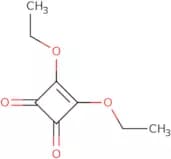
CAS:<p>Diethyl squarate is a squaramide that has been used in the treatment of infectious diseases. It is also known to be an anti-inflammatory agent, which has been shown to inhibit the production of prostaglandin, and is therefore useful in the treatment of autoimmune diseases such as alopecia areata. Diethyl squarate also has a role in immune responses as it binds to human serum albumin and alters antibody response. The compound is thought to bind to the hydroxyl group on a protein molecule, forming a covalent linkage with the amide group on another protein molecule. This reaction mechanism may lead to its immunosuppressant properties.</p>Fórmula:C8H10O4Pureza:Min. 97 Area-%Forma y color:PowderPeso molecular:170.16 g/molBis(2-ethylhexyl) fumarate
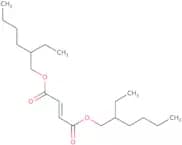
CAS:<p>Bis(2-ethylhexyl) fumarate is a synthetic chemical compound that has been used in the synthesis of clostridium botulinum. It is a white solid with a constant melting point. This compound can be synthesized via the reaction of propiolic acid and maleic anhydride, which produces a carbon-carbon bond. Bis(2-ethylhexyl) fumarate is not estrogenic, but it does bind to the human estrogen receptor. The binding affinity for this receptor has been shown to be lower than other compounds such as diethylstilbestrol and ethinyl estradiol. Bis(2-ethylhexyl) fumarate also reacts with polyvinyl chloride and crotonic acid, forming crosslinked polymers that are photoreactive.</p>Fórmula:C20H36O4Pureza:Min. 95%Forma y color:Clear LiquidPeso molecular:340.5 g/mol2-Hydroxybenzylamine hydrate
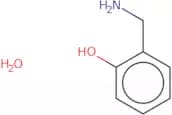
CAS:<p>2-Hydroxybenzylamine hydrate is a fine chemical, useful building block, research chemical, and reagent. It is soluble in water and has a neutral pH. 2-Hydroxybenzylamine hydrate is an intermediate in the synthesis of amphetamines and phenethylamines. This product is also used as a reaction component for the synthesis of polymers, pharmaceuticals, natural products, and other organic compounds. 2-Hydroxybenzylamine hydrate has a high quality level and can be used as a versatile building block in complex reactions.</p>Fórmula:C7H9NO·H2OPureza:Min. 95%Peso molecular:141.17 g/mol6-Thiouric acid sodium salt dihydrate
CAS:<p>6-Thiouric acid sodium salt dihydrate is a reaction component and fine chemical that is used as a reagent in the synthesis of various speciality chemicals. It has been used as a building block for the synthesis of complex compounds, and is also an intermediate for the production of high quality research chemicals. 6-Thiouric acid sodium salt dihydrate is soluble in water, methanol, ethanol, acetone and benzene. The CAS number for this product is 1329805-85-7.</p>Fórmula:C5H7N4NaO4SPureza:Min. 95%Forma y color:PowderPeso molecular:242.19 g/molDichloroacetaldehyde hydrate
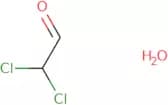
CAS:<p>Dichloroacetaldehyde hydrate is an organic compound that is used in the treatment of skin cancer. It has been shown to have protective effects on cell membranes, which may be due to its ability to inhibit lipid peroxidation. Dichloroacetaldehyde hydrate also has a potential use as a radiation sensitizer and may be able to extend the lifespan of animals.</p>Fórmula:C2H4Cl2O2Pureza:Min. 95%Forma y color:PowderPeso molecular:130.96 g/molPhloroglucinol dihydrate
CAS:<p>Phloroglucinol dihydrate is a chemical substance that can be used as a denaturant, conditioner and deodorant. It is soluble in water and has been shown to have enzyme-inhibiting properties. Phloroglucinol dihydrate has been shown to have anti-inflammatory properties by inhibiting the production of prostaglandins. This compound also has optical properties, which are determined by its chromene structure. There is no phase transition temperature for this compound because it does not melt or freeze.</p>Fórmula:C6H6O3•(H2O)2Pureza:Min. 95%Forma y color:PowderPeso molecular:162.14 g/mol(R)-(-)-Glycidyl butyrate
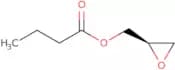
CAS:<p>(R)-(-)-Glycidyl butyrate is a chiral molecule with a single enantiomer. It is an inhibitor of bacterial growth, and has been shown to be selective for Gram-positive bacteria such as staphylococci and subtilis, while being less active against Gram-negative bacteria such as E. coli. The kinetic constants of the enzyme that catalyzes the hydrolysis of (R)-(-)-glycidyl butyrate have been determined by immobilization on ion exchange resins. The stereoselectivity of this reaction was also found to be in favor of (R)-(-)-glycidyl butyrate. This compound also has potent inhibitory activity against iodination reaction catalyzed by Escherichia coli D-amino acid oxidase, which is used in the diagnosis of phenylketonuria. Finally, (R)-(-)-glycidyl butyrate has been shown to inhibit de</p>Fórmula:C7H12O3Pureza:Min. 95%Forma y color:Clear, colourless to pale yellow liquid.Peso molecular:144.17 g/molEthyl 2-phenylbutyrate
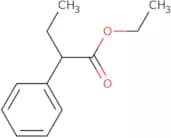
CAS:<p>Ethyl 2-phenylbutyrate is a synthetic, non-steroidal compound that has been shown to inhibit the activity of cyclooxygenase enzymes. It is used as an intermediate in organic synthesis and as a reagent in the cross-coupling reaction between arenes and magnesium. The compound is synthesized by reacting cyclopentyl bromide with an alkyl halide, followed by treatment with an alkanoic acid. The enantiomers of ethyl 2-phenylbutyrate can be separated by chromatography or by crystallization. This chemical is soluble in benzene and ether, but not in water.</p>Fórmula:C12H16O2Pureza:Min. 95%Forma y color:PowderPeso molecular:192.25 g/mol9-Acridinamine hydrochloride hydrate
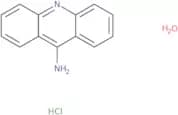
CAS:<p>9-Acridinamine hydrochloride hydrate is a redox agent that has been shown to have genotoxic effects in vitro. It can be used for the treatment of infectious diseases such as tuberculosis and leprosy, but it is not active against gram-positive bacteria. 9-Acridinamine hydrochloride hydrate has been shown to inhibit the growth of bacteria by binding to DNA and preventing transcription, replication, and repair. This compound also inhibits bacterial protein synthesis by forming covalent bonds with amino groups on proteins. 9-Acridinamine hydrochloride hydrate has been shown to be safe when administered orally in animal studies, but it may cause hepatotoxicity.</p>Fórmula:C13H10N2·HCl·H2OPureza:Min. 95%Forma y color:Yellow PowderPeso molecular:248.71 g/mol4-Nitro-D-phenylalanine hydrate
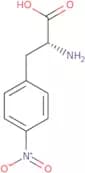
CAS:<p>4-Nitro-D-phenylalanine hydrate is a cytosolic enzyme that catalyzes the conversion of phenylpropionic acid to its conjugate base, 4-nitrophenol. This reaction is important in the synthesis of antimicrobial peptides and extractants. The enzyme also has hemolytic activity and can be used as an extractant for pancreatic juice. 4-Nitro-D-phenylalanine hydrate is a catalyst for acylation reactions, which are involved in the production of various pharmaceuticals. 4-Nitro-D-phenylalanine hydrate binds to receptors on the surface of bacterial cells, making it an effective antibacterial agent.</p>Fórmula:C9H10N2O4·H2OPureza:Min. 95%Forma y color:PowderPeso molecular:228.2 g/mol2,6-Dimethyl-1,4-diphenylpyridinium tetrafluoroborate
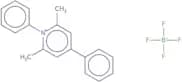
CAS:<p>2,6-Dimethyl-1,4-diphenylpyridinium tetrafluoroborate is a high quality reagent that can be used as a useful intermediate in the synthesis of fine chemicals. It is used as an important building block in the synthesis of many organic compounds and is also an important reaction component. This compound has a wide range of uses and can be used as a versatile building block in organic synthesis or as a speciality chemical for research purposes.</p>Fórmula:C19H18N·BF4Pureza:Min. 95%Peso molecular:347.16 g/mol3-Amino-4-hydroxybenzoic acid hydrate
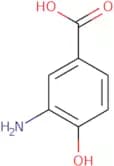
CAS:<p>3-Amino-4-hydroxybenzoic acid hydrate is a fine chemical that is used as a versatile building block in the synthesis of pharmaceuticals, agrochemicals, and other organic chemicals. It is an intermediate for the preparation of various research chemicals. 3-Amino-4-hydroxybenzoic acid hydrate has been shown to be an effective reagent for the synthesis of certain complex compounds. It also has high quality and can be used as a reaction component in many reactions.</p>Fórmula:C7H7NO3·H2OPureza:Min. 95%Forma y color:PowderPeso molecular:171.15 g/molQuinidine sulfate dihydrate
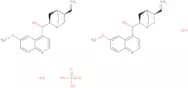
CAS:<p>Quinidine sulfate dihydrate is a medication that belongs to the class of antiarrhythmic drugs. It is used in the treatment of arrhythmias, including atrial fibrillation, supraventricular tachycardia, and ventricular tachycardia. Quinidine sulfate dihydrate has an inhibitory effect on erythromycin-resistant bacteria, such as staphylococci and streptococci. This drug has also been shown to inhibit the growth of many types of cancer cells, including colon cancer cells. Quinidine sulfate dihydrate acts by inhibiting cellular ATPases.</p>Fórmula:C40H48N4O4·H2O4S·2H2OPureza:(Titration) Min. 98%Forma y color:PowderPeso molecular:782.94 g/molDL-Lysine hydrate
CAS:<p>DL-Lysine monohydrate is a white crystalline powder. It is soluble in water and alcohol, but insoluble in ether. DL-Lysine monohydrate has been shown to be fully chemically stable under normal laboratory conditions, with no evidence of decomposition at room temperature or under the influence of light. This compound is used as a drug substance for the treatment of lysinuric protein intolerance and may be used as an additive to animal feed. DL-Lysine monohydrate is also used in the production of other compounds such as amino acids, calorimetry reagents, and thermal analysis materials.</p>Fórmula:C6H14N2O2•xH2OPureza:Min. 95%Forma y color:PowderPeso molecular:146.19 g/mol