Compuestos relacionados con enzimas, péptidos y proteínas
Los compuestos relacionados con enzimas, péptidos y proteínas son críticos para estudiar y manipular las vías bioquímicas. Estos compuestos incluyen enzimas que catalizan reacciones bioquímicas, péptidos que actúan como hormonas y moléculas de señalización, y proteínas que desempeñan una amplia gama de funciones dentro de los organismos. Esta categoría abarca inhibidores, activadores, sustratos y otros reactivos esenciales para la enzimología, la proteómica y la investigación de péptidos. En CymitQuimica, ofrecemos una diversa selección de compuestos de alta calidad para facilitar su investigación en cinética enzimática, función de proteínas y síntesis de péptidos, asegurando resultados precisos y fiables.
Subcategorías de "Compuestos relacionados con enzimas, péptidos y proteínas"
- Aminoácidos (AA)(40.541 productos)
- Enzimas(3.560 productos)
- Péptidos(30.714 productos)
- Proteínas(15.022 productos)
Se han encontrado 1312 productos de "Compuestos relacionados con enzimas, péptidos y proteínas"
Ordenar por
Pureza (%)
0
100
|
0
|
50
|
90
|
95
|
100
Hemokinin 1 (mouse, rat) trifluoroacetate salt
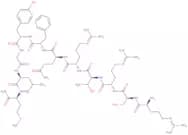
CAS:<p>Hemokinin 1 is a protein that is encoded by the NK1R gene. It has been shown to be associated with insulin resistance, inflammatory diseases, and pain control. Hemokinin 1 is also a potential treatment for viral infections such as HIV and hepatitis C. Hemokinin 1 interacts with nicotinic acetylcholine receptors (nAChRs) in the brain and blood vessels, which leads to an increase in blood pressure. This protein also interacts with hematopoietic cells, which may be responsible for its function as an antinociceptive agent. Hemokinin 1 has been implicated in autoimmune diseases such as arthritis and atrial fibrillation. This protein is expressed mainly in the brain, liver, heart, kidneys and spleen.</p>Fórmula:C61H100N22O15SPureza:Min. 95%Peso molecular:1,413.65 g/mol9-Chloro-11β,17,21-trihydroxy-16β-methylpregna-1,4-diene-3,20-dione 17-valerate
CAS:Producto controlado<p>Prednisolone is a synthetic corticosteroid that is used in the treatment of a number of lung diseases, including asthma. Prednisolone is used to decrease the inflammation and swelling around the airways and lungs. Prednisolone is used to treat certain skin conditions, such as eczema and dermatitis. This drug also decreases the activity of the immune system by inhibiting production of substances that cause inflammation. The onset of action for prednisolone is typically one day with a duration of up to two weeks. It has been shown to be more effective when taken orally than when applied topically. It may be taken with or without food and can be given as an oral or an intravenous dose. Prednisolone tablets must be dissolved in water before they are placed under the tongue (sublingual). The tablets will dissolve quickly under the tongue, releasing prednisolone into your bloodstream. Enteric-coated tablets should not be crushed or chewed</p>Fórmula:C27H37ClO6Pureza:Min. 95%Peso molecular:493.03 g/molLithium Tetrakis(pentafluorophenyl)borate - Ethyl Ether Complex
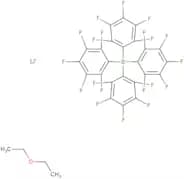
CAS:Producto controlado<p>Lithium tetrakis(pentafluorophenyl)borate - ethyl ether complex is a ligand that has the ability to bind to magnesium. The complex is highly soluble in organic solvents such as ethylene and ether, but not in water. It can be used to produce high yields of ethylene with magnesium as a co-catalyst. The complex binds to magnesium by forming a six-membered ring with the borate group and two oxygen atoms from the ether molecule. The crystal structure of this complex was determined using x-ray crystallography. This complex has been found naturally in plants such as spinach and beets, although it is not yet known what role it plays in these plants.</p>Pureza:70%Nmrδ2-Cefepime etherate
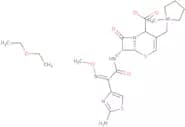
CAS:Producto controlado<p>Please enquire for more information about Delta2-Cefepime etherate including the price, delivery time and more detailed product information at the technical inquiry form on this page</p>Fórmula:C23H34N6O6S2Pureza:Min. 95%Peso molecular:554.68 g/mol11-Hydroxy dihydro loratadine
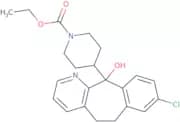
CAS:<p>Please enquire for more information about 11-Hydroxy dihydro loratadine including the price, delivery time and more detailed product information at the technical inquiry form on this page</p>Fórmula:C22H25ClN2O3Pureza:Min. 95%Peso molecular:400.9 g/molGlycodeoxycholic Acid monohydrate
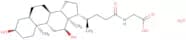
CAS:Producto controlado<p>Glycodeoxycholic acid is a bile acid that has been shown to inhibit bacterial translocation. It is used as an adjuvant therapy in the treatment of primary sclerosing cholangitis and other inflammatory conditions of the liver, such as pancreatitis, and it has also been studied for its effects on iron homeostasis. Glycodeoxycholic acid is produced by the human body and can be found in the serum. The biosynthesis of glycodeoxycholic acid is dependent on microbial metabolism, which may be inhibited by nonsteroidal anti-inflammatory drugs. This compound has been shown to inhibit cell signaling pathways and increase sodium ion uptake into cells through inhibition of sodium-potassium ATPase activity.</p>Pureza:Min. 95%Estrone 3-valerate
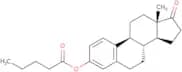
CAS:Producto controlado<p>Please enquire for more information about Estrone 3-valerate including the price, delivery time and more detailed product information at the technical inquiry form on this page</p>Fórmula:C23H30O3Pureza:Min. 95%Peso molecular:354.48 g/molAcridine orange hydrochloride hydrate
CAS:<p>Acridine orange hydrochloride hydrate is a fine chemical that can be used as a reagent or building block in research and other chemical reactions. It is used as a speciality chemical with CAS number 1704465-79-1. Acridine orange hydrochloride hydrate has versatile applications and is used as a reaction component or intermediate. Acridine orange hydrochloride hydrate is also useful as a scaffold to make complex compounds.</p>Fórmula:C17H19N3·HCl·xH2OPureza:Min. 98 Area-%Forma y color:Orange PowderPeso molecular:301.815-Iodo-2,3-dihydro-1H-inden-2-amine hydrochloride hydrate
Producto controlado<p>Please enquire for more information about 5-Iodo-2,3-dihydro-1H-inden-2-amine hydrochloride hydrate including the price, delivery time and more detailed product information at the technical inquiry form on this page</p>Fórmula:C9H13ClINOPureza:Min. 95%Peso molecular:313.56 g/molGastrin I (rat) - acetate salt
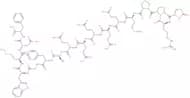
CAS:<p>Acetate salt</p>Fórmula:C94H128N22O31S2Pureza:Min. 95%Forma y color:PowderPeso molecular:2,126.28 g/molCobalt(II) acetate tetrahydrate
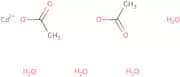
CAS:<p>Cobalt(II) acetate tetrahydrate is a model system that can be used to study the structures of coordination complexes. The cobalt ion has a coordination geometry with two water molecules, two oxygen atoms from the acetate anion, and one proton from the hydroxide anion. The crystal structure is composed of six-membered rings of alternating metal ions and oxygen atoms. The reaction solution contains excess sodium hydroxide and water vapor. It was determined that cobalt(II) acetate tetrahydrate reacts electrochemically at low frequencies as well as with 5-hmf, an oxidizing agent, in the presence of sodium citrate as an oxidation catalyst.</p>Fórmula:C4H6CoO4·4H2OPureza:Min. 95%Forma y color:Pink To Red SolidPeso molecular:249.08 g/molTin(II) chloride dihydrate
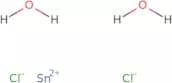
CAS:<p>Tin(II) chloride dihydrate is a white or pale yellow crystalline solid. It is soluble in water and has a relatively low melting point. Tin(II) chloride dihydrate is used as an acid catalyst for the preparation of esters from ethyl trifluoroacetate, and as an intermediate for synthesizing quinoline derivatives. Tin(II) chloride dihydrate can also be used to deactivate fatty acids by reacting with them in the presence of water. The reaction vessel is heated to about 300°C to evaporate the solvent and leave a residue of tin chloride, which can then be recovered by distillation. Tin(II) chloride dihydrate has been shown to have transport properties that are similar to those of other metal chlorides at comparable concentrations.</p>Fórmula:SnCl2•(H2O)2Pureza:Min. 95%Forma y color:Colorless Clear LiquidPeso molecular:225.65 g/molCilazapril monohydrate
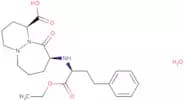
CAS:<p>Cilapzapril monohydrate is the hydrated form of cilapzapril, that improves its solubility. It is a prodrug form that belongs to the group of angiotension converting enzyme inhibitors, also known as ACE inhibitors. Cilapzapril monohydrate acts as antihypertensive and inhibits the production angiotensin, a hormone that casused an increase in blood pressure due to blood vessels constriction. Cilapzapril is similar to other compounds as propranolol, atenolol, hydrochlorothiazide, captopril, enalapril, but recent studies has shown that it can also moderate the proliferative response in vessels after vascular injury.</p>Fórmula:C22H31N3O5·H2OPureza:Min. 95%Forma y color:White Off-White PowderPeso molecular:435.51 g/molFmoc-L-Ala-OH monohydrate
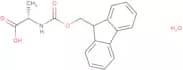
CAS:<p>Please enquire for more information about Fmoc-L-Ala-OH monohydrate including the price, delivery time and more detailed product information at the technical inquiry form on this page</p>Fórmula:C18H17NO4·H2OPureza:Min. 95%Forma y color:White To Off-White SolidPeso molecular:329.35 g/molThymosin beta10 (human, rat)
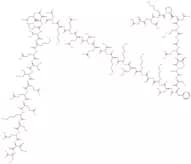
CAS:<p>Please enquire for more information about Thymosin beta10 (human, rat) including the price, delivery time and more detailed product information at the technical inquiry form on this page</p>Fórmula:C211H353N57O76SPureza:Min. 95%Peso molecular:4,936.47 g/molQuinine hydrochloride dihydrate
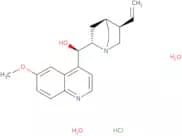
CAS:<p>Quinine hydrochloride dihydrate is a natural compound that has been used for centuries as a treatment for malaria. It is an effective anti-malarial agent and is also used to treat nocturnal leg cramps, although it has a low potency. Quinine hydrochloride dihydrate is active against the parasite Plasmodium falciparum in vitro. It binds to hemozoin, which is the pigment that the malaria parasites produce during digestion of hemoglobin from red blood cells. This binding inhibits the growth of the parasite and causes cell death by inhibiting protein synthesis. Quinine hydrochloride dihydrate has been shown to be genotoxic in vivo, but not in vitro. The genotoxic effects may be due to its ability to create reactive oxygen species (ROS) through photochemical reactions with light exposure and other chemical reactions, such as thermal expansion or matrix effects.</p>Fórmula:C20H24N2O2·HCl·2H2OForma y color:PowderPeso molecular:396.91 g/molMagnesium perchlorate
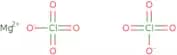
CAS:<p>Magnesium perchlorate is a magnesium salt of perchloric acid. It is a metal chelate that has been reported to be used for detecting water vapor in the atmosphere, and as an electrolyte in electrochemical impedance spectroscopy. Magnesium perchlorate has also been used as a catalyst in chemical reactions. It has a redox potential of -2.8 V and can be used as an oxidizing agent at lower temperatures. In addition, it is sensitive to hydrogen bonding with amines, which can be used for detection purposes.</p>Fórmula:Cl2MgO8Pureza:Min. 95%Peso molecular:223.21 g/molACTH (1-16), human
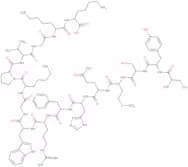
CAS:<p>Please enquire for more information about ACTH (1-16), human including the price, delivery time and more detailed product information at the technical inquiry form on this page</p>Fórmula:C89H133N25O22SPureza:Min. 95%Peso molecular:1,937.23 g/mol2-Chloro-3-ethylbenzoxazolium tetrafluoroborate
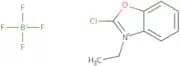
CAS:<p>2-Chloro-3-ethylbenzoxazolium tetrafluoroborate is a synthetic compound that inhibits the enzyme maltase. This compound is used in the treatment of diabetic patients with intestinal maltase deficiency and has been shown to be effective in clinical studies. 2-Chloro-3-ethylbenzoxazolium tetrafluoroborate has also been shown to inhibit other enzymes, such as thiocarbamate synthetase and aminooxazoline synthetase, which are involved in the biosynthesis of chlorinated pesticides and herbicides. The chloride ion is necessary for this inhibition activity. The compound can be prepared by a preparative method that involves hexaacetate and chloride ion or by using an aglycone, trehalamine, or stereospecific method.</p>Fórmula:C9H9BClF4NOPureza:Min. 95%Forma y color:PowderPeso molecular:269.43 g/molDimethyl (2R,3R)-2,3-O-(1-Phenylethylidene)-L-tartrate
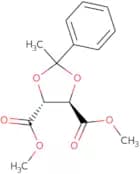
CAS:<p>Please enquire for more information about Dimethyl (2R,3R)-2,3-O-(1-Phenylethylidene)-L-tartrate including the price, delivery time and more detailed product information at the technical inquiry form on this page</p>Fórmula:C14H16O6Pureza:Min. 95%Peso molecular:280.27 g/mol