Compuestos relacionados con enzimas, péptidos y proteínas
Los compuestos relacionados con enzimas, péptidos y proteínas son críticos para estudiar y manipular las vías bioquímicas. Estos compuestos incluyen enzimas que catalizan reacciones bioquímicas, péptidos que actúan como hormonas y moléculas de señalización, y proteínas que desempeñan una amplia gama de funciones dentro de los organismos. Esta categoría abarca inhibidores, activadores, sustratos y otros reactivos esenciales para la enzimología, la proteómica y la investigación de péptidos. En CymitQuimica, ofrecemos una diversa selección de compuestos de alta calidad para facilitar su investigación en cinética enzimática, función de proteínas y síntesis de péptidos, asegurando resultados precisos y fiables.
Subcategorías de "Compuestos relacionados con enzimas, péptidos y proteínas"
- Aminoácidos (AA)(40.509 productos)
- Enzimas(3.560 productos)
- Péptidos(30.719 productos)
- Proteínas(15.022 productos)
Se han encontrado 1312 productos de "Compuestos relacionados con enzimas, péptidos y proteínas"
Ordenar por
Pureza (%)
0
100
|
0
|
50
|
90
|
95
|
100
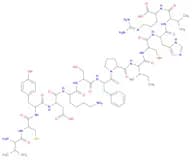
(3S)-3-amino-3-{[(1S)-4-carbamimidamido-1-{[(1S)-1-{[(1S)-1-{[(1S,2S)-1-{[(2S)-1-[(2S)-2-{[(1S)-1-carboxy-2-phenylethyl]carbamoyl}pyrrolidin-1-yl]-3-(1H-imidazol-4-yl)-1-oxopropan-2-yl]carbamoyl}-2-methylbutyl]carbamoyl}-2-(4-hydroxyphenyl)ethyl]carbamoyl}-2-methylpropyl]carbamoyl}butyl]carbamoyl}propanoic acid
CAS:Fórmula:C50H71N13O12Pureza:99%Forma y color:SolidPeso molecular:1046.1786L-Asparagine, N-acetyl-L-α-aspartyl-L-α-glutamyl-L-valyl-N-(4-nitrophenyl)- (9CI)
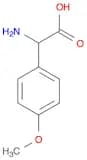
CAS:Fórmula:C26H34N6O13Pureza:97%Forma y color:SolidPeso molecular:638.5806Benzeneacetic acid, α-amino-4-methoxy-
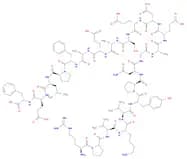
CAS:Fórmula:C9H11NO3Pureza:98%Forma y color:SolidPeso molecular:181.1885L-Arginine, D-arginyl-L-arginyl-L-prolyl-(4R)-4-hydroxy-L-prolylglycyl-3-(2-thienyl)-L-alanyl-L-seryl-(3R)-1,2,3,4-tetrahydro-3-isoquinolinecarbonyl-(2S,3aS,7aS)-octahydro-1H-indole-2-carbonyl-, acetate (salt)
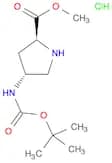
CAS:Fórmula:C61H93N19O15SPureza:98%Forma y color:SolidPeso molecular:1364.5744Methyl (2S,4R)-4-Boc-aminopyrrolidine-2-carboxylate hydrochloride
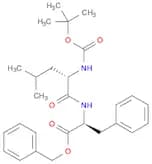
CAS:Fórmula:C11H21ClN2O4Pureza:97%Forma y color:SolidPeso molecular:280.7484(S)-Benzyl 2-((S)-2-(tert-butoxycarbonylamino)-4-methylpentanamido)-3-phenylpropanoate
CAS:Fórmula:C27H36N2O5Pureza:98%Peso molecular:468.5851Benzamide, N-[4-[(aminoiminomethyl)amino]-1-[[(4-nitrophenyl)amino]carbonyl]butyl]-, hydrochloride (1:1)
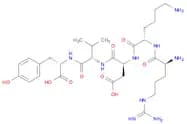
CAS:Fórmula:C19H23ClN6O4Pureza:97%Forma y color:SolidPeso molecular:434.8767L-Tyrosine, L-arginyl-L-lysyl-L-a-aspartyl-L-valyl-
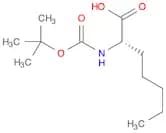
CAS:Fórmula:C30H49N9O9Pureza:95%Forma y color:SolidPeso molecular:679.7650(S)-2-tert-Butoxycarbonylamino-heptanoic acid
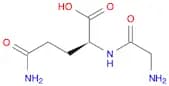
CAS:Fórmula:C12H23NO4Pureza:97%Forma y color:LiquidPeso molecular:245.3153(S)-5-Amino-2-((S)-2-(1,3-dioxoisoindolin-2-yl)propanamido)-5-oxopentanoic acid
CAS:Fórmula:C16H17N3O6Pureza:98%Forma y color:SolidPeso molecular:347.3227Glycine, N-[(9H-fluoren-9-ylmethoxy)carbonyl]-L-alanyl-
CAS:Fórmula:C20H20N2O5Pureza:98%Forma y color:SolidPeso molecular:368.3832Ref: IN-DA000D63
1g90,00€5g113,00€10gA consultar25g220,00€50gA consultar100gA consultar100mg49,00€250mg65,00€2,5-Dimethoxyterephthalohydrazide
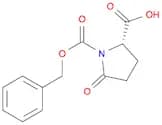
CAS:Fórmula:C14H16F2NO5PPureza:98%Forma y color:SolidPeso molecular:347.2511(S)-1-(Benzyloxycarbonyl)-5-oxopyrrolidine-2-carboxylic acid
CAS:Fórmula:C13H13NO5Pureza:98%Forma y color:SolidPeso molecular:263.2460Methyl (S)-2-(Boc-amino)-4-bromobutyrate
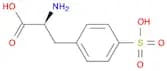
CAS:Fórmula:C10H18BrNO4Pureza:96%Forma y color:SolidPeso molecular:296.15824-Sulfonic acid-l-phenylalanine
CAS:Fórmula:C9H11NO5SPureza:95%Forma y color:SolidPeso molecular:245.2523Tyrosine,3-methoxy-O-methyl-
CAS:Fórmula:C11H15NO4Pureza:97%Forma y color:SolidPeso molecular:225.24119-Octadecenoic acid (9Z)-,(1R)-1-[[[(2-aminoethoxy)hydroxyphosphinyl]oxy]methyl]-1,2-ethanediylester
CAS:Fórmula:C41H78NO8PPureza:98%Forma y color:SolidPeso molecular:744.0337Ref: IN-DA00IMFR
1g159,00€5g592,00€10gA consultar50gA consultar100gA consultar50mg54,00€100mg61,00€250mg95,00€Carbamic acid,[(1S)-1-[[(2,5-dioxo-1-pyrrolidinyl)oxy]carbonyl]-1,5-pentanediyl]bis-,bis(1,1-dimethylethyl) ester
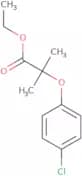
CAS:Fórmula:C20H33N3O8Pureza:95%Forma y color:SolidPeso molecular:443.4913Clofibrate
CAS:<p>Clofibrate is a lipid-lowering agent that is used for the treatment of hyperlipidemia. It is a non-selective inhibitor of fatty acid synthesis and has been shown to inhibit cancer cell growth in vitro. Clofibrate inhibits tumor cell proliferation and induces apoptosis, which may be due to its ability to inhibit protein synthesis in cancer cells. This drug also suppresses the growth of breast cancer cells by inhibiting their ability to proliferate.</p>Fórmula:C12H15ClO3Pureza:Min. 95%Forma y color:Colorless Clear LiquidPeso molecular:242.7 g/molAmmonium metatungstate hydrate
CAS:<p>Ammonium metatungstate hydrate is a catalyst that is used for the efficient production of fatty acids from vegetable oils. It has been shown to be an effective catalyst in the reaction of deionized water and particle at various reaction temperatures. The cationic surfactant, optical properties, and morphology of the fatty acid are all dependent on the type of carbon source used in the reaction. Ammonium metatungstate hydrate is also used as a photocatalyst for gas sensors.</p>Fórmula:(H4N)6•H2O40W12•(H2O)xPureza:Min. 85%Forma y color:PowderPeso molecular:2,956.3 g/molTriethyl citrate
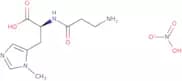
CAS:<p>Triethyl citrate (TEC) is an ester of citric acid, which is a natural compound. It is a reactive chemical that can react with potassium dichromate (K2Cr2O7) to form potassium citrate, or with malonic acid to form triethyl malonate. Triethyl citrate has been used as a reagent in analytical methods for the determination of water permeability and biological properties. In addition, it has been used as a precursor for the synthesis of dimethyl fumarate (DMF). DMF is an anti-inflammatory drug that may be useful in the treatment of multiple sclerosis.</p>Fórmula:C12H20O7Pureza:Min. 99 Area-%Forma y color:Colorless Clear LiquidPeso molecular:276.28 g/molL-Anserine nitrate salt
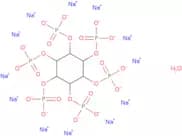
CAS:<p>L-Anserine nitrate salt is a soluble extract that contains nitrogen atoms, histidine, and primary amines. It is a natural substance found in animal tissue and can be used as a nutritional supplement for humans. L-Anserine nitrate salt has been shown to inhibit the activity of histamine release from mast cells in vitro, which may be beneficial in the treatment of hepatic steatosis. This extract has also been shown to increase levels of fatty acids in liver cells, which may reduce inflammation and improve insulin sensitivity. L-Anserine nitrate salt has also been shown to have antioxidant effects and inhibit DPP-IV activity, which may help treat drug sensitivity in animals.</p>Fórmula:C10H17N5O6Pureza:Min. 95%Forma y color:PowderPeso molecular:303.27 g/molSodium phytate hydrate
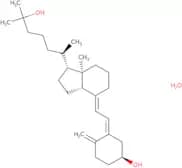
CAS:<p>Chelator of multivalent metal ions; food perservative; antioxidant</p>Fórmula:C6H6Na12O24P6·xH2OPureza:Min. 75.0%Forma y color:White PowderPeso molecular:923.82 g/mol25-Hydroxyvitamin D3 monohydrate
CAS:<p>25-Hydroxyvitamin D3 monohydrate is a vitamin D analog that has been shown to reduce elevated levels of parathyroid hormone and improve bone mineral density. It is used for the treatment of chronic kidney disease, hyperparathyroidism, and osteoporosis. 25-Hydroxyvitamin D3 monohydrate has been found to be effective in the treatment of these conditions because it increases the body's production of calcitriol, the active form of vitamin D. Calcitriol promotes calcium absorption in the gut and reduces renal excretion of calcium by inhibiting parathyroid hormone synthesis. This drug also inhibits pro-inflammatory cytokines such as IL-1β, IL-6, and TNF-α.</p>Fórmula:C27H44O2·H2OPureza:Min. 97 Area-%Forma y color:White PowderPeso molecular:418.65 g/molMalonic acid disodium salt monohydrate
CAS:<p>Malonic acid disodium salt monohydrate is a water-soluble alkanoic acid that is used as a cross-linking agent in the manufacture of polymers. Malonic acid disodium salt monohydrate is also used to produce immunogenic antigens for cancer research and as a synthetic intermediate in the synthesis of pharmaceuticals or agricultural chemicals. Malonic acid disodium salt monohydrate is converted to malic acid by the enzyme cytosolic malate dehydrogenase. Malonic acid disodium salt monohydrate has an acidic pH and can be used to neutralize sodium salts such as sodium bicarbonate. Cell culture studies have shown that exposure to malonic acid disodium salt monohydrate inhibits protein synthesis and cell growth, which may be due to its ability to bind with DNA during transcription.</p>Fórmula:C3H2Na2O4·H2OPureza:Min 98%Forma y color:White PowderPeso molecular:166.04 g/molMagnesium L-threonate monohydrate
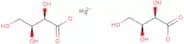
CAS:<p>Magnesium L-threonate monohydrate is a complex chemical that is a versatile building block. The CAS No. for this compound is 500304-76-7. Magnesium L-threonate monohydrate can be used as a research chemical, reagent or speciality chemical in the laboratory. It is also useful as a building block for complex chemical reactions and as an intermediate for the synthesis of other compounds. Magnesium L-threonate monohydrate has been shown to be useful in the synthesis of pharmaceuticals, agrochemicals and materials science products.</p>Fórmula:C8H14MgO10·H2OPureza:Min. 95%Forma y color:White PowderPeso molecular:312.51 g/molAbiraterone acetate
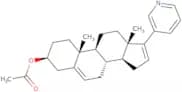
CAS:Producto controlado<p>CYP17 enzyme inhibitor</p>Fórmula:C26H33NO2Pureza:Min. 98 Area-%Forma y color:PowderPeso molecular:391.55 g/molL-Asparagine monohydrate
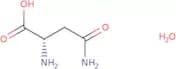
CAS:<p>L-Asparagine monohydrate (LAM) is a water-soluble amino acid that is used in the treatment of metabolic disorders such as diabetes. LAM has been shown to be effective in cell culture and tissue culture experiments, where it was found to increase the production of growth factors, such as insulin and keratinocyte growth factor. This amino acid also has a high degree of kinetic stability and can be used for magnetic resonance spectroscopy studies. LAM is soluble in water, but not in organic solvents. It forms hydrogen bonds with other molecules and is able to form dehydrated crystals. The experimental solubility data for LAM can be found in table 1 below.</p>Fórmula:C4H10N2O4Pureza:(Titration) Min. 99%Forma y color:White Clear LiquidPeso molecular:150.13 g/molVeratramine
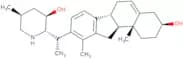
CAS:<p>Veratramine is a natural drug that is used as an anti-inflammatory agent and for the treatment of autoimmune diseases. It has been shown to have significant cytotoxicity in epithelial cells, but not in mesenchymal cells. Veratramine also has a matrix effect on these cell types. Veratramine's surface methodology can be used to measure the degree of inflammation by measuring the level of cytokines at the site of injury. This technique also allows for analysis of human serum samples using LC-MS/MS techniques to identify acute toxicities and steroid alkaloids that may be present.</p>Fórmula:C27H39NO2Pureza:Min. 95%Forma y color:PowderPeso molecular:409.60 g/molR-(+)-Aminoglutethimide L-tartrate
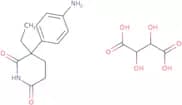
CAS:Producto controlado<p>R-(+)-Aminoglutethimide is a potent inhibitor of mitochondrial electron transport and the cleavage enzyme 4-phenylimidazole. It inhibits mitochondrial ATP production by binding to the inner mitochondrial membrane and preventing the passage of electrons from cytochrome c oxidase to oxygen. This drug has been shown to be effective in treating corticotroph adenoma, a benign tumor of the anterior pituitary gland, which is due to excessive secretion of ACTH by the gland. R-(+)-Aminoglutethimide can also be used for treatment of Cushing's syndrome due to its ability to inhibit cortisol synthesis in the adrenal cortex. This drug has been shown to act as a potent inhibitor of progesterone synthesis in bovine and human ovaries, leading to decreased levels of pregnenolone, which is an important precursor for other steroid hormones such as testosterone or estrogens.</p>Fórmula:C17H22N2O8Pureza:Min. 95%Forma y color:White To Off-White SolidPeso molecular:382.37 g/mol5-Fluoroorotic acid hydrate
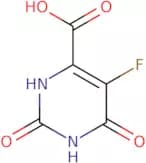
CAS:<p>Selection reagent for orotidine 5'-phosphate decarboxylase mutants</p>Fórmula:C5H3FN2O4·xH2OPureza:(%) Min. 97%Forma y color:Off-White Yellow PowderPeso molecular:174.09 g/mol(R)-Apomorphine hydrochloride hemihydrate
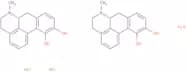
CAS:<p>Apomorphine hydrochloride is the salt form of apomorphine, a morphine derivative D2 dopamine agonist. The high selectivity for D2, D3, D4 and D5 receptors makes apomorphine hydrochloride a possible drug candidate and it is in clinical trials for diagnosis and treatment of Parkinsons disease. Moreover, apomorphine and apomorphine hydrochloride have been investigated in diverse studies for treating movement disorders.</p>Fórmula:C17H17NO2•HCl•(H2O)0Pureza:Min. 95%Forma y color:White PowderPeso molecular:312.79 g/molL-Malic acid disodium salt monohydrate
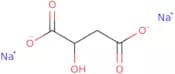
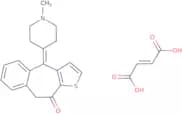
CAS:<p>L-Malic acid disodium salt monohydrate is a versatile building block that can be used in the production of research chemicals, reagents and speciality chemicals. It is also a useful building block for the synthesis of complex compounds with high quality. L-Malic acid disodium salt monohydrate has been used as a reagent in organic syntheses, as well as in the production of pharmaceuticals. In addition, it is an intermediate for the synthesis of polymers and other materials. The CAS number for L-Malic acid disodium salt monohydrate is 207511-06-6.</p>Fórmula:C4H4O5Na2·H2OPureza:Min. 95%Forma y color:PowderPeso molecular:196.07 g/molKetotifen fumarate
CAS:<p>Ketotifen fumarate is an anti-inflammatory drug that belongs to the class of histamine H1 receptor antagonists. It has been shown to be effective in the treatment of inflammatory bowel diseases, such as Crohn’s disease and ulcerative colitis. Ketotifen fumarate also has biological properties, such as eosinophil cationic protein release inhibition, that are important for its therapeutic effects. In vitro studies have shown that ketotifen fumarate can inhibit h1-receptor mediated responses in a dose-dependent manner. The drug is metabolized by the liver enzyme CYP3A4 and has been shown to interact with other drugs metabolized through this pathway. Ketotifen fumarate is currently being used as a research tool in experimental models of infectious diseases, such as tuberculosis and influenza A virus infection.</p>Fórmula:C23H23NO5SPureza:Min. 95%Forma y color:White PowderPeso molecular:425.5 g/mol






![Benzamide, N-[4-[(aminoiminomethyl)amino]-1-[[(4-nitrophenyl)amino]carbonyl]butyl]-, h…](/_next/image/?url=https%3A%2Fstatic.cymitquimica.com%2Fproducts%2FIN%2Fthumb-webp%2FDA00IGHF.webp&w=3840&q=75)

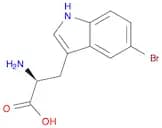

![Glycine, N-[(9H-fluoren-9-ylmethoxy)carbonyl]-L-alanyl-](/_next/image/?url=https%3A%2Fstatic.cymitquimica.com%2Fproducts%2FIN%2Fthumb-webp%2FDA000D63.webp&w=3840&q=75)




![9-Octadecenoic acid (9Z)-,(1R)-1-[[[(2-aminoethoxy)hydroxyphosphinyl]oxy]methyl]-1,2-ethanediylest…](/_next/image/?url=https%3A%2Fstatic.cymitquimica.com%2Fproducts%2FIN%2Fthumb-webp%2FDA00IMFR.webp&w=3840&q=75)
![Carbamic acid,[(1S)-1-[[(2,5-dioxo-1-pyrrolidinyl)oxy]carbonyl]-1,5-pentanediyl]bis-,bis(1,1-dimet…](/_next/image/?url=https%3A%2Fstatic.cymitquimica.com%2Fproducts%2FIN%2Fthumb-webp%2FDA00I5NY.webp&w=3840&q=75)