Compuestos relacionados con enzimas, péptidos y proteínas
Los compuestos relacionados con enzimas, péptidos y proteínas son críticos para estudiar y manipular las vías bioquímicas. Estos compuestos incluyen enzimas que catalizan reacciones bioquímicas, péptidos que actúan como hormonas y moléculas de señalización, y proteínas que desempeñan una amplia gama de funciones dentro de los organismos. Esta categoría abarca inhibidores, activadores, sustratos y otros reactivos esenciales para la enzimología, la proteómica y la investigación de péptidos. En CymitQuimica, ofrecemos una diversa selección de compuestos de alta calidad para facilitar su investigación en cinética enzimática, función de proteínas y síntesis de péptidos, asegurando resultados precisos y fiables.
Subcategorías de "Compuestos relacionados con enzimas, péptidos y proteínas"
- Aminoácidos (AA)(40.558 productos)
- Enzimas(3.561 productos)
- Péptidos(30.674 productos)
- Proteínas(15.026 productos)
Se han encontrado 1312 productos de "Compuestos relacionados con enzimas, péptidos y proteínas"
Ordenar por
Pureza (%)
0
100
|
0
|
50
|
90
|
95
|
100
Tolterodine tartrate
CAS:<p>Muscarinic antagonist</p>Fórmula:C22H31NO·C4H6O6Pureza:Min. 95%Forma y color:PowderPeso molecular:475.57 g/molDiflucortolone valerate
CAS:Producto controlado<p>Diflucortolone valerate is a corticosteroid that is used to treat inflammatory skin diseases. It is a prodrug that is hydrolyzed in vivo to diflucortolone, its active form. Diflucortolone valerate has been shown to be effective against alopecia areata and mycological skin infections. The optimum concentration of this drug for treating these conditions is 0.5% or less, with side effects such as erythema, scaling, and burning at the application site occurring at higher concentrations. Diflucortolone valerate also has broad-spectrum antimicrobial activity against bacteria and fungi, including methicillin-resistant Staphylococcus aureus (MRSA) isolates.</p>Fórmula:C27H36F2O5Pureza:Min. 95%Forma y color:PowderPeso molecular:478.57 g/molNesfatin-1 (human) trifluoroacetate salt
CAS:<p>Please enquire for more information about Nesfatin-1 (human) trifluoroacetate salt including the price, delivery time and more detailed product information at the technical inquiry form on this page</p>Fórmula:C427H691N113O134Pureza:Min. 95%Peso molecular:9,551.74 g/molHuman-24, human
CAS:<p>This antibody is a mouse IgG2a monoclonal antibody to human 24, a protein of unknown function. It blocks the binding of this protein to its ligand, inhibiting the function of this protein.</p>Pureza:Min. 95%Dibenzoyl-L-tartaric acid monohydrate
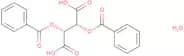
CAS:<p>Dibenzoyl-L-tartaric acid monohydrate is a chiral molecule that can be found in nature. It is soluble in organic solvents, but insoluble in water. Dibenzoyl-L-tartaric acid monohydrate has an affinity for carboxylate ligands and absorbs at 360 nm. The optical rotation of this compound is +20° to -50°, depending on the concentration and pH of the solution. This molecule is a potential pollutant because it can be degraded by oxidation or photolysis, yielding environmentally hazardous compounds. Its conformation may be changed by light or heat and, as a result, its properties may also change.</p>Fórmula:C18H14O8·H2OPureza:Min. 95%Forma y color:PowderPeso molecular:376.31 g/mol(+/-)-Synephrine tartrate
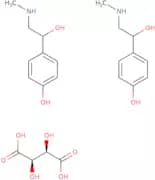
CAS:<p>Synephrine is a drug that is used as an appetite suppressant and weight-loss aid. It can be found in dietary supplements, where it is marketed as a stimulant. Synephrine has been shown to have an inhibitory effect on the carotid sinus reflexes, which are nerve impulses that regulate blood pressure. This drug also has a pressor effect on the heart and causes an increase in systolic and diastolic blood pressures. The enantiomers of synephrine are (+)synephrine or (-)-synephrine tartrate, which differ only in the stereochemistry of their chiral centers. The hydrochloric acid present in synephrine tartrate breaks down into amines such as histamine and serotonin, which cause swelling of smooth muscles found in the walls of blood vessels. When taken orally, this drug is metabolized by hydrolysis to picric acid or (+)-synephrine or (-)-synephrine tartrate,</p>Fórmula:(C9H13NO2)2•C4H6O6Pureza:Min. 95%Forma y color:PowderPeso molecular:484.5 g/molSodium phytate hydrate
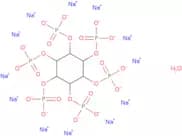
CAS:<p>Chelator of multivalent metal ions; food perservative; antioxidant</p>Fórmula:C6H6Na12O24P6·xH2OPureza:Min. 75.0%Forma y color:White PowderPeso molecular:923.82 g/molSDF-1β (human) trifluoroacetate salt
CAS:<p>Please enquire for more information about SDF-1beta (human) trifluoroacetate salt including the price, delivery time and more detailed product information at the technical inquiry form on this page</p>Fórmula:C382H620N114O97S5Pureza:Min. 95%Peso molecular:8,522.05 g/molRivastigmine tartrate
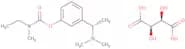
CAS:Producto controlado<p>Acetylcholinesterase and butyrylcholinesterase inhibitor</p>Fórmula:C18H28N2O8Pureza:Min. 95%Forma y color:White PowderPeso molecular:400.42 g/molPefloxacin mesylate dihydrate
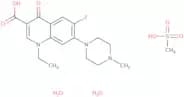
CAS:<p>Pefloxacin mesylate is a prodrug of pefloxacin that is hydrolyzed to the active form in vivo. Pefloxacin is an antibiotic that inhibits bacterial growth by interfering with DNA synthesis by binding to the bacterial ribosome, thereby blocking protein synthesis. This drug has been shown to be effective against gram-positive bacteria such as Streptococcus pneumoniae and Staphylococcus aureus. However, it is not active against gram-negative bacteria such as Escherichia coli or Pseudomonas aeruginosa. Pefloxacin mesylate dihydrate can be administered intravenously at a low dose without any adverse effects on healthy adults. It has also been shown to inhibit the growth of antibiotic-resistant strains of many species, including methicillin-resistant Staphylococcus aureus (MRSA) and Enterococcus faecium.</p>Fórmula:C17H20FN3O3·CH4O3S·2H2OPureza:Min. 95%Peso molecular:465.49 g/mol25-Hydroxyvitamin D3 monohydrate
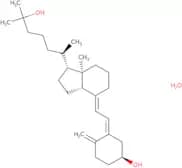
CAS:<p>25-Hydroxyvitamin D3 monohydrate is a vitamin D analog that has been shown to reduce elevated levels of parathyroid hormone and improve bone mineral density. It is used for the treatment of chronic kidney disease, hyperparathyroidism, and osteoporosis. 25-Hydroxyvitamin D3 monohydrate has been found to be effective in the treatment of these conditions because it increases the body's production of calcitriol, the active form of vitamin D. Calcitriol promotes calcium absorption in the gut and reduces renal excretion of calcium by inhibiting parathyroid hormone synthesis. This drug also inhibits pro-inflammatory cytokines such as IL-1β, IL-6, and TNF-α.</p>Fórmula:C27H44O2·H2OPureza:Min. 97 Area-%Forma y color:White PowderPeso molecular:418.65 g/molTriethyl citrate
CAS:<p>Triethyl citrate (TEC) is an ester of citric acid, which is a natural compound. It is a reactive chemical that can react with potassium dichromate (K2Cr2O7) to form potassium citrate, or with malonic acid to form triethyl malonate. Triethyl citrate has been used as a reagent in analytical methods for the determination of water permeability and biological properties. In addition, it has been used as a precursor for the synthesis of dimethyl fumarate (DMF). DMF is an anti-inflammatory drug that may be useful in the treatment of multiple sclerosis.</p>Fórmula:C12H20O7Pureza:Min. 99 Area-%Forma y color:Colorless Clear LiquidPeso molecular:276.28 g/molClofibrate
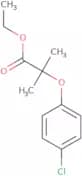
CAS:<p>Clofibrate is a lipid-lowering agent that is used for the treatment of hyperlipidemia. It is a non-selective inhibitor of fatty acid synthesis and has been shown to inhibit cancer cell growth in vitro. Clofibrate inhibits tumor cell proliferation and induces apoptosis, which may be due to its ability to inhibit protein synthesis in cancer cells. This drug also suppresses the growth of breast cancer cells by inhibiting their ability to proliferate.</p>Fórmula:C12H15ClO3Pureza:Min. 95%Forma y color:Colorless Clear LiquidPeso molecular:242.7 g/molManganese(II) chloride monohydrate
CAS:<p>Manganese(II) chloride monohydrate is a high quality, reagent grade chemical that is used as a complexing agent and intermediate in the production of fine chemicals. It can also be used as a versatile building block for the synthesis of speciality chemicals. Manganese(II) chloride monohydrate is a useful scaffold with which to build other molecules and has been found to be an important reaction component for the synthesis of various organic compounds.</p>Fórmula:Cl2Mn·H2OPureza:Min. 95%Forma y color:PowderPeso molecular:143.86 g/molCholesteryl isobutyrate
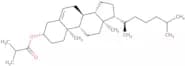
CAS:Producto controlado<p>Cholesteryl isobutyrate is a diagnostic target tissue for cancer. It is a fatty acid that is metabolized by 3β-hydroxysteroid dehydrogenase, which converts it to the corresponding alcohol. Cholesteryl isobutyrate can be detected in urine samples with a chromatographic method and coatings. The fusogenic properties of cholesteryl isobutyrate make it an excellent film-forming polymer for drug delivery systems. The phase transition temperature of cholesteryl isobutyrate has been determined to be around 27°C, which makes it an ideal candidate for cellular drug delivery applications.</p>Fórmula:C31H52O2Pureza:Min. 95%Forma y color:PowderPeso molecular:456.74 g/molrec Monocyte IL-8 (human)
CAS:<p>Polymerase chain reaction (PCR) is a technique for amplifying a single copy of a piece of DNA across several orders of magnitude, generating thousands to millions of copies. PCR is used to amplify DNA from samples containing only one or a few copies, such as blood or tissue samples. The polymerase chain reaction can also be performed on RNA, but RNA amplification may produce different results because the structure and function of RNA are different from those of DNA. This product is an IL-8 primer pair that amplifies human IL-8 gene sequences in vitro. It has been validated by testing it on various animals including cattle and pigs.<br>br>br><br>IL-8 is a proinflammatory cytokine that induces cell migration and proliferation, especially in skin cells after injury. This product can be used to detect and quantify IL-8 expression in patients with cancer or skin injuries.</p>Fórmula:C372H600N106O106S4Pureza:Min. 95%Peso molecular:8,381.66 g/molMethyl 12-ketostearate
CAS:<p>Methyl 12-ketostearate is an organic compound with the formula CH(CH)COCH=CHCOCH=CHCOOCH3. It is a colorless liquid with a fishy odor. The compound is used as a precursor to other compounds, such as esters and amides. It can be prepared by the reaction of methyl mercaptoacetate and copper chromite in dimethylformamide: Methyl 12-ketostearate + CuCrO4 → Methyl 12-ketostearate + CuCrO4 → Methyl 12-ketostearate + CuCrO4 → Methyl 12-ketostearate + CuCrO4 → Methyl 12-ketostearate + CuCrO4 → Methyl 12-ketostearate + CuCrO4 →</p>Fórmula:C19H36O3Pureza:Min. 97 Area-%Forma y color:White PowderPeso molecular:312.49 g/molSodium disulfitoaurate(I) - aqueous solution
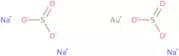
CAS:<p>Sodium disulfitoaurate(I) - aqueous solution is a triamine that is used for the chemical fixation of gold nanoparticles onto fabric. It is also used in the production of solar cells, where it serves as an absorber layer. Sodium disulfitoaurate(I) - aqueous solution has been shown to be able to remove cyanogen from the air and water, which makes it useful in the diagnosis of cyanide poisoning. This agent can be prepared by reacting hydrochloric acid with sodium sulphite or sodium hydrosulphite.</p>Fórmula:AuNa3O6S2Pureza:Min. 95%Forma y color:Colorless Clear LiquidPeso molecular:426.06 g/molEstradiol 17-valerate
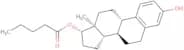
CAS:<p>Estradiol is a form of the hormone estrogen that has been modified to be more lipophilic. It is used in combination with other drugs to treat menopausal symptoms and as an adjuvant for the treatment of breast cancer in women. Estradiol 17-valerate is also used in the treatment of schizophrenia, although not as often as estradiol valerate, because it has a shorter duration of action. The mechanism of action is thought to be due to its ability to increase the concentration of dopamine at nerve terminals by blocking reuptake or inhibiting its metabolism. This may result in relief from distal tubule dysfunction and an improvement in urinary tract symptoms associated with benign prostatic hypertrophy. There are many other possible mechanisms of action including the prevention of bone loss, increased bone age, and increased NMDA receptor binding potentials.</p>Fórmula:C23H32O3Pureza:Min. 95%Forma y color:PowderPeso molecular:356.5 g/molS-(-)-Tolterodine d-tartrate
CAS:<p>S-(-)-Tolterodine d-tartrate is a fine chemical that belongs to the class of organic compounds. It has been used as a useful scaffold in the synthesis of various complex compounds, such as reaction components and speciality chemicals. In addition, S-(-)-Tolterodine d-tartrate has served as an intermediate for the synthesis of other chemicals.</p>Fórmula:C22H31NO•C4H6O6Pureza:Min. 95%Forma y color:White to off-white solid.Peso molecular:475.57 g/mol