Antifúngicos
Los antifúngicos son compuestos específicamente diseñados para detener, prevenir y eliminar el crecimiento de hongos. En esta categoría, encontrará una amplia variedad de agentes antifúngicos esenciales para aplicaciones de investigación y terapéuticas. Estos compuestos son cruciales en el tratamiento de infecciones fúngicas y en la prevención de su recurrencia, lo que los convierte en herramientas vitales tanto en entornos médicos como agrícolas. Investigadores y profesionales de la salud pueden explorar numerosos antifúngicos para comprender sus mecanismos, optimizar su eficacia y desarrollar nuevos tratamientos para combatir cepas de hongos resistentes. La extensa selección de antifúngicos respalda los avances continuos en la investigación fúngica y el desarrollo de terapias antifúngicas efectivas.
Se han encontrado 837 productos de "Antifúngicos"
Ordenar por
Pureza (%)
0
100
|
0
|
50
|
90
|
95
|
100
Levofloxacin
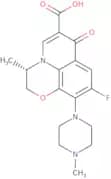
CAS:<p>Levofloxacin is a fluoroquinolone antibiotic with a mode of action that inhibits bacterial DNA gyrase and topoisomerase IV. It is used for treating bacterial infections like pneumonia and urinary tract infections.</p>Fórmula:C18H20FN3O4Pureza:Min. 95%Forma y color:PowderPeso molecular:361.37 g/molNeoaureothin
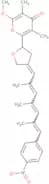
CAS:<p>Neoaureothin is a natural antibiotic product, which is derived from marine actinomycetes with a complex polyketide structure. Its mode of action involves the inhibition of bacterial protein synthesis by binding selectively to the ribosomal subunits, thereby obstructing the translation process in susceptible microbial strains. The specificity of its action allows it to target a broad spectrum of Gram-positive bacteria while presenting a lower risk of resistance development compared to traditional antibiotics.</p>Fórmula:C28H31NO6Pureza:Min. 95%Peso molecular:477.5 g/molZelkovamycin
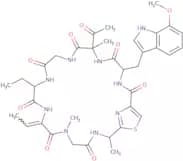
CAS:<p>Zelkovamycin is a novel antibacterial compound isolated from endophytic microorganisms, specifically Streptomyces sp. Endophytes are bacteria or fungi that reside within plant tissues, forming symbiotic relationships and often producing bioactive metabolites. The mode of action of Zelkovamycin involves the inhibition of bacterial cell wall synthesis, interfering with the biosynthesis pathways essential for maintaining the structural integrity and function of bacterial cell walls, particularly in Gram-positive strains.</p>Fórmula:C36H45N9O9SPureza:Min. 95%Forma y color:PowderPeso molecular:779.86 g/molBeauvericin
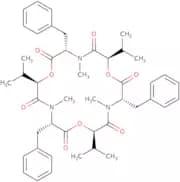
CAS:<p>Beauvericin is a cyclic peptide that is isolated from the fungus Fusarium. It has been shown to have antimicrobial activity against bacteria, as well as a variety of other biological properties. Beauvericin has been shown to inhibit mitochondrial membrane potential and induce toxicity in some animal models. Beauvericin also inhibits protein synthesis and causes cell death by inhibiting DNA polymerase activity. This compound is active against cancer cells, including HL-60 cells, which are derived from human lymphocytes and are used as a model for leukemia. Beauvericin can be extracted from an ETOA extract of the fungus Fusarium oxysporum; this extract has shown anti-cancer effects in vitro assays.</p>Fórmula:C45H57N3O9Pureza:Min. 95%Peso molecular:783.95 g/mol2-Methyl-4-isothiazolin-3-one
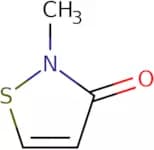
CAS:Producto controlado<p>2-Methyl-4-isothiazolin-3-one or MIT is a powerful antimicrobial and antifungal agent which is widely used in personal care products. It is also used in industrial applications as a preservative and antifouling agent.</p>Fórmula:C4H5NOSPureza:Min. 96%Forma y color:Yellow PowderPeso molecular:115.15 g/molCaerulomycin A
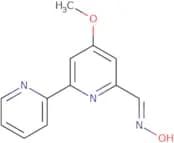
CAS:<p>Caerulomycin A is a bioactive compound classified as a natural broad-spectrum antibiotic, which is derived from various Streptomyces species found in soil. Its mode of action involves inhibiting fungal and bacterial growth by interfering with essential cellular processes, effectively curbing the proliferation of pathogenic microorganisms. This potent molecule achieves its effects by binding to specific cellular targets, thereby disrupting cell wall synthesis and other critical metabolic pathways.</p>Fórmula:C12H11N3O2Pureza:Min. 95%Peso molecular:229.23 g/mol41-Oxo-rapamycin
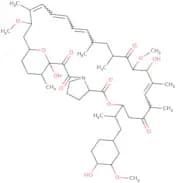
CAS:<p>41-Oxo-rapamycin is a synthetic derivative of rapamycin, which is a macrocyclic lactone. It is derived from Streptomyces hygroscopicus, a gram-positive bacterium known for producing various bioactive compounds. The mode of action of 41-Oxo-rapamycin involves binding to the FK506-binding protein (FKBP12), forming a complex that subsequently inhibits the mammalian target of rapamycin (mTOR) pathway. This inhibition results in the suppression of T-cell proliferation and modulation of immune responses.</p>Fórmula:C51H77NO13Pureza:Min. 95%Peso molecular:912.2 g/mol21-Norrapamycin
CAS:<p>21-Norrapamycin is a macrocyclic lactone antibiotic, which is derived from the bacterium Streptomyces hygroscopicus. Its chemical structure is closely related to that of rapamycin, a well-known immunosuppressant. The mode of action of 21-Norrapamycin involves the inhibition of the mechanistic target of rapamycin (mTOR) signaling pathway. By binding to the FK506-binding protein 12 (FKBP12), it forms a complex that then inhibits mTOR, a crucial regulator of cell growth, proliferation, and survival.</p>Fórmula:C50H77NO13Pureza:Min. 95%Peso molecular:900.1 g/molSordarin sodium salt
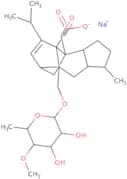
CAS:<p>Sordarin sodium salt is an antifungal agent, characterized as a semisynthetic derivative produced from the fermentation products of filamentous fungi, specifically belonging to the phylum Ascomycota. This compound exerts its effects by selectively inhibiting fungal protein synthesis. It achieves this by obstructing the function of elongation factor 2 (EF-2), an essential component of fungal ribosomal activity, thereby disrupting the translational elongation step of protein synthesis.</p>Fórmula:C27H39NaO8Pureza:Min. 95%Peso molecular:514.58 g/molPropiconazole
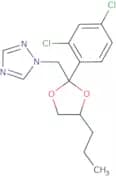
CAS:<p>Propiconazole is a triazole fungicide with action on fungal cell membranes by inhibiting ergosterol biosynthesis and is used for controlling fungal diseases in crops and turf.</p>Fórmula:C15H17Cl2N3O2Pureza:Min. 95%Forma y color:Clear LiquidPeso molecular:342.22 g/molFilipin III
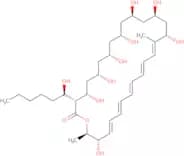
CAS:<p>Filipin III is a polyene macrolide antibiotic, which is extracted from Streptomyces filipinensis. Known for its unique mode of action, Filipin III interferes with cholesterol-rich membranes by binding to ergosterol and cholesterol. This interaction disrupts the membrane structure, altering membrane permeability and ultimately affecting cell viability.</p>Pureza:Min. 95%Malformin C
CAS:<p>Malformin C is a cyclic pentapeptide, which is a secondary metabolite derived from certain strains of the fungus Aspergillus. Its mode of action involves disrupting cellular processes by interfering with cell division. Specifically, it is thought to affect mitotic spindle formation, leading to abnormal cell cycle progression.</p>Fórmula:C23H39N5O5S2Pureza:Min. 95%Forma y color:PowderPeso molecular:529.72 g/mol(Z)-Fluoxastrobin
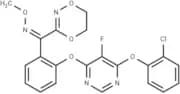
CAS:<p>(Z)-Fluoxastrobin is a fungicide that exhibits effective control of important seed and soil-borne pathogens.</p>Fórmula:C21H16ClFN4O5Forma y color:SolidPeso molecular:458.83Diethofencarb
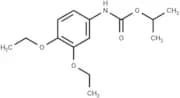
CAS:<p>Diethofencarb: a fungicide effective against Botrytis cinerea and resistant Botryis strains.</p>Fórmula:C14H21NO4Forma y color:SolidPeso molecular:267.32Flutolanil
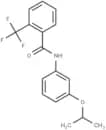
CAS:<p>Flutolanil: a fungicide targeting R. solani in rice, toxic to zebrafish.</p>Fórmula:C17H16F3NO2Forma y color:SolidPeso molecular:323.31Stemphyperylenol
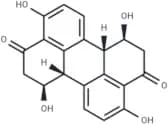
CAS:<p>Stemphyperylenol: antifungal, targets Alternaria solani, MIC at 1.57 μM.</p>Fórmula:C20H16O6Forma y color:SolidPeso molecular:352.34Haloprogin
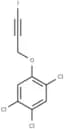
CAS:<p>Haloprogin is an antifungal agent used as a topical cream for the treatment of beriberi and other fungal infections.</p>Fórmula:C9H4Cl3IOForma y color:SolidPeso molecular:361.39BHBM
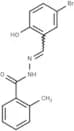
CAS:<p>BHBM, an acylhydrazone antifungal, halts C. neoformans growth (MIC80 = 1 μg/ml) by blocking glucosylceramide synthesis.</p>Fórmula:C15H13BrN2O2Forma y color:SolidPeso molecular:333.18Antifungal agent 69
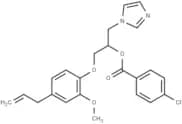
CAS:<p>Antifungal agent 69 (compound 13), a eugenol-imidazole derivative, demonstrates targeted activity against Candida albicans with a minimum inhibitory</p>Fórmula:C23H23ClN2O4Forma y color:SolidPeso molecular:426.89BI-10
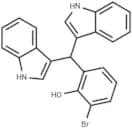
CAS:<p>BI-10, paired with fluconazole, hinders fungal growth, increases ROS, decreases MMP, and changes membrane permeability.</p>Fórmula:C23H17BrN2OForma y color:SolidPeso molecular:417.3