Antimicrobianos
Los antimicrobianos son agentes que destruyen o inhiben el crecimiento de microorganismos, incluyendo bacterias, virus, hongos y parásitos. Estos compuestos son esenciales en la prevención y tratamiento de infecciones, desempeñando un papel crucial en la medicina, la agricultura y la industria alimentaria. En CymitQuimica, ofrecemos una extensa gama de antimicrobianos de alta calidad y pureza, adecuados para diversas aplicaciones científicas e industriales. Nuestro catálogo incluye antibióticos, antifúngicos, antivirales y desinfectantes, todos diseñados para satisfacer las necesidades de investigación y desarrollo, así como para aplicaciones clínicas y de producción. Con nuestros productos, los profesionales pueden garantizar la eficacia y seguridad en el control de infecciones y en la protección de la salud pública.
Subcategorías de "Antimicrobianos"
- Antibióticos(4.115 productos)
- Antifúngicos(841 productos)
- Antiparasitarios(704 productos)
- Antivirales(763 productos)
Se han encontrado 2422 productos de "Antimicrobianos"
Ordenar por
Pureza (%)
0
100
|
0
|
50
|
90
|
95
|
100
HCV-IN-31
CAS:<p>HCV-IN-31 is a chemical inhibitor specifically designed for hepatitis C virus (HCV) research, which is synthesized through advanced organic chemistry techniques. It acts by interfering with the viral replication machinery, effectively reducing the replication rate of the virus in host cells. The inhibition mechanism primarily targets nonstructural proteins crucial for HCV RNA replication, thereby offering a potent blockade to viral proliferation.</p>Fórmula:C12H17FN6O3Pureza:Min. 95%Peso molecular:312.3 g/molNITD-916
CAS:NITD-916 is an antiviral compound, which is a synthetic molecule designed for therapeutic purposes. Its source lies in medicinal chemistry, where it was developed through a detailed process of molecular optimization and testing to enhance its efficacy and pharmacokinetic properties. The mode of action of NITD-916 involves inhibiting viral replication by targeting specific non-structural proteins essential for the replication process of certain RNA viruses.Fórmula:C20H25NO2Pureza:Min. 95%Peso molecular:311.4 g/molTridehydro pirlimycin
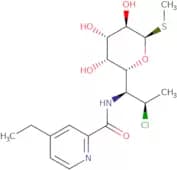
CAS:<p>Tridehydro pirlimycin is an antibiotic compound, which is a synthetic derivative with origins in the lincosamide family. It is characterized by its ability to inhibit bacterial protein synthesis by binding to the 50S ribosomal subunit, leading to a bacteriostatic effect. The compound is primarily developed for its use in veterinary medicine, particularly in the treatment and management of bacterial infections in animals.</p>Fórmula:C17H25ClN2O5SPureza:Min. 95%Peso molecular:404.91 g/molDermaseptin
CAS:<p>Dermaseptin is a type of antimicrobial peptide, which is sourced predominantly from the skin secretions of frogs, specifically from the Phyllomedusinae subfamily. These peptides function by disrupting the microbial cell membranes through their amphipathic and cationic nature, leading to cell lysis and death. Dermaseptins exhibit a broad spectrum of antimicrobial activity, including action against bacteria, fungi, protozoa, and certain viruses, making them of significant interest in biomedical research.</p>Fórmula:C152H257N43O44S2Pureza:Min. 95%Peso molecular:3,455.1 g/mol7-epi-Clindamycin
CAS:<p>7-epi-Clindamycin is a clindamycin derivative, which is a semisynthetic antibiotic derived from the bacterium *Streptomyces lincolnensis*. Its mode of action involves binding to the 50S subunit of the bacterial ribosome, thereby inhibiting protein synthesis. This results in the suppression of bacterial growth, making it effective against certain Gram-positive bacteria and anaerobic species.</p>Fórmula:C18H34Cl2N2O5SPureza:Min. 95%Forma y color:White To Off-White SolidPeso molecular:461.44 g/molFaldaprevir
CAS:<p>Hepatitis C virus protease inhibitor</p>Fórmula:C40H49BrN6O9SPureza:Min. 95%Forma y color:White PowderPeso molecular:869.82 g/molNorfloxacin methyl ester
CAS:<p>Norfloxacin methyl ester is a synthetic derivative of the fluoroquinolone antibiotic, norfloxacin, which is sourced from chemical synthesis. Its mode of action involves inhibiting bacterial DNA gyrase and topoisomerase IV, enzymes crucial for DNA replication, transcription, repair, and recombination. This specific mechanism disrupts bacterial replication and cell division, leading to bacterial cell death.</p>Fórmula:C17H20FN3O3Pureza:Min. 95%Peso molecular:333.36 g/molQuinthiophos
CAS:<p>Quinthiophos is an organophosphate insecticide, which is synthesized chemically. Its mode of action involves the inhibition of the enzyme acetylcholinesterase, which is critical in nerve function. By disrupting this enzyme, quinthiophos causes an accumulation of acetylcholine at the synapses, leading to continual nerve signal transmission, paralysis, and eventual death of the targeted pests.</p>Fórmula:C17H16NO2PSPureza:Min. 95%Peso molecular:329.4 g/mol6'-N-Cbz-kanamycin A
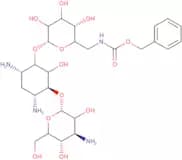
CAS:<p>6'-N-Cbz-kanamycin A is a semi-synthetic aminoglycoside antibiotic derivative, specifically a Cbz (carbobenzyloxy) protected form of kanamycin A. It is derived from the natural product kanamycin, which is an antibiotic obtained from the bacterium *Streptomyces kanamyceticus*. The modification involves the introduction of a protective Cbz group at the 6' position, which can improve solubility, stability, or enable further chemical modifications.</p>Fórmula:C26H42N4O13Pureza:Min. 95%Peso molecular:618.63 g/molValidamycin (technical)
CAS:<p>Validamycin (technical) is an antifungal agent, which is a natural product derived from the actinomycete Streptomyces hygroscopicus. This compound functions through a specific mode of action by inhibiting the enzyme trehalase, crucial for the breakdown of trehalose into glucose. Consequently, this disruption in the carbohydrate metabolism weakens fungal structure and growth.</p>Fórmula:C20H35NO13Pureza:Min. 95%Peso molecular:497.5 g/molPeramivir
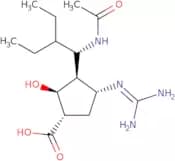
CAS:<p>Selective and potent inhibitor of sialidases (neuraminidases) in influenza A and B viruses. The compound binds tightly to the viral neuraminidase active site in late stages of viral life-cycle. It inhibits shedding sialic acids from host cell surface glycans, which interact with viral hemagglutinin, and consequently prevents release of new viral particles from the host cell surface.</p>Fórmula:C15H28N4O4Pureza:Min. 95%Forma y color:PowderPeso molecular:328.41 g/mol(-)-Actinonin
CAS:<p>Antibiotic peptide; inhibitor of aminopeptidase M and leucine aminopeptidase</p>Fórmula:C19H35N3O5Pureza:Min. 95%Peso molecular:385.5 g/molOmadacycline mesylate
CAS:<p>Omadacycline mesylate is a broad-spectrum antibiotic, which is a semi-synthetic derivative from the natural product tetracycline with enhanced stability and efficacy. It functions by inhibiting bacterial protein synthesis through binding to the 30S ribosomal subunit. This prevents the addition of amino acids to the nascent peptide chain, effectively halting bacterial growth.</p>Fórmula:C30H44N4O10SPureza:Min. 95%Peso molecular:652.76 g/molCloxacillin benzathine
CAS:<p>Cloxacillin benzathine is a beta-lactam antibiotic, which is synthesized from Penicillium fungi-derived penicillins. It acts by inhibiting bacterial cell wall synthesis. The mechanism involves the irreversible inhibition of penicillin-binding proteins (PBPs). This disruption in the bacterial cell wall structure ultimately leads to cell lysis and death.</p>Fórmula:C54H56Cl2N8O10S2Pureza:Min. 95 Area-%Forma y color:White PowderPeso molecular:1,112.11 g/molMorinamide hydrochloride
CAS:<p>Morinamide hydrochloride is a synthetic antitubercular agent, which is derived from chemical synthesis processes. Its mode of action involves disrupting the synthesis of mycolic acids in the cell walls of Mycobacterium tuberculosis, thereby inhibiting bacterial growth and proliferation. The compound serves primarily as an antimicrobial agent targeting tuberculosis infections. In a laboratory setting, Morinamide hydrochloride is utilized in the study of bacterial resistance mechanisms and the development of novel therapeutic agents. Its specific action on mycolic acid synthesis makes it a valuable tool for researchers aiming to elucidate the pathways involved in mycobacterial cell wall construction and to develop more targeted chemotherapeutic interventions. Due to its crucial role, understanding the mechanisms and efficacy of Morinamide hydrochloride can greatly benefit scientific efforts in combating tuberculosis, especially in light of increasing drug resistance.</p>Fórmula:C10H15ClN4O2Pureza:Min. 95%Peso molecular:258.7 g/molN-(4-Hexylphenyl)-5-nitro-2-furancarboxamide
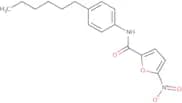
CAS:<p>N-(4-Hexylphenyl)-5-nitro-2-furancarboxamide is a synthetic organic compound, categorized as a nitroaromatic amide. It is synthesized through a condensation reaction involving 4-hexylphenylamine and 5-nitro-2-furancarboxylic acid. The compound's mode of action involves the potential to interfere with specific biomolecular interactions due to its structure, which includes a nitro group capable of engaging in electron transfer reactions. These interactions may modulate enzymatic activities or alter binding affinities between proteins and other biomolecules.</p>Fórmula:C17H20N2O4Pureza:Min. 95%Peso molecular:316.35 g/molClenpenterol d5 hydrochloride
CAS:<p>Clenpenterol d5 hydrochloride is a deuterated chemical compound, which is a stable isotopic variant of the beta-agonist Clenpenterol, commonly used in research and analytical studies. This compound is synthetically derived to enhance specificity and precision in scientific investigations. Deuteration involves the replacement of hydrogen atoms with deuterium, which contributes to the increased stability and differentiation of the isotopes during analysis.</p>Fórmula:C13H21Cl3N2OPureza:Min. 95%Peso molecular:332.7 g/molLysostaphin, from staphylococcus staphylolyticus
CAS:<p>Lysostaphin, from Staphylococcus staphylolyticus is a zinc metalloenzyme with action on bacterial cell walls by cleaving polyglycine cross-links and is used for treating staphylococcal infections and in research applications.</p>Pureza:Min. 95%Forma y color:PowderMtbHU-IN-1
CAS:<p>MtbHU-IN-1 is a small-molecule inhibitor designed specifically for targeting the HU protein in Mycobacterium tuberculosis. This compound is derived through rational drug design and computational modeling efforts, exploiting the vulnerabilities of the bacterial DNA-binding proteins. Its mode of action involves binding to the HU protein, inhibiting its function, which is crucial for DNA structuring and stability within the bacterial cell. By disrupting HU protein function, MtbHU-IN-1 impairs bacterial chromosomal architecture, leading to an inability to replicate and ultimately cell death.</p>Fórmula:C44H36N4O12S2Pureza:Min. 95%Peso molecular:876.9 g/mol6-o-Methacrylate
CAS:<p>6-o-Methacrylate is a monomer used in the synthesis of polymers, which is predominantly sourced from petroleum-based feedstocks through chemical synthesis. Its mode of action involves free radical polymerization, a process where the methacrylate group participates in chain reactions to form complex polymer structures. This compound is a key building block in the creation of various copolymers and homopolymers.</p>Fórmula:C23H30O9Pureza:Min. 95%Peso molecular:450.5 g/mol