Antimicrobianos
Los antimicrobianos son agentes que destruyen o inhiben el crecimiento de microorganismos, incluyendo bacterias, virus, hongos y parásitos. Estos compuestos son esenciales en la prevención y tratamiento de infecciones, desempeñando un papel crucial en la medicina, la agricultura y la industria alimentaria. En CymitQuimica, ofrecemos una extensa gama de antimicrobianos de alta calidad y pureza, adecuados para diversas aplicaciones científicas e industriales. Nuestro catálogo incluye antibióticos, antifúngicos, antivirales y desinfectantes, todos diseñados para satisfacer las necesidades de investigación y desarrollo, así como para aplicaciones clínicas y de producción. Con nuestros productos, los profesionales pueden garantizar la eficacia y seguridad en el control de infecciones y en la protección de la salud pública.
Subcategorías de "Antimicrobianos"
- Antibióticos(4.115 productos)
- Antifúngicos(841 productos)
- Antiparasitarios(704 productos)
- Antivirales(763 productos)
Se han encontrado 2422 productos de "Antimicrobianos"
Ordenar por
Pureza (%)
0
100
|
0
|
50
|
90
|
95
|
100
Hygromycin A
CAS:<p>Hygromycin A is an antimicrobial compound isolated from the bacterium *Streptomyces hygroscopicus*. It functions by inhibiting protein synthesis within microbial cells. This compound disrupts the elongation phase of translation by binding to the ribosomal subunit, therefore impeding mRNA decoding during protein assembly.</p>Fórmula:C23H29NO12Pureza:Min. 95%Peso molecular:511.5 g/molLactoferricin B (4-14) (bovine) trifluoroacetate salt
CAS:<p>Lactoferricin B (4-14) (bovine) trifluoroacetate salt is a peptide derivative, which is a fragment derived from bovine lactoferrin. It is obtained by enzymatic digestion of lactoferrin, a glycoprotein with a well-established role in the innate immune system. This specific peptide, Lactoferricin B (4-14), is known for its potent antimicrobial properties, attributed to its amphipathic structure that facilitates the disruption of microbial membranes. Additionally, it can modulate immune responses through interactions with immune cells, thereby influencing inflammatory processes.</p>Fórmula:C70H113N25O13SPureza:Min. 95%Peso molecular:1,544.87 g/molSulfadimethoxine sodium
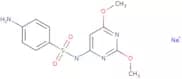
CAS:<p>Sulfadimethoxine sodium is a sulfonamide antibiotic with action on bacterial folate synthesis inhibition and is used for treating respiratory and urinary tract infections in veterinary medicine.</p>Fórmula:C12H13N4NaO4SPureza:Min. 95%Forma y color:White Off-White PowderPeso molecular:332.31 g/molN-Acetal bromopride
CAS:N-Acetal bromopride is a chemical compound that serves as a derivative of bromopride, which is a selective dopamine D2 receptor antagonist. This derivative is synthesized from bromopride, typically through organic chemical processes, and modified to possess an acetal functional group. The presence of this functional group potentially alters its pharmacokinetic or pharmacodynamic properties, although these specific changes may still be under research.Fórmula:C16H24BrN3O3Pureza:Min. 95%Peso molecular:386.28 g/molFlucloxacillin
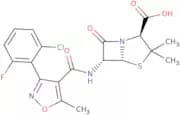
CAS:<p>Flucloxacillin is a beta-lactam antibiotic, which is derived from the penicillin family. It is synthetically produced through chemical modification to enhance its stability against beta-lactamase enzymes. The mode of action of flucloxacillin involves inhibiting bacterial cell wall synthesis. It binds to penicillin-binding proteins (PBPs) located inside the bacterial cell wall, which in turn inhibits the transpeptidation or cross-linking of peptidoglycan chains. This action leads to cell lysis and ultimately, bacterial death.</p>Fórmula:C19H17ClFN3O5SPureza:Min. 95%Peso molecular:453.87 g/molFengycin
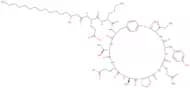
CAS:<p>Fengycin is a cyclic lipopeptide from Bacillus subtilis acts as a biosurfactant and antifungal. As a fungicide, it has a mode of action that involves the formation of ion channels in the fungal lipid membrane, leading to membrane leakage This activity is negatively correlated to cholesterol levels, and may explain why mammalian cells, with higher cholesterol present, are not sensitive to fengycin.</p>Fórmula:C72H110N12O20Pureza:Min. 90 Area-%Forma y color:PowderPeso molecular:1,463.71 g/molGramicidin S hydrochloride
CAS:<p>Gramicidin S hydrochloride is a cyclic peptide antibiotic, which is a derivative of the naturally occurring antibiotic gramicidin S. It is sourced from Bacillus brevis, a type of soil bacterium. This peptide operates through a unique mode of action, whereby it disrupts bacterial cell membranes. By integrating into the lipid bilayer, it increases membrane permeability, leading to leakage of essential ions and molecules, and ultimately causing cell death.</p>Fórmula:C60H92N12O10•(HCl)2Pureza:90%MinPeso molecular:1,214.37 g/molCasein
CAS:<p>Casein is a phosphoprotein, which is derived from milk. It originates primarily from cow's milk, where it constitutes about 80% of the total protein content. The mode of action for casein involves its ability to form a gel or clot in the stomach, which makes it highly efficient in nutrient delivery, especially the slow release of amino acids. This process is facilitated by its unique structural features, such as the presence of multiple phosphoryl groups that can bind calcium ions.</p>Pureza:Min. 95%Forma y color:PowderCarumonam
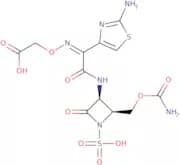
CAS:<p>Carumonam is a synthetic monobactam antibiotic, which is derived from chemically modifying aztreonam to enhance its antimicrobial properties. Its source is entirely synthetic, allowing for precise structural modifications to target specific bacterial pathogens. The mode of action involves the inhibition of bacterial cell wall synthesis. Carumonam binds to penicillin-binding proteins (PBPs) on the surface of bacterial cell walls, disrupting the peptidoglycan cross-linking process necessary for cell wall strength and integrity. This action results in bacterial cell lysis and death, making it effective against a range of Gram-negative bacteria.</p>Fórmula:C12H14N6O10S2Pureza:Min. 95%Peso molecular:466.41 g/molEconazole
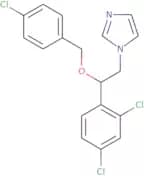
CAS:<p>Econazole is an imidazole antifungal agent with action on fungal cell membrane disruption and is used for treating fungal skin infections like athlete's foot and ringworm.</p>Fórmula:C18H15Cl3N2OPureza:Min. 98 Area-%Forma y color:White PowderPeso molecular:381.68 g/molN-Acetylamphotericin B
CAS:<p>N-Acetylamphotericin B is a derivative of the well-known antifungal agent Amphotericin B, which is derived from the bacterium *Streptomyces nodosus*. This compound is an acetylated version of Amphotericin B, designed to improve certain pharmacokinetic properties. It operates by binding to ergosterol, a key component of fungal cell membranes, leading to the formation of pores that disrupt membrane integrity, causing cell death. The acetylation is intended to reduce the compound's cytotoxicity and improve its solubility in aqueous solutions, potentially allowing for enhanced therapeutic applications.</p>Fórmula:C49H75NO18Pureza:(%) Min. 75%Forma y color:Yellow To Brown SolidPeso molecular:966.12 g/molDesoxymycin
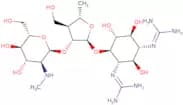
CAS:<p>Desoxymycin is an antibiotic product that belongs to the class of aminoglycosides, which is derived from natural sources such as certain species of Streptomyces bacteria. This compound exhibits its mode of action by specifically binding to the bacterial ribosomal RNA, interfering with protein synthesis. As a result, it inhibits the replication and growth of susceptible bacterial strains.</p>Fórmula:C21H41N7O11Pureza:Min. 95%Peso molecular:567.59 g/molLinearmycin A
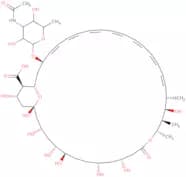
CAS:<p>Linearmycin A is an antibiotic compound, which is a secondary metabolite produced by the bacterium Streptomyces sp. Its mode of action involves disrupting bacterial protein synthesis, leading to the inhibition of bacterial growth. This compound exhibits strong efficacy against various Gram-positive and some Gram-negative bacteria, making it valuable in microbiological research.</p>Fórmula:C64H101NO16Pureza:Min. 95%Peso molecular:1,140.5 g/molOleandomycin
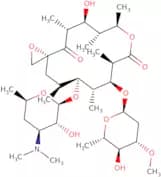
CAS:<p>Oleandomycin is a macrolide antibiotic, which is derived from the bacterium *Streptomyces antibioticus*. This antibiotic functions by binding to the 50S subunit of the bacterial ribosome, thereby inhibiting protein synthesis. The interruption of this essential process ultimately leads to the cessation of bacterial growth and replication.</p>Fórmula:C35H61NO12Pureza:Min. 95%Forma y color:White PowderPeso molecular:687.86 g/molAmoxicillin
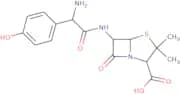
CAS:<p>Amoxicillin is an aminopenicillin antibiotic and is used for the treatment of various bacterial infections. It works by inhibiting the synthesis of bacterial cell wall mucopeptides, leading to cell lysis and death</p>Fórmula:C16H19N3O5SPureza:Min. 95%Forma y color:PowderPeso molecular:365.41 g/molPuberulic acid
CAS:<p>Puberulic acid is a fungal metabolite that exhibits significant antimicrobial properties. It is derived from certain species of the Penicillium genus, a well-known source of various bioactive compounds. The mode of action of puberulic acid involves the disruption of microbial cell wall synthesis, leading to inhibited growth and eventual cell death of targeted microorganisms.</p>Fórmula:C8H6O6Pureza:Min. 95%Peso molecular:198.13 g/molSebuthylazine-2-hydroxy
CAS:<p>Sebuthylazine-2-hydroxy is a selective pre-emergent herbicide, which is a derivative of the sym-triazine compound family synthesized through chemical processes. It functions primarily as a soil-acting agent that inhibits photosynthesis by binding to the D1 protein in the photosystem II complex, thereby disrupting the electron transport chain. This biochemical action effectively curtails the growth of susceptible weed species by preventing their development, particularly annual grasses and broadleaf weeds.</p>Fórmula:C9H17N5OPureza:Min. 95%Peso molecular:211.26 g/molQuinofumelin
CAS:<p>Quinofumelin is a fungicide, which is synthetically derived with a novel mode of action targeting specific biochemical pathways in fungi. Its unique mechanism disrupts crucial cellular processes within pathogenic fungi, thereby halting their growth and spread. This fungicide has been meticulously developed through advanced chemical synthesis to ensure high efficacy and specificity against a broad spectrum of fungal pathogens affecting various crops.</p>Fórmula:C20H16F2N2Pureza:Min. 95%Peso molecular:322.4 g/mol(S)-HPMPA
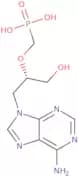
CAS:<p>(S)-HPMPA is a nucleotide analogue, which is a chemically synthesized compound designed to mimic nucleotides. It acts as both an antiviral and an antitumor agent, sourced primarily through synthetic chemistry involving the modification of naturally occurring nucleotide structures. The mode of action of (S)-HPMPA involves mimicking natural substrates of various viral polymerases and cellular enzymes, thereby inhibiting viral DNA synthesis and disrupting the replication cycle of DNA viruses. Additionally, it can interfere with certain cellular pathways contributing to its antitumor effects.</p>Fórmula:C9H14N5O5PPureza:Min. 95%Peso molecular:303.21 g/molAmicoumacin C
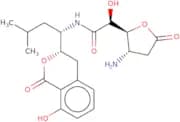
CAS:<p>Amicoumacin C is a biological product derived from certain strains of the Bacillus species, specifically fermented by Bacillus subtilis. It is recognized as a potent antibiotic compound, noted for its ability to inhibit bacterial protein synthesis, primarily by interacting with the 30S ribosomal subunit, thereby hindering the translation process.</p>Fórmula:C20H26N2O7Pureza:Min. 95%Peso molecular:406.43 g/mol