Antimicrobianos
Subcategorías de "Antimicrobianos"
- Antibióticos(4.138 productos)
- Antifúngicos(906 productos)
- Antiparasitarios(700 productos)
- Antivirales(766 productos)
Se han encontrado 2431 productos de "Antimicrobianos"
Colistin sulfate, Antibiotic for Culture Media Use Only
CAS:Antibacterial agent with the ability to permeate bacterial membranes and cause cell death. Colistin is a cationic peptide also known as polymyxin E. Colistin is effective in multidrug resistant Gram-positive bacteria such as P. aeruginosa, A. baumannii and K. pneumoniae.Fórmula:C53H102N16O17SPeso molecular:1,266.73 g/molRef: 3D-Q-200890
1kgA consultar5kgA consultar10kgA consultar25kgA consultar2500gA consultar-Unit-kgkgA consultarRibocil B
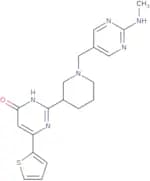
CAS:Ribocil B is an analog of riboflavin, functioning as a synthetic antibiotic. It is derived from chemical synthesis, designed to mimic the structure of natural riboflavin analogs which are crucial for bacterial growth. Ribocil B acts by specifically inhibiting riboswitches, a type of non-coding RNA that regulates gene expression in response to small molecules. This inhibition disrupts RNA synthesis in bacteria by targeting the flavin mononucleotide (FMN) riboswitch.
Fórmula:C19H22N6OSPureza:Min. 95%Peso molecular:382.5 g/molClofoctol
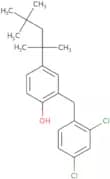
CAS:Clofoctol is an antibacterial agent, which is derived from synthetic origins, specifically designed for therapeutic applications in bacterial infections. Its mode of action involves inhibiting bacterial protein synthesis, thereby preventing the growth and proliferation of harmful bacteria. This compound is particularly effective against Gram-positive bacteria.
Fórmula:C21H26Cl2OPureza:Min. 95%Peso molecular:365.34 g/molBesifloxacin hydrochloride
CAS:Besifloxacin hydrochloride is a fourth-generation fluoroquinolone antibiotic, which is a synthetic derivative of the broad-spectrum quinolone class. Its origin can be traced to laboratory chemical synthesis, tailored specifically to target bacterial infections in ocular applications. The mode of action of besifloxacin involves the inhibition of bacterial enzymes DNA gyrase and topoisomerase IV. These enzymes play crucial roles in bacterial DNA replication, transcription, repair, and recombination. By disrupting these processes, besifloxacin effectively impedes bacterial cell division, leading to the death of the bacterial cells.Fórmula:C19H21ClFN3O3·HClPureza:Min. 95%Peso molecular:430.3 g/molCefluprenam
CAS:Cefluprenam is a cephalosporin antibiotic, which is a synthetic derivative of the fungus Cephalosporium. It functions by inhibiting bacterial cell wall synthesis, effectively disrupting the peptidoglycan cross-linking process essential for bacterial structural integrity. This inhibition leads to cell lysis and ultimately bacterial death.
Fórmula:C20H25FN8O6S2Pureza:Min. 95%Peso molecular:556.60 g/molN-Desisobutyl-N-propyl rifabutin
CAS:N-Desisobutyl-N-propyl rifabutin is a synthetic derivative of rifabutin, which is an antibiotic belonging to the rifamycin class. This compound is sourced from modifications of the parent molecule rifabutin, itself derived from the rifamycin family produced by the bacterium Amycolatopsis, traditionally used for its antimicrobial properties. The mode of action involves the inhibition of bacterial RNA polymerase, effectively preventing the transcription process necessary for bacterial replication and protein synthesis. This disruption of RNA synthesis provides potent antimicrobial activity.
Fórmula:C45H60N4O11Pureza:Min. 95%Peso molecular:832.98 g/molCefoxitin EP impurity B
Cefoxitin EP impurity B is a chemical reference standard, which is derived from the synthesis and purification processes involved in producing Cefoxitin. As an impurity standard, its primary role is to serve as a benchmark for quality control in pharmaceutical formulations. The mode of action of Cefoxitin EP impurity B involves the structural analysis and quantification of impurity levels, ensuring that the primary pharmaceutical products meet necessary safety and efficacy criteria.Fórmula:C16H17N3O7S2Pureza:Min. 95%Peso molecular:427.45 g/molMeldonium
CAS:Producto controladoMeldonium is a cardiovascular drug, which is a synthetic compound originating from Latvia. It functions by modulating carnitine metabolism, leading to decreased fatty acid oxidation and augmented glucose oxidation. This shift in energy substrate helps to improve energy efficiency, particularly under conditions of ischemia, which can prevent ischemic damage by balancing oxygen supply and demand.Fórmula:C6H14N2O2Pureza:Min. 95 Area-%Peso molecular:146.19 g/molVicriviroc
CAS:Vicriviroc is an investigational pharmaceutical compound, specifically classified as an HIV entry inhibitor. It originates from a synthetic source, designed to target the CCR5 co-receptor on human immune cells. The mode of action involves blocking this co-receptor, thereby preventing the HIV virus from binding and fusing with the host cell membrane. This inhibition effectively obstructs the virus's ability to enter and infect the host cells, particularly those within the chemokine receptor family.
Fórmula:C28H38F3N5O2Pureza:Min. 95%Peso molecular:533.63 g/molSpiro-oxanthromicin A
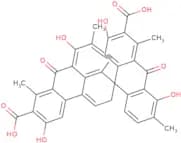
CAS:Spiro-oxanthromicin A is a novel antibiotic compound, which is derived from a rare species of actinomycete bacteria. The unique structure of Spiro-oxanthromicin A integrates spiroketal and oxanthrone moieties, facilitating its distinctive antimicrobial properties. It operates by selectively binding to bacterial ribosomal subunits, inhibiting protein synthesis and effectively curbing pathogenic proliferation.Fórmula:C36H26O10Pureza:Min. 95%Peso molecular:618.6 g/molSymetine
CAS:Symetine is a synthetic peptide-based compound, which is a highly selective agonist of the adenosine A2A receptor. This receptor is coupled to G-proteins mainly associated with activating adenylate cyclase, leading to an increase in cyclic adenosine monophosphate (cAMP) levels within the cell. Symetine binds with high affinity to these receptors, inducing a conformational change that facilitates the downstream signaling pathways associated with this receptor family.
Fórmula:C30H48N2O2Pureza:Min. 95%Peso molecular:468.7 g/mol9-(Tetrahydro-5-methyl-2-furyl)adenine
CAS:9-(Tetrahydro-5-methyl-2-furyl)adenine is a synthetic cytokinin, which is a type of plant growth regulator. This compound is derived from chemical synthesis, rather than extraction from natural sources. The mode of action involves promoting cell division and differentiation in plant tissues, primarily by enhancing the synthesis of proteins crucial for growth and development.
Fórmula:C10H13N5OPureza:Min. 95%Peso molecular:219.24 g/mol7-(3-Aminopyrrolidin-1-yl)-1-(2,4-difluorophenyl)-6-fluoro-4-oxo-1,8-naphthyridine-3-carboxylic acid,hydrate,hydrochloride
CAS:7-(3-Aminopyrrolidin-1-yl)-1-(2,4-difluorophenyl)-6-fluoro-4-oxo-1,8-naphthyridine-3-carboxylic acid, hydrate, hydrochloride is a fluoroquinolone antibiotic, which is a synthetic antimicrobial compound. It operates by inhibiting bacterial DNA gyrase and topoisomerase IV, enzymes critical for the replication, transcription, and repair processes of bacterial DNA. This disruption in DNA activity leads to cell death, providing its bactericidal effect.Fórmula:C19H16ClF3N4O3Pureza:Min. 95%Peso molecular:440.8 g/molSofosbuvir impurity J
CAS:Sofosbuvir impurity J is a chemical impurity that arises during the synthesis of Sofosbuvir, an antiviral medication primarily used in the treatment of hepatitis C. This impurity is a byproduct produced during the manufacturing process of Sofosbuvir, originating from its chemical synthesis pathway.Fórmula:C22H30FN4O8PPureza:Min. 95%Peso molecular:528.5 g/molMMV008138
CAS:MMV008138 is an antimalarial compound, which is a synthetic chemical entity derived from medicinal chemistry efforts aimed at targeting malaria. The source of MMV008138 is the pharmaceutical research pipeline focused on identifying new antimalarial agents. It operates by inhibiting the Plasmodium falciparum enzyme PfNDH2, an essential component in the parasite’s respiratory chain, disrupting its energy production capabilities and ultimately leading to parasite death.Fórmula:C18H14Cl2N2O2Pureza:Min. 95%Peso molecular:361.2 g/molFilipin III
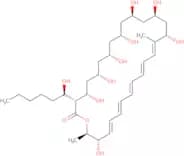
CAS:Filipin III is a polyene macrolide antibiotic, which is extracted from Streptomyces filipinensis. Known for its unique mode of action, Filipin III interferes with cholesterol-rich membranes by binding to ergosterol and cholesterol. This interaction disrupts the membrane structure, altering membrane permeability and ultimately affecting cell viability.
Pureza:Min. 95%Desmethyl doxorubicin oxalate
CAS:Desmethyl doxorubicin oxalate is an anthracycline-type chemotherapeutic agent, which is derived from the naturally occurring antibiotic doxorubicin. This compound comprises a desmethylated form of doxorubicin combined with oxalate. Its mode of action involves intercalating DNA strands and inhibiting topoisomerase II, thereby disrupting DNA replication and transcription. This interference leads to the inhibition of cancer cell proliferation and induces apoptosis.Fórmula:C26H27NO11Pureza:Min. 95%Peso molecular:529.49 g/molN-Demethyl rifampin
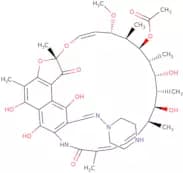
CAS:N-Demethyl rifampin is a metabolite of rifampin, which is a natural product derivative. Rifampin itself is a well-known antibiotic derived from the bacterium *Amycolatopsis rifamycinica*. N-Demethyl rifampin is formed through the metabolic process where rifampin undergoes demethylation. This transformation occurs primarily in the liver, mediated by the cytochrome P450 enzyme system.Fórmula:C42H56N4O12Pureza:Min. 95%Peso molecular:808.91 g/molNicotinamide
CAS:Nicotinamide is an amide form of vitamin B3, which is a water-soluble vitamin derived from dietary sources such as meat, fish, and yeast. In cellular biology, it functions as a precursor to nicotinamide adenine dinucleotide (NAD+), a critical coenzyme in redox reactions and energy production within the cells. Nicotinamide facilitates the transfer of electrons in metabolic processes, contributing to ATP production and cellular respiration. Moreover, it plays a pivotal role in DNA repair and cellular signaling through the regulation of sirtuins and poly(ADP-ribose) polymerases (PARPs).Fórmula:C6H6N2OPureza:Min. 97.0 Area-%Peso molecular:122.12 g/molVoxilaprevir
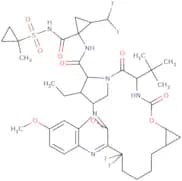
CAS:Voxilaprevir is an antiviral compound, which is a product of chemical synthesis with a unique mode of action targeting the Hepatitis C virus (HCV). It acts as a potent inhibitor of the HCV NS3/4A protease, a crucial enzyme required for the viral replication process. By inhibiting this protease, Voxilaprevir disrupts the viral life cycle, preventing replication and aiding in the clearance of the virus from the host.Fórmula:C40H52F4N6O9SPureza:Min. 95%Peso molecular:868.94 g/mol