Antimicrobianos
Los antimicrobianos son agentes que destruyen o inhiben el crecimiento de microorganismos, incluyendo bacterias, virus, hongos y parásitos. Estos compuestos son esenciales en la prevención y tratamiento de infecciones, desempeñando un papel crucial en la medicina, la agricultura y la industria alimentaria. En CymitQuimica, ofrecemos una extensa gama de antimicrobianos de alta calidad y pureza, adecuados para diversas aplicaciones científicas e industriales. Nuestro catálogo incluye antibióticos, antifúngicos, antivirales y desinfectantes, todos diseñados para satisfacer las necesidades de investigación y desarrollo, así como para aplicaciones clínicas y de producción. Con nuestros productos, los profesionales pueden garantizar la eficacia y seguridad en el control de infecciones y en la protección de la salud pública.
Subcategorías de "Antimicrobianos"
- Antibióticos(4.115 productos)
- Antifúngicos(841 productos)
- Antiparasitarios(704 productos)
- Antivirales(763 productos)
Se han encontrado 2422 productos de "Antimicrobianos"
Ordenar por
Pureza (%)
0
100
|
0
|
50
|
90
|
95
|
100
Amdinocillin
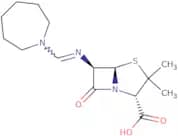
CAS:<p>Amdinocillin is a semisynthetic antibiotic with broad-spectrum activity that is part of the aminopenicillin family. It is used in the treatment of bacterial infections such as those caused by Gram-negative bacteria, and to treat methicillin-resistant Staphylococcus (MRSA). The clinical isolate Amdinocillin has an inhibitory concentration (IC) of 0.25 μg/mL against Enterobacter aerogenes and Enterobacter cloacae, and it displays a synergistic effect in combination with other antibiotics. The mechanism of action is that prevents bacterial growth and proliferation by inhibiting cell wall synthesis and causing lysis, which allows for drug therapy against specific types of bacteria.</p>Fórmula:C15H23N3O3SPureza:(%) Min. 97%Forma y color:White Slightly Yellow PowderPeso molecular:325.43 g/mol2-Methyl-4-isothiazolin-3-one HCl
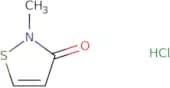
CAS:Producto controlado<p>2-Methyl-4-isothiazolin-3-one HCl , also known as MIT hydrochloride is often used as a preservative in personal care products and other industrial applications. The product has shown to act as an antimicrobial and antifungal agent.</p>Fórmula:C4H5NOS·HClPureza:Min. 95%Forma y color:White Slightly Yellow PowderPeso molecular:151.62 g/molSTAADIUM™ PhosphoZide
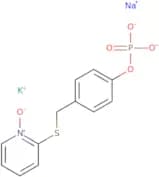
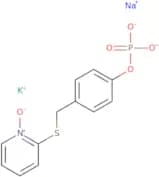
CAS:<p>STAADIUM⢠PhosphoZide is a targeted inhibitor of phosphatase-producing bacteria, which is activated by phosphatase itself. STAADIUM⢠PhosphoZide targets specifically methicillin-resistant Staphylococcus aureus (MRSA) and its antibacterial activity is triggered by both the acid and alkaline phosphatases that the bacteria produce. STAADIUM⢠PhosphoZide can be added as an enzyme-specific selective supplement to agar plates or as an enrichment agent to a broth culture. More details in the application notes document.</p>Fórmula:C12H10KNNaO5PSPeso molecular:373.34 g/molRef: 3D-Z-4004_P00
1gA consultar5gA consultar250mgA consultar500mgA consultar2500mgA consultar-Unit-ggA consultarItraconazole - Bio-X ™
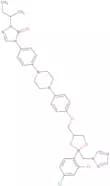
CAS:<p>Itraconazole is an anti-fungal drug that inhibits the synthesis of ergosterol, a component of the fungal cell membrane. Itraconazole is in a class of antifungals called triazoles. The drug binds to ergosterol in the fungal cell membrane and prevents it from being inserted into the membrane. This decreases the permeability of the plasma membrane, causing leakage of cellular contents. Additionally, it has been shown to have a glucose-lowering effect in the treatment of acute leukaemia and may be used for research in aiding to diagnose hematopoietic stem cell or leukaemia.</p>Fórmula:C35H38Cl2N8O4Pureza:Min. 98 Area-%Forma y color:PowderPeso molecular:705.63 g/molPosaconazole
CAS:<p>Posaconazole is an antifungal agent that inhibits the 14-alpha demethylase enzyme which is responsible for the synthesis of the fungal cell wall component, ergosterol. This demethylase enzyme synthesizes ergosterol through converting lanosterol to ergosterol. Therefore Posaconazole prevents the formation of fungal cell walls with the appropriate membrane permeability thus leading to fungal cell lysis. Posaconazole can be used as an antifungal drug to treat opportunistic fungal infections in immunocompromised individuals such as HIV patients. Moreover it is shown to inflict its inhibitory activity against common pathogenic fungus such as Candida and Aspergillus species but also Mucorales and some Fusarium species, which are less common.</p>Fórmula:C37H42F2N8O4Pureza:Min. 98 Area-%Forma y color:White PowderPeso molecular:700.78 g/molSofosbuvir
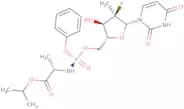
CAS:<p>Potent inhibitor of viral RNA polymerase called non-structural protein 5B (NS5B). This nucleotide analog is effective against Hepatitis C virus (HCV) infection since it inhibits viral RNA replication. Sofosbuvir is a prodrug and gets triphosphorylated in the liver cells, generating biologically active compound with anti-viral activity.</p>Fórmula:C22H29FN3O9PPureza:Min. 95%Forma y color:Off-White PowderPeso molecular:529.45 g/molDoxycycline monohydrate
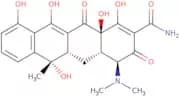
CAS:<p>Antibiotic; anti-protozoal; anti-helmintic; protein synthesis inhibitor</p>Fórmula:C22H24N2O8·H2OPureza:Min. 96.0 Area-%Forma y color:Yellow PowderPeso molecular:462.45 g/molNalidixic acid
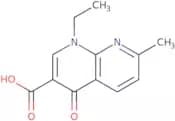
CAS:<p>Nalidixic acid is a quinolone antibiotic with action on bacterial DNA gyrase to inhibit DNA replication and is used for treating urinary tract infections caused by gram-negative bacteria.</p>Fórmula:C12H12N2O3Forma y color:White Slightly Brown PowderPeso molecular:232.24 g/molTolnaftate
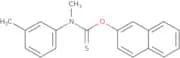
CAS:<p>Tolnaftate is a thiocarbamate antifungal agent with action on fungal cell membrane disruption and is used for treating fungal infections like athlete's foot, jock itch, and ringworm.</p>Fórmula:C19H17NOSPureza:Min. 95%Forma y color:PowderPeso molecular:307.41 g/molTriazavirin
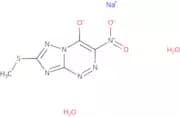
CAS:<p>Triazavirin is an antiviral drug developed against SAR-CoV-2. The action of triazavirin might be due to its ability to inhibit the Mpro protease from SARS viruses. Triazavirin has been clinically tested in the treatment of COVID-19 patients.</p>Fórmula:C5H4N6O3S·Na·2H2OPureza:Min. 95%Forma y color:Slightly Yellow PowderPeso molecular:287.21 g/mol4-Epioxytetracycline
CAS:<p>Epioxytetracycline is a degradation product of the antibiotic oxytetracycline. It has been found in wastewater.</p>Fórmula:C22H24N2O9Pureza:Min. 95%Forma y color:PowderPeso molecular:460.43 g/molBoceprevir
CAS:<p>Boceprevir is a peptidomimetic, covalent inhibitor of NS3/4A serine protease from hepatitis C virus (HCV). Boceprevir also inhibits and acts as a substrate in the cytochrome P450 3A4 (CYP3A) metabolic pathway. Boceprevir was recently shown to inhibit the main protease Mpro (3CLpro) from SARS-CoV-2 with IC50 of 4.13 μM and EC50 of 1.31 μM.</p>Fórmula:C27H45N5O5Pureza:Min. 98 Area-%Forma y color:PowderPeso molecular:519.68 g/molCefiderocol
CAS:<p>Cefiderocol is a siderophore cephalosporin antibiotic with action on bacterial cell wall synthesis, particularly targeting multidrug-resistant gram-negative bacteria and is used for treating complicated urinary tract infections and hospital-acquired pneumonia.</p>Fórmula:C30H34CLN7O10S2Pureza:Min. 95%Forma y color:PowderPeso molecular:752.2 g/molTetracycline hydrochloride - USP
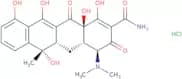
CAS:<p>Tetracycline hydrochloride - USP is a broad-spectrum antibiotic, which is a synthetic derivative of chlortetracycline produced from the bacterium *Streptomyces aureofaciens*. It functions by inhibiting protein synthesis in bacteria, specifically binding to the 30S ribosomal subunit. This action prevents the attachment of aminoacyl-tRNA to the mRNA-ribosome complex, thereby halting bacterial growth and replication.</p>Fórmula:C22H25ClN2O8Forma y color:Yellow PowderPeso molecular:480.9 g/molDequalinium chloride
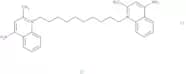
CAS:<p>Dequalinium chloride is a quaternary ammonium compound that has been discovered to be an inhibitor of the cytopathic effects of some syndrome viruses. It is able to inhibit the replication of the virus in various clinical isolates and in cell culture models. Dequalinium chloride also inhibits acetylcholine receptor-mediated endocytosis, which is one of the mechanisms by which cells resist infection. The mechanism by which dequalinium chloride inhibits acetylcholine receptor-mediated endocytosis is not yet known, but it has been suggested that it might be due to its inhibitory activity on mitochondrial uncoupler proteins. This property may make dequalinium chloride an effective treatment against bacterial infections and respiratory diseases such as cystic fibrosis and asthma.</p>Fórmula:C30H40Cl2N4Pureza:Min. 95%Forma y color:PowderPeso molecular:527.57 g/molTeicoplanin
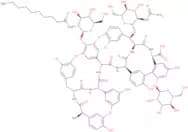
CAS:<p>Teicoplanin is related to vancomycin and has similar effects against gram-positive bacteria and anaerobes, and usually requires less frequent administration than vancomycin, but it is less efficient against S. haemolyticus. Due its size and polarity, teicoplanin cant pass through the membrane of gram-negative bacteria thus it is not active against them. It is used to treat severe infections such as septicemia, endocarditis, bone and joint infections.</p>Fórmula:C89H99Cl2N9O29Pureza:Min. 900 Ug/MgForma y color:White PowderPeso molecular:1827.59257Ticarcillin/Clavulanate (15/1)
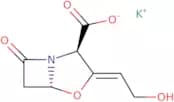
CAS:<p>Ticarcillin is a beta-lactam antibiotic that inhibits the synthesis of peptidoglycan, which is an essential component of bacterial cell walls. Ticarcillin is used for the treatment of infections caused by susceptible bacteria, such as those in the respiratory tract, urinary tract, skin and soft tissues. It can also be used to treat sepsis and meningitis. Ticarcillin has a broad spectrum of activity against Gram-positive and Gram-negative bacteria, including Enterobacteriaceae (e.g., Escherichia coli) and Pseudomonas aeruginosa. Ticarcillin is not active against methicillin-resistant Staphylococcus aureus (MRSA).</p>Fórmula:C15H14N2Na2O6S2•C8H8KNO5Pureza:(Ticarcillin Disodium) Min. 75%Forma y color:White PowderPeso molecular:665.64 g/molApramycin sulfate
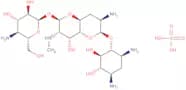
CAS:<p>Apramycin sulfate is a semisynthetic antibiotic that inhibits the growth of Gram-negative bacteria. It is a sulfonamide and has been used in clinical isolates to treat bacterial infections. Apramycin sulfate inhibits the biosynthesis of folic acid, which is important for DNA synthesis and cell division. It also inhibits the production of RNA by binding to ribosomes and inhibiting protein synthesis. Apramycin has been shown to have anticancer properties as well, with studies showing that it can inhibit tumor growth in vitro and in vivo.</p>Fórmula:C21H41N5O11·H2SO4Pureza:Min. 550 Usp U/MgForma y color:Brown Slightly Yellow Yellow PowderPeso molecular:637.66 g/molAmpicillin
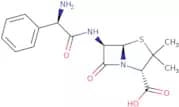
CAS:<p>Antibiotic of penicillin class; inhibits bacterial cell wall biogenesis</p>Fórmula:C16H19N3O4SPureza:Min. 98%Forma y color:PowderPeso molecular:349.41 g/molNorfloxacin
CAS:<p>Norfloxacin is a fluoroquinolone antibiotic with action on bacterial DNA gyrase and topoisomerase IV and is used for treating urinary tract infections and gonorrhea.</p>Fórmula:C16H18FN3O3Pureza:Min. 98 Area-%Forma y color:White PowderPeso molecular:319.33 g/molLevofloxacin hemihydrate
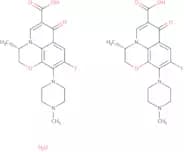
CAS:<p>Levofloxacin Hemihydrate is a fluoroquinolone antibiotic with a mode of action that inhibits bacterial DNA gyrase and topoisomerase IV. It is used for treating bacterial infections, similar to its anhydrous form.</p>Fórmula:C18H20FN3O4H2OPureza:Min. 98 Area-%Forma y color:PowderPeso molecular:370.38 g/molGemifloxacin mesylate
CAS:<p>Inhibits DNA gyrase and topoisomerase IV</p>Fórmula:C19H24FN5O7SPureza:Min. 95%Forma y color:White Beige PowderPeso molecular:485.49 g/molAmpicillin sodium salt - Bio-X ™
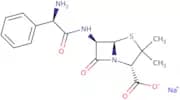
CAS:<p>Ampicillin is a β-lactam antibiotic with a broad spectrum of activity against Gram-positive and Gram-negative bacteria. It is used in the treatment of bacterial infections, including those caused by methicillin-resistant Staphylococcus aureus (MRSA), Streptococcus pneumoniae, and Listeria monocytogenes. Ampicillin binds to penicillin-binding proteins in the bacterial cell wall by competitive inhibition. It prevents the formation of an antibiotic-inhibitor complex with the enzyme cell wall synthesis that is required for cell wall biosynthesis, inhibiting protein synthesis and cell division.</p>Fórmula:C16H19N3O4S·NaPureza:Min. 85 Area-%Forma y color:PowderPeso molecular:372.4 g/molSTAADIUM™ PeptiZide L-Ala
CAS:<p>STAADIUM⢠PeptiZide L-Ala is a targeted inhibitor for L-alanine aminopeptidase-producing bacteria. The antibacterial activity of STAADIUM⢠PeptiZide L-Ala is triggered by the enzyme L-alanine aminopeptidase, an enzyme located in the bacterial cell wall and is a characteristic of Gram-negative bacteria. L-alanine aminopeptidase has not been experimentally detected in Campylobacter species, anaerobic bacilli, Gram-positive and Gram-variable bacteria. More details in the application notes document.</p>Fórmula:C15H18ClN3O2SPureza:Min. 95.0 Area-%Peso molecular:339.84 g/molRef: 3D-Z-4001_P00
1gA consultar5gA consultar250mgA consultar500mgA consultar2500mgA consultar-Unit-ggA consultarSTAADIUM™ PhosphoZide
CAS:<p>STAADIUMTM PhosphoZide is a targeted inhibitor of phosphatase-producing bacteria, which is activated by phosphatase itself. STAADIUMTM PhosphoZide targets specifically methicillin-resistant Staphylococcus aureus (MRSA) and its antibacterial activity is triggered by both the acid and alkaline phosphatases that the bacteria produce. STAADIUMTM PhosphoZide can be added as an enzyme-specific selective supplement to agar plates or as an enrichment agent to a broth culture. More details in the application notes document.</p>Fórmula:C12H10KNNaO5PSForma y color:PowderPeso molecular:373.34 g/molTetracycline
CAS:<p>Antibiotic of tetracycline class; protein synthesis inhibitor</p>Fórmula:C22H24N2O8Pureza:Min. 91 Area-%Forma y color:PowderPeso molecular:444.43 g/molFosfomycin disodium salt, Antibiotic for Culture Media Use Only
CAS:<p>Broad-spectrum antibiotic; bacterial cell wall biogenesis inhibitor</p>Fórmula:C3H5Na2O4PPeso molecular:182.02 g/molCefuroxime sodium
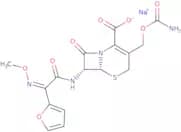
CAS:<p>Cefuroxime sodium is a sodium salt form of cefuroxime with similar action and applications as cefuroxime.</p>Fórmula:C16H15N4NaO8SPureza:Min. 86 Area-%Forma y color:White PowderPeso molecular:446.37 g/molTetracycline - Bio-X ™
CAS:<p>Tetracycline is a broad-spectrum antibiotic that is effective against a variety of bacterial infections. It is a polyketide antibiotic that inhibits protein synthesis by binding to ribosomes and preventing the attachment of amino acids to tRNA molecules thus inhibiting bacterial growth.</p>Fórmula:C22H24N2O8Pureza:Min. 95%Forma y color:PowderPeso molecular:444.43 g/molFosfomycin disodium
CAS:<p>Broad-spectrum antibiotic; bacterial cell wall biogenesis inhibitor</p>Fórmula:C3H5Na2O4PPureza:Min. 95%Forma y color:PowderPeso molecular:182.02 g/molOmbitasvir
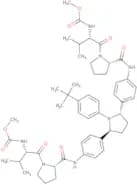
CAS:<p>Ombitasvir is a NS5A inhibitor antiviral agent with action on hepatitis C virus replication and is used for treating chronic hepatitis C in combination therapies.</p>Fórmula:C50H67N7O8Pureza:Min. 98 Area-%Forma y color:White PowderPeso molecular:894.1 g/molPazufloxacin hydrochloride
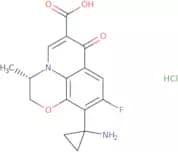
CAS:<p>Pazufloxacin hydrochloride is a synthetic antibacterial agent, which is derived from the fluoroquinolone class of antibiotics with a broad-spectrum activity against various bacterial pathogens. This compound, sourced through chemical synthesis, functions primarily by inhibiting bacterial DNA gyrase and topoisomerase IV, which are critical enzymes for DNA replication, transcription, repair, and recombination. The inhibition of these enzymes leads to the disruption of bacterial DNA processes, ultimately resulting in bacterial cell death.</p>Fórmula:C16H15FN2O4•HClPureza:Min. 95%Peso molecular:354.76 g/molHerbicidin C
CAS:<p>Herbicidin C is an antibiotic, which is derived from a microbial source, specifically from certain strains of actinobacteria. This compound functions as an inhibitor, interfering with specific metabolic pathways within target organisms. Its mode of action involves disrupting the synthesis of critical proteins, which are essential for cell survival and growth.</p>Fórmula:C17H21N5O9Pureza:Min. 95%Peso molecular:439.38 g/molCloxacillin sodium hydrate
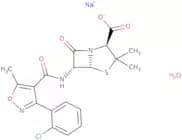
CAS:<p>β-lactam antibiotic of penicillin subclass, which inhibits bacterial cell wall synthesis by targeting the proteoglycan synthesis. Cloxacillin has a narrow spectrum of action and is effective against Gram-positive organisms. Cloxacillin is resistant to the action of β-lactamase and therefore preferentially used for treatment of Staphylococcal infections.</p>Fórmula:C19H18ClN3O5S•H2O•NaPureza:Min. 95%Forma y color:White PowderPeso molecular:476.89 g/molEtravirine - Bio-X ™
CAS:<p>Etravirine is a non-nucleoside reverse transcriptase inhibitor (NNRTI) medication used in the treatment of human immunodeficiency virus (HIV) infections. It works by blocking reverse transcriptase, an enzyme essential for replication of the virus, thereby preventing the virus from multiplying and spreading. Etravirine is often used in combination with other antiretroviral drugs to effectively treat HIV/AIDS. It is commonly prescribed for patients with virus strains that are resistant to other NNRTI medications due to mutations that confer resistance- mutations K103N and Y181C. Etravirine is a diarylpyrimidine (DAPY) and has conformational isomerism meaning that it binds reverse transcriptase in an fleible manner, under multiple conformations. The impact of specific point mutations in the virus is therefore lessened.</p>Fórmula:C20H15BrN6OPureza:Min. 95%Forma y color:PowderPeso molecular:435.28 g/molNevirapine
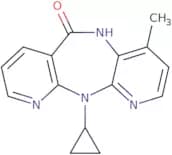
CAS:<p>Nevirapine is a non-nucleoside reverse transcriptase inhibitor (NNRTI) with action on HIV reverse transcriptase to block viral replication and is used for treating HIV/AIDS in combination therapies.</p>Fórmula:C15H14N4OPureza:Min. 95%Forma y color:White PowderPeso molecular:266.3 g/molTomopenem
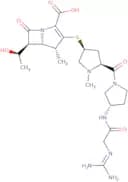
CAS:<p>Tomopenem is a carbapenem antibiotic, which is a product of synthetic origin with broad-spectrum antibacterial properties. It acts by inhibiting the synthesis of bacterial cell walls through binding to penicillin-binding proteins, thereby disrupting the structural integrity of the cell wall and leading to bacterial cell lysis and death.</p>Fórmula:C23H35N7O6SPureza:Min. 95%Peso molecular:537.63 g/molCerulenin
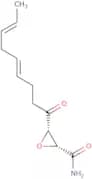
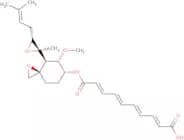
CAS:<p>Cerulenin is an antifungal antibiotic with action on fatty acid and steroid biosynthesis inhibition and is used for studying lipid metabolism and cancer research.</p>Fórmula:C12H17NO3Pureza:Min. 95%Peso molecular:223.27 g/molSangivamycin
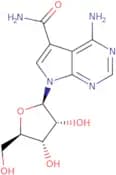
CAS:<p>Sangivamycin is a nucleoside analog with action as a protein kinase C inhibitor and is used for research on antiviral and anticancer therapies.</p>Fórmula:C12H15N5O5Pureza:Min. 97 Area-%Forma y color:PowderPeso molecular:309.28 g/molMeropenem sodium
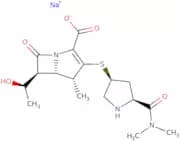
CAS:<p>Inhibitor of cell-wall synthesis; carbapenem class</p>Fórmula:C17H25N3O5S•NaPureza:Min. 95%Forma y color:PowderPeso molecular:406.45 g/molCefepime dihydrochloride monohydrate
CAS:<p>Cefepime dihydrochloride monohydrate is a fourth-generation cephalosporin antibiotic with action on bacterial cell wall synthesis and is used for treating severe bacterial infections, including pneumonia and urinary tract infections.</p>Fórmula:C19H25N6O5S2Cl•HCl•H2OPureza:Min. 95%Forma y color:PowderPeso molecular:571.5 g/molTulathromycin B - 5% (mixture with Tulathromycin A)
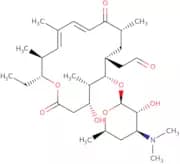
CAS:<p>Inhibitor of protein synthesis; macrolide class</p>Fórmula:C41H79N3O12Pureza:Min. 95%Forma y color:Off-White PowderPeso molecular:806.08 g/molOseltamivir
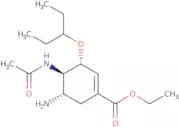
CAS:<p>Inhibitor of viral neuraminidase enzyme, effective against influenza A and B viruses. This antiviral compound inhibits neuraminidase-mediated cleavage of host cell sialic acids, which interact with newly synthesised virions from the host cell. This prevents virion budding from the host, resulting in inhibition of virion release and viral infection overall.</p>Fórmula:C16H28N2O4Pureza:Min. 95 Area-%Forma y color:PowderPeso molecular:312.4 g/molMonensin sodium
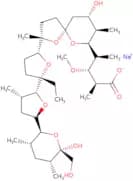
CAS:<p>Monensin sodium is a polyether antibiotic with action on ion transport across bacterial cell membranes and is used for preventing coccidiosis and improving feed efficiency in livestock.</p>Fórmula:C36H61NaO11Pureza:(%) Min. 90%Forma y color:White Off-White PowderPeso molecular:692.85 g/molFumagillin
CAS:<p>Inhibits methionine aminopeptidase-2; anti-angiogenic; antibiotic</p>Fórmula:C26H34O7Pureza:Min. 95%Forma y color:White PowderPeso molecular:458.54 g/molTebuconazole
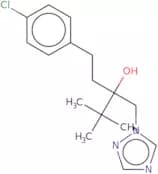
CAS:<p>Tebuconazole is a triazole fungicide with action on fungal cell membranes by inhibiting ergosterol biosynthesis and is used for controlling fungal diseases in crops like cereals and vegetables.</p>Fórmula:C16H22ClN3OPureza:Min. 97 Area-%Forma y color:White PowderPeso molecular:307.82 g/molStreptomycin sulfate
CAS:<p>Inhibitor of protein synthesis; aminoglycoside</p>Fórmula:(C21H39N7O12)2•(H2SO4)3Pureza:Min. 720 Iu/MgForma y color:White Off-White PowderPeso molecular:1,457.39 g/molRepromicin
CAS:<p>Repromicin is a novel antibiotic, which is derived from a unique strain of actinobacteria. This organism is known for its ability to produce a wide range of bioactive compounds. Repromicin operates by inhibiting bacterial protein synthesis, a mode of action that involves binding to the bacterial ribosome and interfering with the translation process. This leads to an effective halt in bacterial growth and proliferation.</p>Fórmula:C31H51NO8Pureza:Min. 95%Peso molecular:565.74 g/molKanamycin sulfate, Antibiotic for Culture Media Use Only
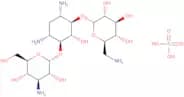
CAS:<p>Kanamycin sulfate is a water-soluble antibiotic. Genes encoding kanamycin resistance are commonly used as selection markers in molecular biology .It acts during the translation mechanism in prokaryotic ribosomes to avoid bacterial cell growth.</p>Fórmula:C18H38N4O15SPeso molecular:582.58 g/molRef: 3D-K-0250
25gA consultar50gA consultar100gA consultar250gA consultar500gA consultar-Unit-kgkgA consultarNeomycin trisulfate hydrate
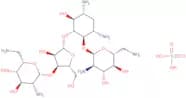
CAS:<p>Neomycin, one of the many oligosaccharide containing antibiotics, is an aminoglycoside antibiotic found in Streptomyces fradiae (Collins, 2006) with wide spectrum, active against Gram-negative Gram-positive bacteria. Neomycin is commony used as a selection marker in cloning, and is therefore used in growth media to select colonies with the neomycin resistance cassette integrated into their genome. Neomycin is a mixture of neomycin B (Framycetin) and its epimer Neomycin C, the latter component accounting for some 515% of the mixture.</p>Fórmula:C23H46N6O13·3H2SO4Pureza:Min. 600 Ug/MgForma y color:White Slightly Yellow PowderPeso molecular:908.88 g/mol