Antimicrobianos
Los antimicrobianos son agentes que destruyen o inhiben el crecimiento de microorganismos, incluyendo bacterias, virus, hongos y parásitos. Estos compuestos son esenciales en la prevención y tratamiento de infecciones, desempeñando un papel crucial en la medicina, la agricultura y la industria alimentaria. En CymitQuimica, ofrecemos una extensa gama de antimicrobianos de alta calidad y pureza, adecuados para diversas aplicaciones científicas e industriales. Nuestro catálogo incluye antibióticos, antifúngicos, antivirales y desinfectantes, todos diseñados para satisfacer las necesidades de investigación y desarrollo, así como para aplicaciones clínicas y de producción. Con nuestros productos, los profesionales pueden garantizar la eficacia y seguridad en el control de infecciones y en la protección de la salud pública.
Subcategorías de "Antimicrobianos"
- Antibióticos(4.132 productos)
- Antifúngicos(897 productos)
- Antiparasitarios(702 productos)
- Antivirales(764 productos)
Se han encontrado 2423 productos de "Antimicrobianos"
Ordenar por
Pureza (%)
0
100
|
0
|
50
|
90
|
95
|
100
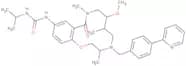
Sparsomycin
CAS:<p>Sparsomycin is an antibiotic compound, which is a secondary metabolite isolated from Streptomyces species. Its mode of action involves the inhibition of protein synthesis by targeting the large subunit of the ribosome, specifically binding to the 50S subunit in bacterial ribosomes and the 60S subunit in eukaryotic ribosomes. This binding interferes with peptide bond formation, thereby disrupting the translational process essential for protein synthesis.</p>Fórmula:C13H19N3O5S2Pureza:Min. 95%Peso molecular:361.4 g/molTrovafloxacin mesylate
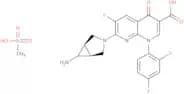
CAS:<p>Trovafloxacin mesylate is a synthetic antibiotic belonging to the fluoroquinolone class, which is derived from chemical synthesis processes rather than natural sources. The mode of action of trovafloxacin mesylate involves the inhibition of bacterial enzymes DNA gyrase and topoisomerase IV. These enzymes are essential for DNA replication, repair, and transcription within the bacterial cell. By inhibiting these enzymes, trovafloxacin mesylate disrupts bacterial DNA processes, leading to cell death and exerting its antibacterial effects.</p>Fórmula:C21H19F3N4O6SPureza:Min. 95%Peso molecular:512.46 g/molAminosidine
CAS:<p>Aminosidine is a nucleoside analogue that inhibits the HIV-1 reverse transcriptase and the integrase, which are enzymes involved in viral DNA synthesis. Aminosidine is active against Leishmania spp., but not against bacteria. Aminosidine has been shown to be effective in experimental models of human bowel disease and in patients with inflammatory bowel disease. It was also found to be active against wild-type strains of human immunodeficiency virus type 1, but not resistant mutants. The mechanism of action is the inhibition of cellular mitochondrial membrane potential.</p>Pureza:Min. 95%Fosmanogepix
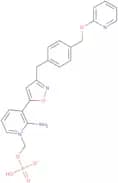
CAS:<p>Fosmanogepix is a novel antifungal prodrug, which is derived from manogepix. This product is a synthetic compound, designed to target invasive fungal infections through its unique mechanism of action. The prodrug itself is inactive until metabolized in the body, where it converts into its active form, manogepix. This activation occurs through enzymatic hydrolysis, enabling it to exert its antifungal effects.</p>Fórmula:C22H21N4O6PPureza:Min. 95%Forma y color:PowderPeso molecular:468.4 g/mol7-Descarbamoyl 17-amino geldanamycin
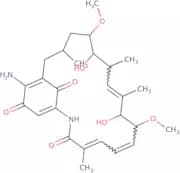
CAS:7-Descarbamoyl 17-amino geldanamycin is a semi-synthetic derivative of the benzoquinone ansamycin antibiotic geldanamycin, which is naturally produced by the bacterium *Streptomyces hygroscopicus*. As an inhibitor of the Heat Shock Protein 90 (Hsp90), it targets this molecular chaperone crucial for the stability and function of numerous oncoproteins. By inhibiting Hsp90, 7-Descarbamoyl 17-amino geldanamycin disrupts protein folding processes, leading to the degradation of client proteins and subsequent disruption of cell signaling pathways involved in tumor growth and survival.Fórmula:C27H38N2O7Pureza:Min. 95%Peso molecular:502.6 g/molAztreonam-d6
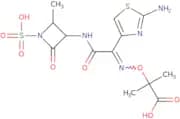
CAS:<p>Aztreonam-d6 is an isotopically labeled antibiotic, which is a synthetic monobactam derived from bacterial fermentation processes with deuterium enrichment. With a beta-lactam structure, Aztreonam-d6 acts by inhibiting bacterial cell wall synthesis, specifically targeting the penicillin-binding protein 3 (PBP3) in Gram-negative bacteria. This action disrupts cell wall construction, leading to cell lysis and death, making it an effective option against certain resistant bacterial strains.</p>Fórmula:C13H17N5O8S2Pureza:Min. 95%Peso molecular:441.5 g/molBRD-K98645985
CAS:<p>BRD-K98645985 is a synthetic biochemical reagent, likely developed through chemical synthesis or natural product isolation. It functions as a modulator of specific biochemical pathways, potentially acting as an enzyme inhibitor, receptor agonist, or antagonist. This compound interacts with targeted proteins or cellular mechanisms, altering physiological responses or signaling cascades. The precise mode of action often involves binding to active sites, thereby influencing molecular conformation and activity.</p>Fórmula:C33H43N5O4Pureza:Min. 95%Peso molecular:573.7 g/molOxysanguinarine
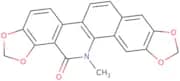
CAS:<p>Oxysanguinarine is an alkaloid compound, which is derived from the plant species of the Papaveraceae family. As a benzophenanthridine alkaloid, it is predominantly extracted from plants such as Sanguinaria canadensis. Its mode of action involves disrupting microbial cell membranes and interfering with enzyme systems, leading to antimicrobial and antifungal effects. This compound exhibits potential in inhibiting the growth of various pathogens, making it a subject of interest in pharmaceutical and microbiological research. Applications of oxysanguinarine extend to studying its efficacy in antimicrobial treatments, exploring its potential as a natural pesticide, and investigating its role in traditional medicine. Due to its complex biochemical interactions, ongoing research aims to better understand its mechanisms and potential therapeutic uses.</p>Fórmula:C20H13NO5Pureza:Min. 95%Peso molecular:347.3 g/mol(S)-4-(((R)-6-(2-Chloro-4-fluorophenyl)-5-(methoxycarbonyl)-2-(thiazol-2-yl)-3,6-dihydropyrimidin-4-yl)methyl)morpholine-3-carboxyli c acid
CAS:<p>(S)-4-(((R)-6-(2-Chloro-4-fluorophenyl)-5-(methoxycarbonyl)-2-(thiazol-2-yl)-3,6-dihydropyrimidin-4-yl)methyl)morpholine-3-carboxylic acid is a selective chemical inhibitor, derived from synthetic organic chemistry methodologies. This compound is engineered for precise interaction with a target protein, modulating cellular pathways involved in disease progression. Its unique structure, including the chlorofluorophenyl and thiazolyl moieties, confers high binding affinity and specificity, making it a valuable tool in biochemical research.</p>Fórmula:C21H20ClFN4O5SPureza:Min. 95%Peso molecular:494.9 g/molOligomycin B
CAS:<p>Oligomycin B is an antibiotic compound, which is derived from Streptomyces species. It is an inhibitor of the mitochondrial ATP synthase complex, specifically targeting the F₀ subunit of ATP synthase. This action obstructs the proton channel, preventing the flow of protons across the mitochondrial membrane. As a result, Oligomycin B effectively halts ATP synthesis by oxidative phosphorylation, which is crucial for the survival of aerobic organisms.</p>Fórmula:C45H72O12Pureza:Min. 95%Forma y color:PowderPeso molecular:805.05 g/molFGI 106
CAS:<p>FGI 106 is an antifungal agent, which is derived from natural sources with a mechanism of action involving disruption of fungal cell wall integrity. The compound is isolated from naturally occurring substances, specifically targeting the structural components of the cell walls in various fungal species. By compromising the protective barrier of the cell wall, FGI 106 effectively inhibits fungal growth and proliferation, making it a potent tool against a variety of fungal pathogens.</p>Fórmula:C28H42Cl4N6Pureza:Min. 95%Peso molecular:604.5 g/molAAI101
CAS:<p>Please enquire for more information about AAI101 including the price, delivery time and more detailed product information at the technical inquiry form on this page</p>Fórmula:C11H14N4O5SPureza:Min. 95%Peso molecular:314.32 g/molPlazomicin sulfate
CAS:<p>An aminoglycoside antibiotic. Found applications in treatment of UTi's as it decreases the ability of bacteria to make protein.</p>Fórmula:C25H48N6O10·XH2SO4Pureza:Min. 85%Forma y color:PowderPeso molecular:592.69 g/molUniconazole
CAS:Uniconazole is a synthetic plant growth regulator, which is derived from triazole compounds. It acts as a potent inhibitor of gibberellin biosynthesis, specifically targeting enzymes involved in gibberellin production. By inhibiting gibberellins, uniconazole reduces internode elongation and alters growth patterns, resulting in shorter, more compact plants.Fórmula:C15H18ClN3OPureza:Min. 95%Peso molecular:291.78 g/molEthofumesate-2-hydroxy
CAS:<p>Ethofumesate-2-hydroxy is a selective herbicide, which is a synthetic chemical compound with a specific mode of action. This herbicide primarily originates from chemical synthesis processes designed to interfere with plant growth at a biochemical level. The mode of action of Ethofumesate-2-hydroxy involves the inhibition of lipid synthesis, which disrupts cell membrane formation and hampers weed growth. It effectively targets susceptible weed species by inhibiting essential biochemical pathways, thus leading to their decline or death.</p>Fórmula:C11H14O5SPureza:Min. 95%Peso molecular:258.29 g/molGanciclovir hydrate
CAS:<p>Ganciclovir hydrate is an antiviral compound, which is a synthetic analogue of 2'-deoxy-guanosine derived from chemical synthesis. It functions through selective inhibition of viral DNA polymerase, specifically by incorporating into the viral DNA during replication. This incorporation leads to chain termination, effectively impeding the synthesis of viral DNA and curbing viral proliferation.</p>Fórmula:C9H15N5O5Pureza:Min. 95%Peso molecular:273.25 g/molPeplomycin sulfate
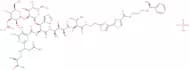
CAS:<p>Peplomycin sulfate is an anticancer antibiotic, which is a derivative of the bleomycin family of glycopeptide antibiotics produced by the bacterium *Streptomyces verticillus*. This antibiotic operates through a mode of action that involves the induction of DNA strand breaks by forming a complex with iron and oxygen, leading to the generation of free radicals. These radicals cleave DNA strands, thereby inhibiting DNA synthesis and inducing apoptosis in cancerous cells.</p>Fórmula:C61H90N18O25S3Pureza:Min. 95%Peso molecular:1,571.67 g/molFosravuconazole L-lysine ethanolate
CAS:<p>Fosravuconazole L-lysine ethanolate is an antifungal prodrug, which is a derivative of the widely used antifungal agent ravuconazole. This compound is synthesized through chemical modification to enhance its bioavailability and aqueous solubility, addressing limitations found in its parent compound. Fosravuconazole is designed to undergo in vivo conversion to ravuconazole, its active form, by enzymatic processes within the body.</p>Fórmula:C31H40F2N7O8PSPureza:Min. 95%Peso molecular:739.7 g/mol1,3''-Di-HABA kanamycin A
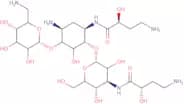
CAS:<p>1,3''-Di-HABA kanamycin A is a chemically modified antibiotic derivative. It is derived from kanamycin A, a well-known aminoglycoside antibiotic that is originally sourced from the bacterium *Streptomyces kanamyceticus*. The modification with 1,3''-Di-HABA alters its pharmacodynamic properties, potentially influencing its specificity and interaction with biological targets.</p>Fórmula:C26H50N6O15Pureza:Min. 95%Peso molecular:686.71 g/molFlufenoxystrobin
CAS:<p>Flufenoxystrobin is a synthetic fungicide, which is derived from the strobilurin class of compounds known for their antifungal properties. It operates by inhibiting mitochondrial respiration in fungal cells, specifically blocking the electron transport chain at the Qo site of cytochrome b. This disruption in energy production is lethal to the targeted fungi.</p>Fórmula:C19H16ClF3O4Pureza:Min. 95%Peso molecular:400.8 g/mol