Antimicrobianos
Los antimicrobianos son agentes que destruyen o inhiben el crecimiento de microorganismos, incluyendo bacterias, virus, hongos y parásitos. Estos compuestos son esenciales en la prevención y tratamiento de infecciones, desempeñando un papel crucial en la medicina, la agricultura y la industria alimentaria. En CymitQuimica, ofrecemos una extensa gama de antimicrobianos de alta calidad y pureza, adecuados para diversas aplicaciones científicas e industriales. Nuestro catálogo incluye antibióticos, antifúngicos, antivirales y desinfectantes, todos diseñados para satisfacer las necesidades de investigación y desarrollo, así como para aplicaciones clínicas y de producción. Con nuestros productos, los profesionales pueden garantizar la eficacia y seguridad en el control de infecciones y en la protección de la salud pública.
Subcategorías de "Antimicrobianos"
- Antibióticos(4.133 productos)
- Antifúngicos(886 productos)
- Antiparasitarios(684 productos)
- Antivirales(765 productos)
Se han encontrado 2437 productos de "Antimicrobianos"
Ordenar por
Pureza (%)
0
100
|
0
|
50
|
90
|
95
|
100
Faropenem sodium hemipentahydrate
CAS:Faropenem sodium hemipentahydrate is a penem-class beta-lactam antibiotic with action on bacterial cell wall synthesis and is used for treating respiratory, skin, and urinary tract infections.Fórmula:C12H15NO5S•(H2O)2•NaPureza:Min. 95%Forma y color:PowderPeso molecular:353.34 g/molSofosbuvir
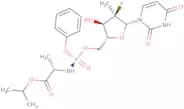
CAS:Potent inhibitor of viral RNA polymerase called non-structural protein 5B (NS5B). This nucleotide analog is effective against Hepatitis C virus (HCV) infection since it inhibits viral RNA replication. Sofosbuvir is a prodrug and gets triphosphorylated in the liver cells, generating biologically active compound with anti-viral activity.Fórmula:C22H29FN3O9PPureza:Min. 95%Forma y color:Off-White PowderPeso molecular:529.45 g/molDoxycycline monohydrate
CAS:Antibiotic; anti-protozoal; anti-helmintic; protein synthesis inhibitorFórmula:C22H24N2O8·H2OPureza:Min. 96.0 Area-%Forma y color:Yellow PowderPeso molecular:462.45 g/molLucimycin
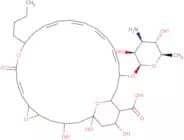
CAS:Lucimycin is an antibiotic, which is derived from the fermentation of specific Streptomyces bacterial strains. This compound exerts its antibacterial effects by binding to the 50S subunit of the bacterial ribosome, thereby inhibiting protein synthesis and effectively halting bacterial growth. Lucimycin is particularly effective against Gram-positive bacteria and some Gram-negative species, making it a valuable tool in both clinical and research settings.Fórmula:C36H53NO13Pureza:Min. 95%Peso molecular:707.8 g/molAtazanavir sulfate
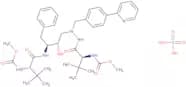
CAS:Anti-viral; HIV protease inhibitor
Fórmula:C38H52N6O7·H2SO4Pureza:Min. 95%Forma y color:PowderPeso molecular:802.94 g/molCefadroxil monohydrate
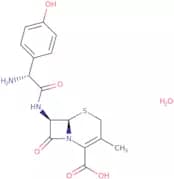
CAS:Cefadroxil monohydrate is a hydrated form of cefadroxil with similar action and applications as cefadroxil.Fórmula:C16H17N3O5S•H2OPureza:Min. 95%Forma y color:PowderPeso molecular:381.41 g/molMarbofloxacin
CAS:Antibiotic of fluoroquinolone class; DNA replication inhibitor
Fórmula:C17H19N4O4FPureza:Min. 95%Forma y color:Yellow PowderPeso molecular:362.36 g/molCeftriaxone sodium hydrate - Bio-X ™
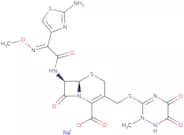
CAS:Ceftriaxone is a broad-spectrum cephalosporin antibiotic that is used for the treatment of bacterial infections in different locations such as the skin, soft tissue and respiratory tract. This drug works by inhibiting mucopeptide synthesis in the bacterial cell wall. As a result, bacteria will produce defective cell walls leading to cell death.Fórmula:C18H16N8Na2O7S3·5H2OPureza:Min. 95%Forma y color:PowderPeso molecular:661.6 g/molPirazinecarboxamide
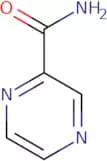
CAS:Pirazinecarboxamide (Pyrazinamide) is an antitubercular agent with action on Mycobacterium tuberculosis by disrupting membrane energetics and is used for treating tuberculosis in combination with other drugs.Fórmula:C5H5N3OPureza:Min. 95%Forma y color:PowderPeso molecular:123.11 g/molStreptomycin sulfate, Antibiotic for Culture Media Use Only
CAS:Streptomycin sulfate is an antibiotic that inhibits the growth of bacteria by binding to the ribosomal subunit and interfering with protein synthesis. It is used in culture media for the production of human antibodies as well as in drug therapy for methicillin-resistant staphylococcus. Streptomycin sulfate has a high specific activity and low sensitivity, but it also has a low solubility in water. The active form of streptomycin sulfate is streptomycin A, which is produced by the addition of a phenyl ring to neomycin sulfate. In plant roots, streptomycin sulfate inhibits cyanogenic glycosides from being hydrolyzed into hydrogen cyanide (HCN) and benzaldehyde.Fórmula:C42H84N14O36S3Peso molecular:1,457.40 g/molRef: 3D-S-8500
25gA consultar50gA consultar100gA consultar250gA consultar500gA consultar-Unit-kgkgA consultarTetracycline hydrochloride - USP
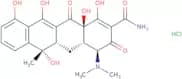
CAS:Tetracycline hydrochloride - USP is a broad-spectrum antibiotic, which is a synthetic derivative of chlortetracycline produced from the bacterium *Streptomyces aureofaciens*. It functions by inhibiting protein synthesis in bacteria, specifically binding to the 30S ribosomal subunit. This action prevents the attachment of aminoacyl-tRNA to the mRNA-ribosome complex, thereby halting bacterial growth and replication.Fórmula:C22H25ClN2O8Forma y color:Yellow PowderPeso molecular:480.9 g/molDequalinium chloride
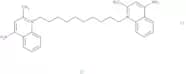
CAS:Dequalinium chloride is a quaternary ammonium compound that has been discovered to be an inhibitor of the cytopathic effects of some syndrome viruses. It is able to inhibit the replication of the virus in various clinical isolates and in cell culture models. Dequalinium chloride also inhibits acetylcholine receptor-mediated endocytosis, which is one of the mechanisms by which cells resist infection. The mechanism by which dequalinium chloride inhibits acetylcholine receptor-mediated endocytosis is not yet known, but it has been suggested that it might be due to its inhibitory activity on mitochondrial uncoupler proteins. This property may make dequalinium chloride an effective treatment against bacterial infections and respiratory diseases such as cystic fibrosis and asthma.Fórmula:C30H40Cl2N4Pureza:Min. 95%Forma y color:PowderPeso molecular:527.57 g/molLopinavir - Bio-X ™
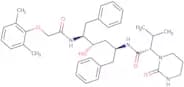
CAS:Chemically derived from ritonavir, Lopinavir belongs to the amphetamines. Lopinavir is clinically used in the prevention and treatment of HIV infections as it acts as HIV-1 protease inhibitor. In 2020, lopinavir was tested to treat COVID-19 patients and although it led to a higher rate of gastrointestinal side effects, the Lopinavir-treated group had a lower incidence of severe complications. Overall it was deemed not to work as a treatment.Fórmula:C37H48N4O5Pureza:Min. 98 Area-%Forma y color:PowderPeso molecular:628.8 g/molGS 441524
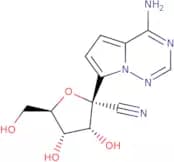
CAS:Nucleoside analog with antiviral activity against zoonotic feline infectious peritonitis virus (FIPV) and severe acute respiratory syndrome (SARS) virus from Coronaviridae family. The compound is a pro-drug and undergoes intracellular phosphorylation resulting in the active triphosphate metabolite. The triphosphorylated GS 441524 analog competes with natural nucleoside triphosphates and interferes with viral RNA synthesis. In previous studies it was tested in vitro as well as in experimental animals and showed good safety profile.Fórmula:C12H13N5O4Pureza:Min. 98 Area-%Forma y color:PowderPeso molecular:291.26 g/molApramycin sulfate
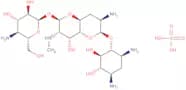
CAS:Apramycin sulfate is a semisynthetic antibiotic that inhibits the growth of Gram-negative bacteria. It is a sulfonamide and has been used in clinical isolates to treat bacterial infections. Apramycin sulfate inhibits the biosynthesis of folic acid, which is important for DNA synthesis and cell division. It also inhibits the production of RNA by binding to ribosomes and inhibiting protein synthesis. Apramycin has been shown to have anticancer properties as well, with studies showing that it can inhibit tumor growth in vitro and in vivo.Fórmula:C21H41N5O11·H2SO4Pureza:Min. 550 Usp U/MgForma y color:Brown Slightly Yellow Yellow PowderPeso molecular:637.66 g/molAmpicillin
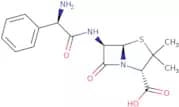
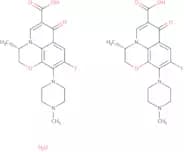
CAS:Antibiotic of penicillin class; inhibits bacterial cell wall biogenesisFórmula:C16H19N3O4SPureza:Min. 98%Forma y color:PowderPeso molecular:349.41 g/molLevofloxacin hemihydrate
CAS:Levofloxacin Hemihydrate is a fluoroquinolone antibiotic with a mode of action that inhibits bacterial DNA gyrase and topoisomerase IV. It is used for treating bacterial infections, similar to its anhydrous form.
Fórmula:C18H20FN3O4H2OPureza:Min. 98 Area-%Forma y color:PowderPeso molecular:370.38 g/molPrulifloxacin
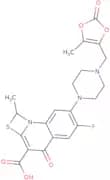
CAS:Prulifloxacin is a fluoroquinolone antibiotic with action on bacterial DNA gyrase and topoisomerase IV and is used for treating urinary tract infections and respiratory infections.Fórmula:C21H20FN3O6SPureza:Min. 95%Forma y color:PowderPeso molecular:461.46 g/molTenofovir diphosphate triethylamine(mixture of diastereomers)
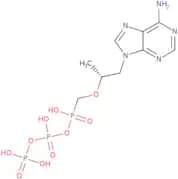
CAS:Tenofovir diphosphate triethylamine (mixture of diastereomers) is an antiviral compound, which is a synthetic chemical product derived from the parent compound, tenofovir. This formulation includes a mixture of diastereomers to enhance its solubility and bioavailability. The compound primarily functions as a nucleotide reverse transcriptase inhibitor (NRTI). It targets viral reverse transcriptase enzymes, inhibiting DNA synthesis and subsequent viral replication by causing premature chain termination.Fórmula:C9H16N5O10P3•(C6H15N)xPureza:Min. 95%STAADIUM™ PhosphoZide
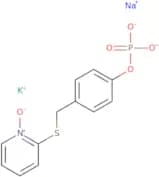
CAS:STAADIUMTM PhosphoZide is a targeted inhibitor of phosphatase-producing bacteria, which is activated by phosphatase itself. STAADIUMTM PhosphoZide targets specifically methicillin-resistant Staphylococcus aureus (MRSA) and its antibacterial activity is triggered by both the acid and alkaline phosphatases that the bacteria produce. STAADIUMTM PhosphoZide can be added as an enzyme-specific selective supplement to agar plates or as an enrichment agent to a broth culture. More details in the application notes document.Fórmula:C12H10KNNaO5PSForma y color:PowderPeso molecular:373.34 g/mol