Antimicrobianos
Subcategorías de "Antimicrobianos"
- Antibióticos(4.502 productos)
- Antifúngicos(939 productos)
- Antiparasitarios(807 productos)
- Antivirales(1.056 productos)
Se han encontrado 2643 productos de "Antimicrobianos"
Triclosan methyl-d3 ether
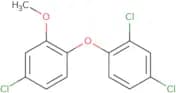
CAS:Triclosan methyl-d3 ether is a labeled compound, which is a derivative of triclosan, commonly sourced from synthetic chemical synthesis involving deuterium incorporation. It serves as a stable isotope-labeled analog, specifically created to aid in the study of triclosan's metabolic pathways. The incorporation of deuterium atoms allows for precise tracking within biological systems using analytical techniques such as mass spectrometry. This approach enables researchers to differentiate the labeled compound from its naturally occurring counterpart effectively.Fórmula:C13H9Cl3O2Pureza:Min. 95%Peso molecular:306.6 g/molBeauveriolide III
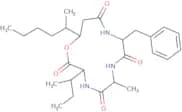
CAS:Beauveriolide III is a cyclic depsipeptide, which is a specialized class of natural products. It is derived from the fungal species Beauveria, known for producing various biologically active compounds. The mode of action of Beauveriolide III involves the inhibition of acyl-CoA:cholesterol acyltransferase (ACAT), an enzyme crucial for cholesterol esterification in cells. This inhibition can lead to reduced cholesterol accumulation, making it a molecule of interest in the study of cholesterol metabolism.Fórmula:C27H41N3O5Pureza:Min. 95%Peso molecular:487.6 g/molN-[[(5S)-3-(4-Methylsulfinylphenyl)-2-oxo-1,3-oxazolidin-5-yl]methyl]acetamide
CAS:N-[[(5S)-3-(4-Methylsulfinylphenyl)-2-oxo-1,3-oxazolidin-5-yl]methyl]acetamide is a synthetic compound, which is derived from the oxazolidinone class of molecules known for their antimicrobial properties. Its mechanism of action involves the inhibition of bacterial protein synthesis by binding to the 50S subunit of the bacterial ribosome, thereby preventing the formation of a functional 70S initiation complex. This effectively disrupts the growth and replication of susceptible bacterial strains.Fórmula:C13H16N2O4SPureza:Min. 95%Peso molecular:296.34 g/molDanofloxacin d3 (methyl d3)
CAS:Danofloxacin d3 (methyl d3) is a synthetic fluoroquinolone antibiotic, which is derived from the parent compound, danofloxacin, incorporating stable isotope labeling with deuterium. The presence of three deuterium atoms in the methyl group offers an isotopic variation that is utilized in precise quantitative studies. The mechanism of action of danofloxacin d3 involves the inhibition of bacterial DNA gyrase and topoisomerase IV, which are crucial enzymes for bacterial DNA replication, transcription, and repair.
Fórmula:C19H20FN3O3Pureza:Min. 95%Peso molecular:360.4 g/molVanoxonin
CAS:Please enquire for more information about Vanoxonin including the price, delivery time and more detailed product information at the technical inquiry form on this page
Fórmula:C18H25N3O9Pureza:Min. 95%Peso molecular:427.40 g/molMethiozolin
CAS:Methiozolin is an herbicide, which is a synthetic compound with a specific mode of action. It targets the cell division process, specifically inhibiting the synthesis of very-long-chain fatty acids in plants. This mode of action makes Methiozolin effective against problematic weed species such as annual bluegrass (Poa annua), which is known for its pervasive growth in turfgrass systems.
Fórmula:C17H17F2NO2SPureza:Min. 95%Peso molecular:337.4 g/molValidamycin D
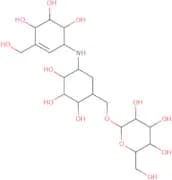
CAS:Validamycin D is an antifungal antibiotic produced by the fermentation of certain Streptomyces species. This compound acts by inhibiting the synthesis of trehalose, a crucial component in the cell structure and stress response of fungi. By disrupting trehalose production, Validamycin D effectively impairs the growth and viability of fungal cells, making it a potent agent in the management of fungal pathogens.
Fórmula:C20H35NO13Pureza:Min. 95%Peso molecular:497.5 g/molAsukamycin
CAS:Asukamycin is an antibiotic, which is a secondary metabolite derived from the bacterium *Streptomyces nodosus*. Its mode of action involves the inhibition of cell wall synthesis in susceptible bacteria by interfering with peptidoglycan polymerization, which is essential for maintaining bacterial cell integrity. Additionally, asukamycin exhibits the ability to interfere with the biosynthesis of important cellular components in certain pathogens, contributing to its antimicrobial efficacy.Fórmula:C31H34N2O7Pureza:Min. 95%Peso molecular:546.6 g/molChaetoglobosin A - From chaetomium globosum
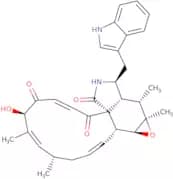
CAS:Chaetoglobosin A is a mycotoxin, which is a secondary metabolite produced by the fungus Chaetomium globosum. This compound exhibits its mode of action by disrupting the cytoskeletal elements within cells, primarily affecting actin polymerization. This interference leads to alterations in cell morphology and can induce apoptosis in certain cell lines.
Fórmula:C32H36N2O5Pureza:Min. 95%Peso molecular:528.64 g/molOfloxacin d3 hydrochloride
CAS:Ofloxacin d3 hydrochloride is a deuterated form of the quinolone antibiotic, which is a synthetic derivative designed for research purposes. It is sourced from the fluorinated carboxyquinolone class, where deuterium atoms replace certain hydrogen atoms to study metabolic pathways involving ofloxacin with minimal isotopic interference. Ofloxacin d3 inhibits bacterial DNA gyrase and topoisomerase IV, enzymes crucial for DNA replication, transcription, and repair. By stabilizing the transient cleavable complex with DNA, it prevents the ligation of DNA strands, leading to bacterial cell death. This compound is utilized primarily in laboratory settings for studying the pharmacokinetics and biodistribution of quinolones, as well as for elucidating resistance mechanisms in bacterial strains. Its stable isotopic composition makes it ideal for advanced analytical techniques such as mass spectrometry. Through these investigations, insights into drug metabolism, efficacy, and resistance can be gleaned, contributing to the broader understanding of quinolone antibiotic activity.Fórmula:C18H21ClFN3O4Pureza:Min. 95%Peso molecular:400.8 g/molPhthivazid
CAS:Phthivazid is an antibiotic, which is a synthetic derivative of isonicotinic acid hydrazide. It functions by inhibiting the synthesis of mycolic acids in the mycobacterium cell wall, which are essential components for the survival of the bacteria. This disruption in the cell wall synthesis results in bactericidal activity against Mycobacterium tuberculosis.Fórmula:C14H13N3O3Pureza:90% MinForma y color:PowderPeso molecular:271.27 g/molCefquinome
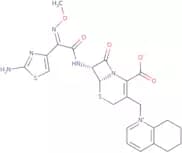
CAS:Cefquinome is a broad-spectrum antibiotic, which is a fourth-generation cephalosporin. It is derived from the β-lactam class of antibiotics and is specifically designed for veterinary applications. Its mode of action involves the inhibition of bacterial cell wall synthesis, leading to cell lysis and death. This action is facilitated through the binding of cefquinome to penicillin-binding proteins, which undermines the structural integrity of bacterial cell walls, proving effective against both Gram-positive and Gram-negative bacteria.
Fórmula:C23H24N6O5S2Pureza:Min. 95%Peso molecular:528.61 g/molseco erythromycin
CAS:Seco erythromycin is a derivative of the macrolide antibiotic erythromycin, which originates from the bacterium *Saccharopolyspora erythraea*. As a semi-synthetic compound, it retains the core lactone ring structure of erythromycin, but modifications in its chemical configuration confer distinct properties. Seco erythromycin operates by binding to the 50S subunit of the bacterial ribosome, inhibiting protein synthesis. This action effectively halts bacterial growth by preventing the translocation of peptides and thus impairs protein assembly.Fórmula:C37H69NO14Pureza:Min. 95%Peso molecular:751.94 g/molTrans-tetradecenyl acetate
CAS:Trans-tetradecenyl acetate is a synthetic pheromone, which is an analog of a naturally occurring insect sex pheromone. It is derived from synthetic organic chemistry processes that aim to replicate the molecular structure of pheromones produced by insects. The mode of action involves mimicking the natural pheromone signals used by female insects to attract males. By dispersing trans-tetradecenyl acetate into the environment, it disrupts the mating communication between the sexes, leading to a reduction in successful mating events and, consequently, a decrease in pest population over time.Fórmula:C16H30O2Pureza:Min. 95%Peso molecular:254.41 g/molN-Nitroso-N-phenylbenzylamine
CAS:N-Nitroso-N-phenylbenzylamine is a nitroso compound, which is synthesized through a chemical reaction involving nitrosation. It arises typically from the interaction of secondary amines and nitrosating agents. This compound functions as a potential mutagen due to its ability to form reactive intermediates that can interact with DNA. These intermediates can lead to modifications in the DNA structure, potentially causing mutations.Fórmula:C13H12N2OPureza:Min. 95%Peso molecular:212.25 g/molDuocarmycin sa
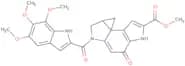
CAS:Duocarmycin SA is an antitumor antibiotic, which is derived from the natural products of Streptomyces bacteria. This compound exhibits its mode of action through the alkylation of DNA, specifically binding within the minor groove. The alkylation process preferentially targets adenine-thymine-rich regions, leading to irreversible DNA damage and subsequent inhibition of DNA replication. Such interaction results in the induction of apoptosis in rapidly dividing cells.
Fórmula:C25H23N3O7Pureza:Min. 95%Peso molecular:477.5 g/molClothianidin-urea
CAS:Clothianidin-urea is an insecticide, which is synthesized from chemical sources and belongs to the neonicotinoid class of compounds. Its mode of action involves binding to nicotinic acetylcholine receptors in the central nervous system of insects, disrupting normal nerve function and leading to paralysis and eventual death. This mode of action is selective to insects, offering a degree of safety to non-target species including humans and animals.Fórmula:C6H8ClN3OSPureza:Min. 95%Peso molecular:205.67 g/molDoxycycline hydrochloride hemiethanolate hemihydrate, Antibiotic for Culture Media Use Only
CAS:Doxycycline is an antibiotic that inhibits bacterial growth by inhibiting protein synthesis, respiratory chain, DNA gyrase, DNA topoisomerase IV. Doxycycline inhibits papaverine by blocking the expression of both cytochrome P450 and epoxide hydrolase. Doxycycline is commonly found in studies for bacterial infections, drug therapy, histopathological studies, cell culture and chemometric analysis.
Fórmula:C22H24N2O8·HClH2OC2H6OPureza:Min. 97.0 Area-%Peso molecular:512.90 g/molQuinocarcin
CAS:Quinocarcin is an antitumor antibiotic, which is a potent chemical compound derived from the bacterium Streptomyces. This compound exhibits its mode of action through interaction with DNA, where it induces DNA cross-linking and inhibits DNA replication, ultimately leading to cell death. The mechanism makes it particularly effective as a cytotoxic agent against rapidly dividing cancer cells.
Fórmula:C18H22N2O4Pureza:Min. 95%Peso molecular:330.4 g/molFinafloxacin hydrochloride
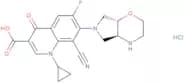
CAS:Finafloxacin hydrochloride is an antibiotic, which is a synthetic compound derived from the fluoroquinolone class. Its source is a chemically engineered structure, specifically designed to combat bacterial infections effectively. The mode of action of Finafloxacin hydrochloride involves the inhibition of bacterial DNA gyrase and topoisomerase IV, essential enzymes responsible for DNA replication, transcription, and repair in bacteria. By inhibiting these enzymes, it disrupts bacterial DNA processes, ultimately leading to cell death and resolution of the infection.Fórmula:C20H20ClFN4O4Pureza:Min. 95%Peso molecular:434.85 g/mol

![N-[[(5S)-3-(4-Methylsulfinylphenyl)-2-oxo-1,3-oxazolidin-5-yl]methyl]acetamide](/_next/image/?url=https%3A%2Fstatic.cymitquimica.com%2Fproducts%2F3D%2Fthumb-webp%2FWDA80041.webp&w=3840&q=75)