Antiparasitarios
Los antiparasitarios son compuestos diseñados para tratar y prevenir infecciones parasitarias mediante la inhibición del crecimiento y la supervivencia de los parásitos. Esta categoría incluye una variedad de agentes antiparasitarios destinados exclusivamente para uso en laboratorio y no para el consumo humano. Estos productos son esenciales para fines de investigación, permitiendo a los científicos estudiar los ciclos de vida de los parásitos, los mecanismos de acción y el desarrollo de resistencia. El uso de antiparasitarios en entornos de laboratorio ayuda en el descubrimiento y la optimización de nuevos tratamientos para enfermedades parasitarias, contribuyendo a los avances en parasitología médica y veterinaria. Los investigadores dependen de estos productos para mejorar su comprensión de las infecciones parasitarias y desarrollar terapias más efectivas.
Se han encontrado 704 productos de "Antiparasitarios"
Ordenar por
Pureza (%)
0
100
|
0
|
50
|
90
|
95
|
100
Urethane
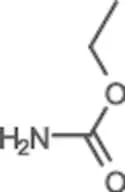
CAS:<p>Urethane (Ethylurethane) was an antineoplastic agent .Now is used for other medicinal purposes.</p>Fórmula:C3H7NO2Pureza:99.01%Forma y color:SoildPeso molecular:89.09AChE-IN-66
<p>Nematicidal Agent 1 is an effective nematicide that binds to the pocket of acetylcholinesterase (AChE).</p>Forma y color:Odour SolidBitoscanate
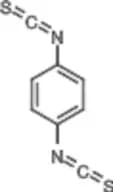
CAS:<p>Bitoscanate (PDITC) is used in the treatment of hookworms.</p>Fórmula:C8H4N2S2Pureza:98.32%Forma y color:Colorless Needles Bitoscanate Is An Odorless Colorless Crystals Melting Point 132°CPeso molecular:192.26Mepartricin
CAS:<p>Mepartricin, a polyene macrolide, exhibits both antifungal and antiprotozoal activities and is extensively utilized in studies related to benign prostatic hyperplasia.</p>Forma y color:SolidSchizophyllan
CAS:<p>Schizophyllan, a member of the β-glucan family, is an extracellular polysaccharide known for its antitumor, antibacterial, and antiparasitic activities.</p>Forma y color:SolidIle-AMS TFA
<p>Ile-AMS TFA exhibits activity against P. falciparum, with an ABSIC50 value of 1.19 nM.</p>Fórmula:C18H27F3N8O8SForma y color:SolidPeso molecular:572.52JC-229
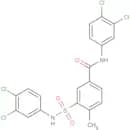
CAS:<p>JC-229 is a potent and selective TbRPA1 inhibitor that can inhibit RPA1 in Trypanosoma brucei. JC-229 can be used to study human African Trypanosomiasis (HAT).</p>Fórmula:C20H14Cl4N2O3SPureza:97.14%Forma y color:SolidPeso molecular:504.21Insecticidal agent 24
<p>Insecticidal agent 24 is an orally active pyridinyl spiroindoline lead compound. It demonstrates antimalarial activity with Pf NF54IC50 of 0.08 μM. Insecticidal agent 24 also inhibits hERG activity with an IC50 of 6.5 μM. In a humanized immunodeficient NSG mouse model of malaria infection, it effectively reduces parasitemia.</p>Fórmula:C26H29N3O2Forma y color:SolidPeso molecular:415.22598pCDPK1/TgCDPK1-IN-3
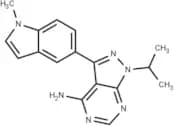
CAS:<p>CpCDPK1/TgCDPK1-IN-3 inhibits Cp/TgCDPK1; IC50: 0.003/0.0036 µM. It's used to research Toxoplasma, Cryptosporidium diseases.</p>Fórmula:C17H18N6Pureza:99.63%Forma y color:SoildPeso molecular:306.36Gypsogenic acid
CAS:<p>Gypsogenic acid, a triterpenic acid isolated from Miconia stenostachya, exhibits antibacterial and antitrypanosomal activities. This compound demonstrates minimum inhibitory concentrations (MICs) ranging from 50-200 μg/mL against oral bacterial pathogens including Enterococcus faecalis, Streptococcus salivarius, Streptococcus sanguinis, Streptococcus spp., and Streptococcus sobrinus. Additionally, gypsogenic acid can induce the lysis of Trypanosoma cruzi in isolated mouse blood, with an IC50 value of 56.6 μM.</p>Fórmula:C30H46O5Forma y color:SolidPeso molecular:486.68Antitrypanosomal agent 13
<p>Compound 4b (antitrypanosomal agent 13) is a potent antitrypanosomal with notable trypanocidal and cytotoxic activities, exhibiting GI50 values of 0.18 μM</p>Fórmula:C47H81N2NaO10SPureza:98%Forma y color:SolidPeso molecular:889.21Azlocillin sodium salt
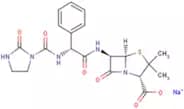
CAS:<p>Azlocillin sodium, an acylampicillin, is a broad-spectrum antibiotics</p>Fórmula:C20H22N5NaO6SPureza:97.63% - 98.302%Forma y color:SolidPeso molecular:483.47Notrilobolide
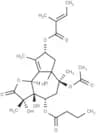
CAS:<p>Notrilobolide, an alkaloid with insecticidal properties, is isolated from sweet potatoes and impedes larval development in pests such as Tribolium castaneum.</p>Fórmula:C26H36O10Pureza:98%Forma y color:SolidPeso molecular:508.561,2-Dimethyl-1H-benzo[d]imidazole
CAS:<p>1,2-Dimethyl-1H-benzo[d]imidazole has antibacterial activity against Entamoeba histolytica and Giardia lamblia,</p>Fórmula:C9H10N2Pureza:99.86%Forma y color:SolidPeso molecular:146.19Antimalarial agent 13
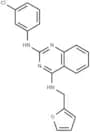
CAS:<p>Antimalarial agent 13 (N2-(3-chlorophenyl)-N4-(furan-2-ylmethyl)quinazoline-2,4-diamine) is a potent antimalarial agent.</p>Fórmula:C19H15ClN4OPureza:99.15%Forma y color:SolidPeso molecular:350.8N-Methyl-1,3-benzoxazol-2-amine
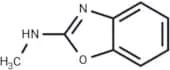
CAS:<p>N-Methyl-1,3-benzoxazol-2-amine, with CAS No. 19776-98-8, is a fragment molecule that serves as an important scaffold for molecular linking, expansion, and modification. N-Methyl-1,3-benzoxazol-2-amine provides a structural basis and research tool for the design and screening of novel drug candidates, and is commonly used in drug discovery, drug synthesis, and related research.</p>Fórmula:C8H8N2OForma y color:SoildPeso molecular:148.1616Febrifugine dihydrochloride
CAS:<p>Febrifugine dihydrochloride (Propyldazine hydrochloride) is a biochemical with therapeutic activity regarding malaria, cancer, fibrosis and inflammatory</p>Fórmula:C16H21Cl2N3O3Pureza:98.27% - 99.85%Forma y color:SolidPeso molecular:374.26DCN-83
<p>DCN-83, a potent anti-leishmanial compound, exhibits its highest efficacy against the amastigote form, achieving an IC50 value of 0.71 μM.</p>Fórmula:C20H18BrN3SPureza:98%Forma y color:SolidPeso molecular:412.35NPD-2975
<p>NPD-2975 (compound 30) is an orally active antitrypanosomal agent effective against Human African Trypanosomiasis (HAT), demonstrating acceptable metabolic</p>Fórmula:C14H13FN4OPureza:98%Forma y color:SolidPeso molecular:272.28Antileishmanial agent-33
<p>Antileishmanial agent-33 (4e) is a hybrid compound of grandisin and machilin G, demonstrating moderate activity against promastigotes with an IC50 of 38.1 μM. In studies of cutaneous leishmaniasis (CL), Antileishmanial agent-33 (4e) has shown potential as an antileishmanial agent.</p>Forma y color:Odour Solid


![1,2-Dimethyl-1H-benzo[d]imidazole](/_next/image/?url=https%3A%2Fstatic.cymitquimica.com%2Fproducts%2FTM%2Fthumb-webp%2FTN9551.webp&w=3840&q=75)