Antiparasitarios
Los antiparasitarios son compuestos diseñados para tratar y prevenir infecciones parasitarias mediante la inhibición del crecimiento y la supervivencia de los parásitos. Esta categoría incluye una variedad de agentes antiparasitarios destinados exclusivamente para uso en laboratorio y no para el consumo humano. Estos productos son esenciales para fines de investigación, permitiendo a los científicos estudiar los ciclos de vida de los parásitos, los mecanismos de acción y el desarrollo de resistencia. El uso de antiparasitarios en entornos de laboratorio ayuda en el descubrimiento y la optimización de nuevos tratamientos para enfermedades parasitarias, contribuyendo a los avances en parasitología médica y veterinaria. Los investigadores dependen de estos productos para mejorar su comprensión de las infecciones parasitarias y desarrollar terapias más efectivas.
Se han encontrado 704 productos de "Antiparasitarios"
Ordenar por
Pureza (%)
0
100
|
0
|
50
|
90
|
95
|
100
Ivermectin
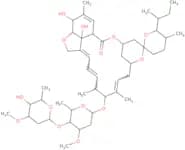
CAS:<p>Naturally produced by the soil bacterium Streptomyces avermitili, it is clinically used in the treatment of parasitosis in both humans and animals. Ivermectin is commercially available as a mixture of 80% 22, 23-dihydroavermectin B1a and 20% 22, 23-dihydroavermectin B1b. In 2020, Ivermectin indicated that it was a good antiviral agent in the treatment of SARS-CoV-2 and a new mechanism of action has been suggested. Ivermectin would act on importin α/β heterodimer and affect nuclear transport and the translocation of viral proteins.</p>Fórmula:C48H74O14Pureza:85%MinPeso molecular:875.1 g/molAmoscanate
CAS:<p>Amoscanate is an antischistosomal agent, which is a synthetic compound with a broad spectrum of activity against parasitic infections. Its mode of action involves the disruption of parasite metabolism and structure, ultimately leading to the elimination of schistosomes. Schistosomes are trematode worms responsible for schistosomiasis, a significant parasitic disease affecting millions of people worldwide.</p>Fórmula:C13H9N3O2SPureza:Min. 95%Peso molecular:271.3 g/mol4′-O-De(2,6-dideoxy-3-O-methyl-α-L-arabino-hexopyranosyl)-5-O-demethylavermectin A1a
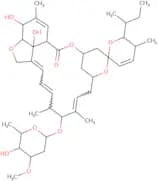
CAS:<p>4′-O-De(2,6-dideoxy-3-O-methyl-α-L-arabino-hexopyranosyl)-5-O-demethylavermectin A1a is a semi-synthetic derivative of avermectin, which is a naturally occurring compound isolated from the fermentation broth of the soil bacterium *Streptomyces avermitilis*. This compound exhibits potent antiparasitic activity by targeting the glutamate-gated chloride channels in the nervous systems of parasitic organisms. By binding and activating these channels, it increases the permeability of the cell membrane to chloride ions, resulting in paralysis and death of the parasite.</p>Fórmula:C41H60O11Pureza:Min. 95%Peso molecular:728.91 g/molICA
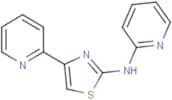
CAS:ICA (N-[4-(2-Pyridinyl)-2-thiazolyl]-2-pyridinamine) is a SK channel inhibitor and exhibits antileishmanial activity (IC50: 2.1 µM).Fórmula:C13H10N4SPureza:99.68%Forma y color:SolidPeso molecular:254.31Piperaquine
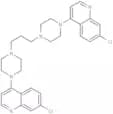
CAS:<p>Piperaquine is a bisquinoline antimalarial compound and a companion compound to artemisinin.</p>Fórmula:C29H32Cl2N6Pureza:98%Forma y color:SolidPeso molecular:535.51BPH-715
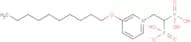
CAS:<p>BPH-715 inhibits the liver-stage growth of P. falciparum with an IC50 of 10 μM for P. falciparum exoerythrocytic forms in HepG2 cells.</p>Fórmula:C17H31NO7P2Pureza:98.91%Forma y color:SolidPeso molecular:423.38Quinfamide
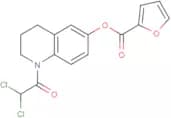
CAS:<p>Quinfamide is a compound with the potential to treat tropical parasitic infections such as Amoebiasis and Helminthiasis.</p>Fórmula:C16H13Cl2NO4Pureza:99.92%Forma y color:SolidPeso molecular:354.18Halofuginone hydrobromide
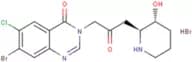
CAS:<p>Halofuginone specifically inhibits collagen type I and MMP-2 gene expression, which may result in the suppression of angiogenesis and tumor cell growth.</p>Fórmula:C16H17BrClN3O3·HBrPureza:97.01% - 99.73%Forma y color:SolidPeso molecular:495.59Antimalarial agent 26
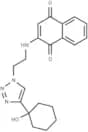
CAS:<p>Antimalarial agent 26, a derivative of 1,4-naphthoquinones, demonstrates antimalarial properties through oral administration.</p>Fórmula:C20H22N4O3Pureza:98%Forma y color:SolidPeso molecular:366.41Antiparasitic agent-18
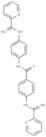
CAS:<p>Antiparasitic agent-18 (compound 3a) exhibits potent and selective antiprotozoal activity, demonstrating effective inhibition of T.</p>Fórmula:C25H21N7OPureza:98%Forma y color:SolidPeso molecular:435.48Antimalarial agent 19
CAS:<p>Compound 6e, an antimalarial, targets P. falciparum K1 (EC50 0.3 µM) and P. berghei (EC50 15.3 µM); has high solubility and stability.</p>Fórmula:C22H33Cl2N5SPureza:98%Forma y color:SolidPeso molecular:470.5Antimalarial agent 24
CAS:<p>Compound 24 (Compound 7), an in vitro antimalarial agent, demonstrates inhibitory activity against the Plasmodium falciparum W2 strain with an IC50 of 0.81 μM</p>Fórmula:C20H16N4O2Pureza:98%Forma y color:SolidPeso molecular:344.37Antimalarial agent 29
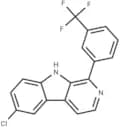
CAS:<p>Compound 29 (also known as Compound 16) is an antimalarial agent that demonstrates inhibition of the P.</p>Fórmula:C18H10ClF3N2Pureza:98%Forma y color:SolidPeso molecular:346.73Antileishmanial agent-14
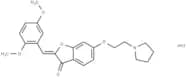
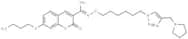
CAS:<p>Antileishmanial agent-14, a sulfuretin analog, exhibits potential activity against Leishmania donovani promastigotes (IC 50 = 4.1 μM) and inhibits infection by</p>Fórmula:C23H26ClNO5Pureza:98%Forma y color:SolidPeso molecular:431.91Insecticidal agent 2
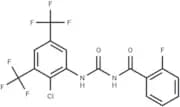
CAS:<p>Insecticidal agent 2 (example 2) is an effective pesticide that significantly inhibits pest growth [1].</p>Fórmula:C16H8ClF7N2O2Pureza:98%Forma y color:SolidPeso molecular:428.69Antileishmanial agent-15
CAS:<p>Antileishmanial agent-15 (compound 13c) exhibits potent activity against L.</p>Fórmula:C28H39N5O4Pureza:98%Forma y color:SolidPeso molecular:509.64Epsiprantel
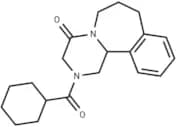
CAS:<p>Epsiprantel is an orally active antiparasitic drug that inhibits various tapeworms, including Echinococcus granulosus (granular echinococcus), in dogs.</p>Fórmula:C20H26N2O2Pureza:98.09%Forma y color:SolidPeso molecular:326.43CRK12-IN-2
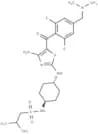
CAS:<p>CRK12-IN-2, a potent CRK12 inhibitor, has EC50 of 3.2 nM for T. congolense and 0.08 nM for T. vivax; treats trypanosomiasis in animals.</p>Fórmula:C23H33F2N5O3S2Pureza:99.26% - 99.70%Forma y color:SolidPeso molecular:529.67Symetine
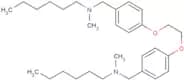
CAS:Symetine(L 16726) is a small molecule compound with antiparasitic activity that can be used to study amoebic liver abscesses in guinea pigs.Fórmula:C30H48N2O2Pureza:99.79%Forma y color:SolidPeso molecular:468.71(Rac)-ACT-451840
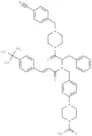
CAS:<p>(Rac)-ACT-451840 is an isomer of ACT-451840 exhibiting antimalarial activity against Plasmodium falciparum NF54.</p>Fórmula:C47H54N6O3Pureza:99.25%Forma y color:SolidPeso molecular:750.97