Ácidos grasos
Los ácidos grasos son ácidos carboxílicos con largas cadenas de hidrocarburos, que pueden ser saturados o insaturados. Son componentes esenciales de los lípidos, sirviendo como building blocksclave para lípidos complejos, fuentes de energía y moléculas de señalización. Los ácidos grasos están involucrados en varios procesos biológicos, incluyendo el metabolismo, la estructura de las membranas celulares y la inflamación. En CymitQuimica, ofrecemos una amplia gama de ácidos grasos de alta calidad para apoyar su investigación en bioquímica de lípidos, nutrición y campos relacionados.
Subcategorías de "Ácidos grasos"
- Acilgliceroles / Glicéridos(43 productos)
- Eicosanoides(6 productos)
- Ésteres de ácidos grasos(946 productos)
- Ácidos grasos halogenados(32 productos)
Se han encontrado 2447 productos de "Ácidos grasos"
Ordenar por
Pureza (%)
0
100
|
0
|
50
|
90
|
95
|
100
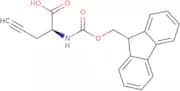
Fmoc-L-propargylglycine
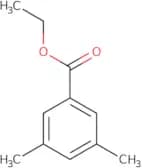
CAS:<p>Fmoc-L-propargylglycine is a cyclic peptide that is synthesized by chemical ligation. It has antiviral, anti-tumor, and anti-inflammatory activities. Fmoc-L-propargylglycine inhibits the growth of cancer cells in vitro. The mechanism of action is not fully understood, but it may involve the inhibition of cellular proliferation and the induction of apoptosis. This compound also inhibits epidermal growth factor (EGF) induced cell proliferation in caco-2 cells.</p>Fórmula:C20H17NO4Pureza:Min. 98 Area-%Forma y color:White PowderPeso molecular:335.35 g/mol3,5-Dimethylbenzoic acid ethyl ester
CAS:<p>3,5-Dimethylbenzoic acid ethyl ester is a quinoline derivative that can be synthesised from the reaction of isobutyraldehyde with benzoic acid. This compound yields terminal alkynes and polynuclear compounds in reactions with metals. It can also be prepared by cross-coupling reactions of substituted benzoates with aminobenzoates as ligands. 3,5-Dimethylbenzoic acid ethyl ester is used in preparative chemistry to synthesise other organic compounds.</p>Fórmula:C11H14O2Pureza:Min. 95%Forma y color:Clear LiquidPeso molecular:178.23 g/molL-Propargylglycine
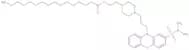
CAS:L-Propargylglycine is a novel, synthetic compound that has been shown to inhibit bacterial growth. It is a strong inhibitor of the polymerase chain reaction (PCR) and nuclear DNA replication. L-Propargylglycine has also been shown to inhibit mitochondrial membrane potential and human serum which may lead to its anti-inflammatory properties. L-Propargylglycine has antioxidative properties, antimicrobial peptide activity, and ATP channel inhibition. This drug also has a number of other pharmacological effects including modulation of intestinal inflammation in models of inflammatory bowel disease and improvement of atherosclerotic lesions in animal models.Fórmula:C5H7NO2Pureza:(%) Min. 98%Forma y color:PowderPeso molecular:113.11 g/molPipotiazine palmitate
CAS:Producto controladoPipotiazine palmitate is a long-acting antipsychotic drug that belongs to the class of phenothiazine derivatives. It is used for the treatment of schizophrenia and other psychotic disorders. Pipotiazine palmitate has been shown to be effective in treating chronic schizophrenia with minimal side effects. This drug binds to dopamine D2 receptors, which leads to a decrease in dopaminergic activity in the brain and improves symptoms of psychosis. Pipotiazine palmitate is administered orally in two doses per day. A major limitation of this medication is its low bioavailability due to its high lipophilicity, which may be due to its undecylenate ester form.Fórmula:C40H63N3O4S2Pureza:Min. 95 Area-%Forma y color:PowderPeso molecular:714.08 g/molHexadecanamide
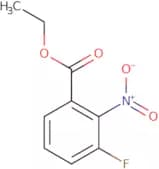
CAS:Hexadecanamide is a reactive amide that has an optimum concentration of 1.5-2.0 M in water and a pH range of 3.0-8.0. Hexadecanamide is oxidized by an oxidation catalyst to form hexadecane, which can be analyzed by gas chromatography or high performance liquid chromatography. The oxidation reaction can be monitored under constant pressure conditions using electrochemical impedance spectroscopy. Hexadecanamide reacts with hydroxyl groups and fatty acids to form hexadecanoic acid, which can be analyzed using gas chromatography or high performance liquid chromatography. Hexadecanamide also reacts with viral life to form hexadecanoic acid, which can be analyzed using gas chromatography or high performance liquid chromatography. Hexadecanamide has been shown to have anti-inflammatory properties, which may be due to its ability to inhibit the production of pro-inflammatory cytokines such as histamine and leukotrienesFórmula:C16H33NOPureza:Min. 95%Forma y color:PowderPeso molecular:255.44 g/mol3-Fluoro-2-nitrobenzoic acid ethyl ester
CAS:3-Fluoro-2-nitrobenzoic acid ethyl ester is a fine chemical that is useful as a versatile building block in the synthesis of complex compounds. It can be used as an intermediate in the preparation of research chemicals and has been shown to react with amines to form nitrosoamines, which are useful reaction components. 3-Fluoro-2-nitrobenzoic acid ethyl ester has CAS number 163077-89-2 and is available at high quality.Fórmula:C9H8FNO4Pureza:Min. 95%Forma y color:PowderPeso molecular:213.16 g/molFmoc-Cys((S)-2,3-di(palmitoyloxy)-propyl)-OH
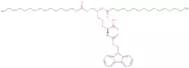
CAS:Fmoc-Cys((S)-2,3-di(palmitoyloxy)-propyl)-OH is a reagent used in the synthesis of complex compounds. It is also a useful scaffold for the synthesis of speciality chemicals and versatile building blocks. This compound is an intermediate that can be used in the preparation of fine chemicals and pharmaceuticals. Fmoc-Cys((S)-2,3-di(palmitoyloxy)-propyl)-OH has a CAS number of 139573-78-7 and can be purchased as a high quality chemical.Fórmula:C53H83NO8SPureza:Min. 95 Area-%Forma y color:Slightly Yellow PowderPeso molecular:894.29 g/mol2-Bromo-6-fluorobenzoic acid ethyl ester
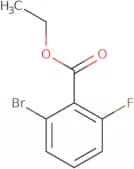
CAS:2-Bromo-6-fluorobenzoic acid ethyl ester is a chemical that reacts with other chemicals to form new substances. It is a useful scaffold for complex compounds and can be used as a building block for fine chemicals, pharmaceuticals, agrochemicals, and other organic compounds. 2-Bromo-6-fluorobenzoic acid ethyl ester is also a versatile building block or intermediate in the synthesis of many different substances.Fórmula:C9H8BrFO2Pureza:Min. 90%Forma y color:PowderPeso molecular:247.06 g/mol3-Chloro-4-methoxybenzoic acid ethyl ester
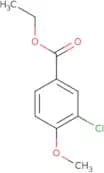
CAS:<p>3-Chloro-4-methoxybenzoic acid ethyl ester is a chemical compound that is used as a reactant in organic synthesis. It has shown high quality and can be used for research. 3-Chloro-4-methoxybenzoic acid ethyl ester can be used as a scaffold to make fine chemicals, pharmaceuticals, and other products. It has been shown to be useful in the synthesis of many complex compounds and as an intermediate or building block for chemical reactions.</p>Fórmula:C10H11ClO3Pureza:Min. 95%Forma y color:PowderPeso molecular:214.65 g/mol2-Acetyl-3-oxo-butyric acid ethyl ester - 90%
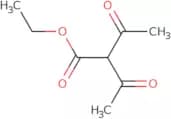
CAS:2-Acetyl-3-oxo-butyric acid ethyl ester (2ABEE) is a chemokine receptor antagonist that binds to the CCR5 receptor. It is a small molecule drug candidate with potential therapeutic value for HIV and other diseases. 2ABEE has been shown to be active against human immunodeficiency virus type 1 (HIV-1) in cell culture and animal models, as well as against influenza virus in mice. This compound also inhibits the production of chemokines, which are inflammatory proteins that recruit immune cells from the blood stream to the site of infection. In addition, 2ABEE is not toxic to healthy human cells, indicating that it may have fewer side effects than other anti-HIV drugs.Fórmula:C8H12O4Pureza:Min. 95%Forma y color:Clear LiquidPeso molecular:172.18 g/mol2-Chloro-5-hydroxybenzoic acid ethyl ester
CAS:<p>2-Chloro-5-hydroxybenzoic acid ethyl ester is synthesized by the substitution of anthranilic acid with an aryl ring. The substituents on the aryl ring are chloro and hydroxy, which are attached to carbon atoms. 2-Chloro-5-hydroxybenzoic acid ethyl ester can be metabolized into a number of different metabolites. For example, it can be converted into acid metabolites that have substituents on the benzene ring such as nitro or nitroso groups. These metabolites are then excreted in urine or bile.</p>Fórmula:C9H9ClO3Pureza:Min. 95%Forma y color:Off-White To Yellow To Brown SolidPeso molecular:200.62 g/mol4-Bromo-2,6-pyridinedicarboxylic acid ethyl ester
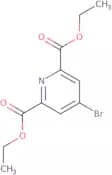
CAS:<p>4-Bromo-2,6-pyridinedicarboxylic acid ethyl ester is a luminescent compound that emits light in the visible region of the spectrum. It can be used as a ligand for polymerized monolayers or as a bifunctional covalent coupling agent. The carboxylate group on 4-Bromo-2,6-pyridinedicarboxylic acid ethyl ester interacts with lanthanide metal ions to produce luminescence. This chemical also has low frequency emission and can be used for supramolecular interactions.</p>Fórmula:C11H12BrNO4Pureza:Min. 95%Peso molecular:302.12 g/mol8-Chloro-6-oxo-octanoic acid ethyl ester
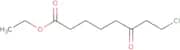
CAS:<p>8-Chloro-6-oxo-octanoic acid ethyl ester is a chiral, thermostable and oxidizing agent that is used as an intermediate in organic synthesis. It is used to produce 8-chloro-6-oxo-octanoic acid ethyl ester, a reactive carbonyl reagent that can be used in the synthesis of amines and amides. This compound has been shown to be effective against wild type strains of E. coli as well as recombinant strains of E. coli. It also has been found to have fungicidal activity against Candida parapsilosis and Paracoccidioides brasiliensis at concentrations of 0.1 mg/mL or less.</p>Fórmula:C10H17ClO3Pureza:Min. 95%Forma y color:PowderPeso molecular:220.69 g/mol2-Bromo-3-fluorobenzoic acid ethyl ester
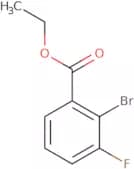
CAS:2-Bromo-3-fluorobenzoic acid ethyl ester is a versatile building block that can be used in the preparation of many different chemical compounds. It is a high quality chemical with a CAS number 1131040-49-7. 2-Bromo-3-fluorobenzoic acid ethyl ester is useful in the synthesis of complex compounds, and has been shown to be an effective reagent. This chemical has also been used as a reaction component and scaffold in research chemicals.Fórmula:C9H8BrFO2Pureza:Min. 95%Forma y color:PowderPeso molecular:247.06 g/mol2,6-Dimethylbenzoic acid ethyl ester
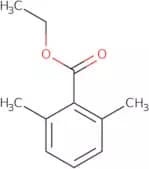
CAS:<p>2,6-Dimethylbenzoic acid ethyl ester (DBE) is an organic compound that is used as a starting material for the synthesis of other chemicals. It is produced by reacting chlorobenzene with magnesium in the presence of a suitable catalyst such as copper(II) chloride. The reaction can be carried out in bulk or in liquid phase, and yields are optimized by using activated carbon as a support. DBE is one of the most commonly used dialkyl benzoates for chemical syntheses due to its high reactivity. DBE has a particle size of about 10 micrometres and a bulk density close to 1 g/cm3.</p>Fórmula:C11H14O2Pureza:Min. 95%Forma y color:PowderPeso molecular:178.23 g/molPalmitoyl-glycine
CAS:Palmitoyl-glycine is a fatty acid amide. It is an analog of the naturally occurring amino acid glycine that has been modified by adding a palmitoyl group to the side chain. Palmitoyl-glycine is enzymatically inactivated by bacterial enzymes and cationic surfactants and can be used as a skin cell model system for basic structure and physiological effects. Palmitoyl-glycine has been shown to have skin cell protective effects against oxidative stress, which may be due to its ability to form hydrogen bonds with the acyl chains of lipids.Fórmula:C18H35NO3Pureza:Min. 95%Forma y color:White PowderPeso molecular:313.48 g/mol1,2-Dipalmitoyl-sn-glycero-3-phosphoethanolamine
CAS:<p>1,2-Dipalmitoyl-sn-glycero-3-phosphoethanolamine is a phospholipid that plays an important role in many cellular processes. It is a major component of the lipid bilayer that surrounds cells and provides stability to the membrane. 1,2-Dipalmitoyl-sn-glycero-3-phosphoethanolamine can form hydrogen bonding interactions with other molecules in the cytoplasm. The redox potential of this compound is also high enough to allow it to participate in oxidation reactions. This phospholipid also has a phase transition temperature at which it changes from a liquid state to a solid state at room temperature. 1,2-Dipalmitoyl-sn-glycero-3-phosphoethanolamine can be used as a reaction mechanism for synthesizing glycosylated proteins or lipids. In vitro assays have been performed using this compound as</p>Fórmula:C37H74NO8PPeso molecular:691.96 g/molDL-alpha-Hydroxypalmitic acid
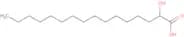
CAS:<p>Palmitic acid is a fatty acid that is found in animal and vegetable fats. It is also an important component of the cell membrane. Palmitic acid has been shown to inhibit the growth of bacteria by interfering with the synthesis of cell membranes, which are largely composed of lipids. Palmitic acid has been shown to be active against Gram-positive bacteria, including Bacillus subtilis and Staphylococcus epidermidis, as well as Gram-negative bacteria such as Salmonella enterica Serovar Typhi and Escherichia coli O157:H7. Palmitic acid can be used to produce monolayers for use in magnetic resonance spectroscopy. These monolayers have been shown to have an effect on the rate at which glucose is transported across the surface of the membrane. Palmitic acid also inhibits glucosylceramide production in ganoderma lucidum, a type of fungus that causes plant diseases, by blocking</p>Fórmula:C16H32O3Pureza:Min. 98 Area-%Forma y color:PowderPeso molecular:272.42 g/mol3-Bromo-4-methoxyphenylacetic acid ethyl ester
CAS:3-Bromo-4-methoxyphenylacetic acid ethyl ester is a versatile building block that can be used to synthesize a variety of compounds. It is also a useful intermediate for research chemicals and pharmaceuticals. 3-Bromo-4-methoxyphenylacetic acid ethyl ester is a fine chemical with high quality and can be used as a reagent or speciality chemical. As a reaction component, this product makes an excellent scaffold for complex compounds.Fórmula:C11H13BrO3Pureza:Min. 95%Forma y color:Clear LiquidPeso molecular:273.12 g/mol2-Amino-5-iodobenzoic acid ethyl ester
CAS:<p>2-Amino-5-iodobenzoic acid ethyl ester is a chemical reagent that is used to prepare 2-chloro-5-iodobenzoic acid. It can be prepared by the hydrolysis of 2,4,6-trinitrobenzene with an aqueous solution of sodium hydroxide. The iodination reaction proceeds in two steps: (1) chlorination of methyl anthranilate with chlorine and (2) addition of the resultant product to 2,4,6-trinitrobenzene. In the first step, methyl anthranilate reacts with chlorine to form 2-chloro-5-iodobenzoic acid ethyl ester and hydrogen chloride gas. In the second step, this product reacts with 2,4,6-trinitrobenzene to form 2-amino 5 -iodobenzoic acid ethyl ester and nitrogen gas</p>Fórmula:C9H10INO2Pureza:Min. 95%Forma y color:PowderPeso molecular:291.09 g/mol