Terpenoides
Los terpenoides, también conocidos como isoprenoides, son la clase más grande de compuestos orgánicos naturales, derivados de unidades de isopreno de cinco carbonos. Se encuentran en una variedad de plantas y son conocidos por sus propiedades aromáticas, así como por su papel en la defensa y señalización de las plantas. Los terpenoides han sido ampliamente estudiados por sus efectos terapéuticos, incluidas sus propiedades antiinflamatorias, antimicrobianas y anticancerígenas. Se utilizan en las industrias farmacéutica, cosmética y alimentaria por sus beneficios para la salud y sus cualidades aromáticas. En CymitQuimica, encontrarás una amplia selección de terpenoides, esenciales para la investigación en biología vegetal, farmacología y síntesis de productos naturales.
Subcategorías de "Terpenoides"
- Diterpenos (C₂₀)(671 productos)
- Hemiterpenos (C₅)(21 productos)
- Monoterpenos (C₁₀)(709 productos)
- Sesquiterpenos (C₂₅)(452 productos)
- Tetraterpenos (C₄₀)(63 productos)
- Triterpenos (C₃₀)(1.130 productos)
Se han encontrado 1423 productos de "Terpenoides"
Ordenar por
Pureza (%)
0
100
|
0
|
50
|
90
|
95
|
100
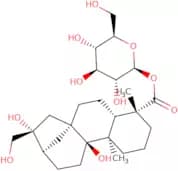
Cofaryloside
CAS:Please enquire for more information about Cofaryloside including the price, delivery time and more detailed product information at the technical inquiry form on this pageFórmula:C26H42O10Pureza:Min. 95%Peso molecular:514.61 g/molDeoxygedunin
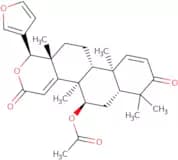
CAS:<p>Deoxygedunin is a natural limonoid, which is a type of chemical compound often derived from plant sources, particularly in the Meliaceae family. This compound is primarily isolated from the seeds of the Indian neem tree (Azadirachta indica) and the African mahogany tree (Khaya senegalensis). It exhibits its biological effects through activation of the Nrf2 pathway, an essential cellular defense mechanism against oxidative stress. By promoting the expression of antioxidant proteins, deoxygedunin enhances cellular resilience to oxidative damage.</p>Fórmula:C28H34O6Pureza:Min. 95%Peso molecular:466.57 g/mol10-epi-Elemol
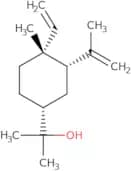
CAS:<p>10-epi-Elemol is a sesquiterpene alcohol, which is derived from natural plant sources, primarily obtained through the essential oils of particular species. Its molecular structure includes a complex arrangement of carbon rings and an alcohol group, characterizing it as a prominent component among sesquiterpenes.</p>Fórmula:C15H26OPureza:Min. 95%Peso molecular:222.37 g/molDehydrocostus lactone
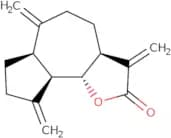
CAS:Dehydrocostus lactone is a sesquiterpene lactone, which is a natural compound extracted from plants, notably from the roots of Saussurea lappa, a plant known for its therapeutic properties. This compound exerts its mode of action primarily through the inhibition of key inflammatory pathways, including the NF-κB pathway. By interfering with these pathways, dehydrocostus lactone can modulate the expression of pro-inflammatory cytokines, thereby exhibiting anti-inflammatory effects.Fórmula:C15H18O2Pureza:Min. 95%Peso molecular:230.3 g/molα-Terpineol
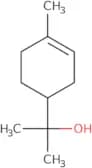
CAS:<p>Alpha-terpineol is a terpene alcohol that exhibits cytotoxic effects on cells. It has been shown to cause cell lysis in both bacteria and mammalian cells, which may be due to its reactive oxygen species (ROS) production. Alpha-terpineol is also an effective agent against infectious diseases such as HIV, tuberculosis, and malaria. This molecule has a high resistance to chemical degradation, making it a promising anticancer agent. Alpha-terpineol can inhibit the polymerase chain reaction (PCR) by binding to the enzyme DNA polymerase, thereby preventing the synthesis of DNA molecules. It can also bind to the enzyme RNA polymerase and inhibit the transcription of mRNA into protein molecules. Lastly, alpha-terpineol is known for its genotoxic effects in vivo and in vitro. The genotoxicity of alpha-terpineol has been demonstrated using several different methods including electron microscopy, chemical stability assays, surface methodology experiments on kidney bean extract,</p>Fórmula:C10H18OPureza:Min. 95%Peso molecular:154.25 g/molLasiokaurin
CAS:Lasiokaurin is a sesquiterpene lactone, which is a type of terpenoid compound primarily found in certain plant species. It is derived from the plants of the Asteraceae family, where it is biosynthesized as part of the plant's secondary metabolites. This compound is characterized by its complex structure, which includes a lactone ring, contributing to its biological activity.Fórmula:C22H30O7Pureza:Min. 95%Forma y color:Yellow PowderPeso molecular:406.47 g/molGinkgolide B
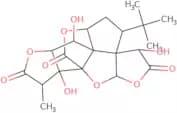
CAS:<p>Ginkgolide B is a diterpenoid lactone, which is a secondary metabolite isolated from the leaves of the Ginkgo biloba tree. This compound is primarily sourced from the extract of Ginkgo biloba, a plant that has been utilized for centuries in traditional medicine systems.</p>Fórmula:C20H24O10Pureza:Min. 90 Area-%Forma y color:White PowderPeso molecular:424.4 g/molSoyasaponin Bb
CAS:Soyasaponin Bb is a naturally occurring saponin, which is a type of glycoside, derived from soybeans (Glycine max). It is primarily sourced from the seeds and roots of the soybean plant. The mode of action of soyasaponin Bb involves its ability to interact with lipid membranes, affecting cellular pathways and exerting antioxidant and anti-inflammatory effects. Additionally, it has been shown to modulate cholesterol metabolism and exhibit potential anticancer activities through apoptosis induction and inhibition of tumor cell proliferation.Fórmula:C48H78O18Pureza:Min. 94.0 Area-%Peso molecular:943.12 g/molRef: 3D-Q-100575
1gA consultar50mgA consultar100mgA consultar250mgA consultar500mgA consultar-Unit-mgmgA consultarGinsenoside Re
CAS:Ginsenoside Re is a naturally occurring saponin, which is a bioactive compound sourced primarily from the root of Panax ginseng. It operates through multiple biochemical pathways, including the modulation of immune responses, anti-inflammatory effects, and protective antioxidant activities. Ginsenoside Re exerts its actions by interacting with cellular receptors, influencing signaling pathways such as the PI3K/Akt and MAPK pathways, ultimately impacting gene expression and cellular responses.Fórmula:C48H82O18Pureza:Min. 98 Area-%Forma y color:White PowderPeso molecular:947.18 g/molPonicidin
CAS:<p>Ponicidin is a natural product, which is a diterpenoid compound derived from the plant *Isodon rubescens*. It exhibits a mode of action characterized by its ability to interfere with cellular processes through apoptosis induction and inhibition of cell proliferation. This occurs via the modulation of specific signaling pathways, including the suppression of NF-κB activity and the promotion of caspase activation.</p>Fórmula:C20H26O6Pureza:Min. 95%Forma y color:PowderPeso molecular:362.43 g/molBrusatol
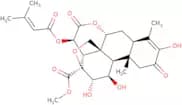
CAS:Inhibitor of protein synthesis and Nrf2-mediated chemoresistanceFórmula:C26H32O11Pureza:Min. 97 Area-%Forma y color:White PowderPeso molecular:520.53 g/molMonotropein
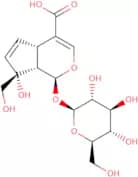
CAS:<p>Monotropein is a bioactive compound, which is an iridoid glycoside derived from natural sources such as plants in the Gentianaceae and Rubiaceae families. Its mode of action primarily involves anti-inflammatory and antioxidant pathways, exerting effects through modulation of specific molecular targets like NF-kB and various oxidative stress-related enzymes. These actions contribute to its efficacy in reducing inflammation and protecting against cellular oxidative damage.</p>Fórmula:C16H22O11Pureza:Min. 95 Area-%Forma y color:PowderPeso molecular:390.34 g/molDubione B
CAS:Please enquire for more information about Dubione B including the price, delivery time and more detailed product information at the technical inquiry form on this pagePureza:Min. 95%Nigranoic acid
CAS:Nigranoic acid is a triterpenoid compound, which is derived from the seeds of Schisandra species, a type of plant known for its medicinal properties. It is particularly abundant in Schisandra chinensis, commonly used in traditional medicine systems. The mode of action of nigranoic acid involves modulation of inflammatory pathways and oxidative stress. It has shown the ability to inhibit the production of pro-inflammatory cytokines and reactive oxygen species, mediating its potential therapeutic effects.Fórmula:C30H46O4Pureza:Min. 95%Forma y color:PowderPeso molecular:470.68 g/molTotarol - 98%
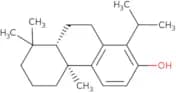
CAS:<p>Natural diterpene; anti-microbial</p>Fórmula:C20H30OPureza:Min. 98 Area-%Forma y color:PowderPeso molecular:286.45 g/molIsosteviol
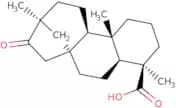
CAS:<p>Isosteviol is a diterpenoid compound, which is a metabolite derived from the enzymatic hydrolysis of stevioside, a glycoside found in the leaves of the Stevia rebaudiana plant. Its mode of action involves modulation of various biological pathways, including anti-inflammatory and antihyperglycemic effects. These actions are attributed to its ability to interact with specific cellular targets, inhibiting pro-inflammatory cytokines and improving insulin sensitivity.</p>Fórmula:C20H30O3Pureza:Min. 95%Peso molecular:318.45 g/molAjugarin II
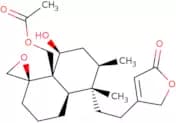
CAS:<p>Ajugarin II is a naturally occurring iridoid glycoside found in plants belonging to the genus Ajuga, which is a member of the Lamiaceae family. These plants have been traditionally used in herbal medicine and are known for their various pharmacological properties. The source of Ajugarin II is primarily the leaf and stem tissues, where it is biosynthesized as part of the plant's secondary metabolites.</p>Fórmula:C22H32O6Pureza:Min. 95%Peso molecular:392.49 g/molAndrographolide
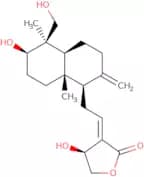
CAS:Andrographolide is a labdane diterpenoid, which is the primary active constituent extracted from the plant *Andrographis paniculata*. This compound exhibits a broad spectrum of pharmacological activities, primarily attributed to its ability to modulate various biological pathways. The mode of action of andrographolide includes the inhibition of pro-inflammatory cytokines and enzymes, as well as the activation of pathways that enhance antioxidant activities within cells.Fórmula:C20H30O5Pureza:Min. 97.5 Area-%Forma y color:White PowderPeso molecular:350.45 g/molLevopimaric acid
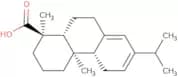
CAS:Producto controladoLevopimaric acid is a type of resin acid, which is a naturally occurring compound primarily derived from the resin of pine trees. It is classified as a diterpenoid, a group of chemical compounds known for their complex structure and diverse functionalities. The mode of action of levopimaric acid involves its role as a key intermediate in the biosynthesis of other resin acids, affecting the properties of the resin through its chemical stability and reactivity.Fórmula:C20H30O2Pureza:(%) Min. 85%Forma y color:PowderPeso molecular:302.45 g/mol(+)-Aromadendrene
CAS:<p>(+)-Aromadendrene is a sesquiterpene, which is a type of hydrocarbon compound found in the essential oils of various plants, particularly those within the Myrtaceae family. This compound is primarily sourced from the leaves and branches of Eucalyptus species, where it contributes to the plant’s aromatic profile.</p>Fórmula:C15H24Pureza:Min. 80 Area-%Forma y color:Yellow Clear LiquidPeso molecular:204.35 g/mol