Fenilpropanoides
Les phénylpropanoïdes sont un groupe diversifié de métabolites végétaux dérivés de l'acide aminé phénylalanine. Ils jouent des rôles importants dans la structure des plantes, la défense et la pigmentation. De plus, les phénylpropanoïdes ont été étudiés pour leurs propriétés anti-inflammatoires, antioxydantes et antimicrobiennes. Ces composés sont utilisés dans la recherche sur les produits naturels, la biologie végétale et la pharmacologie.
Subcategorías de "Fenilpropanoides"
Se han encontrado 1293 productos de "Fenilpropanoides"
Ordenar por
Pureza (%)
0
100
|
0
|
50
|
90
|
95
|
100
Neodiosmin
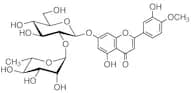
CAS:Fórmula:C28H32O15Pureza:>95.0%(HPLC)Forma y color:Light yellow to Yellow to Orange powder to crystalinePeso molecular:608.55Chlorogenic acid
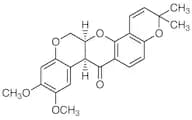
CAS:Chlorogenic acid is a derivative of caffeic acid and quinic acid; it has an antioxidant activity. Chlorogenic acid has been combined with gadolinium to develop a therapeutic and diagnostic nanodelivery system for MRI imaging. In a rat model of diabetes mellitus, chlorogenic acid counteracted the alterations in lipid profiles typical of type-2 diabetes, especially when administered in combination with tetrahydrocurcumin. In mice fed with a high-fat diet, the consumption of chlorogenic acid resulted in an anti-obesity action that lowered the blood levels of cholesterol and triglycerides. In humans, it is readily absorbed in the intestinal tract.Fórmula:C16H18O9Pureza:Min. 95%Forma y color:PowderPeso molecular:354.32 g/mol(-)-Deguelin
CAS:Fórmula:C23H22O6Pureza:>95.0%(HPLC)Forma y color:White to Yellow to Green powder to crystalPeso molecular:394.42[6]-Shogaol
CAS:Fórmula:C17H24O3Pureza:>90.0%(HPLC)Forma y color:Light yellow to Yellow clear liquidPeso molecular:276.38Maritimein
CAS:Maritimein is an advanced bioactive compound, which is isolated from specific marine organisms, particularly those inhabiting unique ecological niches. This marine-derived compound operates through complex biochemical pathways, often involving the modulation of cellular signaling and interaction with specific protein targets, which can lead to effects such as inhibiting enzymes or altering gene expression.Fórmula:C21H20O11Pureza:Min. 95%Forma y color:Yellow PowderPeso molecular:448.38 g/molMyricoside
CAS:Myricoside is a glycoside compound, which is derived from the bark and leaves of the plant _Myrica rubra_, commonly known as the Chinese bayberry. This compound exhibits potential biological activities primarily due to its nature as a plant secondary metabolite with a specific chemical structure that fosters interactions at the cellular level.Fórmula:C34H44O19Pureza:Min. 95%Peso molecular:756.7 g/molDihydrodehydrodiconiferyl alcohol
CAS:Dihydrodehydrodiconiferyl alcohol is a lignan compound, which is a type of polyphenol. It is primarily sourced from plants, including species like conifers and other woody plants. The compound is notable for its ability to modulate various biochemical pathways, primarily through its antioxidant and anti-inflammatory activities. Its mode of action involves scavenging free radicals and inhibiting pro-inflammatory enzyme pathways, thereby reducing oxidative stress and inflammation at the cellular level.Fórmula:C20H24O6Pureza:Min. 95%Peso molecular:360.4 g/mol4’-demethyldehydropodophyllotoxin
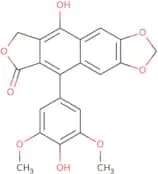
CAS:4’-Demethyldehydropodophyllotoxin is a semi-synthetic lignan, which is a refined and modified product from natural lignans found in certain plant species, particularly those in the genus Podophyllum. This compound undergoes a sophisticated extraction and synthesis process to enhance its biological activity and pharmacological properties.
Fórmula:C21H16O8Pureza:Min. 95%Peso molecular:396.35 g/molPurpureaside C
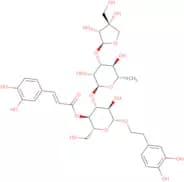
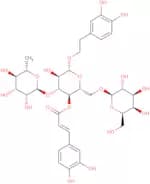
CAS:Purpureaside C is a natural compound, which is a type of iridoid glycoside. It is derived from plants belonging to the genus *Cistanche*, commonly found in dry and arid environments. These plants have been used in traditional medicine, providing a rich source for isolating various bioactive substances.Pureza:Min. 95%10Isovaleryloxy-8,9-epoxythymol-3-isovalerate
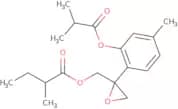
CAS:10Isovaleryloxy-8,9-epoxythymol-3-isovalerate is a bioactive compound, which is a naturally occurring derivative of thymol, often sourced from plant species belonging to the Lamiaceae family. It exhibits noteworthy antimicrobial properties by interacting with microbial cell membranes, disrupting their integrity, and ultimately leading to cell death. This mechanism involves the compound's ability to penetrate the lipid bilayer, causing leakage of cellular contents and interfering with essential biological processes.Fórmula:C19H26O5Pureza:Min. 95%Peso molecular:334.41 g/molEthyl ferulate - Natural grade
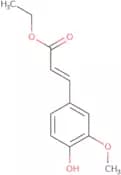
CAS:Ethyl ferulate - Natural grade is a phenolic compound, which is derived from the esterification of ferulic acid, a compound commonly extracted from plant sources such as rice bran and oats. The mode of action of ethyl ferulate involves its ability to scavenge free radicals, thereby exhibiting potent antioxidant properties. Additionally, it is known for its anti-inflammatory effects, as it can modulate the expression of various inflammatory mediators, making it a valuable molecule in the context of cellular protection.Pureza:Min. 95%Sulfuretin
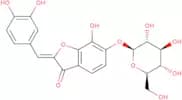
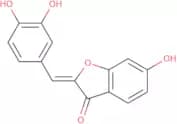
CAS:Sulfuretin is a naturally occurring flavonoid compound, which is found in various plants, notably in the Heartwood of *Securinega suffruticosa* and *Rhus verniciflua*. It exerts its effects through various biological pathways, including the modulation of enzyme activities, antioxidant properties, and anti-inflammatory mechanisms.Fórmula:C15H10O5Pureza:Min. 95%Forma y color:Yellow To Orange SolidPeso molecular:270.24 g/mol3,5-Di-O-caffeoylquinic acid methyl ester
CAS:3,5-Di-O-caffeoylquinic acid methyl ester is a specialized ester compound that belongs to the family of caffeoylquinic acids. This molecule is typically derived from plant sources, where it functions as part of the secondary metabolites with notable biochemical significance. It is often found in various plant species, notably those used in traditional medicine. The compound acts as a potent antioxidant due to its capacity to neutralize free radicals and reduce oxidative stress within biological systems.Fórmula:C26H26O12Pureza:Min. 95%Peso molecular:530.48 g/molα-(3,4-Dihydroxyphenyl)lactic acid
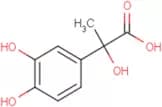
CAS:Danshensu has antioxidant activity, can enhance HO-1 expression to suppress 6-OHDA-induced oxidative damage via PI3K/Akt/Nrf2 signaling pathways.Fórmula:C9H10O5Pureza:98%Forma y color:SolidPeso molecular:198.17Ethyl salvianolate A
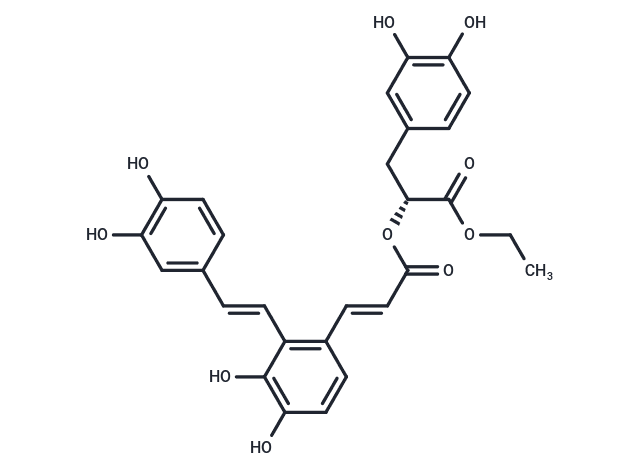
CAS:Ethyl salvianolate A (Ethyl salvionolate A) is an anti-HIV-1 compound extracted from the roots of Salvia yunnanensis. It inhibits the P24 antigen in HIV-1 infected MT-4 cell cultures with an EC50 of 1.44 μg/mL. Additionally, it suppresses HIV-1 enzymes with IC50s of 56.38 μM (reverse transcriptase), 12.03 μM (protease), and 14.54 μM (integrase).Fórmula:C28H26O10Forma y color:SolidPeso molecular:522.50Acetyleugenol
CAS:Acetyleugenol analytical standard provided with chromatographic purity, to be used as reference material for qualitative determination.Fórmula:C12H14O3Pureza:(GC) ≥98%Forma y color:LiquidPeso molecular:206.24α-Asarone
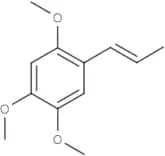
CAS:alpha-Asarone analytical standard provided with chromatographic purity, to be used as reference material for qualitative determination.Fórmula:C12H16O3Pureza:(GC) ≥97%Forma y color:PowderPeso molecular:208.26Myristicin
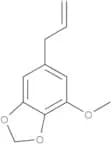
CAS:Myristicin analytical standard provided with chromatographic purity, to be used as reference material for qualitative determination.Fórmula:C11H12O3Pureza:(GC) ≥97%Forma y color:LiquidPeso molecular:192.22(2R,3R)-3,3',4',5,7-Pentahydroxyflavanone
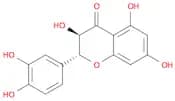
CAS:Fórmula:C15H12O7Pureza:98%Forma y color:SolidPeso molecular:304.2516



![[6]-Shogaol](/_next/image/?url=https%3A%2Fstatic.cymitquimica.com%2Fproducts%2F3B%2Fthumb-webp%2FH1771.webp&w=3840&q=75)