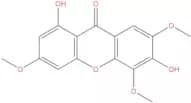
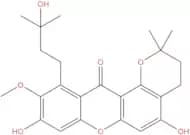
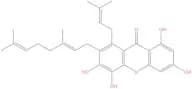
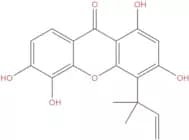
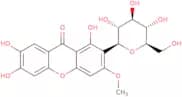
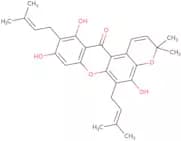
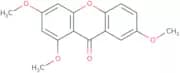
Xantonas
Las xantonas son un grupo de compuestos fenólicos conocidos por sus diversas propiedades farmacológicas, como efectos antioxidantes, antiinflamatorios, anticancerígenos y antimicrobianos. Se encuentran comúnmente en ciertas frutas, especialmente en el mangostán. Las xantonas son ampliamente estudiadas por sus posibles aplicaciones terapéuticas en el tratamiento de diversas afecciones, como el cáncer, las enfermedades neurodegenerativas y los trastornos cardiovasculares. En CymitQuimica, encontrarás una amplia selección de xantonas, esenciales para la investigación en biología vegetal, farmacología y el desarrollo de terapias basadas en productos naturales.
Se han encontrado 118 productos de "Xantonas"
Ordenar por
Pureza (%)
0
100
|
0
|
50
|
90
|
95
|
100
sibiricaxanthone B
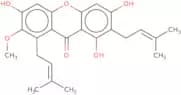
CAS:Sibiricaxanthone B is a natural product from Polygala tenuifolia.Fórmula:C24H26O14Pureza:95%~99%Forma y color:PowderPeso molecular:538.458Flemiphilippinin A
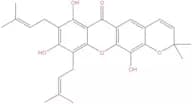
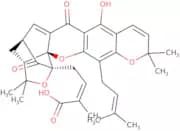
CAS:Flemiphilippin A has antioxidant activity, it shows DPPH radical scavenging activity with effective half maximal concentration (EC50) of 18.36 ug/mL. Flemiphilippinin A (5 ug/mL) exhibits some level of antitumor activity against human hepatocellular carcinoma cell (BEL-7402), human lung epithelial (A-549) and human ileocecal adenocarcinoma cell (HCT-8).Fórmula:C30H32O6Pureza:95%~99%Peso molecular:488.583-Prenyl-2,4,6-trihydroxybenzophenone
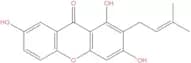
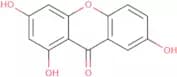
CAS:Fórmula:C18H18O4Pureza:95%~99%Forma y color:Yellow powderPeso molecular:298.3381,3,7-Trihydroxy-2-prenylxanthone
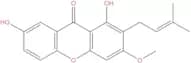
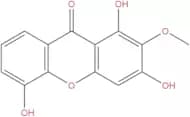
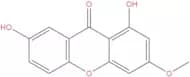
CAS:Fórmula:C18H16O5Pureza:95%~99%Forma y color:Yellow powderPeso molecular:312.3211,7-Dihydroxy-3-methoxy-2-prenylxanthone
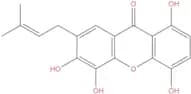
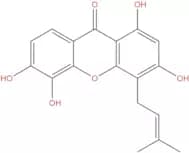
CAS:Fórmula:C19H18O5Pureza:95%~99%Forma y color:Yellow powderPeso molecular:326.3481,4,5,6-Tetrahydroxy-7-prenylxanthone
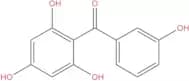
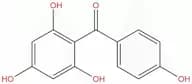
CAS:Fórmula:C18H16O6Pureza:95%~99%Forma y color:Yellow powderPeso molecular:328.322,3',4,6-Tetrahydroxybenzophenone
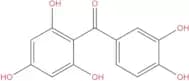
CAS:Fórmula:C13H10O5Pureza:95%~99%Forma y color:Yellow powderPeso molecular:246.218Isogarciniaxanthone E
CAS:Fórmula:C28H32O6Pureza:95%~99%Forma y color:Yellow powderPeso molecular:464.5583-Isomangostin hydrate
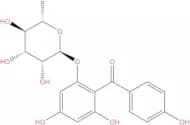
CAS:Fórmula:C24H28O7Pureza:95%~99%Forma y color:Yellow powderPeso molecular:428.481Iriflophenone 2-O-rhamnoside
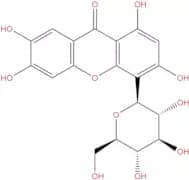
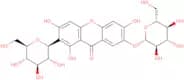
CAS:Fórmula:C19H20O9Pureza:95%~99%Forma y color:Yellow powderPeso molecular:392.36Mangiferin
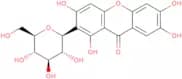
CAS:Mangiferin (MF) and its glucosides (mangiferin-7-O-beta-glucoside) (MG) isolated from Anemarrhena asphodeloides Bunge rhizome, have antidiabetic activity in KK-Ay mice,Fórmula:C19H18O11Pureza:95%~99%Forma y color:PowderPeso molecular:422.342Iriflophenone 3-C-glucoside
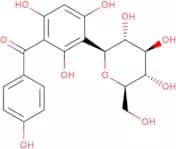
CAS:Fórmula:C19H20O10Pureza:95%~99%Forma y color:PowderPeso molecular:408.359Neomangiferin
CAS:Neomangiferin exhibits antidiabetic and antiosteoporotic actions; it has beneficial effects on high fat diet-induced nonalcoholic fatty liver disease in rats, it also modulates the Th17/Treg balance and ameliorates colitis in mice.Fórmula:C25H28O16Pureza:95%~99%Peso molecular:584.4833-Isomangostin hydrate formate
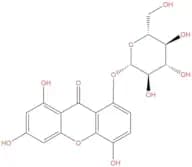
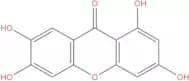
CAS:Fórmula:C25H28O8Pureza:95%~99%Forma y color:Yellow powderPeso molecular:456.4911,6,7-Trihydroxyxanthone
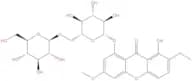
CAS:Fórmula:C13H8O5Pureza:95%~99%Forma y color:Yellow powderPeso molecular:244.2021-O-gentiobiosyl-3,7-dimethoxy-8-hydroxyxanthone
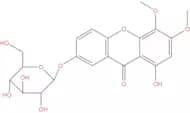
CAS:Fórmula:C27H32O16Pureza:95%~99%Peso molecular:612.5371,7-dihydroxy-3,4-dimethoxylxanthone-7-O-Veratriloside
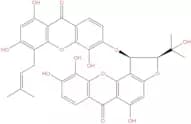
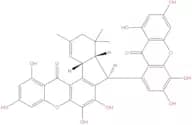
CAS:Fórmula:C21H22O11Pureza:95%~99%Peso molecular:450.396Griffipavixanthone
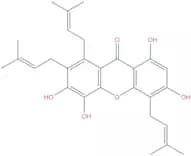
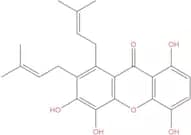
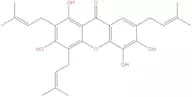
CAS:Fórmula:C36H28O12Pureza:95%~99%Forma y color:Yellow powderPeso molecular:652.6081,4,5,6-Tetrahydroxy-7,8-diprenylxanthone
CAS:Fórmula:C23H24O6Pureza:95%~99%Forma y color:Yellow powderPeso molecular:396.4391,6-dihydroxy-3,5,7-trimethoxy-Xanthone
CAS:Fórmula:C16H14O7Pureza:95%~99%Forma y color:Yellow powderPeso molecular:318.2811-Isomangostin hydrate
CAS:Fórmula:C24H28O7Pureza:95%~99%Forma y color:Yellow powderPeso molecular:428.481Garciniaxanthone E
CAS:Fórmula:C28H32O6Pureza:95%~99%Forma y color:Yellow powderPeso molecular:464.558O-Demethylforbexanthone
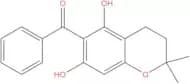
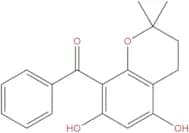
CAS:Fórmula:C18H14O6Pureza:95%~99%Forma y color:Yellow powderPeso molecular:326.3046-Benzoyl-5,7-dihydroxy-2,2-dimethylchromane
CAS:Fórmula:C18H18O4Pureza:95%~99%Forma y color:Yellow powderPeso molecular:298.3381,4,6-Trihydroxy-5-methoxy-7-prenylxanthone
CAS:Fórmula:C19H18O6Pureza:95%~99%Forma y color:Yellow powderPeso molecular:342.347Nigrolineaxanthone V
CAS:Fórmula:C24H24O6Pureza:95%~99%Forma y color:Yellow powderPeso molecular:408.45Garcinexanthone A
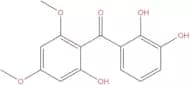
CAS:Fórmula:C19H18O6Pureza:95%~99%Forma y color:Yellow powderPeso molecular:342.3472,2',3'-Trihydroxy-4,6-dimethoxybenzophenone
CAS:Fórmula:C15H14O6Pureza:95%~99%Forma y color:Yellow powderPeso molecular:290.2718-Benzoyl-5,7-dihydroxy-2,2-dimethylchromane
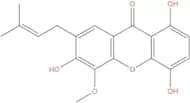
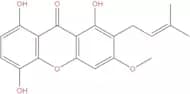
CAS:Fórmula:C18H18O4Pureza:95%~99%Forma y color:Yellow powderPeso molecular:298.3381,5,8-Trihydroxy-3-methoxy-2-prenylxanthone
CAS:Fórmula:C19H18O6Pureza:95%~99%Forma y color:Yellow powderPeso molecular:342.347Polygalaxanthone III
CAS:Polygalaxanthone III can significantly inhibit chlorzoxazone 6-hydroxylation catalyzed by CYP2E1.Fórmula:C25H28O15Pureza:95%~99%Peso molecular:568.484Homomangiferin
CAS:<p>Homomangiferin is a xanthone derivative, which is extracted primarily from the leaves of the mango tree, Mangifera indica. This natural compound belongs to a class of polyphenolic compounds known for their potential health benefits and is most notably sourced from various parts of the mango plant, including its leaves and bark.</p>Fórmula:C20H20O11Pureza:Min. 95%Forma y color:PowderPeso molecular:436.37 g/mol1,3-Dimethoxy-5,8-dihydroxyxanthone
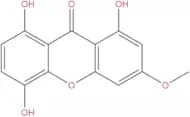
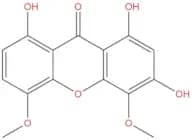
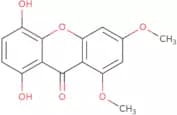
CAS:<p>1,3-Dimethoxy-5,8-dihydroxyxanthone is a naturally occurring xanthone compound, which is a type of polyphenolic compound. It is derived from certain plant species, often found in the families Guttiferae and Gentianaceae. The compound exhibits various bioactive properties attributed to its molecular structure, allowing it to interact with biological targets within cellular systems.</p>Fórmula:C15H12O6Pureza:Min. 95%Peso molecular:288.25 g/molTovophyllin A
CAS:<p>Tovophyllin A is a methylxanthine compound, which is an alkaloid derived from natural plant sources. It is primarily found in abundance within the seeds, leaves, and fruit of various plants, including coffee beans, tea leaves, and cocoa seeds. The mode of action of Tovophyllin A involves the inhibition of phosphodiesterase enzymes, which leads to an increase in cyclic adenosine monophosphate (cAMP) levels. This biochemical action results in smooth muscle relaxation, notably within the bronchial airways, thereby exhibiting bronchodilator effects.</p>Fórmula:C28H30O6Pureza:Min. 95%Peso molecular:462.53 g/molGentisein trimethylether
CAS:<p>Gentisein trimethylether is a specific flavonoid derivative, which is synthesized from naturally occurring isoflavones. It belongs to a class of polyphenolic compounds widely studied for their pharmacological properties. Derived from plant sources, Gentisein trimethylether emerges through specific biosynthetic pathways involving methylation processes, which enhance its stability and bioavailability.</p>Fórmula:C16H14O5Pureza:Min. 95%Peso molecular:286.28 g/mol2-Hydroxy-5,6,7,8-tetramethoxyxanthone
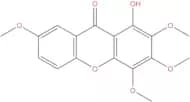
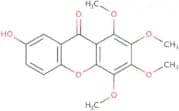
CAS:<p>2-Hydroxy-5,6,7,8-tetramethoxyxanthone is a naturally occurring xanthone derivative, which is often isolated from various plant species known for their medicinal properties. As a xanthone compound, it is characterized by a tricyclic aromatic scaffold embellished with methoxy and hydroxy groups. This molecular structure contributes to its potent antioxidant properties, allowing it to scavenge free radicals effectively.</p>Fórmula:C17H16O7Pureza:Min. 95%Peso molecular:332.3 g/molMangiferin - 90%
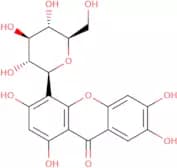
CAS:<p>Mangiferin - 90% is a purified form of the bioactive compound mangiferin, which is a xanthonoid derived primarily from the leaves, bark, and fruit of the mango tree, Mangifera indica. Known for its potent antioxidant properties, mangiferin acts by scavenging free radicals, thereby protecting cells from oxidative stress and potential damage. This mode of action makes it a critical component in research focused on understanding its potential in mitigating oxidative stress-related conditions.</p>Fórmula:C19H18O11Pureza:Min. 95%Forma y color:PowderPeso molecular:422.34 g/molIriflophenone 3-C-b-D-glucopyranoside
CAS:<p>Iriflophenone 3-C-β-D-glucopyranoside is a glucoside compound, which is a naturally occurring chemical constituent often found in certain plant species. It is typically isolated from members of the genus *Garcinia*, a group of flowering plants known for their diverse secondary metabolites. The mode of action of Iriflophenone 3-C-β-D-glucopyranoside involves its role as an antioxidant, potentially offering protection against oxidative stress by scavenging free radicals. This compound may also exhibit other bioactivities such as anti-inflammatory or anti-microbial effects, although these require further elucidation through research.</p>Fórmula:C19H20O10Pureza:Min. 98 Area-%Forma y color:White PowderPeso molecular:408.36 g/molGentisein
CAS:<p>Please enquire for more information about Gentisein including the price, delivery time and more detailed product information at the technical inquiry form on this page</p>Fórmula:C13H8O5Pureza:Min. 95 Area-%Peso molecular:244.2 g/mol3,8-Dihydroxy-6-methylxanthone
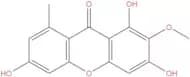
CAS:<p>3,8-Dihydroxy-6-methylxanthone is a bioactive compound, classified as a xanthone derivative, which is primarily sourced from various plants, including those in the Gentianaceae and Clusiaceae families. Xanthones are polyphenolic compounds known for their diverse pharmacological activities. This particular derivative exhibits a range of biological activities owing to its unique chemical structure.</p>Fórmula:C14H10O4Pureza:Min. 95%Peso molecular:242.23 g/mol1-Hydroxyxanthone
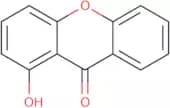
CAS:<p>1-Hydroxyxanthone is a synthetic xanthone derivative, which is a type of organic compound known for its diverse bioactive properties. Derived from natural sources such as plants in the Guttiferae family, xanthones are renowned for their therapeutic potential. 1-Hydroxyxanthone specifically is obtained through chemical synthesis, allowing for greater purity and batch-to-batch consistency, which is beneficial for scientific research.</p>Fórmula:C13H8O3Pureza:Min. 95%Forma y color:PowderPeso molecular:212.2 g/molCowanin
CAS:<p>Notch and gamma-secretase inhibitor</p>Fórmula:C29H34O6Pureza:Min. 95%Forma y color:PowderPeso molecular:478.58 g/molIsomangiferin
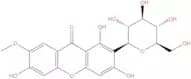
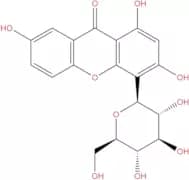
CAS:<p>Isomangiferin is a C-glucosyl xanthone, which is a naturally occurring polyphenolic compound derived primarily from the leaves of the mango tree, Mangifera indica. This compound is one of the many bioactive components found in mangoes, renowned for its contribution to the plant's defense system against environmental stress.</p>Fórmula:C19H18O11Pureza:Min. 95%Forma y color:PowderPeso molecular:422.34 g/molMangostin
CAS:<p>Mangostin is a bioactive compound, which is a xanthone derivative sourced from the pericarp of the mangosteen fruit (Garcinia mangostana). It exhibits its mode of action through potent antioxidant and anti-inflammatory mechanisms, attributed to its interactions with various cellular pathways. Mangostin intervenes by scavenging free radicals and inhibiting pro-inflammatory mediators, such as cyclooxygenase and lipoxygenase enzymes.</p>Fórmula:C24H26O6Pureza:Min. 95%Forma y color:PowderPeso molecular:410.46 g/mol8-Hydroxy-3,4,6-trimethoxyxanthone
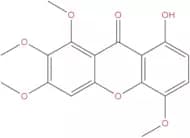
CAS:<p>8-Hydroxy-3,4,6-trimethoxyxanthone is a naturally occurring xanthone derivative, which is isolated primarily from the Garcinia plant species. These plants are known for their diverse range of bioactive compounds, contributing to extensive research into their pharmacological properties. The mode of action of 8-Hydroxy-3,4,6-trimethoxyxanthone involves multiple biochemical pathways, including antioxidant and anti-inflammatory activities. This compound is believed to interact with cellular signaling cascades, potentially modulating oxidative stress and inflammatory responses.</p>Fórmula:C16H14O6Pureza:Min. 95%Peso molecular:302.28 g/molGentisein-3,7-dimethylether
CAS:<p>Gentisein-3,7-dimethylether is a naturally occurring flavonoid, which is derived from specific plant sources. This compound is a methoxylated derivative of genistein, a well-known isoflavone found in various plants, particularly in soy. The mode of action of Gentisein-3,7-dimethylether involves its function as an antioxidant, where it scavenges free radicals and inhibits oxidative stress pathways. This biochemical activity makes it a molecule of interest in the prevention of oxidative damage at the cellular level.</p>Fórmula:C15H12O5Pureza:Min. 95%Peso molecular:272.25 g/mol1,8-Dihydroxy-3-methylxanthone
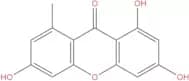
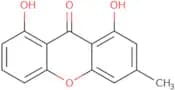
CAS:<p>1,8-Dihydroxy-3-methylxanthone is a naturally occurring xanthone derivative, which is often sourced from plants known for their therapeutic properties. This compound is distinguished by its aromatic and polyphenolic structure, typically extracted from the roots or bark of certain plant species. Its mode of action is largely attributed to its ability to interact with biological membranes and proteins, often resulting in antioxidant, anti-inflammatory, and potential anticancer activities.</p>Fórmula:C14H10O4Pureza:Min. 95%Peso molecular:242.23 g/mol2,3,5,6,7,8-Pentamethoxyxanthone
CAS:<p>2,3,5,6,7,8-Pentamethoxyxanthone is a xanthone derivative, which is a class of polyphenolic compounds typically sourced from various plant species, particularly those in the Guttiferae family. These compounds are naturally occurring and often found in medicinal plants known for their diverse pharmacological properties.</p>Fórmula:C19H20O8Pureza:Min. 95%Peso molecular:376.36 g/molNeomangiferin
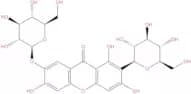
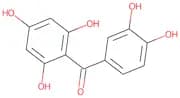
CAS:<p>Neomangiferin is a bioactive compound, which is a xanthone glucoside derived from the leaves, bark, or roots of Mangifera indica, commonly known as the mango tree. Its molecular structure enables it to engage in multiple biochemical interactions, primarily through antioxidant, anti-inflammatory, and immunomodulatory mechanisms. The compound's antioxidant properties result from its ability to scavenge free radicals and reduce oxidative stress, while its anti-inflammatory action is associated with the inhibition of key inflammatory mediators.</p>Fórmula:C25H28O16Pureza:Min. 95%Forma y color:PowderPeso molecular:584.48 g/molMaclurin
CAS:<p>Maclurin (NSC-83240) is a phenolic component of mulberry twigs, exerts anti-metastatic effects.</p>Fórmula:C13H10O6Pureza:99.71%Forma y color:SolidPeso molecular:262.217-O-Methylgarcinone E
CAS:<p>7-O-Methylgarcinone E is a bioactive compound, specifically a xanthone derivative, which is sourced from various Garcinia species, a genus of tropical trees and shrubs. This compound is structurally characterized by its xanthone core and the presence of a methoxy group at the seventh position, contributing to its biological activity.</p>Fórmula:C29H34O6Pureza:Min. 95%Peso molecular:478.58 g/molMorellic acid
CAS:<p>Morellic acid is a naturally occurring compound that is classified as an organic acid, specifically a depsidone. It is derived primarily from the lichen species of the Parmelia genus. Lichens are symbiotic associations between fungi and photosynthetic organisms, typically algae or cyanobacteria, found in a variety of environmental conditions.</p>Pureza:Min. 95%1-Hydroxy-3,4,5-trimethoxyxanthone
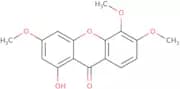
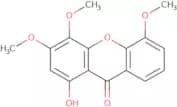
CAS:<p>1-Hydroxy-3,4,5-trimethoxyxanthone is a naturally occurring xanthone compound, which is derived from various plant sources, particularly in the Gentianaceae and Hypericaceae families. The plant-based origin allows it to be isolated through extraction and purification processes from medicinal herbs known for their bioactive properties.</p>Fórmula:C16H14O6Pureza:Min. 95%Peso molecular:302.28 g/mol3,6-Dihydroxyxanthone
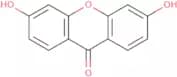
CAS:<p>3,6-Dihydroxyxanthone is a naturally occurring compound classified as a xanthone, which is a type of polyphenolic compound. It is primarily sourced from various plant species, notably those within the Gentianaceae family. This compound exhibits a range of biological activities due to its ability to interact with multiple molecular targets within biological systems. The mode of action of 3,6-Dihydroxyxanthone involves its function as an antioxidant, as well as its potential to inhibit specific enzymes and modulate signaling pathways, contributing to its diverse biological effects.</p>Fórmula:C13H8O4Pureza:Min. 95%Peso molecular:228.2 g/mol1,5,6-Trihydroxyxanthone
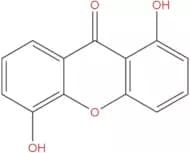
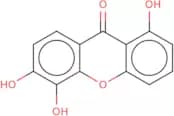
CAS:<p>1,5,6-Trihydroxyxanthone is a natural xanthone derivative, which is commonly isolated from various plant sources, particularly in the family Gentianaceae. This compound is characterized by its polyhydroxylated xanthone structure, contributing to its diverse biological functionalities. Xanthones, including 1,5,6-Trihydroxyxanthone, are known for their ability to modulate oxidative pathways and interact with cellular signaling mechanisms.</p>Fórmula:C13H8O5Pureza:Min. 95%Peso molecular:244.2 g/molGarcinone D
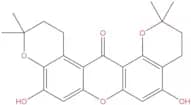
CAS:<p>Garcinone D is a xanthone derivative, which is a naturally occurring compound extracted from the fruit rind of the Garcinia species, notably Garcinia mangostana. This compound is characterized by its bioactive profile, which has been studied for various pharmacological effects.</p>Pureza:Min. 95%Cowaxanthone B
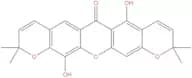
CAS:<p>Cowaxanthone B is a naturally occurring xanthone compound, which is isolated from the fruiting bodies of Garcinia species, a genus known for its diverse range of biologically active phytochemicals. This compound is characterized by its tetracyclic chemical structure, which contributes to its unique biological properties. The mode of action of Cowaxanthone B involves modulation of various cellular pathways, including apoptosis induction, and inhibition of cell proliferation, which is mediated through interaction with specific molecular targets within the cell.</p>Pureza:Min. 95%Gentisein
CAS:<p>Gentisein (NSC-329491), a primary metabolite of Mangiferin, exhibits significant inhibition of serotonin uptake, demonstrating potency with an IC50 value of 4.7</p>Fórmula:C13H8O5Pureza:96.89%Forma y color:SolidPeso molecular:244.23,8-Dimethoxyxanthone
CAS:<p>3,8-Dimethoxyxanthone is an organic compound, which is a type of xanthone derivative. It is primarily sourced from natural plant extracts, particularly those found in certain tropical and subtropical regions. This compound is synthesized via the oxidative coupling of phenolic precursors and subsequent methylation, a process leveraged due to its presence in various plant species.</p>Fórmula:C15H12O4Pureza:Min. 95%Peso molecular:256.25 g/mol