Flavonoides
Subcategorías de "Flavonoides"
- Antocianidinas(46 productos)
- Antocianina(46 productos)
- Catequina(88 productos)
- Chalconas(237 productos)
- Pterocarpan(28 productos)
Se han encontrado 2410 productos de "Flavonoides"
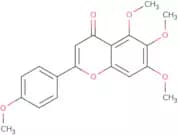
Scutellarein tetramethyl ether
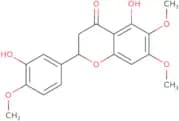
CAS:Scutellarein tetramethyl ether is a methylated flavonoid compound, which is a result of structural modifications to scutellarein, itself a naturally occurring flavone. This compound is derived from various plant sources, particularly those within the Scutellaria genus, known for their bioactive flavonoid content. The modification involves methylation of hydroxyl groups, which can augment its bioavailability and stability.Fórmula:C19H18O6Pureza:Min. 95 Area-%Forma y color:PowderPeso molecular:342.34 g/mol3',5-Dihydroxy-4',6,7-trimethoxyflavanone
CAS:3',5-Dihydroxy-4',6,7-trimethoxyflavanone is a naturally occurring flavonoid, which is a type of polyphenolic compound. This product is primarily sourced from various plant species known to produce flavonoids as secondary metabolites. Its mode of action involves the inhibition of specific enzymes and modulation of signaling pathways, which can lead to antioxidant and anti-inflammatory effects.Fórmula:C18H18O7Pureza:Min. 95%Peso molecular:346.3 g/molNeoastilbin
CAS:Neoastilbin is a natural flavonoid compound, which is derived from the plant species *Smilax glabra*. It acts by modulating immune responses and inhibiting specific enzymatic pathways associated with inflammation, making it an effective agent in reducing inflammatory processes.Fórmula:C21H22O11Pureza:Min. 95%Forma y color:PowderPeso molecular:450.39 g/mol(-)-Epiafzelechin
CAS:(-)-Epiafzelechin is a flavan-3-ol compound, which is a type of flavonoid. It is derived primarily from plant sources, including various tea leaves and cocoa. The compound is known for its potent antioxidant properties, which act by neutralizing free radicals and thereby reducing oxidative stress within biological systems. This action helps in maintaining cellular integrity and function, which is crucial in preventing various oxidative damage-related diseases.Fórmula:C15H14O5Pureza:Min. 95%Forma y color:PowderPeso molecular:274.27 g/molMilldurone
CAS:Please enquire for more information about Milldurone including the price, delivery time and more detailed product information at the technical inquiry form on this pageFórmula:C19H16O7Pureza:Min. 95%Forma y color:PowderPeso molecular:356.33 g/molSophoraflavanone H
CAS:Sophoraflavanone H is a prenylated flavonoid, which is a natural compound isolated primarily from plants of the Sophora species. The source of this bioactive compound is predominantly the root extracts of these plants, which have been traditionally utilized in herbal medicine systems for their therapeutic properties.Fórmula:C34H30O9Pureza:Min. 95%Peso molecular:582.6 g/mol7-Methoxyflavanone
CAS:7-Methoxyflavanone is a bioactive compound, specifically a methoxylated flavanone, which is derived from various plant sources. This compound plays a role in the modulation of several biological pathways due to its structural attributes. As a flavanone, it is known to interact with various cellular mechanisms including enzyme inhibition, receptor binding, and antioxidant activity. These interactions result in diverse pharmacological effects, such as anti-inflammatory and neuroprotective properties.
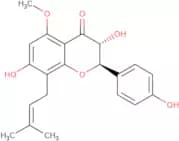
Fórmula:C16H14O3Pureza:Min. 95%Forma y color:PowderPeso molecular:254.28 g/mol3,7,4'-Trihydroxy-5-methoxy-8-prenylflavanone, (2R,3R)-
CAS:3,7,4'-Trihydroxy-5-methoxy-8-prenylflavanone, (2R,3R)- is a prenylated flavonoid compound, which is a type of naturally occurring polyphenol. These compounds are known for their complex structures and biological activities, frequently contributing to the therapeutic properties of various plants. The source of this flavanone is often plants belonging to the Fabaceae family, including the roots and other parts of certain legumes, where it accumulates as part of the plant’s secondary metabolism.Pureza:Min. 95%Icarisid I
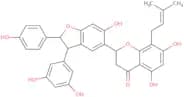
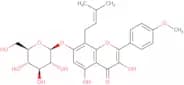
CAS:Icarisid I is a sophisticated protease inhibitor, which is derived from a natural source. This compound exhibits a high affinity for specific proteases, making it an invaluable tool in research and biotechnological applications. The compound's mode of action involves the selective and competitive inhibition of protease enzymes, effectively blocking their activity within biological systems. This can be particularly useful in studies aiming to elucidate the role of proteases in various biochemical pathways and disease processes.Pureza:Min. 95%Sophoraflavanone I
CAS:Sophoraflavanone I is a naturally occurring flavonoid compound, which is derived from the roots of the Sophora species, a genus of flowering plants in the family Fabaceae. This compound is predominantly extracted from the roots of Sophora flavescens, also known as Chinese Sophora.Fórmula:C39H38O9Pureza:Min. 95%Peso molecular:650.7 g/mol2'-Methoxybiochanin A
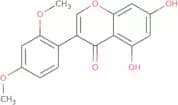
CAS:2'-Methoxybiochanin A is a naturally occurring isoflavone, which is predominantly derived from the plant Trifolium pratense, commonly known as red clover. This compound is characterized by its unique chemical structure that includes a methoxy group, which differentiates it from other isoflavones. The mode of action of 2'-Methoxybiochanin A involves its interaction with estrogen receptors, as well as its ability to modulate various biological pathways linked to inflammation and oxidative stress.
Fórmula:C17H14O6Pureza:Min. 95%Forma y color:PowderPeso molecular:314.29 g/molFlavanone-d5
CAS:Flavanone-d5 is an isotopically labeled flavonoid, which is a type of phenolic compound found in various plants. This compound is sourced from natural flavonoids that have been enriched with deuterium, an isotope of hydrogen, typically at five specific positions within the molecular structure. The mode of action involves the examination of metabolic pathways and interactions due to its stable isotopic labeling, allowing for precise tracing in biochemical assays.Fórmula:C15H12O2Pureza:Min. 95%Peso molecular:229.28 g/mol3'-Methoxydaidzein
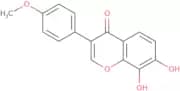
CAS:3'-Methoxydaidzein is an isoflavone compound, which is typically isolated from soybean sources. This compound belongs to a class of phytoestrogens, naturally occurring plant-derived compounds with estrogenic activity. 3'-Methoxydaidzein exhibits various biological activities due to its structural similarity to human estrogens, allowing it to bind to estrogen receptors. Its mode of action primarily involves modulating estrogen receptor activity, potentially influencing gene expression in estrogen-responsive tissues.
Pureza:Min. 95%Retusin tlc
CAS:Retusin TLC is a flavonoid compound, which is derived from natural plant sources. Flavonoids are known for their diverse biological activities, primarily due to their antioxidant properties. The mode of action of Retusin TLC involves its ability to scavenge free radicals, thereby reducing oxidative stress at the cellular level. This activity plays a crucial role in modulating various biochemical pathways, potentially leading to anti-inflammatory and anti-cancer effects.Fórmula:C16H12O5Pureza:Min. 95%Peso molecular:284.26 g/mol5,7-Dimethoxyflavanone
CAS:5,7-Dimethoxyflavanone is a flavonoid derivative, which is a type of polyphenolic compound predominantly found in plants. This compound is often isolated from various botanical sources, where it contributes to the plant's adaptive defense mechanisms against environmental stressors. The mode of action of 5,7-Dimethoxyflavanone involves interaction with cellular signaling pathways, potentially influencing antioxidant, anti-inflammatory, and enzyme inhibition activities through modulation of molecular targets.Fórmula:C17H16O4Pureza:Min. 95%Peso molecular:284.31 g/mol7-Hydroxy-5-methoxyflavanone
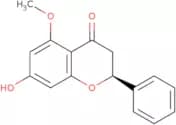
CAS:7-Hydroxy-5-methoxyflavanone is a naturally occurring flavanone compound, which is derived from various plant sources. These sources often include fruits, vegetables, and certain medicinal herbs, known for their rich flavonoid content. The mode of action of 7-Hydroxy-5-methoxyflavanone primarily involves its role as an antioxidant. It helps in scavenging free radicals and reducing oxidative stress, which is a common pathway in cellular protection against damage.
Fórmula:C16H14O4Pureza:Min. 95 Area-%Forma y color:PowderPeso molecular:270.28 g/molPodospicatin
CAS:Podospicatin is a type of natural compound, which is derived from fungal sources. This unique compound is isolated from specific fungal species known for their ability to produce bioactive secondary metabolites. Podospicatin is characterized by its distinctive molecular structure, which contributes to its potential bioactivity.Fórmula:C17H14O7Pureza:Min. 95%Forma y color:PowderPeso molecular:330.29 g/mol5,7-Dihydroxy-3',4',5'-trimethoxyflavanone
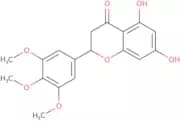
CAS:5,7-Dihydroxy-3',4',5'-trimethoxyflavanone is a flavanone compound, which is a type of polyphenolic compound found predominantly in the plant kingdom. This compound can be sourced from various plants, where it often occurs as part of the natural defense mechanisms to protect the organism from environmental stressors.
Fórmula:C18H18O7Pureza:Min. 95%Peso molecular:346.33 g/mol6,7,2',3',4'-Pentamethoxyisoflavone
CAS:6,7,2',3',4'-Pentamethoxyisoflavone is a naturally occurring flavonoid compound, which is derived from certain plant sources known for their rich polyphenolic content. As part of the isoflavone family, this compound is structurally similar to estrogen, allowing it to potentially interact with estrogen receptors in the body. Its mode of action includes modulating various biochemical pathways, including antioxidant and anti-inflammatory pathways, due to its ability to influence enzyme activities and cell signaling processes.Fórmula:C20H20O7Pureza:Min. 95%Forma y color:PowderPeso molecular:372.37 g/molLicoflavone C
CAS:Licoflavone C is a bioactive flavonoid compound, which is derived from the roots of Glycyrrhiza species. This particular flavonoid is notable for its complex chemical structure that contributes to its biological activity. The primary mode of action of Licoflavone C involves modulation of various cellular pathways, including antioxidant and anti-inflammatory mechanisms. It also influences cell cycle regulation and apoptosis, which are critical in cancer research. The compound's ability to act as a natural antioxidant makes it a valuable candidate in the formulation of skincare products aimed at protecting against oxidative stress. In scientific studies, Licoflavone C has been investigated for its potential anticancer properties, particularly focusing on its effects in inhibiting the proliferation of cancer cells. Furthermore, its role in skin health is under exploration, where its antioxidant capacity and potential to stimulate collagen production may offer benefits in anti-aging products. Such applications make Licoflavone C an intriguing subject for research in natural product chemistry and therapeutic development.Fórmula:C20H18O5Pureza:Min. 95%Peso molecular:338.35 g/mol