Flavonoides
Subcategorías de "Flavonoides"
- Antocianidinas(46 productos)
- Antocianina(46 productos)
- Catequina(88 productos)
- Chalconas(237 productos)
- Pterocarpan(28 productos)
Se han encontrado 2409 productos de "Flavonoides"
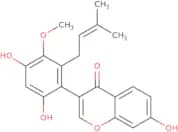
Kwakhurin
CAS:Kwakhurin is a natural compound, characterized as an isoflavone, which is derived from the plant Pueraria mirifica. This plant is traditionally found in Southeast Asia and has been used in traditional medicine for various health benefits. Kwakhurin acts primarily as a phytoestrogen, meaning it can mimic the activity of estrogen in the body by binding to estrogen receptors. This behavior enables it to potentially modulate hormonal balances and exert estrogenic effects.Fórmula:C21H20O6Pureza:(%) Min. 95%Forma y color:White/Off-White SolidPeso molecular:368.38 g/molNaringenin-7-glucoside
CAS:Naringenin-7-glucoside is a flavonoid glycoside, which is primarily sourced from citrus fruits and certain herbs. This compound is a glucoside derivative of naringenin, a type of flavanone commonly found in a variety of plant species. With its distinct chemical structure, Naringenin-7-glucoside exerts its effects primarily through antioxidant and anti-inflammatory mechanisms. The compound works by scavenging free radicals and modulating cell signaling pathways, thereby reducing oxidative stress and inflammation at the cellular level.
Fórmula:C21H22O10Pureza:Min. 95%Forma y color:White Off-White PowderPeso molecular:434.39 g/molCyrtopterinetin
CAS:Cyrtopterinetin is a naturally occurring flavonoid compound, which is derived from specific plant sources such as Cyrtomium species in Pteridaceae. This compound exerts its biological effects primarily through the modulation of various signaling pathways. It affects key molecular targets involved in the regulation of cell proliferation, apoptosis, and inflammation. The ability of cyrtopterinetin to influence these pathways is attributed to its capacity to bind with cellular proteins and alter gene expression.Fórmula:C17H16O5Pureza:Min. 98 Area-%Peso molecular:300.31 g/molKaempferol-3-glucoside(6”-O-acetate)-7-glucoside
CAS:Kaempferol-3-glucoside(6”-O-acetate)-7-glucoside is a flavonoid glycoside, which is a naturally occurring compound found in various plants and foods. This compound originates from plant sources, notably in fruits, vegetables, and certain traditional medicines, where it is biosynthesized as a secondary metabolite.
Fórmula:C29H32O17Pureza:Min. 95%Peso molecular:652.55 g/mol6,2',3'-Trimethoxyflavanone
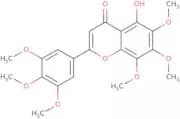
CAS:6,2',3'-Trimethoxyflavanone is a type of flavonoid compound, specifically a flavanone, which is derived from natural sources, commonly plants. These compounds are often extracted from various parts of plants such as leaves, stems, or seeds, where they naturally occur in small quantities. The structure of flavanones, characterized by their three-ring system and methoxy groups, contributes to their biochemical activity.Fórmula:C18H16O5Pureza:Min. 95%Forma y color:PowderPeso molecular:312.3 g/mol3',4',5',6,7,8-Hexamethoxy-5-hydroxyflavone
CAS:3',4',5',6,7,8-Hexamethoxy-5-hydroxyflavone is a methoxylated flavonoid, which is a type of polyphenolic compound derived from various plant sources. These compounds are often synthesized naturally within the plant kingdom, and their structures are characterized by multiple methoxy groups that contribute to their distinct bioactive properties.Fórmula:C21H22O9Pureza:Min. 95%Forma y color:PowderPeso molecular:418.39 g/molRutin hydrate
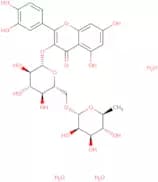
CAS:Capillary protectant; free radical scavenger; antioxidantFórmula:C27H30O16·3H2OPureza:Min. 95 Area-%Forma y color:Yellow PowderPeso molecular:664.56 g/mol7,8,2',4'-Tetrabenzyloxyisoflavone
7,8,2',4'-Tetrabenzyloxyisoflavone is a synthetic chemical compound derived from the modification of the isoflavone structure. It is designed for research purposes and acts as a biochemical tool in studying the effects and interactions of isoflavones and their derivatives. The compound is synthesized through a series of benzylation reactions involving isoflavone, sourced primarily from plant-based materials like soybeans, known for their phytoestrogen properties.
Fórmula:C43H34O6Pureza:Min. 95%Peso molecular:646.73 g/mol7,8-Benzoflavone
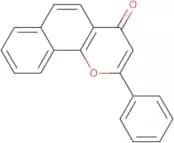
CAS:7,8-Benzoflavone is a synthetic flavonoid compound, which is derived from the structural modification of naturally occurring flavones. It possesses significant biochemical activity attributed to its ability to act as a potent inhibitor of certain cytochrome P450 enzymes, particularly CYP1A1 and CYP1B1. By inhibiting these enzymes, 7,8-Benzoflavone modulates the metabolism of various xenobiotics, impacting the bioactivation or detoxification of potential carcinogens.Fórmula:C19H12O2Pureza:Min. 95%Forma y color:White PowderPeso molecular:272.3 g/molGlycitein
CAS:Glycitein is an isoflavone compound, which is a type of phytoestrogen primarily derived from soy products. It is sourced from soybeans, where it functions as a secondary metabolite. In biochemical terms, glycitein exhibits modes of action characterized by its estrogenic and antioxidant activities. It interacts with estrogen receptors in the body, mimicking the hormone's effects to a certain extent, which can influence numerous physiological processes.Fórmula:C16H12O5Pureza:Min. 95%Forma y color:PowderPeso molecular:284.26 g/molKaempferol-3-O-glucorhamnoside - 65%
CAS:Kaempferol-3-O-glucorhamnoside - 65% is a flavonoid glycoside, which is derived from various plant sources such as tea, broccoli, and apples. This compound is a conjugate of the flavonoid kaempferol with sugar moieties, specifically glucose and rhamnose. Its biochemical mode of action involves modulating various signaling pathways, including those related to oxidative stress and inflammation. By influencing these pathways, it may inhibit the production of reactive oxygen species (ROS) and regulate the expression of inflammatory cytokines.Fórmula:C27H30O15Pureza:Min. 95%Forma y color:PowderPeso molecular:594.52 g/molLoureirin B
CAS:Loureirin B is a natural polyphenolic compound, which is derived from the resin of Dracaena cochinchinensis, commonly known as Dragon's Blood. This compound exhibits its mode of action primarily through the inhibition of key inflammatory pathways, including the suppression of cyclooxygenase-2 (COX-2) and the reduction of pro-inflammatory cytokines. Such mechanisms suggest its potential in modulating inflammatory responses effectively.Fórmula:C18H20O5Pureza:Min. 95%Forma y color:White PowderPeso molecular:316.35 g/mol5,2'-Dihydroxyflavone
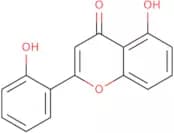
CAS:5,2'-Dihydroxyflavone is a type of flavonoid, which is a class of polyphenolic compounds. These compounds are predominantly found in various plants, serving as part of their secondary metabolites. As a natural phytochemical, 5,2'-Dihydroxyflavone has garnered attention for its potential bioactive properties, particularly in the realm of neuroprotection.Fórmula:C15H10O4Pureza:Min. 95%Peso molecular:254.24 g/molEriodictyol - 98%
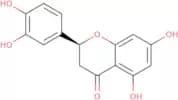
CAS:Eriodictyol - 98% is a flavonoid compound, which is a type of plant-based molecule. It is primarily sourced from multiple plant species, including certain herbs and bark, notably from the Eriodictyon genus. As a bioactive compound, eriodictyol functions by modulating cellular oxidative stress responses through its ability to scavenge free radicals and inhibit reactive oxygen species.Fórmula:C15H12O6Pureza:Min. 98 Area-%Forma y color:White PowderPeso molecular:288.25 g/mol7-Methoxyflavone
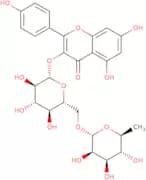
CAS:7-Methoxyflavone is a bioactive compound classified as a flavonoid, which is derived from various natural sources such as plants, fruits, and vegetables. This compound exerts its biological effects through modulation of enzyme activity and interaction with cellular signaling pathways, primarily involving the modulation of cytochrome P450 enzymes and affecting neurotransmitter systems.Fórmula:C16H12O3Pureza:Min. 95%Forma y color:White PowderPeso molecular:252.26 g/molKaempferol-3-rutinoside
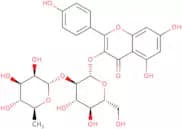
CAS:Kaempferol-3-rutinoside is a naturally occurring flavonoid glycoside, which is derived from various plant sources such as tea, fruits, and vegetables. It is a complex compound where the flavonoid kaempferol is conjugated to a disaccharide, rutinoside. The mode of action involves its ability to scavenge free radicals due to its antioxidant properties, as well as inhibit specific enzymes and pathways associated with inflammation, thus providing both antioxidant and anti-inflammatory benefits.Fórmula:C27H30O15Pureza:Min. 95%Forma y color:PowderPeso molecular:594.52 g/molAzoxystrobin
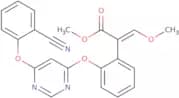
CAS:Azoxystrobin is a fungicide, which is a synthesized chemical compound, derived from natural strobilurin compounds produced by fungi. Its mode of action involves inhibiting mitochondrial respiration in fungi by blocking the cytochrome bc1 complex, disrupting energy production essential for fungal growth and survival.Fórmula:C22H17N3O5Pureza:Min. 95%Forma y color:PowderPeso molecular:403.39 g/mol3',4',7-Trihydroxyisoflavone
CAS:3',4',7-Trihydroxyisoflavone is a naturally occurring isoflavone, which is derived from plants, particularly those in the legume family. This compound is part of the flavonoid class of polyphenols, known for their extensive presence in various plant and food sources. The source of 3',4',7-Trihydroxyisoflavone can often be traced back to soybeans and other similar legumes, which are rich in these phenolic compounds.Fórmula:C15H10O5Pureza:Min. 95%Forma y color:Slightly Yellow PowderPeso molecular:270.24 g/molFlavanone
CAS:Flavanone is a type of flavonoid, which is a class of plant secondary metabolites. This compound is primarily found in citrus fruits such as oranges, lemons, and grapefruits. As a natural polyphenolic antioxidant, flavanone exhibits its mode of action by scavenging free radicals, thereby reducing oxidative stress within biological systems. This activity is crucial in modulating signaling pathways and enhancing the cellular antioxidant capacity.
Fórmula:C15H12O2Pureza:Min. 95%Forma y color:PowderPeso molecular:224.25 g/molEucomin dimethyl ether
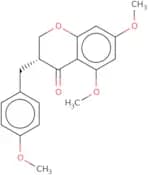
CAS:Eucomin dimethyl ether is a synthetic compound, which is a specially synthesized chemical molecule derived through a series of controlled laboratory reactions. Its mode of action involves acting as a methylating agent where it can add methyl groups to other compounds, a key property exploited in various chemical syntheses.Fórmula:C19H20O5Pureza:Min. 95%Peso molecular:328.36 g/mol