Flavonoides
Subcategorías de "Flavonoides"
- Antocianidinas(46 productos)
- Antocianina(46 productos)
- Catequina(88 productos)
- Chalconas(237 productos)
- Pterocarpan(28 productos)
Se han encontrado 2410 productos de "Flavonoides"
Dihydrodaidzein-7,4'-dimethylether
CAS:Dihydrodaidzein-7,4'-dimethylether is a synthetic compound that falls under the category of isoflavone derivatives. Isoflavones are naturally occurring compounds typically sourced from soybeans and other legumes. Their structural similarity to estrogen allows them to exert estrogenic or anti-estrogenic effects, depending on the context and biological system.
Fórmula:C17H16O4Pureza:Min. 95%Forma y color:PowderPeso molecular:284.31 g/molApigenin-7-O-glucronide
CAS:Apigenin-7-O-glucronide is a flavonoid derivative, which is a bioactive compound found naturally in various plants, particularly in those used medicinally or as nutritional supplements. Its source includes a variety of plant species, where it exists as part of the plant's secondary metabolites, often contributing to the plant's defense mechanisms.Fórmula:C21H18O11Pureza:Min. 98 Area-%Forma y color:PowderPeso molecular:446.36 g/mol6,4'-Dimethoxyflavone
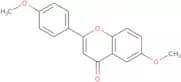
CAS:6,4'-Dimethoxyflavone is a naturally occurring flavone, which is a type of polyphenolic compound typically found in various plants. It is derived from natural sources such as certain species of citrus fruits and other flavonoid-rich plants. The compound is characterized by the presence of two methoxy groups attached to its flavone backbone.
Fórmula:C17H14O4Pureza:Min. 95%Peso molecular:282.29 g/mol3-Hydroxy-7,2',3'-trimethoxyflavone
CAS:3-Hydroxy-7,2',3'-trimethoxyflavone is a naturally occurring flavonoid, which is a type of polyphenolic compound commonly found in plants. These compounds are typically sourced from various plant species where they are known to contribute to pigmentation and offer protective functions.Fórmula:C18H16O6Pureza:Min. 95%Peso molecular:328.32 g/mol3-Hydroxy-7,8-dimethoxyflavone
CAS:3-Hydroxy-7,8-dimethoxyflavone is a synthetic flavonoid derivative, which is structurally sourced from the broader class of naturally occurring flavonoids found in various plants. It functions primarily as a potent and selective ligand for the TrkB receptor, a receptor for brain-derived neurotrophic factor (BDNF). This interaction mimics the effects of BDNF, promoting neuronal survival, synaptic plasticity, and neurogenesis, thereby facilitating neuroprotective and neurorestorative processes.
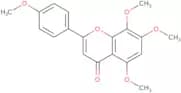
Fórmula:C17H14O5Pureza:Min. 95%Peso molecular:298.29 g/mol5,7,8,4'-Tetramethoxyflavone
CAS:5,7,8,4'-Tetramethoxyflavone is a naturally occurring flavone, which is a type of plant-derived polyphenolic compound. It is found in various plants, particularly those belonging to the genus Scutellaria. The compound acts primarily by modulating various cellular signaling pathways, including those involved in inflammation, apoptosis, and oxidative stress. Through its interaction with these pathways, it exhibits potential anti-inflammatory, antioxidant, and anti-cancer properties.
Fórmula:C19H18O6Pureza:Min. 95%Forma y color:White PowderPeso molecular:342.34 g/molPratensein
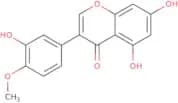
CAS:Pratensein is an isoflavone compound that is derived primarily from plants such as red clover (Trifolium pratense). This natural product belongs to the class of phytochemicals known for their diverse biological activities. Pratensein is sourced through the extraction and purification processes that involve isolating the bioactive components from plant materials rich in flavonoids.Fórmula:C16H12O6Pureza:Min. 95%Forma y color:PowderPeso molecular:300.26 g/molTexasin 7-O-glucoside
CAS:Texasin 7-O-glucoside is a flavonoid glycoside, which is a plant-derived compound with significant antioxidant properties. This glycoside is sourced primarily from plants, where it naturally occurs as a secondary metabolite. It is composed of the flavonoid backbone, texasetin, conjugated with a glucose molecule at the 7-O position, enhancing its solubility and bioavailability in biological systems.
Fórmula:C22H22O10Pureza:Min. 95%Peso molecular:446.4 g/molEupatorin - 98%
CAS:Eupatorin - 98% is a high-purity flavonoid compound, which is extracted primarily from various plant species such as Eupatorium. This compound is renowned for its bioactive properties, engaging in numerous biochemical interactions that contribute to its therapeutic potentials. Eupatorin operates through multiple biochemical pathways as an inhibitor of specific enzymes like cytochrome P450s and as a modulator of cellular signaling pathways. This enables it to exert anti-inflammatory, anticancer, and antioxidant effects, making it a valuable subject of study in pharmaceutical and clinical research.Fórmula:C18H16O7Pureza:Min. 95%Forma y color:White PowderPeso molecular:344.32 g/mol3'-Benzyloxy-5,7-dihydroxy-3,4'-dimethoxyflavone
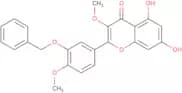
CAS:3'-Benzyloxy-5,7-dihydroxy-3,4'-dimethoxyflavone is a synthetic flavone derivative, which is primarily obtained through targeted chemical synthesis in laboratory settings. This compound belongs to a broader class of polyphenolic flavonoids, which are known for their potential bioactive properties.Fórmula:C24H20O7Pureza:Min. 95%Peso molecular:420.41 g/molSwertisin
CAS:Swertisin is a naturally occurring flavonoid, which is extracted primarily from medicinal plants like Swertia and Enicostemma species. This compound is a C-glycosyl flavone, found in various herbs traditionally used in different cultural medicinal practices. The mode of action of Swertisin involves its interaction with cellular pathways, leading to anti-inflammatory, antioxidant, and potential anti-diabetic effects. These bioactivities are primarily mediated through modulation of enzyme activity and gene expression related to oxidative stress and inflammation.
Fórmula:C22H22O10Pureza:Min. 98 Area-%Forma y color:PowderPeso molecular:446.4 g/mol3'-Hydroxyflavanone
CAS:3'-Hydroxyflavanone is a naturally occurring flavonoid compound, which is derived from various plant sources, including citrus fruits and some leguminous plants. Its chemical structure contains a flavanone backbone with a hydroxyl group at the 3' position, contributing to its unique properties and biological activity.Fórmula:C15H12O3Pureza:Min. 95%Forma y color:White PowderPeso molecular:240.25 g/molSalvigenin
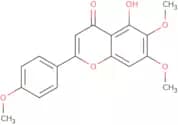
CAS:Salvigenin is a flavone compound, which is found in various species of the Salvia plant. It is a naturally occurring phytochemical characterized by its potential to modulate biological pathways. Salvigenin primarily acts by interacting with biochemical pathways, exhibiting antioxidant and anti-inflammatory activities. These activities are thought to result from its ability to modulate enzyme activity, influence signaling pathways, and scavenge free radicals.
Fórmula:C18H16O6Pureza:Min. 95%Forma y color:Off-White PowderPeso molecular:328.32 g/molKaempferol 3-O-b-D-glucuronide
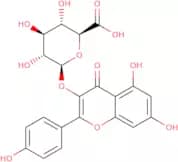
CAS:Kaempferol 3-O-b-D-glucuronide is a bioactive flavonoid glucuronide, which is a naturally occurring compound found in various plants, fruits, and vegetables. It is formed through the glucuronidation of the parent compound, kaempferol, a process which enhances its solubility and bioavailability. This compound exhibits significant antioxidant activity through its ability to scavenge free radicals and reduce oxidative stress within biological systems.Fórmula:C21H18O12Pureza:Min. 95%Forma y color:PowderPeso molecular:462.36 g/molNaringin hydrate
CAS:Naringin hydrate is a flavonoid compound, which is found predominantly in citrus fruits such as grapefruits. This compound is a glycoside, sourced primarily from the peels and seeds of these fruits, playing a role as a natural constituent of the fruit's phytonutrient profile. The mode of action of naringin hydrate involves its ability to modulate a variety of biological pathways. It exhibits antioxidant properties by scavenging free radicals and enhancing the body’s endogenous antioxidant enzymes. Additionally, naringin hydrate demonstrates anti-inflammatory actions through the inhibition of pro-inflammatory cytokines and the modulation of signaling pathways such as NF-kB and MAPK.Fórmula:C27H32O14•H2OPureza:Min. 95%Forma y color:PowderPeso molecular:598.55 g/molKaempferol-3-glucoside-7-rhamnoside
CAS:Kaempferol-3-glucoside-7-rhamnoside is a flavonoid glycoside, which is a natural compound found in several plant species, including tea, broccoli, and propolis. It is synthesized through glycosylation, where sugar moieties are enzymatically attached to the kaempferol backbone. This compound is known for its potent antioxidant activity, capable of scavenging free radicals and protecting cells from oxidative stress.
Fórmula:C27H30O15Pureza:Min. 95%Forma y color:PowderPeso molecular:594.52 g/molBryacarpene-2
CAS:Bryacarpene-2 is a terpene compound, which is derived from natural sources, specifically marine bryozoans. Its mode of action involves interacting with specific biological pathways, potentially influencing cellular processes such as apoptosis and inflammation. This interaction suggests its potential as a therapeutic agent in various biomedical fields. The uses and applications of Bryacarpene-2 are currently under investigation, particularly its role in medical research related to anti-cancer, anti-inflammatory, and antimicrobial properties. The exploration of Bryacarpene-2 highlights its capacity as a candidate for drug development, offering a promising avenue for scientific exploration and potential clinical applications.
Fórmula:C18H16O6Pureza:Min. 95%Peso molecular:328.32 g/molTheaflavin-3,3'-digallate
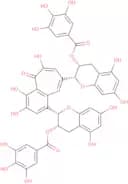
CAS:Theaflavin-3,3'-digallate is a polyphenolic compound, which is primarily derived from black tea through the oxidative fermentation of tea leaves. This compound is part of the theaflavins, which result from the enzymatic oxidation of catechins, the major constituents of green tea. It exhibits various biological activities due to its complex molecular structure, which includes multiple hydroxyl groups that facilitate specific intermolecular interactions.Fórmula:C43H32O20Pureza:Min. 95%Forma y color:Red PowderPeso molecular:868.7 g/molApigenin - 97%
CAS:Apigenin - 97% is a high-purity flavonoid compound, which is primarily derived from various plant sources such as parsley, chamomile, and celery. This compound is known for its significant presence in the plant kingdom, where it functions as a secondary metabolite contributing to plant defense.Fórmula:C15H10O5Pureza:Min. 97 Area-%Forma y color:PowderPeso molecular:270.24 g/molQuercetin 3,4'-dimethyl ether
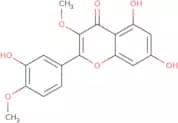
CAS:Quercetin 3,4'-dimethyl ether is a flavonoid derivative, which is a naturally occurring compound found in various plants. It is part of the larger family of flavonoids, known for their diverse biological activities and presence in numerous botanical sources such as fruits, vegetables, and medicinal herbs. The modification of quercetin by methylation alters its solubility and bioavailability, potentially enhancing its biological effects.Fórmula:C17H14O7Pureza:Min. 95%Peso molecular:330.29 g/mol