Flavonoides
Los flavonoides son un grupo de metabolitos vegetales con propiedades antioxidantes que contribuyen al color de frutas y flores. Desempeñan un papel significativo en la protección de las plantas contra la radiación UV y los patógenos. Los flavonoides se estudian por sus potenciales beneficios para la salud, incluidas propiedades antiinflamatorias, antivirales y anticancerígenas. Son ampliamente investigados en los campos de la farmacología, la nutrición y la biología molecular.
Subcategorías de "Flavonoides"
- Antocianidinas(46 productos)
- Antocianina(46 productos)
- Catequina(88 productos)
- Chalconas(237 productos)
- Pterocarpan(28 productos)
Se han encontrado 2408 productos de "Flavonoides"
Ordenar por
Pureza (%)
0
100
|
0
|
50
|
90
|
95
|
100
2',7,8-Trimethoxyflavone
CAS:<p>2',7,8-Trimethoxyflavone is a specialized flavonoid compound, which is naturally derived from certain medicinal plants. This compound belongs to the broader class of polyphenolic molecules known as flavones, often found in various fruits and vegetables. It is primarily isolated from plants such as Kaempferia parviflora, renowned for its traditional use in herbal medicine.</p>Fórmula:C18H16O5Pureza:Min. 95%Peso molecular:312.32 g/molRef: 3D-XT182988
Producto descatalogado3-O-Methyl quercetin
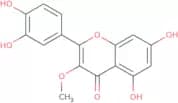
CAS:<p>3-O-Methyl quercetin is a flavonoid derivative, which is a naturally occurring compound found in various plant sources, particularly in fruits and vegetables. This compound is structurally related to quercetin, a well-known flavonoid, and differs by a methoxy group substitution at the 3-position. The biological activity of 3-O-Methyl quercetin is primarily attributed to its antioxidant and anti-inflammatory properties. It acts by scavenging free radicals and modulating enzymatic pathways that influence oxidative stress and inflammation.</p>Fórmula:C16H12O7Pureza:Min. 95 Area-%Forma y color:PowderPeso molecular:316.26 g/molRef: 3D-FM25555
Producto descatalogado6,7-Dimethoxy-2',4'-dihydroxyisoflavone
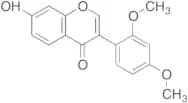
CAS:<p>6,7-Dimethoxy-2',4'-dihydroxyisoflavone is a naturally occurring isoflavone, which is typically derived from various plant sources, such as legumes or medicinal herbs. It belongs to a class of polyphenolic compounds known for their antioxidative capabilities. This compound acts primarily by scavenging free radicals and reducing oxidative stress, thus protecting cellular structures from damage. Its mode of action involves the modulation of cellular antioxidant pathways and potential interaction with estrogen receptors, contributing to its biological effects.</p>Fórmula:C17H14O6Pureza:Min. 95%Peso molecular:314.29 g/mol7,8,3'-Trihydroxyflavone
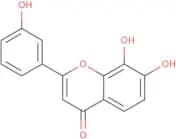
CAS:<p>7,8,3'-Trihydroxyflavone is a type of flavonoid, which is a class of polyphenolic compounds. It is primarily derived from various plant sources, including certain fruits, vegetables, and herbs known for their antioxidant properties. Its mode of action involves selective agonism of the tropomyosin receptor kinase B (TrkB), a receptor associated with the brain-derived neurotrophic factor (BDNF).</p>Fórmula:C15H10O5Pureza:Min. 95%Forma y color:PowderPeso molecular:270.24 g/molRef: 3D-XT183040
Producto descatalogadoNevadensin
CAS:<p>Nevadensin is a naturally occurring flavonoid compound, which is isolated from the plant *Rosmarinus officinalis*, commonly known as rosemary. Rosemary is a member of the Lamiaceae family and is widely recognized for its antioxidant and aromatic properties. The active ingredient, nevadensin, exerts its effects primarily through the inhibition of the cyclooxygenase (COX) enzymes, particularly COX-2, which are key players in the inflammatory process. This inhibition reduces the production of pro-inflammatory mediators, contributing to its anti-inflammatory activity.</p>Fórmula:C18H16O7Pureza:Min. 98 Area-%Forma y color:Yellow PowderPeso molecular:344.32 g/mol3'-Methoxydaidzein
CAS:<p>3'-Methoxydaidzein is an isoflavone compound, which is typically isolated from soybean sources. This compound belongs to a class of phytoestrogens, naturally occurring plant-derived compounds with estrogenic activity. 3'-Methoxydaidzein exhibits various biological activities due to its structural similarity to human estrogens, allowing it to bind to estrogen receptors. Its mode of action primarily involves modulating estrogen receptor activity, potentially influencing gene expression in estrogen-responsive tissues.</p>Pureza:Min. 95%Hinokiflavone
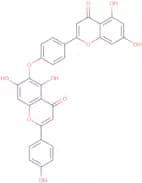
CAS:<p>A cytotoxic biflavonoid from Toxicodendron succedaneum, Juniperus sp., and Chamaecyparis obtusa (hinoki).</p>Fórmula:C30H18O10Pureza:Min. 97 Area-%Forma y color:PowderPeso molecular:538.46 g/molRef: 3D-FH74127
Producto descatalogado