Flavonoides
Subcategorías de "Flavonoides"
- Antocianidinas(46 productos)
- Antocianina(46 productos)
- Catequina(88 productos)
- Chalconas(237 productos)
- Pterocarpan(28 productos)
Se han encontrado 2410 productos de "Flavonoides"
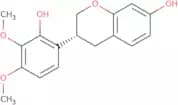
Isomucronulatol
CAS:Isomucronulatol is a naturally occurring flavonoid compound, which is a secondary metabolite sourced primarily from various plant species. It exhibits significant antioxidant activity by scavenging free radicals and reducing oxidative stress, which can damage cellular components such as lipids, proteins, and DNA. Additionally, Isomucronulatol demonstrates anti-inflammatory effects by modulating signaling pathways involved in the inflammatory response, thereby reducing the production of pro-inflammatory cytokines.
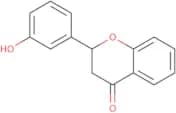
Fórmula:C17H18O5Pureza:Min. 95%Forma y color:PowderPeso molecular:302.32 g/mol3'-Hydroxyflavanone
CAS:3'-Hydroxyflavanone is a naturally occurring flavanone, which is a type of polyphenolic compound found in various plants and fruits. Known for its presence in citrus fruits and certain herbal sources, 3'-Hydroxyflavanone is characterized by its unique structural configuration, featuring a hydroxyl group that is crucial for its bioactivity.
Fórmula:C15H12O3Pureza:Min. 95%Peso molecular:240.26 g/molRef: 3D-SDA49665
Producto descatalogadoQuercetin 3-O-rutinoside-7-O-glucoside
CAS:Quercetin 3-O-rutinoside-7-O-glucoside is a flavonoid derivative, which is a specialized plant metabolite known for its diverse bioactive properties. Extracted primarily from plant sources, this compound is a glycoside derivative of quercetin, a well-known flavonoid found abundantly in fruits and vegetables. The specific glycosylation at the 3-O-rutinoside and 7-O-glucoside positions enhances its solubility and bioavailability compared to its aglycone form.
Fórmula:C33H40O21Pureza:Min. 95%Peso molecular:772.66 g/molRef: 3D-XQ172648
Producto descatalogadoSinocrassoside C1
CAS:Sinocrassoside C1 is a cycloartane triterpenoid, which is a class of chemical compounds. It is derived from the plant genus Sinocrassula, known for its traditional medicinal applications. The mode of action of Sinocrassoside C1 involves interactions with specific cellular targets, potentially influencing signal transduction pathways and modulating enzyme activities. These interactions may account for its reported bioactivities, including anti-inflammatory, anti-tumor, and neuroprotective effects.
Fórmula:C27H30O16Pureza:Min. 95%Peso molecular:610.52 g/mol5,7,3'-Trihydroxy-4'-methoxy-8-prenylflavanone
CAS:5,7,3'-Trihydroxy-4'-methoxy-8-prenylflavanone is a prenylated flavanone, which is often isolated from various plant sources, particularly those in the Fabaceae family. The compound belongs to a class of naturally occurring polyphenolic compounds that have drawn interest for their diverse biological activities. It is characterized by the presence of a prenyl group and multiple hydroxy and methoxy functional groups, contributing to its unique chemical properties.Fórmula:C21H22O6Pureza:Min. 95%Peso molecular:370.4 g/molRef: 3D-TAC14015
Producto descatalogado2,3-Dehydrokievitone
CAS:2,3-Dehydrokievitone is a phytoalexin, which is a naturally occurring antimicrobial compound. It is derived from leguminous plants, such as those in the Fabaceae family. Phytoalexins are synthesized de novo by plants in response to pathogen attack, and 2,3-Dehydrokievitone plays a role in the plant’s defense mechanisms.
Fórmula:C20H18O6Pureza:Min. 95%Peso molecular:354.35 g/molRef: 3D-XD161868
Producto descatalogadoRhamnetin-3-rutinoside
CAS:Rhamnetin-3-rutinoside is a specialized bioflavonoid, a type of plant-derived polyphenolic compound. It is typically sourced from various plant species, where it naturally occurs as part of the plant’s secondary metabolites. This compound functions primarily as an antioxidant, where its mode of action involves scavenging free radicals and stabilizing reactive oxygen species, thereby protecting cells from oxidative stress.
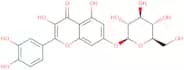
Fórmula:C28H32O16Pureza:Min. 95%Peso molecular:624.54 g/molQuercetin-7-O-β-D-glucopyranoside
CAS:Quercetin-7-O-β-D-glucopyranoside is a flavonoid glycoside, which is a specialized type of bioactive compound found predominantly in various plants. Structurally, it constitutes quercetin—a well-known flavonoid—conjugated with a glucose molecule, specifically at the 7th position of the quercetin structure. This compound is primarily sourced from fruits, vegetables, and various herbs.
Fórmula:C21H20O12Pureza:Min. 95%Forma y color:Yellow PowderPeso molecular:464.38 g/molSumatrol
CAS:Sumatrol is a selective herbicide, which is a compound derived from synthetic sources designed to inhibit the growth of unwanted vegetation. It functions primarily by disrupting specific physiological processes in plants, specifically targeting the enzymatic pathways critical for the growth of broadleaf weeds and grasses. Its action mechanism involves the inhibition of key enzymes that lead to the cessation of cellular division and growth within the targeted plant species.
Fórmula:C23H22O7Pureza:(%) Min. 95%Forma y color:White PowderPeso molecular:410.42 g/molCajanol
CAS:Cajanol is a naturally occurring compound, which is a flavonoid isolated from the plant *Cajanus cajan* (commonly known as pigeon pea). This compound is primarily extracted from the leaves and seeds of the plant through various chromatographic techniques, ensuring high purity and bioactive consistency. Cajanol functions by interacting with cellular pathways, exhibiting antioxidant and anti-inflammatory properties. It achieves this through the scavenging of free radicals and modulation of signaling pathways involved in cellular stress responses.
Fórmula:C17H16O6Pureza:Min. 95%Forma y color:PowderPeso molecular:316.31 g/molRef: 3D-XC161666
Producto descatalogado