Flavonoides
Los flavonoides son un grupo de metabolitos vegetales con propiedades antioxidantes que contribuyen al color de frutas y flores. Desempeñan un papel significativo en la protección de las plantas contra la radiación UV y los patógenos. Los flavonoides se estudian por sus potenciales beneficios para la salud, incluidas propiedades antiinflamatorias, antivirales y anticancerígenas. Son ampliamente investigados en los campos de la farmacología, la nutrición y la biología molecular.
Subcategorías de "Flavonoides"
- Antocianidinas(46 productos)
- Antocianina(46 productos)
- Catequina(88 productos)
- Chalconas(237 productos)
- Pterocarpan(28 productos)
Se han encontrado 2408 productos de "Flavonoides"
Ordenar por
Pureza (%)
0
100
|
0
|
50
|
90
|
95
|
100
Kaempferol-3-(p-coumaryl)glucoside
CAS:<p>Kaempferol-3-(p-coumaryl)glucoside is a bioactive phenolic compound found in the plant Tilia tomentosa. It has been shown to have hypoglycemic and anti-inflammatory effects, as well as an ability to inhibit the production of cytokines that are important for the development of inflammatory bowel disease. Kaempferol-3-(p-coumaryl)glucoside has also been shown to have an antiviral effect against infectious diseases such as HIV and herpes simplex virus type 2 (HSV2). This compound binds to the signal pathways that regulate apoptosis, which leads to cell death. Kaempferol-3-(p-coumaryl)glucoside can also cause DNA damage and genotoxic activity in bacteria.</p>Fórmula:C30H26O13Pureza:Min. 95%Forma y color:PowderPeso molecular:594.52 g/mol3',4'-Dihydroxyflavanone
<p>3',4'-Dihydroxyflavanone is a type of flavonoid, which is a class of polyphenolic compounds known for diverse biological activities. This compound is primarily sourced from various plants, where it plays a role in plant defense mechanisms due to its antioxidant properties. The mode of action of 3',4'-Dihydroxyflavanone involves the scavenging of free radicals, thereby mitigating oxidative stress at the cellular level. This activity is facilitated by its dihydroxy structure, which allows it to donate hydrogen atoms to neutralize reactive oxygen species.</p>Fórmula:C15H10O4Pureza:Min. 95%Peso molecular:254.24 g/molGlycitein-7-O-methyl ether
CAS:<p>Glycitein-7-O-methyl ether is an isoflavone derivative, which is a type of flavonoid. It is primarily sourced from soybean and other leguminous plants, where it is present as a minor phytoestrogen. The mode of action of Glycitein-7-O-methyl ether involves mimicking estrogenic activity, binding to estrogen receptors, which could potentially affect various physiological processes. Additionally, it may exhibit antioxidant properties, scavenging free radicals and thereby influencing oxidative stress-related pathways.</p>Fórmula:C17H14O5Pureza:Min. 95%Peso molecular:298.29 g/molPatuletin
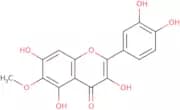
CAS:<p>Patuletin is a naturally occurring flavonoid, which is derived primarily from various plants. It is a type of polyphenolic compound that is widely recognized for its potential therapeutic properties. The source of Patuletin is mostly plant-based, where it is usually extracted from species in the Asteraceae family. The mode of action of Patuletin involves multiple biochemical interactions, including its potential to modulate oxidative stress and inflammation pathways. It acts by scavenging free radicals and may inhibit key enzymes linked to inflammation.</p>Fórmula:C16H12O8Pureza:80%Forma y color:White PowderPeso molecular:332.26 g/molTheaflavin
CAS:Theaflavin is a polyphenolic compound, which is derived from the oxidation of catechins in black tea leaves. This compound acts as an antioxidant by scavenging free radicals and reducing oxidative stress. Theaflavin modulates various signaling pathways, influencing cellular processes such as apoptosis and inflammation. Its antioxidant capabilities are attributed to its ability to donate electrons and stabilize radical species, thus protecting cellular components from damage.Fórmula:C29H24O12Pureza:Min. 95%Forma y color:Red PowderPeso molecular:564.49 g/mol6-Hydroxy-5,7,4'-trimethoxyflavone
CAS:<p>6-Hydroxy-5,7,4'-trimethoxyflavone is a methoxylated flavone, which is a type of polyphenolic compound. It is derived from various natural sources, including certain plant species where flavonoids are abundant. This compound features distinct methoxy and hydroxyl groups that contribute to its biochemical activity.</p>Fórmula:C18H16O6Pureza:Min. 95%Peso molecular:328.32 g/molSigmoidin C
CAS:Sigmoidin C is a naturally occurring alkaloid, which is derived from the roots of certain species within the genus Alstonia. This compound is notable for its complex chemical structure and its potential therapeutic effects, which stem from its plant-based origin. Sigmoidin C operates primarily through modulating neurotransmitter systems, where it influences synaptic transmission and neuronal excitability.Fórmula:C20H18O6Pureza:Min. 95%Peso molecular:354.35 g/mol3’,4’-Dimethoxyflavanone
CAS:3’,4’-Dimethoxyflavanone is a flavonoid compound, which is a type of natural phenolic product derived from various plant sources. Its structure is characterized by a flavanone backbone with methoxy groups at the 3' and 4' positions on the B-ring. These structural features contribute to its bioactivity, allowing it to interact with various biological targets through mechanisms such as free radical scavenging, modulation of signaling pathways, and enzyme inhibition.Fórmula:C17H16O4Pureza:Min. 95%Peso molecular:284.31 g/mol2',7,8-Trihydroxyflavone
CAS:<p>2',7,8-Trihydroxyflavone is a flavonoid compound, which is naturally sourced from various plant species. It functions by acting as an agonist for the tropomyosin receptor kinase B (TrkB), a receptor for brain-derived neurotrophic factor (BDNF). This interaction modulates neurotrophic signaling pathways, promoting neuronal survival, differentiation, and synaptic plasticity.</p>Fórmula:C15H10O5Pureza:90%Forma y color:PowderPeso molecular:270.24 g/molCitrus bioflavonoids
CAS:<p>Citrus bioflavonoids are a complex of compounds, which are derived from the peel and pulp of citrus fruits such as oranges, lemons, and grapefruits. These bioflavonoids function primarily as antioxidants, neutralizing free radicals and reducing oxidative stress within biological systems. By supporting the integrity of cellular structures, they contribute to the maintenance of optimal physiological conditions.</p>Pureza:Min. 95%(±)-Naringenin
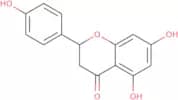
CAS:<p>Inhibits CYP3A4 and Shad 3 transcription; antioxidant; anti-tumor</p>Fórmula:C15H12O5Pureza:Min. 98 Area-%Forma y color:Brown White PowderPeso molecular:272.25 g/mol5-Methyl-7-hydroxyisoflavone
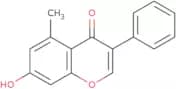
CAS:5-Methyl-7-hydroxyisoflavone is a naturally occurring isoflavone metabolite, which is derived primarily from the metabolic process of certain plant-derived flavonoids. Its source includes various legumes and other plants known for their rich isoflavone profiles. The compound acts principally by modulating cellular signaling pathways, including those involved in inflammation and oxidative stress response.Fórmula:C16H12O3Pureza:Min. 95%Forma y color:White PowderPeso molecular:252.26 g/molOrobol 3',4'-dimethyl ether
CAS:Orobol 3',4'-dimethyl ether is a synthetic flavonoid compound, which is derived from chemical modifications of naturally occurring flavonoids. These compounds are typically found in a variety of plants and are well-known for their diverse biological activities. Orobol 3',4'-dimethyl ether is specifically engineered to enhance or modify these natural properties for potential therapeutic use.Fórmula:C17H14O6Pureza:Min. 95 Area-%Forma y color:PowderPeso molecular:314.29 g/molPrunetin
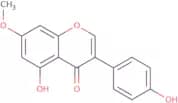
CAS:<p>Prunetin is a naturally occurring isoflavone, which is an organic compound derived from plant sources. It is primarily found in legumes and other plant materials where it naturally occurs as part of the plant's phytochemical arsenal. The mode of action of prunetin involves modulating various biochemical pathways, including acting as an antioxidant, influencing estrogenic activity, and affecting cellular signaling pathways. Its biochemical properties allow it to interact with multiple cellular targets, leading to its diverse biological activities.</p>Fórmula:C16H12O5Pureza:Min. 95%Forma y color:Slightly Brown PowderPeso molecular:284.26 g/mol5,7-Di-O-methyl-8-prenylflavanone
CAS:5,7-Di-O-methyl-8-prenylflavanone is a prenylated flavanone, which is a type of natural compound known for its structural complexity and biological activities. This compound is primarily sourced from plants, especially those in the Leguminosae family, where it plays a role in the plant's defense mechanisms. Its mode of action involves the modulation of various intracellular signaling pathways, often contributing to its anti-inflammatory and anti-cancer properties. This compound can inhibit certain enzyme activities and interfere with cellular proliferation and apoptosis processes.Fórmula:C22H24O4Pureza:Min. 95%Peso molecular:352.42 g/mol6,8-Diprenylorobol
CAS:<p>6,8-Diprenylorobol is a prenylated isoflavonoid, which is a type of bioactive compound. It is isolated primarily from various plant sources, such as those belonging to the Fabaceae family. The structural uniqueness of 6,8-Diprenylorobol arises from the addition of prenyl groups to the isoflavonoid backbone, which enhances its biological activity.</p>Fórmula:C25H26O6Pureza:Min. 95%Forma y color:PowderPeso molecular:422.47 g/molOrobol-3'-methyl ether
CAS:Orobol-3'-methyl ether is a synthetic flavonoid compound, which is derived from natural flavonoids that are typically extracted from plants. Flavonoids like Orobol-3'-methyl ether are important due to their roles in various biological processes. This compound operates primarily by interacting with enzymes, potentially inhibiting or modifying their activity. The methyl ether modification can enhance its biological activity or stability, making it a valuable tool in biochemical research.Fórmula:C16H12O6Pureza:Min. 98 Area-%Peso molecular:300.26 g/molNaringenin-7-glucoside
CAS:<p>Naringenin-7-glucoside is a flavonoid glycoside, which is primarily sourced from citrus fruits and certain herbs. This compound is a glucoside derivative of naringenin, a type of flavanone commonly found in a variety of plant species. With its distinct chemical structure, Naringenin-7-glucoside exerts its effects primarily through antioxidant and anti-inflammatory mechanisms. The compound works by scavenging free radicals and modulating cell signaling pathways, thereby reducing oxidative stress and inflammation at the cellular level.</p>Fórmula:C21H22O10Pureza:Min. 95%Forma y color:White Off-White PowderPeso molecular:434.39 g/mol7-Benzyloxy-4'-methoxyisoflavone
CAS:<p>7-Benzyloxy-4'-methoxyisoflavone is a synthetic isoflavone derivative, which is meticulously designed with specific substituents to enhance its bioactivity. This compound is derived from isoflavones, a class of naturally occurring polyphenolic compounds found predominantly in soy products and other plants. Isoflavones are known for their diverse biological activities, including antioxidant and anti-inflammatory properties.</p>Fórmula:C23H18O4Pureza:Min. 95%Peso molecular:358.39 g/molQuercetin 3-O-glucoside-7-O-rhamnoside
CAS:<p>Quercetin 3-O-glucoside-7-O-rhamnoside is a flavonoid glycoside, which is a type of secondary metabolite present in many plants. It is derived from natural sources such as fruits, vegetables, and certain grains. These compounds are known for their potential health benefits and are widely studied in the context of plant biochemistry and physiology.</p>Fórmula:C27H30O16Pureza:Min. 95%Forma y color:PowderPeso molecular:610.52 g/mol