Cannabinoides
Los cannabinoides son una clase de compuestos químicos diversos derivados de ácidos grasos o poliquétidos que actúan sobre los receptores cannabinoides en las células, alterando la liberación de neurotransmisores en el cerebro. Se encuentran principalmente en las plantas de cannabis, y cannabinoides como el THC y el CBD son ampliamente estudiados por sus efectos terapéuticos, como el alivio del dolor, propiedades antiinflamatorias y su posible uso en enfermedades neurodegenerativas. En CymitQuimica, encontrará una amplia variedad de cannabinoides para investigaciones en farmacología, neurobiología y química médica.
Se han encontrado 299 productos de "Cannabinoides"
Ordenar por
Pureza (%)
0
100
|
0
|
50
|
90
|
95
|
100
PSNCBAM-1
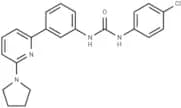
CAS:<p>PSNCBAM-1 (PSNCBAM 1) is a CB1 receptor negative allosteric modulator (EC50 = 0.1 μM) with hypophagic effects in vivo.</p>Fórmula:C22H21ClN4OPureza:99.86%Forma y color:SolidPeso molecular:392.88Heptadecanoyl ethanolamide
CAS:<p>Heptadecanoyl ethanolamide, an endogenous cannabinoid, serves as a synthetic analog of PEA, featuring an odd-numbered (17-carbon) fatty acid chain [1].</p>Fórmula:C19H39NO2Forma y color:SolidPeso molecular:313.52GSK494581A
CAS:<p>GSK494581A is a GPR55 agonist and glycine transporter subtype 1 inhibitor.</p>Fórmula:C27H28F2N2O4SPureza:98%Forma y color:SolidPeso molecular:514.58PF 514273
CAS:<p>PF 514273 is a CB1 receptor antagonist.</p>Fórmula:C21H17Cl2F2N3O2Pureza:98%Forma y color:SolidPeso molecular:452.28CAY10508
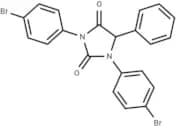
CAS:<p>CAY10508 is a potent and selective inverse agonist for the central cannabinoid (CB1) receptor with therapeutic potential for treating obesity and drug dependence, lacking psychotropic effects. It exhibits a Ki value of 243 nM and an EC50 of 195 nM. At a concentration of 10 µM, CAY10508 displaces [3H]-CP-55,940 with 100% efficacy at the CB1 receptor and 35% at the peripheral cannabinoid (CB2) receptor. Its inverse agonist activity at the CB1 receptor was confirmed through a [35S]-GTPγS binding assay.</p>Fórmula:C21H14Br2N2O2Forma y color:SolidPeso molecular:486.2O-2050
CAS:<p>O-2050: strong CB1 antagonist (Ki 2.5 nM), CB2 inhibitor (Ki 0.2 nM); reduces mouse food intake, increases activity.</p>Fórmula:C23H31NO4SPureza:98%Forma y color:SolidPeso molecular:417.56Tedalinab
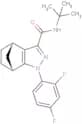
CAS:<p>Tedalinab is an effective and selective cannabinoid receptor 2 agonist.</p>Fórmula:C19H21F2N3OPureza:98%Forma y color:SolidPeso molecular:345.39PSB-SB1202
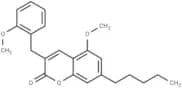
CAS:<p>PSB-SB1202 (Compound 21a), a phenyl coumarin compound, acts as a CB1/CB2 agonist. It demonstrates EC50 values of 56 and 14 nM and K i values of 32 and 49 nM for CB1 and CB2 receptors, respectively [1].</p>Fórmula:C23H26O4Forma y color:SolidPeso molecular:366.45Prostaglandin E2-1-glyceryl ester
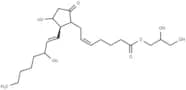
CAS:<p>Prostaglandin E2-1-glyceryl ester, a member of the Prostaglandin Glycerol Ester family, serves as an endocannabinoid ligand targeting the CB1 receptor. This compound triggers a swift and transient surge in intracellular free calcium levels [1] [2].</p>Fórmula:C23H38O7Forma y color:SolidPeso molecular:426.55GSK-554418A
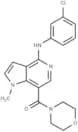
CAS:<p>GSK-554418A, a novel azaindole CB(2) agonists, is used for the treatment of chronic pain. It is efficacious in the acute model and the chronic joint pain model.</p>Fórmula:C19H19ClN4O2Forma y color:SolidPeso molecular:370.83GW405833 hydrochloride
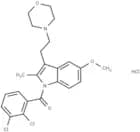
CAS:<p>GW405833 hydrochloride, a potent and selective agonist of the cannabinoid-2 (CB2) receptor (EC 50 = 0.65 nM; maximum inhibition = 44.6%), exhibits significant antihyperalgesic effects in various rodent pain models [1] [2] [3].</p>Fórmula:C23H25Cl3N2O3Forma y color:SolidPeso molecular:483.822-Linoleoyl Glycerol
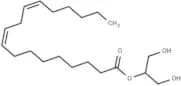
CAS:<p>2-Arachidonoyl glycerol (2-AG), a natural endocannabinoid ligand for the CB1 receptor, was isolated from porcine brain and characterized. Its congener, 2-linoleoyl glycerol (2-LG), which has a linoleoyl group instead of an arachidonoyl group, also exists alongside 2-AG in vivo. While 2-LG exhibits low intrinsic activity, it enhances the activity of 2-AG and other endocannabinoids through an "entourage" effect, attributed to the inhibition of breakdown and reuptake pathways that typically decrease endocannabinoid levels post-release.</p>Fórmula:C21H38O4Forma y color:SolidPeso molecular:354.531CB1 antagonist 1
CAS:<p>CB1 antagonist 1 is a CB1 receptor antagonist, used in the research of obesity and metabolic syndrome, neuroinflammatory disorders, cognitive disorders, and</p>Fórmula:C26H22Cl2N4Pureza:98%Forma y color:SolidPeso molecular:461.39CB 65
CAS:<p>CB 65 is a high affinity and selective CB2 receptor agonist with Ki values of 3.3 and > 1000 nM for CB2 and CB1 receptors respectively.</p>Fórmula:C22H28ClN3O3Pureza:98.73%Forma y color:SolidPeso molecular:417.93(R)-Monlunabant
CAS:<p>(R)-Monlunabant ((R)-MRI-1891) serves as a CB1 receptor antagonist utilized in obesity and metabolic disease research [1].</p>Fórmula:C26H22ClF3N6O3SPureza:98%Forma y color:SolidPeso molecular:591OMDM-5
CAS:<p>OMDM-5 is a potent vanilloid receptor type 1 (TRPV1, EC50 = 75 nM) agonist, showing weak ligand activity at cannabinoid type 1 receptor (CB1, Ki=4.9 μM).</p>Fórmula:C26H44N2O3Pureza:99.73%Forma y color:SolidPeso molecular:432.64CB-52
CAS:<p>CB-52 acts as a neutral antagonist and ligand for the CB2 cannabinoid receptor [1].</p>Fórmula:C26H43NO3Forma y color:SolidPeso molecular:417.62CB1 inverse agonist 1
CAS:<p>MRL-650 is an oral, selective CB1 agonist; IC50: CB1=7.5 nM, CB2=4100 nM; anorexigenic effects noted.</p>Fórmula:C25H18Cl3N3O3Pureza:99.92%Forma y color:SolidPeso molecular:514.79Isopropyl dodec-11-enylfluorophosphonate
CAS:<p>Isopropyl dodec-11-enylfluorophosphonate (IDEFP) is an organophosphorus ester functioning as a central cannabinoid receptor (CB1) antagonist and exhibits</p>Fórmula:C15H30FO2PPureza:98%Forma y color:SolidPeso molecular:292.37AM841
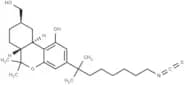
CAS:<p>AM841, a high-affinity electrophilic ligand, covalently interacts with a cysteine residue in helix six, thus activating the CB1 cannabinoid receptor.</p>Fórmula:C26H39NO3SPureza:98%Forma y color:SolidPeso molecular:445.66