Cannabinoides
Los cannabinoides son una clase de compuestos químicos diversos derivados de ácidos grasos o poliquétidos que actúan sobre los receptores cannabinoides en las células, alterando la liberación de neurotransmisores en el cerebro. Se encuentran principalmente en las plantas de cannabis, y cannabinoides como el THC y el CBD son ampliamente estudiados por sus efectos terapéuticos, como el alivio del dolor, propiedades antiinflamatorias y su posible uso en enfermedades neurodegenerativas. En CymitQuimica, encontrará una amplia variedad de cannabinoides para investigaciones en farmacología, neurobiología y química médica.
Se han encontrado 299 productos de "Cannabinoides"
Ordenar por
Pureza (%)
0
100
|
0
|
50
|
90
|
95
|
100
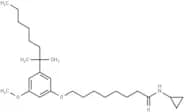
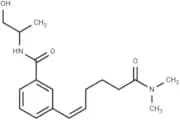
CB1/2 agonist 3
CAS:<p>CB1/2 agonist 3 is a competitive and potent CB1/CB2 agonist with high affinity for hCB1 and hCB2 and can be used to study neurological disorders.</p>Fórmula:C25H41NO2Pureza:98.78%Forma y color:SolidPeso molecular:387.6S-Methoprene
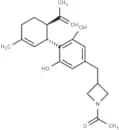
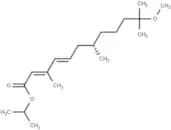
CAS:<p>S-Methoprene (ZR2458), a juvenile hormone analog, acts as an insecticide influencing redox activity and male sex differentiation.</p>Fórmula:C19H34O3Pureza:97.05% - 98.55%Forma y color:SolidPeso molecular:310.47Cannabichromenic Acid
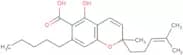
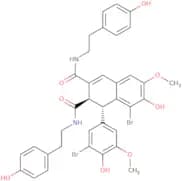
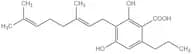
CAS:<p>Cannabichromenic acid is a non-psychoactive phytocannabinoid and a precursor of cannabichromene1 which toxicological and pharmacological properties are unknown. Due to its structural similarity to cannabichromene, it is thought to reportedly exert anti-analgesic and anti-inflammatory activity.</p>Fórmula:C22H30O4Pureza:Min. 95%Peso molecular:358.47 g/molrel-(1R,2S)-8-Bromo-1-(3-bromo-4-hydroxy-5-methoxyphenyl)-1,2-dihydro-7-hydroxy-N2,N3-bis[2-(4-hydroxyphenyl)ethyl]-6-methoxy-2,3-na phthalenedicarboxamide
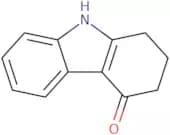
CAS:<p>rel-(1R,2S)-8-Bromo-1-(3-bromo-4-hydroxy-5-methoxyphenyl)-1,2-dihydro-7-hydroxy-N2,N3-bis[2-(4-hydroxyphenyl)ethyl]-6-methoxy-2,3-naphthalenedicarboxamide is a synthetic chemical compound, which is derived through targeted organic synthesis and structural optimization efforts. Its source lies in advanced laboratory methodologies designed to enhance specific pharmacological properties. The mode of action is expected to involve selective interaction with particular molecular targets, potentially modulating distinct pathways related to cellular function or signaling processes.</p>Fórmula:C36H34Br2N2O8Pureza:Min. 95%Forma y color:PowderPeso molecular:782.47 g/mol1,2,3,9-Tetrahydro-4H-carbazol-4-one
CAS:<p>1,2,3,9-Tetrahydro-4H-carbazol-4-one is a cyclic ketone compound, which can be synthesized through various organic reactions involving appropriate precursors. It is often derived from indole-based substrates through catalytic hydrogenation, allowing the formation of its stable tetrahydro structure with a retained core carbazole skeleton.</p>Fórmula:C12H11NOPureza:Min. 95%Forma y color:PowderPeso molecular:185.23 g/molAnandamide
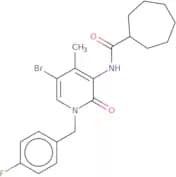
CAS:<p>Anandamide is an endogenous cannabinoid, which is a bioactive lipid mediator primarily found in the brain and peripheral organs. It is synthesized from membrane phospholipid precursors through enzymatic pathways, primarily involving the enzyme N-acyl phosphatidylethanolamine phospholipase D (NAPE-PLD). Anandamide acts as a ligand for cannabinoid receptors, mainly the CB1 receptor located in the central nervous system, and the CB2 receptor found in peripheral tissues.</p>Fórmula:C22H37NO2Pureza:Min. 95%Forma y color:Clear LiquidPeso molecular:347.53 g/molC2
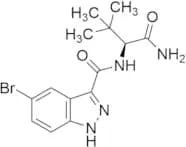
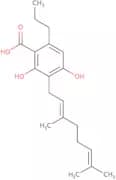
CAS:<p>Positive allosteric modulator (PAM) of cannabinoid receptors CB2. The C2 modulator is the first synthetic PAM of CB2 receptors with antinociceptive properties, which were observed in a mouse model of neuropathic pain.</p>Fórmula:C21H24BrFN2O2Pureza:Min. 95%Forma y color:White PowderPeso molecular:435.33 g/molCannabigerovarinic acid
CAS:Producto controlado<p>Cannabigerovarinic acid is a phytocannabinoid and the precursor to tetrahydrocannabivarinic acid, cannabidivarinic acid, and cannabichromevarinic acid1. No in vitro or in vivo pharmacological and toxicological studies have been conducted on cannabigerovarinic acid.</p>Fórmula:C20H28O4Pureza:Min. 95%Peso molecular:332.43 g/molGW 833972A
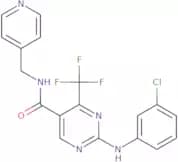
CAS:<p>A cannabinoid receptor agonist, which binds more selectively to CB2 than CB1 receptors (1000-fold). GW833972A inhibits vagus nerve depolarization induced by tussive agents, such as hypertonic saline (EC50 = 6.5 μM), capsaicin (EC50 = 33.9 μM) or PGE2 (EC50 = 15.9 μM).</p>Fórmula:C18H13ClF3N5OPureza:Min. 95%Forma y color:White To Off-White SolidPeso molecular:407.78 g/molAPD 371
CAS:<p>A selective cannabinoid receptor type 2 (CB2) agonist. Commonly, CB2 agonists induce receptor internalization, which results in desensitization and tachyphylaxis. However, APD 371 mediates efficient recycling of internalized receptors back to the plasma membrane and thus sustains analgesic effects, upon subchronic treatment, in an osteoarthritis pain model in vivo.</p>Fórmula:C18H23N5O3Pureza:Min. 95%Forma y color:White PowderPeso molecular:357.41 g/molACEA, 5mg/ml solution in ethanol
CAS:<p>Cannabinoid type 1 (CB1) receptor agonist. Anti-depressant activity demonstrated in vivo alone, as well as enhancing the effect of fluoxetine. In the brain, ACEA activates CB1 receptors expressed in the mitochondria of neuronal cells to elicit neuroprotective effects. This is mediated by inducing glycogen synthase kinase-3β (GSK-3β) phosphorylation and inhibiting the opening of mitochondrial permeability transition pore (MPTP).<br>Sold by weight of solid</p>Fórmula:C22H36ClNOPureza:Min. 95%Forma y color:Clear LiquidPeso molecular:365.98 g/molGW 833972A hydrochloride
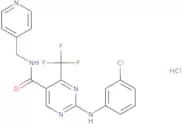
CAS:<p>A cannabinoid receptor agonist, which binds more selectively to CB2 than CB1 receptors (1000-fold). GW833972A inhibits vagus nerve depolarization induced by tussive agents, such as hypertonic saline (EC50 = 6.5 μM), capsaicin (EC50 = 33.9 μM) or PGE2 (EC50 = 15.9 μM).</p>Fórmula:C18H13ClF3N5O·HClPureza:Min. 95%Forma y color:White/Off-White SolidPeso molecular:444.24 g/molAbnormal 1''-Hydroxycannabidiol
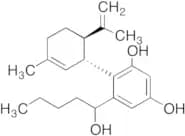
Producto controladoFórmula:C21H30O3Forma y color:NeatPeso molecular:330.4615-(4-Hydroxypentyl)-1,3-benzenediol
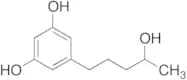
CAS:Producto controlado<p>Applications 5-(4-Hydroxypentyl)-1,3-benzenediol is an intermediate used in the synthesis of 4''-Hydroxycannabidiol (H824830), which is a metabolite of Canabidiol (C175300), a major constituents in marijuana. 4''-Hydroxycannabidiol be used to investigate canabidiol metabolism and human liver microsomes that metabolize Canabidiol into 6α-Hydroxycannabidiol.<br>References Jiang, R., et al.: Life Sci. 89, 165 (2011); Lander, N., et al.: Science 169, 611 (1970)<br></p>Fórmula:C11H16O3Forma y color:NeatPeso molecular:196.24Cannabigerovarinic acid
CAS:Carboxylic acid with phenol functionFórmula:C20H28O4Pureza:≥ 90.0 % (HPLC)Forma y color:PowderPeso molecular:332.43Dehydroabiethylamine
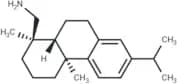
CAS:<p>Dehydroabiethylamine (NSC-2955) boosts liver CYP2B, blocks PDKs & cholesterol transport, and has anti-tumor effects.</p>Fórmula:C20H31NPureza:98.79%Forma y color:Pale Yellow Viscous Liquid /Technical Grade/ Viscous Colorless To Amber LiquidPeso molecular:285.47UR-144 N-Pentanoic Acid
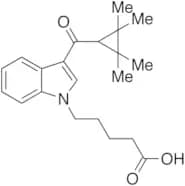
CAS:Producto controladoFórmula:C21H27NO3Forma y color:NeatPeso molecular:341.442-[(9Z)-9-Octadecenyloxy]-1,3-propanediol
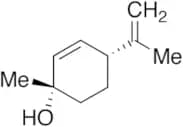
CAS:Producto controlado<p>Applications 2-[(9Z)-9-Octadecenyloxy]-1,3-propanediol, which is an endogenous cannabinoid receptor ligand.<br>References Suhara, Y. et al.: Chem. Pharm. Bull., 48, 903 (2000);<br></p>Fórmula:C21H42O3Forma y color:NeatPeso molecular:342.56(1S,4R)-1-Methyl-4-(1-methylethenyl)-2-cyclohexen-1-ol
CAS:Producto controlado<p>Applications 1-Methyl-4-(1-methylethenyl)-2-cyclohexen-1-ol is an acetal reagent used in the synthesis of desoxy cannabidiols and THC (T293202) related psychoactive compounds. It is formed from (+)-Limonene using a photosynthesized O2 transfer.<br>References Wilkinson, S. et al.: Tetrahedron Lett., 54, 52 (2013);<br></p>Fórmula:C10H16OForma y color:NeatPeso molecular:152.23Cannabigerorcinic Acid
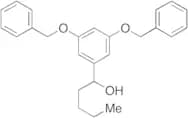
CAS:Producto controlado<p>Stability Light Sensitive<br>Applications Cannabigerorcinic Acid is a compound that takes part in the biosynthesis of daurichromenic acid synthase which is active in anti-HIV biosynthesis.<br>References Iijima, M. et al.: Plant Phys., 174, 2213 (2017);<br></p>Fórmula:C18H24O4Forma y color:NeatPeso molecular:304.381-(3,5-Bis(benzyloxy)phenyl)pentan-1-ol
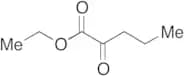
CAS:Producto controladoFórmula:C25H28O3Forma y color:NeatPeso molecular:376.49Ethyl 2-Oxopentanoate
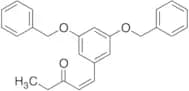
CAS:Producto controlado<p>Applications Ethyl 2-oxopentanoate is used as a reagent to synthesize selective CB1 cannabinoid receptor antagonists. Ethyl 2-oxopentanoate is also used to synthesize derivatives of iminodiacid, an inhibitor of angiotensin converting enzyme.<br>References Lange, J., et al.: J. Med. Chem., 48, 1823 (2005); Vincent, M., et al.: Tetrahedron Lett., 23, 1677 (2982)<br></p>Fórmula:C7H12O3Forma y color:NeatPeso molecular:144.171-(3,5-Bis(benzyloxy)phenyl)pent-1-en-3-one
CAS:Producto controlado<p>Stability Light Sensitive<br>Applications (Z)-1-(3,5-Bis(benzyloxy)phenyl)pent-1-en-3-one is a reagent in the synthesis of 3''-Hydroxycannabidiol (H824825) which is a major constituents in marijuana. 3''-Hydroxycannabidiol be used to investigate canabidiol metabolism and human liver microsomes that metabolize Canabidiol into 6α-Hydroxycannabidiol.<br>References Jiang, R., et al.: Life Sci. 89, 165 (2011); Lander, N., et al.: Science 169, 611 (1970)<br></p>Fórmula:C25H24O3Forma y color:NeatPeso molecular:372.462-Arachidonyl glycerol
CAS:<p>2-Arachidonyl glycerol is an endogenous cannabinoid receptor agonist, which is derived from arachidonic acid present in cellular membranes. It functions as a signaling lipid and plays a critical role in the endocannabinoid system, which is a complex network of receptors and ligands involved in maintaining physiological homeostasis.</p>Fórmula:C23H38O4Pureza:Min. 95%Forma y color:Clear LiquidPeso molecular:378.55 g/molMM-22
CAS:<p>biotinylated anandamide analog acts as a probe for visualizing the accumulation and intracellular trafficking of anandamide</p>Fórmula:C36H60N4O5SPureza:98%Forma y color:SolidPeso molecular:660.95CB2 receptor agonist 3
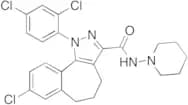
CAS:<p>GP 2A is a selective agonist of CB2 receptor.</p>Fórmula:C24H23Cl2N3OForma y color:SolidPeso molecular:440.36CB1R Allosteric modulator 1
CAS:<p>CB1R modulator 1 (compound 11), a potent CB1R inhibitor, decreases activity of orthosteric ligands.</p>Fórmula:C24H24ClN3OForma y color:SolidPeso molecular:405.92S-777469
CAS:<p>S-777469: Selective CB2 agonist, oral, inhibits itching in mice (Ki: 36 nM). Anti-pruritic.</p>Fórmula:C23H27FN2O4Forma y color:SolidPeso molecular:414.47AM-6538
CAS:<p>AM6538: long-acting, high-affinity CB antagonist similar to rimonabant, useful for studying cannabinoid agonists.</p>Fórmula:C26H25Cl2N5O4Forma y color:SolidPeso molecular:542.41NIDA 41020
CAS:<p>NIDA 41020 is a CB1 receptor antagonist.</p>Fórmula:C23H24Cl2N4O2Pureza:98%Forma y color:SolidPeso molecular:459.37LH 21
CAS:<p>LH-21, a strong CB1 receptor antagonist, curbs eating and lessens weight gain in obese rats.</p>Fórmula:C20H20Cl3N3Forma y color:SolidPeso molecular:408.75(R)-SLV 319
CAS:<p>(R)-SLV 319: potent CB1 antagonist, K i of 894 nM, dextrorotatory isomer.</p>Fórmula:C23H20Cl2N4O2SForma y color:SolidPeso molecular:487.4LBP-1
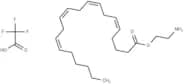
CAS:<p>LBP-1 is a cannabinoid receptor type 1 (CB1) agonist.</p>Fórmula:C23H29ClN6O3Forma y color:SolidPeso molecular:472.97Virodhamine trifluoroacetate
CAS:<p>Virodhamine trifluoroacetate: full GPR55 & CB2 agonist, partial CB1 antagonist, cannabinoid receptor mixed antagonist.</p>Fórmula:C24H38F3NO4Pureza:98%Forma y color:SolidPeso molecular:461.56CB1/2 agonist 4
CAS:<p>CB1/2 agonist 4 is a potent CB1 full agonist (EC50: 15.09 nM) and CB2 partial agonist (EC50: 1.16 nM), with anti-pain and TRPV1 activation properties.</p>Fórmula:C27H45NO3Forma y color:SolidPeso molecular:431.65CB1R Allosteric modulator 4
CAS:<p>Modulates CB1R positively; inhibits cAMP production; strong β-arrestin-2 recruitment.</p>Fórmula:C20H17N3O2SForma y color:SolidPeso molecular:363.43UCM710
CAS:<p>UCM710 is a dual inhibitor of α/β hydrolase domain 6 (ABHD6) and fatty acid amide hydrolase (FAAH).</p>Fórmula:C19H34O3Pureza:98%Forma y color:SolidPeso molecular:310.47VSN-16
CAS:<p>VSN-16, a cannabinoid receptor agonist, is used potentially for the treatment of spasticity in multiple sclerosis.</p>Fórmula:C18H26N2O3Forma y color:SolidPeso molecular:318.41AM404
CAS:<p>AM404 is a cannabinoid reuptake inhibitor and a TRPV (1) activator with neuroprotective and anticancer activities that blocks anandamide transport.</p>Fórmula:C26H37NO2Forma y color:SolidPeso molecular:395.58KLS-13019
CAS:<p>KLS-13019 is a highly effective and orally active GPR55 receptor antagonist, neuroprotective can reverse chemotherapy-induced peripheral neuropathy (CIPN).</p>Fórmula:C22H29NO3Pureza:>99.99% - >99.99%Forma y color:SolidPeso molecular:355.47LEI-101
CAS:<p>LEI-101: potent CB2 agonist, pEC50=8, bioavailable, >100x selective over CB1, potential for inflammatory diseases.</p>Fórmula:C23H25FN4O4SPureza:98%Forma y color:SolidPeso molecular:472.53CB1-IN-2
CAS:<p>CB1-IN-2 (4g) inhibits CB1 receptor with 0.644 μM IC50; crosses blood-brain barrier, may cause CNS side effects like Rimonabant.</p>Fórmula:C17H19Cl2N5OForma y color:SolidPeso molecular:380.27OMDM-6
CAS:<p>OMDM-6 is a dual agonist of TRPV1(EC50 = 75 nM) and CB1 (Ki = 3.2 μM). OMDM-6 inhibits anandamide cellular uptake with a Ki of 7.0 μM.</p>Fórmula:C28H42N2O3Pureza:99.66%Forma y color:SolidPeso molecular:454.64UCM 707
CAS:<p>endocannabinoid transport inhibitor</p>Fórmula:C25H37NO2Pureza:98%Forma y color:SolidPeso molecular:383.57








![2-[(9Z)-9-Octadecenyloxy]-1,3-propanediol](/_next/image/?url=https%3A%2Fstatic.cymitquimica.com%2Fproducts%2FTR%2Fthumb-webp%2FO235930.webp&w=3840&q=75)