Anticuerpos primarios
Los anticuerpos primarios son inmunoglobulinas que se unen específicamente a un antígeno de interés, permitiendo la detección y cuantificación de proteínas, péptidos u otras biomoléculas. Estos anticuerpos son herramientas fundamentales en una amplia gama de aplicaciones, como el Western blot, la inmunohistoquímica y el ELISA. En CymitQuimica, ofrecemos una extensa selección de anticuerpos primarios de alta calidad que brindan especificidad y sensibilidad para diversas necesidades de investigación, incluidas las áreas de cáncer, inmunología y biología celular.
Subcategorías de "Anticuerpos primarios"
- Anticuerpos para la investigación del cáncer(3.609 productos)
- Anticuerpos cardiovasculares(2 productos)
- Biología del desarrollo(746 productos)
- Anticuerpos Epigenéticos(162 productos)
- Anticuerpos inmunológicos(2.609 productos)
- Anticuerpos del metabolismo(278 productos)
- Anticuerpos de microbiología(736 productos)
- Transducción de señales(2.710 productos)
- Etiquetas y marcadores celulares(33 productos)
Mostrar 1 subcategorías más
Se han encontrado 75080 productos de "Anticuerpos primarios"
Ordenar por
Pureza (%)
0
100
|
0
|
50
|
90
|
95
|
100
TCAL2 rabbit pAb
This gene encodes a member of the transcription elongation factor A (SII)-like (TCEAL) gene family. Members of this family contain TFA domains and may function as nuclear phosphoproteins that modulate transcription in a promoter context-dependent manner. Multiple family members are located on the X chromosome. [provided by RefSeq, Jul 2008],RAC2 rabbit pAb
This gene encodes a member of the Ras superfamily of small guanosine triphosphate (GTP)-metabolizing proteins. The encoded protein localizes to the plasma membrane, where it regulates diverse processes, such as secretion, phagocytosis, and cell polarization. Activity of this protein is also involved in the generation of reactive oxygen species. Mutations in this gene are associated with neutrophil immunodeficiency syndrome. There is a pseudogene for this gene on chromosome 6. [provided by RefSeq, Jul 2013],CKR-5 rabbit pAb
This gene encodes a member of the beta chemokine receptor family, which is predicted to be a seven transmembrane protein similar to G protein-coupled receptors. This protein is expressed by T cells and macrophages, and is known to be an important co-receptor for macrophage-tropic virus, including HIV, to enter host cells. Defective alleles of this gene have been associated with the HIV infection resistance. The ligands of this receptor include monocyte chemoattractant protein 2 (MCP-2), macrophage inflammatory protein 1 alpha (MIP-1 alpha), macrophage inflammatory protein 1 beta (MIP-1 beta) and regulated on activation normal T expressed and secreted protein (RANTES). Expression of this gene was also detected in a promyeloblastic cell line, suggesting that this protein may play a role in granulocyte lineage proliferation and differentiation. This gene is located at the chemokPPAR-α rabbit pAb
peroxisome proliferator activated receptor alpha(PPARA) Homo sapiens Peroxisome proliferators include hypolipidemic drugs, herbicides, leukotriene antagonists, and plasticizers; this term arises because they induce an increase in the size and number of peroxisomes. Peroxisomes are subcellular organelles found in plants and animals that contain enzymes for respiration and for cholesterol and lipid metabolism. The action of peroxisome proliferators is thought to be mediated via specific receptors, called PPARs, which belong to the steroid hormone receptor superfamily. PPARs affect the expression of target genes involved in cell proliferation, cell differentiation and in immune and inflammation responses. Three closely related subtypes (alpha, beta/delta, and gamma) have been identified. This gene encodes the subtype PPAR-alpha, which is a nuclear transcription factor.DAPK2 rabbit pAb
This gene encodes a protein that belongs to the serine/threonine protein kinase family. This protein contains a N-terminal protein kinase domain followed by a conserved calmodulin-binding domain with significant similarity to that of death-associated protein kinase 1 (DAPK1), a positive regulator of programmed cell death. Overexpression of this gene was shown to induce cell apoptosis. It uses multiple polyadenylation sites. [provided by RefSeq, Jul 2008],AKAP4 rabbit pAb
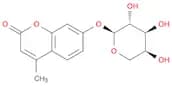
The A-kinase anchor proteins (AKAPs) are a group of structurally diverse proteins, which have the common function of binding to the regulatory subunit of protein kinase A (PKA) and confining the holoenzyme to discrete locations within the cell. This gene encodes a member of the AKAP family. The encoded protein is localized to the sperm flagellum and may be involved in the regulation of sperm motility. Alternative splicing of this gene results in two transcript variants encoding different isoforms. [provided by RefSeq, Jul 2008],4-Methylumbelliferyl a-L-arabinopyranoside
CAS:Fórmula:C15H16O7Pureza:98%Forma y color:SolidPeso molecular:308.2833β Tubulin rabbit pAb
tubulin beta 3 class III(TUBB3) Homo sapiens This gene encodes a class III member of the beta tubulin protein family. Beta tubulins are one of two core protein families (alpha and beta tubulins) that heterodimerize and assemble to form microtubules. This protein is primarily expressed in neurons and may be involved in neurogenesis and axon guidance and maintenance. Mutations in this gene are the cause of congenital fibrosis of the extraocular muscles type 3. Alternate splicing results in multiple transcript variants. A pseudogene of this gene is found on chromosome 6. [provided by RefSeq, Oct 2010],LAX1 rabbit pAb
function:Negatively regulates TCR (T-cell antigen receptor)-mediated signaling in T-cells and BCR (B-cell antigen receptor)-mediated signaling in B-cells.,induction:Up-regulated in T-cells following TCR engagement.,PTM:Phosphorylated on tyrosines by Syk, Lck or ZAP70 upon TCR or BCR activation; which leads to the recruitment of GRB2, PIK3R1 and GRAP2.,subunit:When phosphorylated, interacts with GRB2, PIK3R1 and GRAP2.,tissue specificity:Expressed in spleen, thymus, and peripheral blood leukocytes. Expressed in several B-, T-, NK and monocyte cell lines.,KRA42 rabbit pAb
This protein is a member of the keratin-associated protein (KAP) family. The KAP proteins form a matrix of keratin intermediate filaments which contribute to the structure of hair fibers. KAP family members appear to have unique, family-specific amino- and carboxyl-terminal regions and are subdivided into three multi-gene families according to amino acid composition: the high sulfur, the ultrahigh sulfur, and the high tyrosine/glycine KAPs. This protein is a member of the ultrahigh sulfur KAP family and the gene is localized to a cluster of KAPs at 17q12-q21. [provided by RefSeq, Jul 2008],TRPC3 rabbit pAb
transient receptor potential cation channel subfamily C member 3(TRPC3) Homo sapiens The protein encoded by this gene is a membrane protein that can form a non-selective channel permeable to calcium and other cations. The encoded protein appears to be induced to form channels by a receptor tyrosine kinase-activated phosphatidylinositol second messenger system and also by depletion of intracellular calcium stores. Two transcript variants encoding different isoforms have been found for this gene. [provided by RefSeq, Oct 2011],SCOT1 rabbit pAb
This gene encodes a member of the 3-oxoacid CoA-transferase gene family. The encoded protein is a homodimeric mitochondrial matrix enzyme that plays a central role in extrahepatic ketone body catabolism by catalyzing the reversible transfer of coenzyme A from succinyl-CoA to acetoacetate. Mutations in this gene are associated with succinyl CoA:3-oxoacid CoA transferase deficiency. [provided by RefSeq, Jul 2008],Synaptotagmin X rabbit pAb
cofactor:Binds 3 calcium ions per subunit. The ions are bound to the C2 domains.,function:May be involved in Ca(2+)-dependent exocytosis of secretory vesicles through Ca(2+) and phospholipid binding to the C2 domain or may serve as Ca(2+) sensors in the process of vesicular trafficking and exocytosis.,similarity:Belongs to the synaptotagmin family.,similarity:Contains 2 C2 domains.,subunit:Homodimer. Can also form heterodimers.,tissue specificity:Expressed only in pancreas, lung and kidney.,