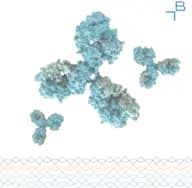
Anticuerpos primarios
Los anticuerpos primarios son inmunoglobulinas que se unen específicamente a un antígeno de interés, permitiendo la detección y cuantificación de proteínas, péptidos u otras biomoléculas. Estos anticuerpos son herramientas fundamentales en una amplia gama de aplicaciones, como el Western blot, la inmunohistoquímica y el ELISA. En CymitQuimica, ofrecemos una extensa selección de anticuerpos primarios de alta calidad que brindan especificidad y sensibilidad para diversas necesidades de investigación, incluidas las áreas de cáncer, inmunología y biología celular.
Subcategorías de "Anticuerpos primarios"
- Anticuerpos para la investigación del cáncer(3.620 productos)
- Anticuerpos cardiovasculares(2 productos)
- Biología del desarrollo(751 productos)
- Anticuerpos Epigenéticos(162 productos)
- Anticuerpos inmunológicos(2.793 productos)
- Anticuerpos del metabolismo(279 productos)
- Anticuerpos de microbiología(736 productos)
- Transducción de señales(2.717 productos)
- Etiquetas y marcadores celulares(33 productos)
Mostrar 1 subcategorías más
Se han encontrado 75326 productos de "Anticuerpos primarios"
Ordenar por
Pureza (%)
0
100
|
0
|
50
|
90
|
95
|
100
SLC39A4 antibody
<p>SLC39A4 antibody was raised using a synthetic peptide corresponding to a region with amino acids VLGLHTHSEEGLSPQPTWRLLAMLAGLYAFFLFENLFNLLLPRDPEDLED</p>Pureza:Min. 95%Mapk12 antibody
<p>Mapk12 antibody was raised in rabbit using the C terminal of Mapk12 as the immunogen</p>Pureza:Min. 95%LFNG antibody
<p>LFNG antibody was raised using the N terminal of LFNG corresponding to a region with amino acids LSEYFSLLTRARRDAGPPPGAAPRPADGHPRPLAEPLAPRDVFIAVKTTK</p>Pureza:Min. 95%SLFN12 antibody
<p>SLFN12 antibody was raised using the middle region of SLFN12 corresponding to a region with amino acids KYLLKALFKALKRLKSLRDQFSFAENLYQIIGIDCFQKNDKKMFKSCRRL</p>NOB1 antibody
<p>NOB1 antibody was raised using a synthetic peptide corresponding to a region with amino acids TEIRDKATRRRLAVLPYELRFKEPLPEYVRLVTEFSKKTGDYPSLSATDI</p>TDG antibody
<p>The TDG antibody is a highly specific monoclonal antibody that targets the glycan structures on glycoproteins. It is widely used in life sciences research to study the role of glycans in various biological processes. The TDG antibody can be used for applications such as lectin blotting, glycan profiling, and immunohistochemistry. This antibody recognizes a polymorphic epitope that is activated by fatty acid treatment, making it a valuable tool for studying changes in glycosylation patterns. Additionally, the TDG antibody has been shown to interact with epithelial cadherin, suggesting a potential role in cell adhesion and signaling pathways. With its high specificity and sensitivity, this monoclonal antibody is an essential tool for researchers studying glycan-related processes in human proteins.</p>NUDT22 antibody
<p>NUDT22 antibody was raised in rabbit using the C terminal of NUDT22 as the immunogen</p>Secernin 2 antibody
<p>Secernin 2 antibody was raised using the N terminal of SCRN2 corresponding to a region with amino acids MASSSPDSPCSCDCFVSVPPASAIPAVIFAKNSDRPRDEVQEVVFVPAGT</p>EFNA5 antibody
<p>The EFNA5 antibody is a highly specialized polyclonal antibody that targets EFNA5, a protein involved in various biological processes. This antibody has been extensively studied and proven to be effective in detecting and neutralizing EFNA5 in different research applications.</p>MKK3 antibody
<p>The MKK3 antibody is a highly specialized monoclonal antibody that targets the growth hormone receptor and progesterone. It is commonly used in immunoassays and research studies within the field of Life Sciences. This antibody specifically binds to MKK3, a phosphatase enzyme involved in various cellular processes such as chemokine signaling and interferon response. The MKK3 antibody has been extensively validated for its specificity and sensitivity in detecting activated MKK3 in human serum samples. Additionally, it can be utilized as a valuable tool for studying the role of MKK3 in different biological pathways and for developing potential inhibitors targeting this enzyme. With its high-quality performance, this polyclonal antibody is an essential component for any researcher working in the field of Life Sciences.</p>ACCN1 antibody
<p>ACCN1 antibody was raised using a synthetic peptide corresponding to a region with amino acids GDIGGQMGLFIGASILTILELFDYIYELIKEKLLDLLGKEEDEGSHDENV</p>cSRC antibody
<p>The cSRC antibody is a highly specialized Polyclonal Antibody used in Life Sciences research. This antibody specifically targets the activated form of the cSRC protein, which plays a crucial role in cell signaling and regulation.</p>PPA1 antibody
<p>PPA1 antibody was raised using a synthetic peptide corresponding to a region with amino acids PRWSNAKMEIATKDPLNPIKQDVKKGKLRYVANLFPYKGYIWNYGAIPQT</p>Ezrin antibody
<p>The Ezrin antibody is a powerful tool in the field of Life Sciences. It is a polyclonal antibody that specifically targets and binds to ezrin, a protein involved in various cellular processes. This antibody has been extensively studied and proven to be effective in inhibiting the growth factor signaling pathways, particularly endothelial growth factor (EGF). By blocking EGF signaling, the Ezrin antibody can prevent the proliferation and migration of cells, making it an ideal choice for research and therapeutic applications.</p>TCTP antibody
<p>The TCTP antibody is a biochemical agent that targets the hyperpolarization-activated protein kinase. It belongs to the group of polyclonal antibodies and can be used for various applications, including research and diagnostic purposes. This antibody specifically recognizes TCTP (Translationally Controlled Tumor Protein), which has been found to play a role in various cellular processes such as cell growth, proliferation, and apoptosis.</p>GPR87 antibody
<p>GPR87 antibody was raised using the N terminal of GPR87 corresponding to a region with amino acids MGFNLTLAKLPNNELHGQESHNSGNRSDGPGKNTTLHNEFDTIVLPVLYL</p>14-3-3 gamma antibody
<p>The 6-Fluoro-3-indoxyl-beta-D-galactopyranoside is a powerful antituberculosis drug that falls under the class of rifamycins. It stands out as the most effective rifamycin for treating tuberculosis infections. By binding to DNA-dependent RNA polymerase, this drug inhibits bacterial growth, preventing transcription and replication. Its high activity in humans has been demonstrated through patch-clamp technique on human erythrocytes. The active form of this drug undergoes various metabolic transformations, including hydrolysis by esterases or glucuronidases, oxidation by cytochrome P450 enzymes, reduction by glutathione reductase, or conjugation with glucuronic acid. Additionally, it specifically targets markers expressed at high levels in Mycobacterium tuberculosis strains, thus inhibiting cell growth in culture.</p>C1ORF96 antibody
<p>C1ORF96 antibody was raised using the N terminal Of C1Orf96 corresponding to a region with amino acids LGRRLLEQAHAPWLWDDWGPAGSSEDSASSESSGAGGPAPRCAPPSPPPP</p>FOS antibody
<p>The FOS antibody is a glycoprotein that belongs to the family of epidermal growth factor (EGF)-like antibodies. It contains sugar moieties that enhance its stability and functionality. This antibody has been shown to have endonuclease activity, which allows it to cleave DNA at specific sites. Additionally, it exhibits glutamate and hyaluronidase activity, making it useful in various biochemical assays. The FOS antibody can also be pegylated to increase its half-life and improve its pharmacokinetic properties. In life sciences research, this antibody is commonly used for immunostaining and Western blotting experiments. Its high specificity and affinity make it an excellent tool for studying protein expression patterns and understanding cellular signaling pathways. Furthermore, the FOS antibody has been shown to inhibit microvessel density and collagen synthesis, suggesting potential therapeutic applications in angiogenesis-related disorders. Its ability to modulate TGF-beta signaling further expands its potential use in cancer research and tissue engineering studies.</p>TBC1D21 antibody
<p>TBC1D21 antibody was raised using the N terminal of TBC1D21 corresponding to a region with amino acids MTTLSPENSLSARQSASFILVKRKPPIDKTEWDSFFDESGHLAKSRDFIC</p>Fibronectin antibody
<p>The Fibronectin antibody is a monoclonal antibody that specifically targets fibronectin, a glycoprotein found in the extracellular matrix. Fibronectin plays a crucial role in cell adhesion, migration, and tissue repair. This antibody can be used for various applications, including research and diagnostic purposes.</p>ATF2 antibody
<p>The ATF2 antibody is a potent diagnostic agent used in Life Sciences research. This polyclonal antibody specifically targets the amino-terminal region of ATF2, a transcription factor that plays a crucial role in regulating gene expression. By binding to ATF2, this antibody inhibits its activity and can be used to study the downstream effects of ATF2 inhibition.</p>DVL1 antibody
<p>DVL1 antibody was raised using a synthetic peptide corresponding to a region with amino acids AAGAGGSGSESDHTAPSGVGSSWRERPAGQLSRGSSPRSQASATAPGLPP</p>MCM5 antibody
<p>The 6-Fluoro-3-indoxyl-beta-D-galactopyranoside is an antituberculosis drug from the rifamycins class. It is highly effective in treating tuberculosis infections. This active compound exhibits bactericidal activity by inhibiting bacterial growth through binding to DNA-dependent RNA polymerase, preventing transcription and replication. Extensive studies have shown its high frequency of human activity using a patch-clamp technique on human erythrocytes. The drug undergoes various metabolic transformations, including hydrolysis by esterases or glucuronidases, oxidation by cytochrome P450 enzymes, reduction by glutathione reductase, or conjugation with glucuronic acid. Additionally, it specifically targets markers expressed at high levels in Mycobacterium tuberculosis strains and inhibits cell growth in culture.</p>p53 antibody
<p>The p53 antibody is a protein that specifically targets and binds to the p53 protein, which plays a crucial role in cell cycle regulation and tumor suppression. This antibody can be used in various research applications, including immunohistochemistry, western blotting, and flow cytometry.</p>PLSCR1 antibody
<p>PLSCR1 antibody was raised using the N terminal of PLSCR1 corresponding to a region with amino acids MDKQNSQMNASHPETNLPVGYPPQYPPTAFQGPPGYSGYPGPQVSYPPPP</p>PSMA5 antibody
<p>PSMA5 antibody was raised using a synthetic peptide corresponding to a region with amino acids FGGVDEKGPQLFHMDPSGTFVQCDARAIGSASEGAQSSLQEVYHKSMTLK</p>Complexin 2 antibody
<p>Complexin 2 antibody was raised using the N terminal of CPLX2 corresponding to a region with amino acids MDFVMKQALGGATKDMGKMLGGEEEKDPDAQKKEEERQEALRQQEEERKA</p>IER5L antibody
<p>IER5L antibody was raised using the middle region of IER5L corresponding to a region with amino acids SNLISIFGSGFSGLVSRQPDSSEQPPPLNGQLCAKQALASLGAWTRAIVA</p>AML1 antibody
<p>The AML1 antibody is a neutralizing insulin antibody that targets the growth factor adalimumab. It is a monoclonal antibody that specifically binds to glutamate and has been extensively studied in the field of Life Sciences. This antibody is commonly used in research for its ability to detect and measure various proteins, including rubisco, insulin, TNF-α, natriuretic peptides, and glycoproteins. With its high specificity and sensitivity, the AML1 antibody is an essential tool for scientists conducting experiments related to protein analysis and characterization.</p>IL8 antibody
<p>The IL8 antibody is a polyclonal antibody used in the field of life sciences. It specifically targets alpha-fetoprotein and is known for its neutralizing properties. This antibody is commonly used in research and diagnostic applications. It has been extensively studied and proven to be effective in blocking the activity of TGF-beta, a growth factor involved in various cellular processes. The IL8 antibody is available as a monoclonal antibody and contains excipients to ensure stability and effectiveness. It can be used for various applications, including immunohistochemistry, western blotting, and flow cytometry. This antibody is highly specific to its target molecule and has been validated for its accuracy and reliability. Researchers rely on the IL8 antibody to study the role of alpha-fetoprotein in different biological systems and to develop potential therapeutic interventions. With its high affinity and specificity, this monoclonal antibody is an essential tool for studying cell signaling pathways, drug discovery, and understanding disease mechanisms.</p>RPS8 antibody
<p>The 6-Fluoro-3-indoxyl-beta-D-galactopyranoside is an effective antituberculosis drug belonging to the rifamycins class. It is specifically designed to combat tuberculosis infection by targeting active compounds and exhibiting strong bactericidal activity. Through transcription-quantitative polymerase chain techniques, its high frequency of human activity has been verified. Additionally, it undergoes various metabolic transformations, including hydrolysis by esterases or glucuronidases, oxidation by cytochrome p450 enzymes, reduction by glutathione reductase, or conjugation with glucuronic acid. Moreover, this drug binds to markers expressed at high levels in Mycobacterium tuberculosis strains and inhibits cell growth in culture.</p>NSUN6 antibody
<p>NSUN6 antibody was raised using the N terminal of NSUN6 corresponding to a region with amino acids MSIFPKISLRPEVENYLKEGFMNKEIVTALGKQEAERKFETLLKHLSHPP</p>Tau antibody
<p>The Tau antibody is a highly specialized antibody that plays a crucial role in various biological processes. It has the ability to neutralize interferon and collagen, making it an essential component in the field of Life Sciences. This antibody is available both as polyclonal antibodies derived from human serum and as monoclonal antibodies.</p>SirT1 antibody
<p>The SirT1 antibody is a highly specialized tool used in life sciences research. It is a polyclonal antibody that specifically targets the Sirtuin 1 (SirT1) protein, which plays a crucial role in various cellular processes. This antibody can be used in a wide range of applications, including western blotting, immunohistochemistry, and immunofluorescence.</p>COPG antibody
<p>COPG antibody was raised using the N terminal of COPG corresponding to a region with amino acids MLKKFDKKDEESGGGSNPFQHLEKSAVLQEARVFNETPINPRKCAHILTK</p>DUS1L antibody
<p>DUS1L antibody was raised using a synthetic peptide corresponding to a region with amino acids EEEEGGTEVLSKNKQKKQLRNPHKTFDPSLKPKYAKCDQCGNPKGNRCVF</p>C4ORF22 antibody
<p>C4ORF22 antibody was raised using the N terminal Of C4Orf22 corresponding to a region with amino acids YLEDETLARQLVELGYRGTGERVKREDFEARKAAIEIARLAERAQQKTLT</p>STAT3 antibody
<p>The STAT3 antibody is a peptide antigen used in Life Sciences research. It is commonly used in studies involving the expression plasmid and antibodies. This antibody specifically targets the inhibitory factor of the cytokine family, interleukin-6, and has been shown to inhibit the activation of reactive glial fibrillary acidic cells. The STAT3 antibody can be used in various experimental techniques, such as immunohistochemistry and Western blotting. Its high specificity and affinity make it an ideal tool for researchers studying cell signaling pathways and inflammatory responses. With its wide range of applications, this polyclonal antibody is a valuable asset for any laboratory or research facility.</p>SRBD1 antibody
<p>SRBD1 antibody was raised using the N terminal of SRBD1 corresponding to a region with amino acids MSSLPRRAKVQVQDVVLKDEFSSFSELSSASEEDDKEDSAWEPQKKVPRS</p>HMBS antibody
<p>HMBS antibody was raised using the middle region of HMBS corresponding to a region with amino acids SSLRRAAQLQRKFPHLEFRSIRGNLNTRLRKLDEQQEFSAIILATAGLQR</p>AHCYL1 antibody
<p>AHCYL1 antibody was raised using the N terminal of AHCYL1 corresponding to a region with amino acids MSMPDAMPLPGVGEELKQAKEIEDAEKYSFMATVTKAPKKQIQFADDMQE</p>HSP27 antibody
<p>The HSP27 antibody is a highly specialized product used in the field of life sciences. It is an activated growth factor that plays a crucial role in various cellular processes. This antibody specifically targets HSP27, a protein involved in the regulation of cell growth and survival.</p>PRRX1 antibody
<p>The PRRX1 antibody is a polyclonal antibody that targets the adeno-associated virus (AAV) and its intermediates. It is specifically designed to detect and bind to autoantibodies in nuclear cells, particularly those found in isolated retinal tissues. This antibody can be used as a test compound in various research applications, including the development of anti-thrombotic medicines and other therapeutic interventions. With its solubilized formulation, the PRRX1 antibody offers high specificity and sensitivity, making it an invaluable tool in life sciences research.</p>Resistin antibody
<p>The Resistin antibody is a highly specialized product used in the field of Life Sciences. It belongs to the category of nuclear antibodies and acts as a growth factor and necrosis factor-related apoptosis-inducing protein complex. This monoclonal antibody is specifically designed to neutralize the effects of resistin, a hormone that plays a role in insulin resistance and inflammation.</p>RUNX2 antibody
<p>RUNX2 antibody was raised using the middle region of RUNX2 corresponding to a region with amino acids DTATSDFCLWPSTLSKKSQAGASELGPFSDPRQFPSISSLTESRFSNPRM</p>MTHFS antibody
<p>MTHFS antibody was raised using a synthetic peptide corresponding to a region with amino acids TSWNIPQPGEGDVREEALSTGGLDLIFMPGLGFDKHGNRLGRGKGYYDAY</p>ICA1L antibody
<p>ICA1L antibody was raised using the middle region of ICA1L corresponding to a region with amino acids PVPSQSPKKLTRSPNNGNQDMSAWFNLFADLDPLSNPDAIGHSDDELLNA</p>CD19 antibody
<p>CD19 antibody was raised in mouse using CD19+ murine pre-B cell line as the immunogen.</p>TBCCD1 antibody
<p>TBCCD1 antibody was raised using the N terminal of TBCCD1 corresponding to a region with amino acids WPSPRNKSQSPDLTEKSNCHNKNWNDYSHQAFVYDHLSDLLELLLDPKQL</p>CD71 antibody
<p>The CD71 antibody is a powerful tool in the field of Life Sciences. This steroid-based antibody specifically targets the CD71 molecule, also known as transferrin receptor 1. It plays a crucial role in iron metabolism and is highly expressed on the surface of proliferating cells.</p>CDK2 antibody
<p>The CDK2 antibody is an essential tool in the field of Life Sciences. It is an antigen that has antiviral properties and can be used to neutralize harmful viruses. This antibody is available in both polyclonal and monoclonal forms, providing researchers with options for their specific needs.</p>SPTLC2 antibody
<p>SPTLC2 antibody was raised using the N terminal of SPTLC2 corresponding to a region with amino acids VLTYVGYGVLTLFGYLRDFLRYWRIEKCHHATEREEQKDFVSLYQDFENF</p>VASP antibody
<p>The VASP antibody is a polyclonal antibody that specifically targets and binds to the VASP protein. VASP, also known as vasodilator-stimulated phosphoprotein, plays a crucial role in cell signaling pathways and cytoskeletal rearrangement. This antibody can be used for various applications, including immunohistochemistry, western blotting, and flow cytometry.</p>Pureza:Min. 95%Cadherin 6 antibody
<p>The Cadherin 6 antibody is a monoclonal antibody that specifically targets the plasminogen receptor. It is commonly used in life sciences research for various applications. This antibody has high affinity and specificity for its target, making it an ideal tool for studying the function of Cadherin 6.</p>ST14 antibody
<p>ST14 antibody is a monoclonal antibody that targets protein kinase ST14. It is widely used in Life Sciences research for its ability to specifically bind to ST14 and inhibit its activity. This antibody has been shown to effectively block the function of ST14, preventing its interaction with other proteins and interfering with various cellular processes. Additionally, ST14 antibody has been used in studies involving albumin, inhibitors, antibodies, tyrosine, alpha-synuclein, activated mitogen-activated protein (MAP) kinases, collagen, and glucose transporter. It is also known to enhance the cytotoxic effects of certain anti-CD20 antibodies. With its high specificity and potency, ST14 antibody is a valuable tool for scientists studying protein kinase signaling pathways and their role in disease development and progression.</p>Ssr2 antibody
<p>Ssr2 antibody was raised in rabbit using the C terminal of Ssr2 as the immunogen</p>Pureza:Min. 95%RRAD antibody
<p>RRAD antibody was raised using the middle region of RRAD corresponding to a region with amino acids LARIFGGVEDGPEAEAAGHTYDRSIVVDGEEASLMVYDIWEQDGGRWLPG</p>Pureza:Min. 95%NCOR1 antibody
<p>NCOR1 antibody was raised in rabbit using the N terminal of NCOR1 as the immunogen</p>Pureza:Min. 95%Ebf3 antibody
<p>Ebf3 antibody was raised in rabbit using the N terminal of Ebf3 as the immunogen</p>Pureza:Min. 95%FZD7 antibody
<p>FZD7 antibody was raised using a synthetic peptide corresponding to a region with amino acids PDFTVFMIKYLMTMIVGITTGFWIWSGKTLQSWRRFYHRLSHSSKGETAV</p>Pureza:Min. 95%RB1 antibody
<p>The RB1 antibody is a highly specialized monoclonal antibody that targets glycan dimers. It specifically recognizes and binds to the glycopeptide region of these dimers, which plays a crucial role in various biological processes. This antibody has been extensively studied in the field of Life Sciences and has shown promising results in neutralizing the activity of chemokines, including TNF-α.</p>Cacng1 antibody
<p>Cacng1 antibody was raised in rabbit using the middle region of Cacng1 as the immunogen</p>Pureza:Min. 95%EIF4E2 antibody
<p>EIF4E2 antibody was raised in rabbit using the N terminal of EIF4E2 as the immunogen</p>Pureza:Min. 95%CEA antibody
<p>CEA antibody was raised in mouse using human colon adrenocarcinoma as the immunogen.</p>C7ORF38 antibody
<p>C7ORF38 antibody was raised using the middle region of C7Orf38 corresponding to a region with amino acids QTFNYYFPEEKFESLKENIWMKDPFAFQNPESIIELNLEPEEENELLQLS</p>Pureza:Min. 95%RAD9 antibody
<p>The RAD9 antibody is a trifunctional antibody that plays a crucial role in various life sciences applications. It is widely used in research to study the signaling pathways of growth factors and 3-kinase enzymes. This polyclonal antibody specifically targets the RAD9 protein, which is activated in response to genotoxic stress and DNA damage. It has been shown to have neutralizing effects on amyloid proteins and can be used to detect and quantify alpha-fetoprotein levels in human serum samples. The RAD9 antibody is also commonly utilized in immunohistochemistry and Western blotting techniques, making it an essential tool for researchers studying protein kinases, chemokines, and other molecular markers. With its high specificity and sensitivity, this antibody provides reliable results for a wide range of experimental applications in the field of Life Sciences.</p>SLC22A7 antibody
<p>SLC22A7 antibody was raised using a synthetic peptide corresponding to a region with amino acids LSLPKLTYGGIALLAAGTALLLPETRQAQLPETIQDVERKSAPTSLQEEE</p>Pureza:Min. 95%LYN antibody
<p>LYN antibody was raised using the N terminal of LYN corresponding to a region with amino acids DPTSNKQQRPVPESQLLPGQRFQTKDPEEQGDIVVALYPYDGIHPDDLSF</p>