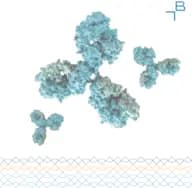
Anticuerpos primarios
Los anticuerpos primarios son inmunoglobulinas que se unen específicamente a un antígeno de interés, permitiendo la detección y cuantificación de proteínas, péptidos u otras biomoléculas. Estos anticuerpos son herramientas fundamentales en una amplia gama de aplicaciones, como el Western blot, la inmunohistoquímica y el ELISA. En CymitQuimica, ofrecemos una extensa selección de anticuerpos primarios de alta calidad que brindan especificidad y sensibilidad para diversas necesidades de investigación, incluidas las áreas de cáncer, inmunología y biología celular.
Subcategorías de "Anticuerpos primarios"
- Anticuerpos para la investigación del cáncer(3.606 productos)
- Anticuerpos cardiovasculares(2 productos)
- Biología del desarrollo(746 productos)
- Anticuerpos Epigenéticos(162 productos)
- Anticuerpos inmunológicos(2.736 productos)
- Anticuerpos del metabolismo(277 productos)
- Anticuerpos de microbiología(736 productos)
- Transducción de señales(2.710 productos)
- Etiquetas y marcadores celulares(33 productos)
Mostrar 1 subcategorías más
Se han encontrado 69953 productos de "Anticuerpos primarios"
Ordenar por
Pureza (%)
0
100
|
0
|
50
|
90
|
95
|
100
IL19 antibody
<p>IL19 antibody is a monoclonal antibody that targets interleukin-19 (IL-19), a protein involved in various inflammatory processes. IL-19 is known to play a role in the development of amyloid plaques, which are associated with Alzheimer's disease. This antibody specifically binds to IL-19 and inhibits its activity, potentially reducing inflammation and the formation of amyloid plaques. Additionally, IL19 antibody has been shown to inhibit the growth of cancer cells by targeting proteins such as mesothelin and E-cadherin. It may also have potential therapeutic applications in other diseases characterized by abnormal immune responses or inflammation. With its high specificity and efficacy, IL19 antibody is a valuable tool for researchers in the field of Life Sciences studying cytokine biology and developing novel therapies.</p>Norovirus antibody
<p>Norovirus antibody was raised in mouse using purified native norwalk virus, strain 8Flla as the immunogen.</p>ApoBEC3F antibody
<p>ApoBEC3F antibody was raised using the N terminal of APOBEC3F corresponding to a region with amino acids MKPHFRNTVERMYRDTFSYNFYNRPILSRRNTVWLCYEVKTKGPSRPRLD</p>CD9 antibody
<p>The CD9 antibody is a monoclonal antibody that belongs to the class of antibodies known as polyclonal antibodies. It specifically targets CD9, a protein that is involved in various cellular processes. This antibody has been extensively studied in the field of Life Sciences and has shown promising results in inhibiting the growth of fibroin and natriuretic factors. Additionally, it has been found to have anti-VEGF activity, which makes it a potential candidate for anti-angiogenic therapy. The CD9 antibody also plays a role in hormone regulation and has been shown to modulate endothelial growth. In liver microsomes, this antibody acts as an inhibitor of caspase-9, thus preventing apoptosis. Furthermore, it has been found to interact with fatty acids and β-catenin, suggesting its involvement in lipid metabolism and cell signaling pathways. Overall, the CD9 antibody is a versatile tool with diverse applications in research and pharmaceutical development.</p>OSBPL9 antibody
<p>OSBPL9 antibody was raised using the N terminal of OSBPL9 corresponding to a region with amino acids HQTPTPNSTGSGHSPPSSSLTSPSHVNLSPNTVPEFSYSSSEDEFYDADE</p>TNRC6A antibody
<p>TNRC6A antibody was raised using the N terminal of TNRC6A corresponding to a region with amino acids RELEAKATKDVERNLSRDLVQEEEQLMEEKKKKKDDKKKKEAAQKKATEQ</p>ZNF786 antibody
<p>The ZNF786 antibody is a monoclonal antibody that exhibits cytotoxic properties and interacts with interferon-gamma (IFN-gamma). It specifically targets β-catenin, a protein involved in cell adhesion and signaling pathways. This antibody has been extensively studied for its potential therapeutic applications in various diseases, including cancer. Additionally, it has shown promising results in targeting the circumsporozoite protein of the malaria parasite. The ZNF786 antibody is highly specific and exhibits strong binding affinity towards its target, making it a valuable tool for research and diagnostic purposes. With its ability to modulate nuclear signaling and growth factors, this antibody holds great potential for future therapeutic interventions.</p>RANBP1 antibody
<p>The RANBP1 antibody is a highly specialized monoclonal antibody that targets the RAN binding protein 1 (RANBP1). This antibody has been extensively studied in the field of Life Sciences and has shown significant potential in various areas.</p>TSLP antibody
<p>The TSLP antibody is an active agent that neutralizes the effects of thymic stromal lymphopoietin (TSLP). TSLP is a cytokine that plays a crucial role in the regulation of immune responses. The TSLP antibody binds to TSLP, preventing its interaction with its receptor and blocking downstream signaling pathways. This antibody has been shown to inhibit the production of interferon and other pro-inflammatory cytokines. It can be used as a therapeutic medicament for various conditions characterized by abnormal immune responses, such as autoimmune diseases and allergic disorders. The TSLP antibody is available in both polyclonal and monoclonal forms, providing options for different research and clinical applications. With its high specificity and affinity, this antibody offers a valuable tool for studying the role of TSLP in various biological processes and developing targeted therapies.</p>PEX5 antibody
<p>PEX5 antibody was raised using the N terminal of PEX5 corresponding to a region with amino acids TATDRWYDEYHPEEDLQHTASDFVAKVDDPKLANSEFLKFVRQIGEGQVS</p>MEF2C antibody
<p>The MEF2C antibody is a nuclear monoclonal antibody that is used in Life Sciences research. It targets the MEF2C protein, which plays a crucial role in various cellular processes, including endothelial growth and differentiation. The MEF2C antibody can be utilized to study the regulation of gene expression and signaling pathways involving MEF2C. Additionally, this antibody has been shown to be effective in detecting the presence of alpha-synuclein and c-myc proteins in samples. It can also be used in combination with other antibodies, such as collagen or trastuzumab, for specific research applications. With its high specificity and sensitivity, the MEF2C antibody is a valuable tool for scientists studying epidermal growth factor-related pathways and investigating potential therapeutic targets.</p>ACTH antibody
<p>The ACTH antibody is a nuclear protein complex that consists of monoclonal antibodies targeting adrenocorticotropic hormone (ACTH). It is widely used in the field of Life Sciences for research purposes. These monoclonal antibodies have the ability to bind to ACTH and neutralize its effects. Additionally, they can also bind to other proteins such as growth factors and binding proteins, thereby modulating their activity. The ACTH antibody has shown potential in various applications, including the study of endothelial growth and the detection of alpha-fetoprotein. Its specificity and high affinity make it a valuable tool for researchers working in the field of steroid hormones and related pathways. With its reliable performance and accurate results, the ACTH antibody is an essential component for any laboratory conducting research in this area.</p>Caspase 9 antibody
<p>The Caspase 9 antibody is a powerful tool used in Life Sciences research. It specifically targets caspase-9, an enzyme involved in apoptosis (programmed cell death). This antibody can be used in various applications such as immunohistochemistry, western blotting, and flow cytometry.</p>SRC antibody
<p>The SRC antibody is a monoclonal antibody that specifically targets the SRC protein, a family kinase inhibitor. This antibody has been shown to have cytotoxic effects on cancer cells by inhibiting the activity of caspase-9 and annexin. Additionally, the SRC antibody can bind to fibroin and other binding proteins, making it an effective tool for research in various fields such as oncology and immunology. It has also been shown to interact with oncostatin and TGF-beta, two important cytokines involved in cell signaling pathways. The SRC antibody is available as both polyclonal antibodies and immobilized on electrodes for specific applications. With its potent binding capabilities and versatile uses, the SRC antibody is a valuable tool for researchers in need of highly specific and reliable antibodies.</p>MTMR14 antibody
<p>MTMR14 antibody was raised using the middle region of MTMR14 corresponding to a region with amino acids NFLKHITSEEFSALKTQRRKSLPARDGGFTLEDICMLRRKDRGSTTSLGS</p>Elk1 antibody
<p>The Elk1 antibody is a highly specific and potent tool used in various research applications. It is a recombinant monoclonal antibody that binds to Elk1, a transcription factor involved in the regulation of gene expression. This antibody has been extensively characterized and validated for its ability to detect and neutralize Elk1 protein isoforms.</p>MAML3 antibody
<p>MAML3 antibody was raised in mouse using recombinant Human Mastermind-Like 3 (Drosophila) (Maml3)</p>BCAS4 antibody
<p>The BCAS4 antibody is a highly versatile and potent growth factor that exhibits antiviral and neuroprotective properties. It belongs to the class of interferons and is widely used in Life Sciences research. This monoclonal antibody plays a crucial role in various biochemical processes, including glycosylation and fatty acid metabolism.</p>EGFR antibody
<p>EGFR antibody was raised in mouse using human A431 membrane protein as the immunogen.</p>PNMT antibody
<p>The PNMT antibody is a monoclonal antibody that specifically targets the PNMT protein. This antibody has been shown to have anti-cd33 activity and can inhibit the growth of cancer cells. It binds to the PNMT protein, which is involved in the synthesis of catecholamines, and prevents its activation. The PNMT antibody also activates oncostatin, a growth factor that promotes the growth and survival of cells. In addition, this antibody has been shown to affect actin filaments in activated cells and can be used in various life sciences research applications. With its high specificity and potency, the PNMT antibody is a valuable tool for studying catecholaminergic neurons and developing adrenergic receptor agonists.</p>IRS1 antibody
<p>The IRS1 antibody is a highly specialized monoclonal antibody used in Life Sciences research. It specifically targets and binds to the insulin receptor substrate 1 (IRS1), a key protein involved in insulin signaling pathways. By binding to IRS1, this antibody can neutralize its function and inhibit downstream signaling events.</p>SUCLG2 antibody
<p>The SUCLG2 antibody is a highly effective medicament that is used in the field of Life Sciences. It is a monoclonal antibody that specifically targets the amino-terminal region of SUCLG2, an enzyme involved in the production of creatine kinase. This antibody has been extensively studied and has shown great potential in various applications.</p>HNRPA1 antibody
<p>HNRPA1 antibody was raised using the C terminal of HNRPA1 corresponding to a region with amino acids NQSSNFGPMKGGNFGGRSSGPYGGGGQYFAKPRNQGGYGGSSSSSSYGSG</p>GAS7 antibody
<p>GAS7 antibody was raised in mouse using recombinant human GAS7 (1-416aa) purified from E. coli as the immunogen.</p>FLJ35767 antibody
<p>FLJ35767 antibody was raised using the middle region of FLJ35767 corresponding to a region with amino acids PEGLEDAGLDPHFVPTELWPQEAVPLGLGLEDADWTQGLPWRFEELLTCS</p>PTBP2 antibody
<p>PTBP2 antibody was raised using the N terminal of PTBP2 corresponding to a region with amino acids MDGIVTEVAVGVKRGSDELLSGSVLSSPNSNMSSMVVTANGNDSKKFKGE</p>