Azúcares troncales y bases nucleicas
Los azúcares del esqueleto y las bases nitrogenadas son componentes esenciales de los ácidos nucleicos como el ADN y el ARN. El esqueleto está compuesto por grupos de azúcar y fosfato, mientras que las bases nitrogenadas forman el código genético mediante el emparejamiento de bases. Estos compuestos son cruciales en el estudio de la genética y la biología molecular. En CymitQuimica, puedes encontrar una variedad de azúcares del esqueleto y bases nitrogenadas para la investigación y el uso en laboratorio.
Se han encontrado 1001 productos de "Azúcares troncales y bases nucleicas"
Ordenar por
Pureza (%)
0
100
|
0
|
50
|
90
|
95
|
100
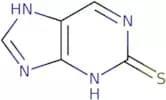
2-Mercaptopurine
CAS:<p>2-Mercaptopurine (2MP) is a thiopurine drug that is used to treat bowel disease. 2MP inhibits the activity of methyltransferase, which is an enzyme that converts 6-mercaptopurine to 6-thioguanine. This process prevents the conversion of 6-thioguanine into 6-thiouric acid, which is an intermediate in the synthesis of thymine nucleotides. 2MP also inhibits the binding of atp-binding cassette transporter proteins to DNA and blocks the incorporation of purines into RNA and DNA. The drug has been shown to be effective in treating squamous cell carcinoma and other diseases with a high level of activity. 2MP has been shown to be metabolized by erythrocyte polymerase chain reaction and can be detected in biological samples.</p>Fórmula:C5H4N4SPureza:Min. 95%Forma y color:PowderPeso molecular:152.18 g/molAdenine sulfate dihydrate
CAS:<p>Adenine sulfate dihydrate is an important component of the energy-producing process in mitochondria. Adenine sulfate dihydrate is a necessary cofactor for many metabolic reactions, including those that produce ATP and NADH. It has been shown to promote growth factor activity and stimulate cell proliferation. Adenine sulfate dihydrate can be used as a nutrient solution in recombinant protein production, where it is required for the expression of recombinant proteins in E. coli or mammalian cells. This compound also plays an important role in the glycosylation of proteins during their synthesis on ribosomes and may have implications for protein folding and stability.</p>Fórmula:(C5H5N5)2•(H2O)2•H2SO4Pureza:Min. 95%Forma y color:PowderPeso molecular:404.36 g/mol8-[(1E)-2-(3,4-Dimethoxyphenyl)ethenyl]-1,3-diethyl-3,9-dihydro-1H-purine-2,6-dione
CAS:Producto controlado<p>Please enquire for more information about 8-[(1E)-2-(3,4-Dimethoxyphenyl)ethenyl]-1,3-diethyl-3,9-dihydro-1H-purine-2,6-dione including the price, delivery time and more detailed product information at the technical inquiry form on this page</p>Fórmula:C19H22N4O4Pureza:Min. 95%Forma y color:PowderPeso molecular:370.4 g/mol5-Chlorouracil
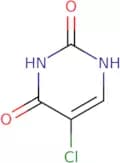
CAS:<p>5-Chlorouracil is a drug that is used to treat cancer. It has been shown to have biological properties, and its mechanism of action is not yet fully understood. 5-Chlorouracil can be synthesized in the laboratory by reacting sodium hydroxide with 5-chloro-2,4(1H,3H)-pyrimidinedione. In wastewater treatment plants, it reacts with organic matter in the water to form nontoxic products, such as carbon dioxide and urea. The reaction solution contains 5-chlorouracil, which undergoes tautomerization spontaneously or through the addition of base. This reaction is reversible, and both the erythro and threo forms are present in solution at equilibrium. The biological properties of 5-chlorouracil have been investigated using sublethal doses in experimental animals. In one study, 5-chlorouracil was found to inhibit xanthine oxidase activity in rats significantly more</p>Fórmula:C4H3ClN2O2Pureza:Min. 95%Forma y color:PowderPeso molecular:146.53 g/molCytosine
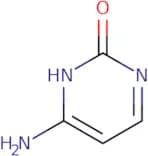
CAS:<p>Pyrimidine nucleobase; component of nucleic acids</p>Fórmula:C4H5N3OPureza:(Hplc) Min. 99%Forma y color:White PowderPeso molecular:111.1 g/mol3'-[2- Cyanoethyl N, N- bis(1- methylethyl) phosphoramidite]-5'- O- [bis(4- methoxyphenyl) phenylmethyl] - 2'- O- methyl- N- [2- [4- (1- methylethyl) phenoxy] acetyl] -guanosine
CAS:<p>Please enquire for more information about 3'-[2- Cyanoethyl N, N- bis(1- methylethyl) phosphoramidite]-5'- O- [bis(4- methoxyphenyl) phenylmethyl] - 2'- O- methyl- N- [2- [4- (1- methylethyl) phenoxy] acetyl] -guanosine including the price, delivery time and more detailed product information at the technical inquiry form on this page</p>Fórmula:C52H62N7O10PPureza:Min. 95%Peso molecular:976.06 g/molN1-(Pivaloyloxy)methyl-N2-(dimethylamino)methylene 9-deazaguanine
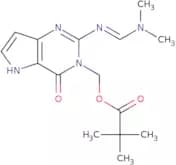
CAS:<p>Please enquire for more information about N1-(Pivaloyloxy)methyl-N2-(dimethylamino)methylene 9-deazaguanine including the price, delivery time and more detailed product information at the technical inquiry form on this page</p>Fórmula:C15H21N5O3Pureza:Min. 95%Peso molecular:319.36 g/mol3'-O-Benzyl-2'-Deoxy-5-Trifluoromethyluridine
CAS:<p>3'-O-Benzyl-2'-Deoxy-5-Trifluoromethyluridine (BDBMU) is a pyrimidine derivative that can be used as an antiviral drug. It inhibits the synthesis of DNA and RNA by inhibiting viral polymerase. BDBMU is a prodrug of uracil, which is converted to the active compound in tissues. The benzoylation reaction produces a fluorine atom at C5, which increases its potency. This drug has been shown to have minimal toxicity in tumor cells and has been used for the treatment of leukemia and other cancers.</p>Fórmula:C17H17F3N2O5Pureza:Min. 95%Peso molecular:386.32 g/mol(S)-HPMPA
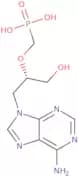
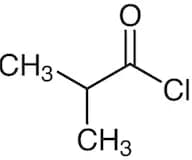
CAS:<p>(S)-HPMPA is a nucleotide analogue, which is a chemically synthesized compound designed to mimic nucleotides. It acts as both an antiviral and an antitumor agent, sourced primarily through synthetic chemistry involving the modification of naturally occurring nucleotide structures. The mode of action of (S)-HPMPA involves mimicking natural substrates of various viral polymerases and cellular enzymes, thereby inhibiting viral DNA synthesis and disrupting the replication cycle of DNA viruses. Additionally, it can interfere with certain cellular pathways contributing to its antitumor effects.</p>Fórmula:C9H14N5O5PPureza:Min. 95%Peso molecular:303.21 g/molIsobutyryl Chloride
CAS:Fórmula:C4H7ClOPureza:>98.0%(GC)(T)Forma y color:Colorless to Light yellow clear liquidPeso molecular:106.554-Amino-6-hydroxypyrazolo[3,4-d]pyrimidine
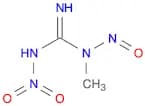
CAS:Fórmula:C5H5N5OPureza:>93.0%(HPLC)Forma y color:White to Light yellow to Light orange powder to crystallinePeso molecular:151.131-Methyl-3-nitro-1-nitrosoguanidine
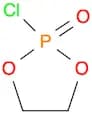
CAS:Fórmula:C2H5N5O3Pureza:95%Forma y color:LiquidPeso molecular:147.09282-Chloro-1,3,2-dioxaphospholane-2-oxide
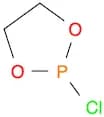
CAS:Fórmula:C2H4ClO3PPureza:95%Forma y color:LiquidPeso molecular:142.47812-Chloro-1,3,2-dioxaphospholane
CAS:Fórmula:C2H4ClO2PPureza:97%Forma y color:LiquidPeso molecular:126.4787Ref: 4Z-G-2447
Producto descatalogadoSYBR GREEN II
CAS:<p>1) Non-toxicity: belong to flower-stem dye, easy to biodegrade, no carcinogenic toxicity.</p>Fórmula:C28H28IN3OSPureza:98%Forma y color:SolidPeso molecular:581.51Ref: TM-TD0005
Producto descatalogadoRef: 4Z-G-2434
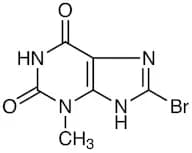
Producto descatalogado8-Bromo-3-methylxanthine
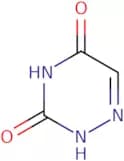
CAS:Fórmula:C6H5BrN4O2Pureza:>98.0%(T)(HPLC)Forma y color:White to Almost white powder to crystalPeso molecular:245.046-Azauracil
CAS:<p>6-Azauracil is a heterocycle with the chemical formula C8H10N2O3. It is approved by the FDA to treat HIV infections and has been shown to have pharmacokinetic properties in humans. 6-Azauracil is structurally similar to uracil, which is found in RNA, but lacks the hydroxyl group on the para position of the heterocyclic ring. The synthesis of this drug was accomplished through acid complex formation with nucleotides and nitrous acid. The compound inhibits replication of retroviruses by competitive inhibition of primer binding. 6-Azauracil has also been shown to be toxic in rats, leading to congestive heart failure and death when administered at high doses. This drug may also act as an anti-inflammatory agent by inhibiting prostaglandin synthesis or platelet aggregation.</p>Fórmula:C3H3N3O2Pureza:Min. 95%Forma y color:PowderPeso molecular:113.07 g/mol


![8-[(1E)-2-(3,4-Dimethoxyphenyl)ethenyl]-1,3-diethyl-3,9-dihydro-1H-purine-2,6-dione](/_next/image/?url=https%3A%2Fstatic.cymitquimica.com%2Fproducts%2F3D%2Fthumb-webp%2FFD152904.webp&w=3840&q=75)
![3'-[2- Cyanoethyl N, N- bis(1- methylethyl) phosphoramidite]-5'- O- [bis(4- methoxyphenyl) phenylm…](/_next/image/?url=https%3A%2Fstatic.cymitquimica.com%2Fproducts%2F3D%2Fthumb-webp%2FFC165570.webp&w=3840&q=75)


![4-Amino-6-hydroxypyrazolo[3,4-d]pyrimidine](/_next/image/?url=https%3A%2Fstatic.cymitquimica.com%2Fproducts%2F3B%2Fthumb-webp%2FA2699.webp&w=3840&q=75)