Nucleótidos
Subcategorías de "Nucleótidos"
Se han encontrado 2634 productos de "Nucleótidos"
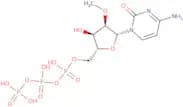
2'-O-Methylcytidine-5'-triphosphate sodium salt - 100mM aqueous solution
CAS:2'-O-Methylcytidine-5'-triphosphate sodium salt is a synthetic, modified nucleoside analog. It can be used as an antiviral agent and anticancer drug to inhibit viral replication and tumor growth. 2'-O-Methylcytidine-5'-triphosphate sodium salt has the ability to activate cellular DNA synthesis. This compound also inhibits RNA polymerase activity in cancer cells, which inhibits the production of proteins vital for cell division. 2'-O-Methylcytidine-5'-triphosphate sodium salt can be used as a phosphoramidite building block for the synthesis of oligonucleotides with novel structures.
Fórmula:C10H18N3O14P3·xNaPureza:Min. 95%Forma y color:Clear LiquidPeso molecular:497.18 g/molPoly(2'-O-Methyladenosine 5'-monophosphate) sodium
CAS:Please enquire for more information about Poly(2'-O-Methyladenosine 5'-monophosphate) sodium including the price, delivery time and more detailed product information at the technical inquiry form on this page
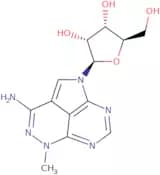
Fórmula:(C11H16N5O7P)x•NaxPureza:Min. 95%Triciribine
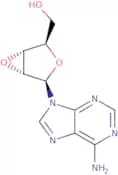
CAS:Protein kinase B inhibitor;Fórmula:C13H16N6O4Pureza:Min. 95%Forma y color:White/Off-White SolidPeso molecular:320.3 g/mol2',3'-Anhydroadenosine
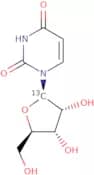
CAS:2',3'-Anhydroadenosine is a nucleoside for a range of applicationsFórmula:C10H12N2O5Pureza:Min. 95%Forma y color:PowderPeso molecular:240.21 g/mol1'-13CUridine
CAS:1'-13CUridine is a nucleoside analog attached to an isotopeFórmula:CC8H12N2O6Forma y color:PowderPeso molecular:245.19 g/molN1-Methyladenosine-5’-monophosphate
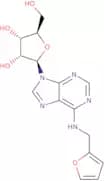
CAS:The N1-methyladenosine is a reversible modification in tRNA, mRNA and long non-coding RNAFórmula:C11H16N5O7PPureza:Min. 95%Forma y color:PowderPeso molecular:361.25 g/molKinetin riboside
CAS:Kinetin is a plant hormone that regulates cell proliferation and differentiation. Kinetin riboside is a derivative of kinetin in which the ribose moiety has been converted to ribosyl-ribitol. Kinetin riboside has shown the ability to inhibit cancer cells by inducing apoptosis, which may be related to its ability to inhibit cyclin D2 and mitochondrial membrane potential. In addition, kinetin riboside has been shown to protect against oxidative stress and decrease mitochondrial function in cells. This compound may have therapeutic potential for cancer treatment and other diseases caused by oxidative stress or mitochondrial dysfunction.Fórmula:C15H17N5O5Pureza:Min. 98 Area-%Forma y color:White PowderPeso molecular:347.33 g/molCapecitabine
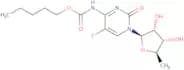
CAS:Pro-drug of 5-FU; anti-cancer agent
Fórmula:C15H22FN3O6Pureza:Min. 95%Forma y color:PowderPeso molecular:359.35 g/molN-Cbz gemcitabine
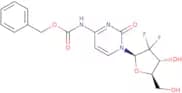
CAS:N-Cbz gemcitabine is a novel nucleoside analog that is chemically modified to be activated by enzymes in the cell. It has been shown to have high purity and high quality. In addition, N-Cbz gemcitabine is an anticancer drug that is most effective against cells with a low number of nucleotides per cell. This drug has shown antiviral properties and is used for the treatment of HIV/AIDS patients.Fórmula:C17H17F2N3O6Pureza:Min. 95%Forma y color:Off-White To Yellow SolidPeso molecular:397.33 g/mol2-Thiocytidine
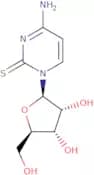
CAS:2-Thiocytidine is a nucleoside that is an intermediate in the synthesis of thiamine. It has been shown to be effective in the treatment of prostate cancer cells, which may be due to its ability to inhibit protein synthesis. 2-Thiocytidine binds to the catalytic site of ribonucleotide reductase (RR) and inhibits the enzyme's activity, thereby inhibiting DNA synthesis. This drug also has been shown to inhibit crosslinking caused by UV light or other agents that generate reactive oxygen species. 2-Thiocytidine binds to the active site of RR and prevents the formation of the enzyme-substrate complex. This binding prevents reduction of ribose into ribonucleotides and inhibits DNA synthesis.
Fórmula:C9H13N3O4SPureza:Min. 95%Forma y color:Yellow PowderPeso molecular:259.28 g/molN6-Etheno 2'-deoxyadenosine
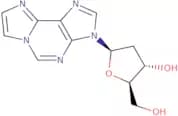
CAS:N6-Etheno 2'-deoxyadenosine is a nucleoside analogue that inhibits DNA synthesis by binding to the enzyme thymidylate synthase, which catalyzes the conversion of deoxyuridine monophosphate to thymidine monophosphate. This drug has been shown to be genotoxic in vitro and in vivo, as evidenced by its ability to induce chromosomal aberrations in cultured human lymphocytes and disrupt DNA replication in mammalian cells. It also reacts with mismatched base pairs and dna duplexes, leading to their degradation. N6-Etheno 2'-deoxyadenosine binds reversibly to antibodies and can be detected using an analytical method that employs monoclonal antibodies.Fórmula:C12H13N5O3Forma y color:White Off-White PowderPeso molecular:275.26 g/mol3',5'-Di-O-acetyl-2'-deoxy-5-iodouridine
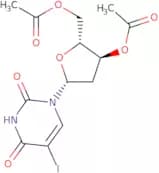
CAS:3',5'-Di-O-acetyl-2'-deoxy-5-iodouridine is an inorganic, deoxyribonucleoside. It is the acetyl derivative of 2'-deoxy-5-iodouridine, which is an analog of uracil. 3',5'-Di-O-acetyl-2'-deoxy-5-iodouridine has been shown to have antiviral properties against herpes simplex virus type 1 (HSV1) and herpes simplex virus type 2 (HSV2) in animals. This drug also has antiangiogenic properties, inhibiting the growth of new blood vessels and tissues at the site of a tumour. Studies have shown that 3',5'-di-O acetyl 2'-deoxyuridine can be incorporated into exudates from human cancer patients and can inhibit tumor cell proliferation in vivo.
Fórmula:C13H15IN2O7Pureza:Min. 95%Peso molecular:438.18 g/mol2′-O-(2-Methoxy-2-oxoethyl)-5-methyl-uridine
CAS:2′-O-(2-Methoxy-2-oxoethyl)-5-methyl-uridine is a nucleoside that can be used as an anticancer drug and antiviral agent. It has shown potent in vitro cytotoxic activity against human leukemia cells and other cancer cell lines, including breast, prostate, ovarian, and colon cancers. 2′-O-(2-Methoxy-2-oxoethyl)-5-methyl-uridine also has good antiherpetic potential. This compound is a novel and synthetic nucleoside with high purity, high quality, and excellent stability. It is soluble in water, methanol, ethanol, acetone, acetonitrile; slightly soluble in chloroform; insoluble in ether or hexane. CAS No. 149301-23-5Fórmula:C13H18N2O8Pureza:Min. 95%Peso molecular:330.29 g/mol5-Chloro-2',3'-dideoxy-3'-fluorouridine
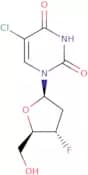
CAS:5-Chloro-2',3'-dideoxy-3'-fluorouridine is a nucleoside analog that inhibits the replication of HIV by competing with other nucleosides for incorporation into viral DNA, thereby inhibiting the production of new viruses. This drug has been shown to have an inhibitory effect on the replication of HIV and has been approved as an antiretroviral agent. 5-Chloro-2',3'-dideoxy-3'-fluorouridine is active against most HIV strains and is able to suppress viral load in patients with chronic hepatitis B or C. It also inhibits the hepatic metabolism of drugs metabolized by cytochrome P450 enzymes, such as CYP3A4 inducers. The effective dose for this drug ranges from 100 mg to 200 mg per day.
Fórmula:C9H10ClFN2O4Pureza:Min. 95 Area-%Forma y color:White PowderPeso molecular:264.64 g/mol2-Amino-6-chloro-9-(2',3',5'-tri-O-acetyl-b-D-ribofuranosyl)purine
CAS:2-Amino-6-chloro-9-(2',3',5'-tri-O-acetyl-b-D-ribofuranosyl)purine is a protected nucleoside analog.In this compound the sugar’s hydroxyl groups are acetylated to make it chemically stable and reactive in nucleoside chemistry.Pureza:Min. 95%2′-O-[2-(Methylamino)-2-oxoethyl]adenosine
CAS:2′-O-[2-(Methylamino)-2-oxoethyl]adenosine is a nucleoside that can be used as an anticancer, antiviral, and anticoagulant. It is synthesized from the natural nucleosides adenosine and cytidine. 2′-O-[2-(Methylamino)-2-oxoethyl]adenosine has been shown to inhibit the growth of tumor cells in vitro. This compound also inhibits viral replication by inhibiting DNA synthesis through inhibition of ribonucleotide reductase and deoxyribonucleotide reductase. 2′-O-[2-(Methylamino)-2-oxoethyl]adenosine is phosphorylated by ATP to produce 2′-O-[2-(methylamino)-2-oxoethyl]adenosinophosphate (AMP). AMP then binds to the purinergic receptor P1, which leads toFórmula:C13H18N6O5Pureza:Min. 95%Peso molecular:338.32 g/mol1-(3',5'-Di-O-benzoyl-2'-deoxy-2'-fluoro-β-D-arabinofuranosyl)-5-iodouracil
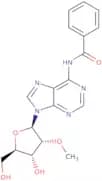
1-(3',5'-Di-O-benzoyl-2'-deoxy-2'-fluoro-b-D-arabinofuranosyl)-5-iodouracil is a modified nucleoside analog for research applications. It contains a uracil base with an iodine atom, a fluorinated sugar that produces increased metabolic stability and benzoyl-protecting groups at the 3'- and 5'-hydroxyl positions, commonly used in nucleoside synthesis.Pureza:Min. 95%N6-Benzoyl-2'-O-methyladenosine
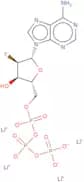
CAS:N6-Benzoyl-2'-O-methyladenosine is a nucleoside that is chemically synthesized. It has been shown to be an inhibitor of the polyhedrosis virus, which causes an infectious disease in silkworms. N6-Benzoyl-2'-O-methyladenosine also inhibits viral replication by interfering with the synthesis of messenger RNA. This compound can be used as a silver nitrate or silver salt prodrug for treating diseases caused by viruses and bacteria. This drug is not active against DNA viruses because it does not possess phosphate groups on its structure.Fórmula:C18H19N5O5Pureza:Min. 95%Forma y color:PowderPeso molecular:385.37 g/mol2'-Deoxy-2'-fluoroadenosine-5'-triphosphate tetralithium salt
CAS:2'-Deoxy-2'-fluoroadenosine-5'-triphosphate tetralithium salt (FdATP) is a competitive inhibitor of ATP. It inhibits the synthesis of RNA, DNA, and protein in cell culture at high concentrations. FdATP is also an analog of adenosine triphosphate (ATP), which is needed for cellular energy production. The competitive inhibition of ATP by FdATP prevents the formation of a phosphorylated enzyme that is required for the initiation of DNA synthesis. This can lead to cell death, as the cells cannot produce proteins required for growth and replication.Fórmula:C10H11FN5O12P3•Li4Pureza:Min. 95%Forma y color:PowderPeso molecular:532.9 g/mol2'-Deoxyadenosine monohydrate
CAS:2'-Deoxyadenosine monohydrate (2'-dA) is an adenosine nucleotide that is synthesized by the enzyme adenosine kinase. It is a competitive inhibitor of phosphodiesterase and inhibits the activity of this enzyme, which breaks down cyclic nucleotides to their corresponding monophosphate form. This leads to elevated levels of cAMP, which can cause neuronal death by apoptosis. 2'-dA has been shown to have sublethal effects on neurons at concentrations that are below those required for neuronal death and apoptosis. This may be due to its ability to inhibit the synthesis of ATP, thereby limiting the production of phosphoryl groups from ATP. The inhibition of ATP synthesis also reduces the amount of energy available for other processes within cells.
Fórmula:C10H13N5O3•H2OPureza:Min. 98 Area-%Forma y color:PowderPeso molecular:269.26 g/mol





![2′-O-[2-(Methylamino)-2-oxoethyl]adenosine](/_next/image/?url=https%3A%2Fstatic.cymitquimica.com%2Fproducts%2F3D%2Fthumb-webp%2FNM182883.webp&w=3840&q=75)